


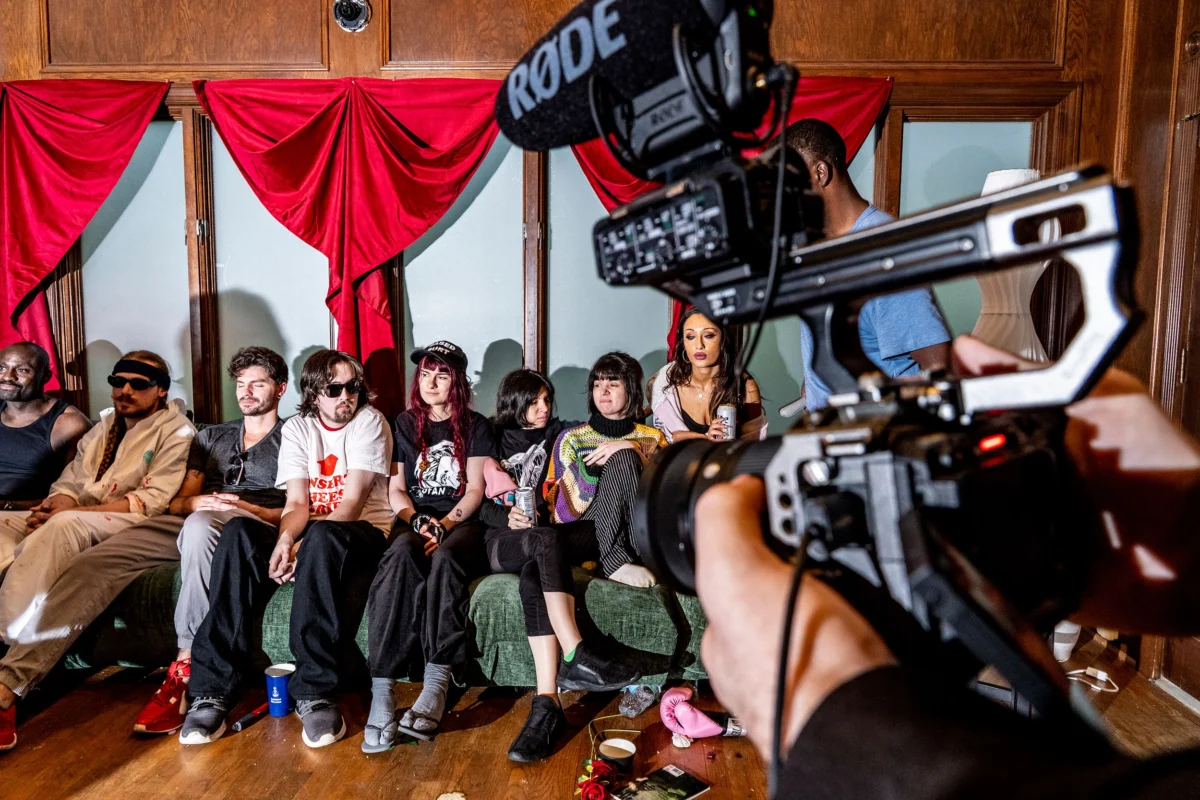
The emergence of Fishtank Live represents a paradigm shift in the reality television landscape, transitioning from the curated drama of legacy network programming to a 24/7, unedited, and hyper-interactive surveillance model. Operating out of a rotating series of suburban mansions, the production—often described as "Big Brother without limits"—utilizes a sophisticated network of CCTV cameras, microphones, and a proprietary digital platform to monetize the psychological and physical endurance of its participants. Created by controversial media figures Sam Hyde and Jet Neptune, the show has rapidly evolved from an internet subculture curiosity into a multi-million-dollar enterprise that challenges contemporary standards of broadcast ethics, privacy, and digital consumption.

The Mechanics of Hyper-Interactive Surveillance
Fishtank Live functions within what the producers term a "fully monitored smart house." Unlike traditional reality shows such as MTV’s The Real World or CBS’s Big Brother, which utilize editing to craft cohesive narratives and character arcs, Fishtank is broadcast live and unedited. The production environment is designed to be an architectural panopticon, with nearly every square inch of the residence—save for bathrooms—rigged with high-definition surveillance equipment.

The central innovation of the program is its "wall-dweller" interface, which allows the audience to assume an active role in the environment. Viewers do not merely observe; they control the conditions of the house through financial transactions. By purchasing "Fishtoys" or paying for text-to-speech (TTS) messages, the audience can influence the contestants—referred to as "fish"—in real time. These interactions range from benign gifts to "disadvantages" that include blasting high-volume insults through house speakers at all hours, forcing contestants to sleep on the floor, or subjecting them to repetitive, psychologically taxing sound effects.

A Chronology of Escalation and Law Enforcement Interaction
The production’s history is marked by a series of geographic displacements and interactions with local authorities. Since its inception, Fishtank has been forced to relocate across four different neighborhoods in three states, largely due to zoning violations and noise complaints.

A significant incident occurred on March 16, 2026, in Sandy Springs, Georgia, illustrating the volatile intersection of livestreaming and public safety. Following a fraudulent distress call—a practice known as "swatting"—police arrived at the production’s "French Country-style" mansion with rifles drawn. The caller had claimed a gunman was hiding in a bathroom. Bodycam footage later revealed a surreal scene: police officers navigating a house decorated with AI-generated art and primary-colored dormitory rooms, while producers monitored the encounter from a high-tech control room in the basement. Despite the presence of firearms kept for self-defense against "obsessive fans," local law enforcement ultimately allowed the stream to continue, highlighting the legal complexities of 24/7 residential broadcasting.

The Business of the "Trash Economy"
Financially, Fishtank Live operates on a high-margin model that leverages the "Chudtech" ecosystem—a term coined by media analysts to describe platforms that monetize transgressive content and digital humiliation. While the production budget for a season is estimated to be less than $1 million, the show’s valuation has reportedly climbed to over $30 million.

The revenue streams are diverse and highly optimized:

- Season Passes: Access to the full 24/7 feed is sold for approximately $10 per season.
- Interactive Trolling: Viewers pay between $30 and $60 to broadcast messages through the house speakers.
- Fishtoys: Digital items such as "Bedsnatchers" ($800) or symbolic roses ($50) allow fans to reward or punish participants.
- Corporate Sponsorships: Despite the show’s controversial nature, brands such as Sticker Mule and Backyard Butchers have provided financial support, signaling a shift in how some companies view "uncancelable" media.
- Memorabilia: Following the conclusion of Season 2, the production sold "mystery boxes" containing actual debris from the house—including chunks of drywall and garbage—for $200 each, a literal manifestation of what Sam Hyde once predicted as a "trash economy."
The Participant Profile: The Rise of the NEET Phenomenon
The casting strategy for Fishtank Live intentionally avoids the "aspirational" archetypes of mainstream reality TV. Instead, the production recruits individuals from the "NEET" demographic—those Not in Education, Employment, or Training. These participants are often socially isolated, highly online, and possess a mired sense of privacy.

The psychological toll on these individuals is a core component of the show’s "entertainment" value. Contestants are subjected to challenges designed to break down social inhibitions and mental fortitude. These include:

- The Rice Challenge: A tedious task requiring the counting of thousands of mixed grains of rice.
- The Mommy-Baby Challenge: A regressive role-playing exercise.
- The Shit Your Pants Challenge: A test of biological and social dignity.
- Physical Confrontations: Producers and contestants have engaged in sanctioned boxing matches that frequently result in actual injury.
Former contestants report a complex aftermath. Letty, a Season 1 participant, noted that while the "torture" was intense, it provided a sense of community and self-esteem she lacked in her previous isolated life. Conversely, Jimmy Downey, a Season 2 contestant, was removed from the show after being deemed a legal liability for physical aggression, later expressing regret over his behavior while citing the unbearable pressure of 24/7 audience surveillance.

The Creators: From Subculture to Independent Media Power
The ideological backbone of Fishtank Live is provided by Sam Hyde, a comedian and filmmaker known for the "Million Dollar Extreme" (MDE) collective. Hyde’s career has been defined by a contentious relationship with mainstream institutions. Following the 2016 cancellation of his Adult Swim show, World Peace, amid allegations of alt-right affiliations and offensive content, Hyde pivoted to a fully independent model.

Hyde’s collaborator, Jet Neptune, serves as the current showrunner. Neptune’s approach is rooted in the belief that "negativity is the most powerful force" in digital media. He posits that Fishtank is a "freak show makeover program" that uses extreme exposure therapy to "fix" the personalities of its participants. This philosophy suggests that by subjecting individuals to the absolute worst of human interaction—slurs, physical degradation, and total loss of privacy—they are somehow "reborn" into more resilient performers.

Official Responses and Ethical Implications
The rise of Fishtank Live has drawn criticism from media watchdogs and ethical experts. Concerns center on the lack of traditional broadcast standards, the potential for long-term psychological trauma, and the safety risks associated with "swatting" and physical challenges. Unlike network television, which is governed by the FCC and internal legal departments, Fishtank operates on independent platforms like Kick and its own proprietary site, largely shielding it from conventional oversight.

However, the show has gained a level of tacit acceptance in certain media circles. Podcaster Joe Rogan has noted that the show differs from The Real World only in the degree of its participants’ mental instability, suggesting that the line between "acceptable" reality TV and "extreme" streaming is increasingly blurred.

Broader Impact and the Future of Digital Voyeurism
Fishtank Live serves as a bellwether for the future of the attention economy. It occupies the intersection of reality TV, professional gaming, and the "OnlyFans" model of personalized, paid interaction. As traditional media viewership declines, the high-engagement, high-monetization model of Fishtank provides a blueprint for a new form of entertainment that prioritizes raw authenticity and audience agency over production value or ethical guardrails.

The show’s ultimate trajectory, according to Jet Neptune, involves even greater scales of simulation. Plans for future seasons include hosting the show in a warehouse-sized spaceship set, where the cast remains for an entire year. This "expeditionary" model aims to replicate the global collective focus of historical events like the Apollo missions, albeit through the lens of transgressive reality streaming.

As digital platforms continue to relax moderation standards and the boundaries between private life and public performance dissolve, Fishtank Live stands as a stark reminder of the lengths to which producers and audiences will go in the pursuit of unmediated human drama. Whether it is viewed as a groundbreaking evolution of the medium or a descent into digital barbarism, its financial success and growing cultural footprint suggest that the "Fishtank" model of reality is likely to proliferate in the years to reach.