


The 79th Cannes Film Festival has solidified its reputation as a grueling yet essential marathon for the global film industry, serving as a primary site for the intersection of high-art cinema and international cultural diplomacy. As the festival enters its second week, the focus has shifted toward expansive, long-form narratives that challenge institutional structures and examine the complexities of human care. Representing the Asia Society—a global network of centers dedicated to deepening the understanding between Asia and the rest of the world—curators have been scouring the selection for titles to feature at the society’s 258-seat theater located in the museum building on New York’s Upper East Side. The selection process this year highlights a significant trend: the blending of Asian and European production sensibilities to address universal social crises.
The Premiere of Ryusuke Hamaguchi’s All of a Sudden
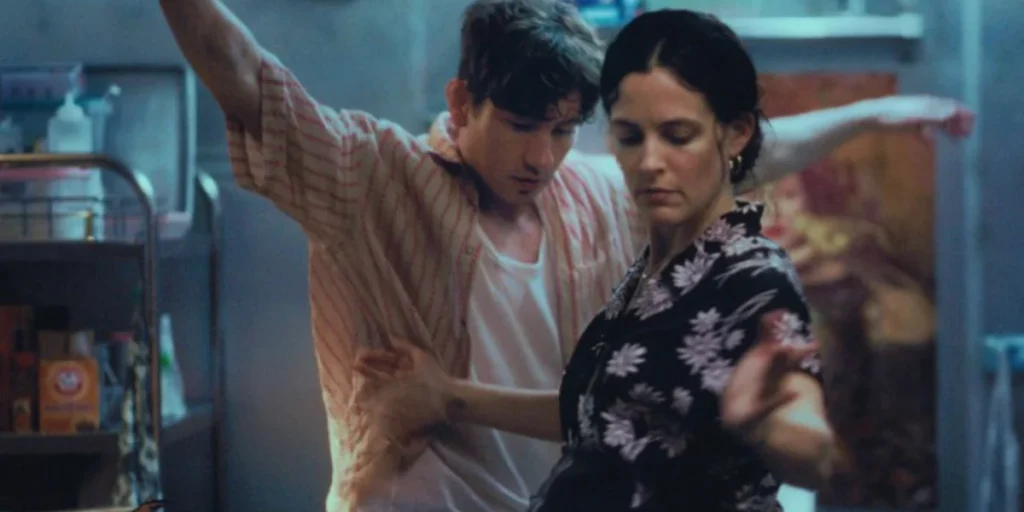
Among the most significant entries in the 2026 lineup is Ryusuke Hamaguchi’s latest work, All of a Sudden. Following the international success of Drive My Car and Evil Does Not Exist, Hamaguchi has pivoted toward a French-Japanese co-production that explores the boundaries of professional care and personal friendship. The film, which runs three and a half hours, centers on the relationship between Marie-Louise, portrayed by Virginie Efira, and Mari, played by Tao Okamoto.
Marie-Louise serves as the director of a senior care facility in the Parisian suburbs, where she is attempting to implement "Humanitude." This real-world care methodology, developed in France, emphasizes the importance of gaze, speech, and touch, advocating for the dignity of elderly patients who are often marginalized by the bureaucratic nature of medical institutions. Conversely, Mari is a Japanese theater director staging an experimental production in France centered on the life of Franco Basaglia, the radical Italian psychiatrist who spearheaded the movement to abolish psychiatric asylums in the 20th century.
The narrative functions as a dual thesis on the concept of care. Through a series of earnest dialogues, the two protagonists discuss the philosophy of chance, the constraints of capitalism on social services, and their personal histories. The film posits that while Marie-Louise works within a large-scale institution and Mari works on a smaller, artistic scale, their collaboration eventually forges a path toward shared humanitarian ideals.
Theoretical Foundations: The Influence of Franco Basaglia
The inclusion of Franco Basaglia’s legacy in All of a Sudden has sparked renewed interest in the history of mental health reform. Basaglia is best known for "Law 180," the 1978 Italian mental health reform act that led to the closure of all state psychiatric hospitals. His work was rooted in the idea that institutions often "bracket" the illness while ignoring the person, a theme that resonates throughout Hamaguchi’s film.
In the context of the movie, Marie-Louise’s struggle to reform her for-profit facility mirrors Basaglia’s observations in John Foot’s biography, The Man Who Closed the Asylums: Franco Basaglia and the Revolution in Mental Health Care. The film explores the contradiction of managing an institution that one fundamentally denies or wishes to dismantle. By framing care as an act of "creating possibility from impossibility," Hamaguchi critiques the limitations of the capitalist structure while offering a life-affirming view of individual agency within those systems.
Historical Restoration: Ken Russell’s The Devils
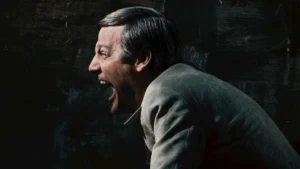
While new premieres dominated the headlines, the festival also provided a platform for significant repertory restorations. A major highlight was the screening of Ken Russell’s 1971 masterpiece, The Devils, presented in its newly restored and lengthened original cut. Released by Warner Brothers’ new "Clockwork" label, this version re-inserts six minutes of footage that were censored upon its initial release in the United Kingdom and the United States due to their perceived obscenity.

The film, based on Aldous Huxley’s The Devils of Loudun, depicts a 17th-century convent descending into religious hysteria. The restoration was introduced by British film critic Mark Kermode, who has spent decades advocating for the release of Russell’s original vision. Kermode noted that the missing footage, which he helped locate twenty years ago while producing a documentary, is essential to understanding Russell’s critique of institutional hypocrisy.
The performances by Vanessa Redgrave, as the tormented Mother Superior, and Oliver Reed, as the charismatic Father Grandier, remain a benchmark for visceral intensity in period cinema. The restoration serves not only as a cinematic event but also as a thematic companion to the festival’s broader focus on the contradictions of the Catholic Church and other historical institutions. Industry analysts suggest that the 2026 reintroduction of The Devils will likely lead to a wider theatrical and home media rollout, bringing Russell’s uncompromising style to a new generation of viewers.
Cultural Diplomacy at the Village International
Beyond the screening rooms, the festival’s market arm, the Village International, continues to serve as a hub for cultural exchange. On Tuesday evening, the Palestine Pavilion hosted a performance by Sol Band, providing a musical interlude that drew a large crowd of delegates and journalists. These pavilions, situated in the waterside tents, represent the festival’s commitment to providing a space for nations to showcase their cultural heritage alongside their cinematic output.
The Asia Society’s presence at these events underscores the organization’s mission to foster global dialogue. By engaging with both established masters like Hamaguchi and emerging musical talents, the society aims to curate a diverse program for its New York audience that reflects the current geopolitical and artistic climate.
Emerging Voices and the Future of Asian Cinema
As the festival moves toward its conclusion, several other titles have gained momentum among critics and distributors. These films represent a broad spectrum of genres and styles, further cementing the dominance of Asian filmmakers in the 2026 selection:
- 9 Temples to Heaven: The feature debut of Sompot Chidgasornpongse, who previously served as the longtime assistant director to Apichatpong Weerasethakul. The film is described as a moving exploration of spirituality and memory in modern Thailand.
- The Samurai and the Prisoner: A visually stunning samurai epic from Kiyoshi Kurosawa. Known for his contributions to the J-Horror genre, Kurosawa’s move into a period action-drama has been met with significant acclaim for its choreography and philosophical depth.
- Hope: A high-budget monster movie directed by Na Hong-jin (The Wailing). The film reportedly features "outrageous" practical effects and a narrative that blends traditional horror elements with social commentary.
- Clarissa: A contemporary adaptation of Virginia Woolf’s Mrs. Dalloway, directed by the Nigerian filmmaking duo Arie and Chuko Esiri (Eyimofe). The film is noted for its sumptuous cinematography and its clever transposition of Woolf’s themes to a modern setting.
Analysis of Implications for the Global Film Market
The 2026 Cannes Film Festival highlights a shift in how "prestige cinema" is defined and consumed. The success of long-form narratives like All of a Sudden suggests that audiences and critics are increasingly willing to engage with demanding, slow-burn storytelling that prioritizes dialogue and philosophical inquiry over traditional pacing. Furthermore, the prominence of co-productions—such as the French-Japanese backing of Hamaguchi’s work—points to a more integrated global film economy where resources are pooled to support visionary directors.
For organizations like the Asia Society, the festival serves as a vital scouting ground. The films selected here are expected to drive the programming for the 2026-2027 season in New York, offering American audiences a window into the institutional and personal struggles being explored by today’s leading international directors. As the festival enters its final days, the industry remains focused on which of these titles will secure the prestigious Palme d’Or, but the thematic impact of "care" and "institutional reform" has already left an indelible mark on this year’s proceedings.