




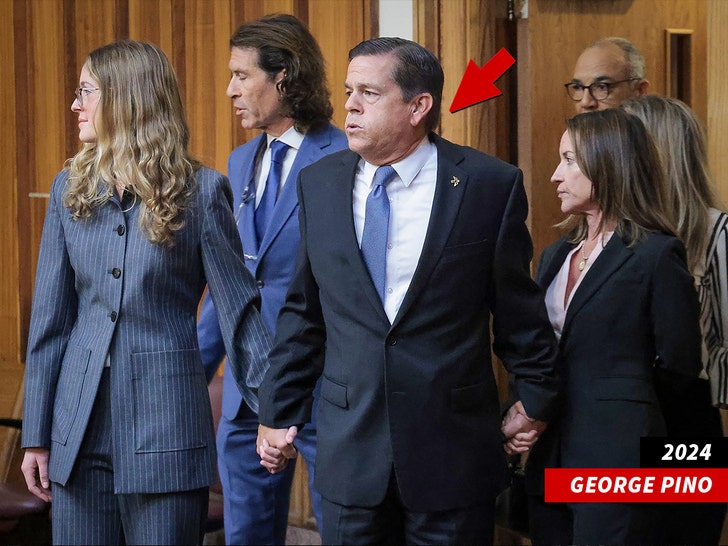
George Pino, a prominent figure in Florida’s real estate sector, was acquitted on Monday of manslaughter and vessel homicide charges stemming from a tragic 2022 boat crash in Biscayne Bay that claimed the life of one teenager and left another with severe, permanent injuries. The verdict, delivered by a Miami-Dade jury after an emotional eight-day trial, marks a significant legal conclusion to a case that has drawn considerable public attention and scrutiny, particularly given Pino’s high-profile status in the community. The decision allows Pino to walk free, though the shadow of the devastating incident and its lasting impact on the victims’ families remains profound.
The Tragic Incident: A Birthday Celebration Turns Fatal
The fatal event unfolded on September 4, 2022, a Labor Day weekend Sunday, when George Pino and his wife, Cecilia, were hosting a birthday celebration for their daughter and a group of teenage friends aboard their 29-foot boat. The vessel, carrying a total of 14 passengers, was navigating the waters of Biscayne Bay near Boca Chita Key, a popular recreational spot known for its clear waters and picturesque lighthouse, frequently visited by boaters from South Florida. As dusk began to settle, the festive atmosphere aboard the boat abruptly transformed into a scene of chaos and horror.
According to court documents and initial investigation reports, the boat collided with a floating marker, specifically identified as a channel marker, in the bay. The impact was sudden and severe, causing all 14 individuals on board to be violently ejected into the water. In the immediate aftermath, a desperate scramble ensued as passengers struggled to orient themselves and assist those in distress in the darkening waters. Emergency services were alerted, and a multi-agency rescue effort was swiftly launched, involving the U.S. Coast Guard, Florida Fish and Wildlife Conservation Commission (FWC), and local fire-rescue units.
Among those thrown from the boat were 17-year-old Lucy Fernandez and Katy Puig, who was 19 at the time of the accident and is now 21. Tragically, Lucy Fernandez sustained critical injuries from which she later succumbed, her life cut short by the unforeseen disaster. Katy Puig, a close friend, also suffered catastrophic injuries, including permanent brain damage, which have irrevocably altered the course of her life. The incident sent shockwaves through the local community, particularly among the families and schools connected to the young victims.
Investigation and Legal Proceedings: From Accident to Indictment
The immediate aftermath of the crash triggered an extensive investigation by the FWC, the primary state agency responsible for boating safety and accident investigations in Florida. Investigators meticulously gathered evidence, interviewed survivors and witnesses, and reconstructed the events leading up to the collision. Their focus was on determining the precise cause of the crash, including factors such as the boat’s speed, the visibility of the marker, environmental conditions, and the operator’s conduct.

Several months later, based on the findings of this investigation, George Pino was formally charged by the Miami-Dade State Attorney’s Office. He faced one count of manslaughter and one count of vessel homicide. In Florida, vessel homicide, as defined by state statutes, involves the operation of a vessel in a reckless manner likely to cause death or great bodily harm, or operating it under the influence of alcohol or controlled substances, leading to a fatality. Manslaughter, a broader charge, typically implies a culpable degree of negligence that results in death, falling short of premeditated murder but exceeding simple carelessness. The decision to file such severe charges underscored the prosecution’s belief that Pino’s actions, or inactions, constituted a criminal offense rather than a mere accident.
The legal journey for Pino and the victims’ families was protracted, marked by pre-trial motions, evidence discovery, and the inevitable delays inherent in complex criminal cases. The charges transformed the incident from a tragic accident into a high-stakes legal battle, pitting the state against a prominent businessman and drawing intense media scrutiny.
The Trial: Competing Narratives of Responsibility
The trial commenced with jury selection, a critical phase in any high-profile case, particularly one involving such profound emotional weight. A six-person jury was ultimately impaneled to hear the evidence and determine Pino’s culpability. Over eight days, the Miami-Dade courtroom became the stage for a dramatic and often harrowing presentation of testimony and evidence.
Prosecution’s Case:
Assistant State Attorneys Laura Adams and Jonathon Borst spearheaded the prosecution’s efforts. Their primary objective was to convince the jury that George Pino’s operation of the vessel on that fateful evening amounted to criminal negligence or recklessness, directly contributing to the deaths and injuries. They likely presented evidence related to:
- Boat Operation: Expert witnesses might have testified about appropriate speeds for the area, the expected level of vigilance from a boat operator, and how Pino’s conduct allegedly deviated from these standards.
- Visibility and Conditions: Arguments could have been made about the general visibility at dusk, emphasizing that a prudent operator should have been able to identify and avoid the channel marker, even if it was unlit or poorly maintained.
- Overcrowding (Implied): While not explicitly stated in the initial report as a charge, the fact that 14 passengers were on a 29-foot boat is a high number, and the prosecution might have subtly suggested that the sheer number of people could have contributed to distraction or compromised the vessel’s handling or stability, though this would need to be linked to Pino’s negligence.
- Victim Impact: The prosecution undoubtedly brought forth emotionally charged testimony from the families of Lucy Fernandez and Katy Puig, painting a vivid picture of their loss and suffering, aiming to underscore the tragic consequences of Pino’s alleged actions.
Defense’s Case:
Pino’s defense was led by renowned attorney Howard Srebnick, who mounted a vigorous challenge to the prosecution’s claims. The core of the defense strategy was to firmly establish that the collision was a tragic accident, devoid of any criminal intent, recklessness, or culpable negligence on Pino’s part. Key aspects of their defense likely included:
- Accident, Not Crime: Srebnick consistently argued that the crash was an unforeseeable event, an unfortunate mishap that, while devastating, did not meet the legal threshold for criminal culpability.
- Eyewitness Testimony: The defense presented eyewitness accounts from other passengers on the boat, who testified that Pino was not under the influence of alcohol or drugs, nor was he operating the boat recklessly prior to the collision. This directly countered any potential implication of impaired judgment or excessive speed.
- Visibility of the Marker: A crucial element of the defense would have focused on the channel marker itself. It is common in such cases for the defense to argue that the marker was improperly lit, obscured, or otherwise difficult to see, especially at dusk, thus presenting an unforeseen hazard to even a careful operator. Expert marine navigators might have testified about the challenges of identifying such markers under specific lighting conditions.
- Pino’s Experience and Care: The defense would likely have portrayed Pino as an experienced boater who regularly navigated Biscayne Bay and was generally careful and responsible. They would have argued that he exercised the appropriate level of care expected of a boat operator, and the incident was simply an unavoidable accident.
The jury was tasked with weighing these competing narratives, sifting through technical evidence, expert testimonies, and emotional accounts. Their decision hinged on whether the prosecution had proven beyond a reasonable doubt that Pino’s actions constituted criminal negligence or recklessness, rather than a tragic, albeit non-criminal, accident.

The Verdict and Immediate Reactions
On Monday, following intense deliberations, the six-person jury returned its verdict: not guilty on all counts. The announcement brought an audible sigh of relief from George Pino and his legal team, concluding a harrowing period of legal uncertainty that had loomed over his life for nearly four years.
Howard Srebnick, speaking immediately after the verdict, praised the jury’s diligence and careful consideration of the evidence. He reiterated his client’s consistent position throughout the ordeal: that the crash was an accident, not a crime. Srebnick emphasized that eyewitness testimony had corroborated Pino’s sobriety and lack of reckless behavior, leading the jury to a "just verdict." This outcome validates the defense’s strategy and the narrative that the incident, while tragic, did not warrant criminal prosecution.
Conversely, Assistant State Attorneys Laura Adams and Jonathon Borst, while expressing their disagreement with the verdict, stated their respect for the judicial process and their acceptance of the jury’s decision. They extended their gratitude to the jurors for their service, acknowledging the difficult task they faced. For the prosecution, the verdict is a disappointing setback, particularly given the severity of the charges and the profound losses suffered by the victims’ families.
Broader Implications and Lingering Questions
The acquittal of George Pino, a prominent figure, in a case involving teenage fatalities, inevitably sparks broader discussions about justice, accountability, and the legal system’s handling of such tragedies, especially when a wealthy defendant is involved. While the criminal trial has concluded, the human impact of the 2022 crash remains.
Victims’ Families: For the families of Lucy Fernandez and Katy Puig, the verdict undoubtedly represents a profound disappointment and a potential source of renewed grief and frustration. While the legal system has rendered its decision on criminal culpability, it does not diminish the pain of their loss or the ongoing challenges faced by Katy Puig. In many such cases, victims’ families often pursue civil litigation, seeking damages for wrongful death and personal injury, regardless of the outcome of criminal proceedings. A criminal acquittal does not preclude civil liability, as the burden of proof in civil court is lower (preponderance of the evidence) than in criminal court (beyond a reasonable doubt). It is highly probable that the families will consider or have already initiated civil actions against Pino, which could lead to further legal battles focused on financial compensation for their immense suffering and losses.
Boating Safety in Biscayne Bay: The incident also shines a light on boating safety in busy waterways like Biscayne Bay. Florida consistently ranks as one of the states with the highest number of registered vessels and, consequently, a significant number of boating accidents. Common causes include inattention, excessive speed, alcohol impairment, and collisions with fixed or floating objects. While the defense argued the marker’s visibility was an issue, the crash serves as a stark reminder of the inherent dangers of nighttime navigation and the critical importance of vigilance, proper lighting, and adherence to safety protocols for all boat operators. Agencies like the FWC regularly issue warnings and conduct campaigns to promote safer boating practices, but incidents like this underscore the continuous need for caution and awareness on the water.
Public Perception: Cases involving high-profile individuals and tragic outcomes often ignite public debate about the fairness and impartiality of the justice system. While the jury’s decision was based on the evidence presented in court and the legal standards for criminal culpability, there can be a public perception that wealth or status might influence outcomes, regardless of the facts. This case will likely be discussed in that context, even as legal experts emphasize the jury’s role in adhering strictly to the law.
Conclusion:
George Pino’s acquittal brings a formal end to the criminal chapter of the 2022 Biscayne Bay boat crash. While he has been cleared of criminal wrongdoing, the incident remains a profound tragedy that claimed a young life and left another irrevocably changed. The verdict, while a relief for Pino, underscores the complex and often heart-wrenching nature of legal proceedings in cases of accidental death, where the line between misfortune and criminal culpability is fiercely debated. As the families of Lucy Fernandez and Katy Puig continue to grapple with their immense losses, the broader implications for boating safety and the pursuit of justice in civil courts will undoubtedly persist long after the courtroom doors have closed on this particular case.