


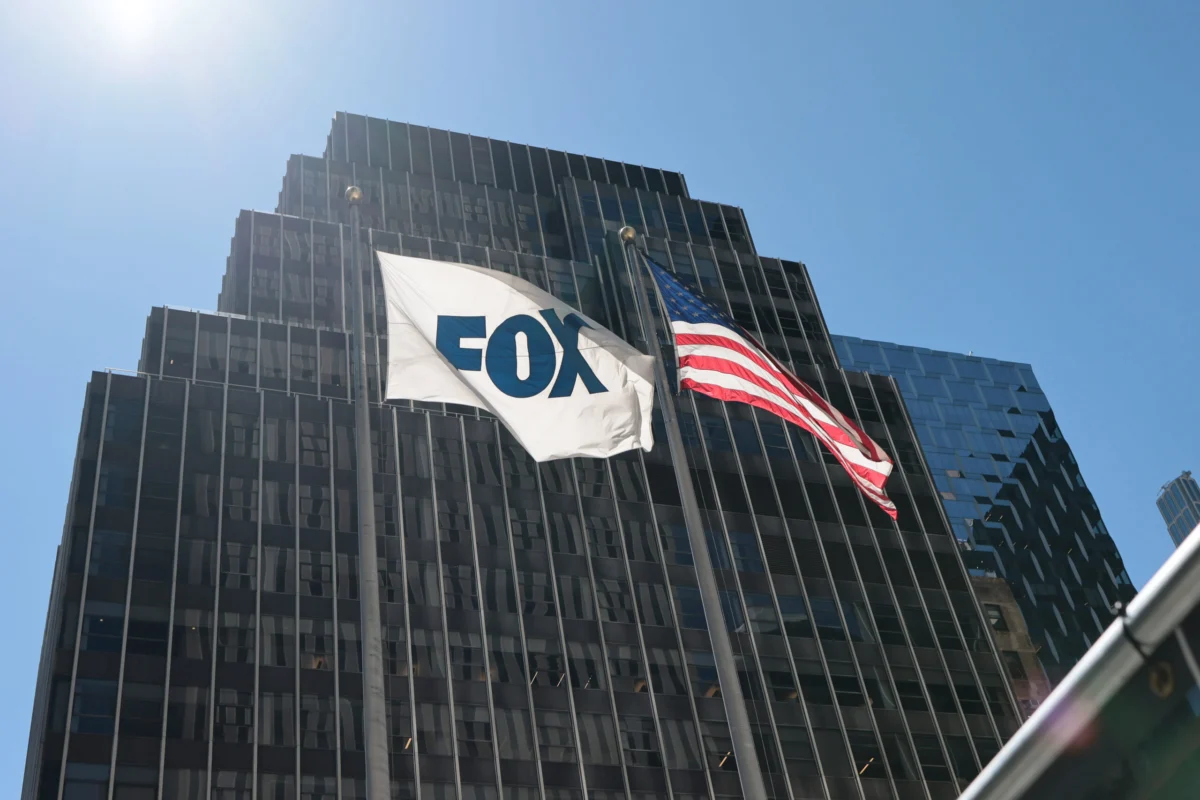
The media industry, long characterized by its slow dance toward consolidation and the looming threat of tech-driven disruption, witnessed a seismic shift this week as Fox Corp. announced its definitive agreement to acquire Roku Inc. for $22 billion. The deal, announced on Monday, June 15, 2026, represents one of the most significant strategic pivots in the history of the Murdoch-led media empire, signaling a decisive move away from a reliance on the declining linear television bundle and toward a future defined by platform ownership, first-party data, and digital advertising dominance. While the transaction was heralded by many industry analysts as a necessary step to "future-proof" the company, the immediate reaction from the public markets was one of sharp skepticism. Fox Corp. shares plummeted 16% on the day of the announcement, hitting a 52-week low, followed by an additional 4% decline on Tuesday as investors grappled with the implications of the company’s new debt load and the inherent risks of a large-scale integration.
The acquisition brings together two distinct but increasingly overlapping worlds: Fox’s powerhouse portfolio of live sports, news, and broadcast content, and Roku’s industry-leading streaming gateway, which includes both its hardware ecosystem and its massive Free Ad-supported Streaming Television (FAST) platform, The Roku Channel. By folding Roku into a portfolio that already includes the burgeoning Tubi service, Fox is positioning itself as a titan of the AVOD (Advertising Video on Demand) space, effectively leapfrogging many of its legacy peers in terms of total streaming viewership share.
The Strategic Logic: A Marriage of Content and Distribution
The core of the deal lies in the synergy between Fox’s premium content and Roku’s massive distribution footprint. For years, Fox has operated as a "lean" media company compared to rivals like Disney or Warner Bros. Discovery. After selling the majority of its entertainment assets to Disney in 2019 for $71.3 billion, the "New Fox" focused heavily on live, "appointment-to-view" programming—specifically Fox News and Fox Sports. However, as cord-cutting continues to erode the traditional cable bundle, the long-term viability of relying solely on carriage fees and linear ad spots has come under scrutiny.
Roku provides the technological "connective tissue" that Fox has lacked. As the leading streaming platform in the United States, Roku’s operating system (OS) is embedded in millions of dedicated devices and smart TVs. By owning the platform, Fox gains unprecedented control over the user interface, allowing it to prioritize its own content—such as NFL games, the FIFA World Cup, and Fox News—directly on the home screens of millions of viewers.
"We view this as a strategic fit," wrote Thomas Champion, an analyst at Piper Sandler, in a research note following the announcement. "Fox marries its strong content with Roku’s leading distribution platform and first-party data that add scale and can enhance the value proposition with advertisers." Champion further noted that the combined entity would become the third-largest player in the U.S. by share of viewing, a metric that spans broadcast, cable, local, and streaming categories.
Financial Dynamics and Market Skepticism
Despite the strategic accolades from analysts, the $22 billion price tag triggered a sell-off among Fox shareholders. The primary concern cited by market insiders involves the financial structure of the deal. To fund the acquisition, Fox will take on significant new debt. While the company’s leverage is expected to remain relatively low by industry standards upon the deal’s expected closing in the first half of 2027, the timing is sensitive. Fox is currently entering a period of intensive capital expenditure, particularly as the National Football League (NFL) reopens media rights negotiations. With competitors like Paramount Global (now under Skydance ownership) and Comcast’s NBCUniversal aggressively bidding for sports packages, Fox’s balance sheet will be under increased pressure.
However, some experts argue that the market’s reaction is a classic case of short-term volatility masking long-term value. Mike Proulx, Vice President and Research Director at Forrester, suggested that big media deals are frequently punished in the short term because they introduce uncertainty into established earnings models. "What the market is missing is the long-term strategic importance of this deal," Proulx stated. "It’s far from just a content play. The long-term value is in owning the platform, the data, and the ad stack. That’s what this deal gives Fox and helps the company to future proof."
A Chronology of Fox’s Digital Evolution
To understand the magnitude of the Roku acquisition, one must look at the timeline of Fox’s digital strategy over the last decade:
- March 2019: Fox closes the $71.3 billion sale of its film and television studios, along with several cable networks, to The Walt Disney Company. The remaining "Fox Corp." focuses on news and sports.
- April 2020: Fox acquires Tubi, a leading FAST service, for approximately $440 million. This marks the company’s first major entry into the ad-supported streaming space.
- 2021–2023: Tubi experiences explosive growth, becoming a key revenue driver and a centerpiece of Fox’s "invest-to-grow" strategy.
- Early 2025: Fox launches "Fox One," a direct-to-consumer (DTC) application designed to bundle its news and sports offerings for the post-cable era.
- June 2026: Fox announces the $22 billion acquisition of Roku, signaling its intent to own the entire streaming ecosystem, from the hardware to the ad-buying software.
This trajectory shows a company that has moved from being a content wholesaler to a vertically integrated tech and media giant. While Fox was often criticized for being "under-leveraged" or too cautious during the initial "streaming wars" dominated by Netflix and Disney+, the Roku deal suggests that Fox was waiting for the market to mature before making its move.
The Ad-Tech Powerhouse: Tubi Meets The Roku Channel
One of the most significant implications of this merger is the consolidation of the FAST market. By combining Tubi with The Roku Channel, Fox will control a massive share of the free streaming market. According to estimates from MoffettNathanson, the combined viewership of Tubi and Roku’s platform now rivals the combined reach of Disney+, Hulu, and ESPN+.
This scale is critical for attracting advertisers who are increasingly moving away from traditional TV "upfronts" in favor of programmatic, data-driven digital buying. Roku’s sophisticated ad-tech stack, combined with Fox’s sales force and premium content, creates a formidable competitor to Google and Amazon in the digital video advertising space. Furthermore, Roku’s platform gives Fox a "toll-booth" position; when other streamers like Netflix or Disney+ are watched on a Roku device, the platform owner typically receives a percentage of ad revenue or subscription fees. This provides Fox with a diversified revenue stream that is decoupled from its own content production.
Competitive Pressures and the Walmart-Vizio Factor
The acquisition also serves as a defensive maneuver against shifting retail and tech dynamics. In 2024, Walmart acquired smart TV manufacturer Vizio, a move that threatened Roku’s dominance by integrating a massive retail footprint with a proprietary television OS. By joining forces with Fox, Roku gains the financial backing and high-value content necessary to withstand the "retail media" onslaught from giants like Walmart and Amazon.
Furthermore, the deal provides Fox with significant leverage in "carriage" negotiations. In the past, Fox’s primary leverage was the popularity of Fox News and the NFL. Now, it can negotiate from a position of platform power. If a cable provider or a rival streaming service wants prominence on the Roku home screen—the most valuable real estate in the modern living room—they must deal with Fox.
Broader Industry Implications
The Fox-Roku deal is likely to trigger a new wave of consolidation across the media and technology sectors. As the distinction between "content companies" and "platform companies" continues to blur, other legacy players may feel compelled to seek similar hardware or OS integrations.
Industry insiders suggest that the move places immense pressure on companies like Warner Bros. Discovery and Comcast to further scale their streaming footprints. The "innovator’s dilemma," a term used by LightShed Partners to describe the reluctance of legacy companies to risk their existing cash flows for future tech, appears to have been solved by Fox through this bold, if expensive, acquisition.
As the deal moves toward regulatory review, the focus will shift to how Fox integrates Roku’s hardware business—a segment with lower margins than traditional media—into its high-margin news and sports operations. While the 16% drop in stock price reflects immediate investor anxiety, the long-term narrative for Fox has fundamentally changed. The company is no longer just a broadcaster; it is now a platform operator with the data, the technology, and the distribution to dictate the terms of the streaming era’s next chapter.
The expected close of the transaction in early 2027 will likely coincide with a new era of NFL broadcasting and a further thinned cable landscape. By then, the "unexpected strategic pivot" of 2026 may be viewed not as a risky gamble, but as a calculated necessity for survival in a digital-first world.