


The National Football League and Paramount Skydance have entered the preliminary stages of a major contract renewal aimed at securing the league’s cornerstone Sunday afternoon game package on CBS for the next decade. According to sources familiar with the ongoing discussions, the two entities are currently navigating a significant price adjustment that could see the broadcaster’s annual payments surge by more than 50%. This negotiation marks a critical juncture for both the league and the newly restructured media conglomerate, as they seek to stabilize their partnership amidst a rapidly shifting media landscape and internal corporate transformations.
The current framework of the negotiations suggests a bid-ask spread with a midpoint between 50% and 60% above current rates. CBS, which has long been the home of the American Football Conference (AFC) package, currently pays an average of $2.1 billion annually under the terms of an 11-year agreement signed in 2021. A 50% increase would elevate that annual commitment to more than $3 billion. In exchange for this higher financial commitment, the NFL is prepared to provide Paramount Skydance with long-term security by eliminating an opt-out clause originally scheduled for the 2029-30 season. This move would effectively lock in the partnership through the end of the 2033-34 season, removing the league’s ability to terminate the deal early and providing the broadcaster with a guaranteed anchor for its sports programming.
The Catalyst for Early Negotiations: Corporate Restructuring and Control Provisions
The timing of these negotiations is not coincidental. While the NFL’s broader media rights deals with various partners are not set to expire for several years, a specific legal trigger has brought Paramount to the table ahead of its peers. The recent acquisition of Paramount Global by Skydance Media, led by David Ellison, activated a "change-of-control" provision within the NFL’s existing contract. This clause granted the league a unique window to potentially exit its agreement with CBS by 2027 if it were dissatisfied with the new ownership or the financial stability of the resulting entity.
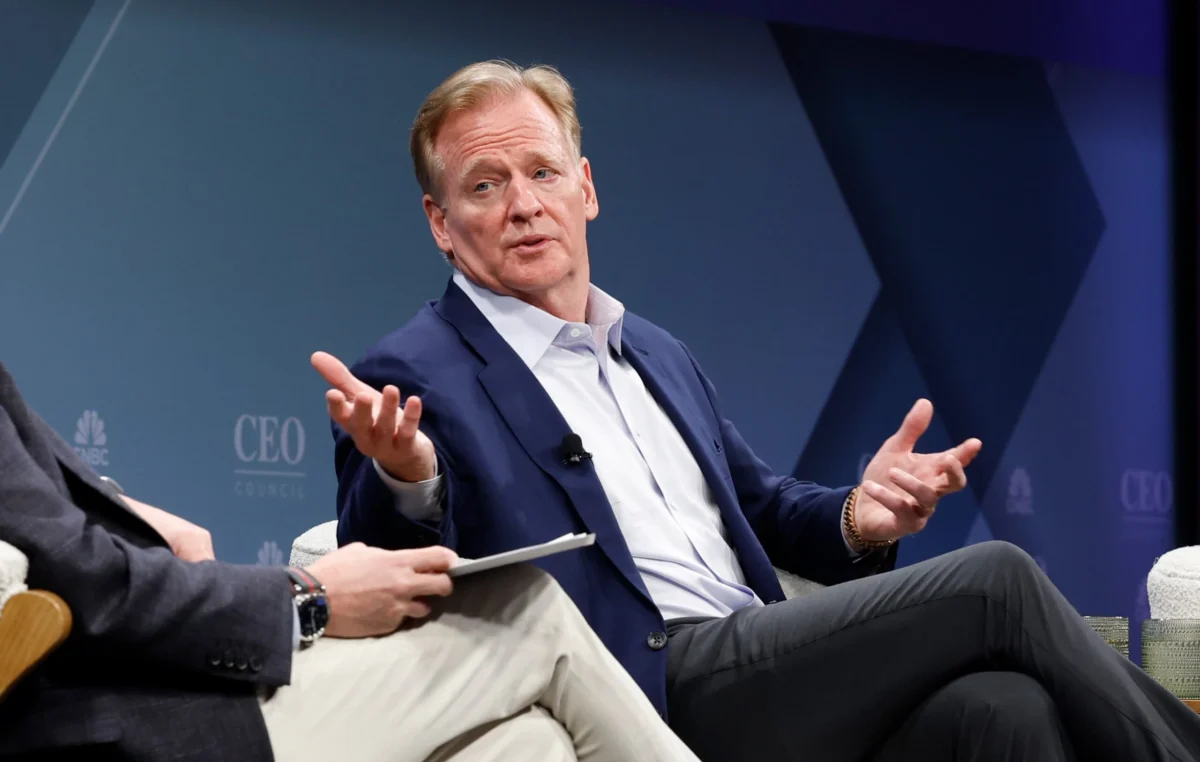
Rather than exercising the exit option, the NFL has chosen to use the provision as leverage to reset the financial terms of the deal. By negotiating now, the league secures a massive revenue increase years earlier than anticipated, while Paramount Skydance secures the continuity of its most valuable asset. During a recent CNBC CEO Council event in Arizona, NFL Commissioner Roger Goodell emphasized the league’s focus on long-term stability with its media partners, though he remained tight-lipped regarding specific figures.
Paramount CEO David Ellison has publicly affirmed the league’s importance to the company’s future. Following a historic season that culminated in high viewership for CBS, Ellison noted that the NFL remains one of Paramount’s "most important partners." For Skydance, retaining the NFL is viewed as an existential necessity as it seeks to integrate Paramount’s assets and compete with tech giants like Amazon and legacy rivals like Disney.
Chronology of the NFL’s Current Media Rights Cycle
To understand the magnitude of the current talks, it is necessary to look back at the landmark 11-year media rights agreements established in 2021. These deals, valued at a combined $110 billion, were designed to carry the league into the mid-2030s while facilitating a transition toward digital streaming.
- March 2021: The NFL announces new 11-year deals with CBS, NBC, Fox, ESPN/ABC, and Amazon. The deals were set to begin in 2023 and run through 2033.
- 2023-2024 Season: The new agreements officially take effect. Amazon Prime Video becomes the exclusive home of Thursday Night Football, while CBS and Fox maintain their Sunday afternoon packages.
- July 2025: The FCC approves the $8 billion merger between Skydance Media and Paramount Global, triggering the NFL’s change-of-control clause.
- May 2025: Commissioner Roger Goodell and Paramount executives begin formal discussions on a deal "reset" to account for the merger and the removal of the 2029 opt-out.
- Early 2026: Paramount CFO Dennis Cinelli provides updated financial projections, highlighting a combined EBITDA of $18 billion if a subsequent merger with Warner Bros. Discovery (WBD) is finalized.
The current talks indicate that the "reset" deal would see CBS begin paying the increased fee as early as the next season, effectively front-loading the revenue for the NFL while giving CBS an eight-year runway of certainty.
Financial Projections and the Impact of a Potential WBD Merger
The financial stakes for Paramount Skydance are heightened by the company’s broader strategic ambitions. Paramount’s adjusted projection for its earnings before interest, taxes, depreciation, and amortization (EBITDA) for 2026 stands at $3.6 billion. However, the landscape could shift dramatically if the rumored merger with Warner Bros. Discovery (WBD) gains regulatory approval.
According to Paramount CFO Dennis Cinelli, a combined Paramount-WBD entity would boast an adjusted EBITDA projection of approximately $18 billion. This massive scale would provide the necessary capital to absorb the $3 billion annual NFL commitment while also maintaining a competitive edge in the "streaming wars" via Paramount+ and Max. The NFL’s Sunday games are a primary driver for Paramount+ subscriptions, making the rights deal a dual-purpose investment for both linear television and digital growth.
The Competitive Landscape: Fox, Disney, and Amazon
The NFL’s successful push for a 50% increase from CBS is expected to set a new benchmark for its other media partners. Following the conclusion of the CBS deal, the league is expected to turn its attention to Fox. Like CBS, Fox operates a Sunday afternoon package and is subject to the same 2029-30 opt-out clause.
Fox currently pays approximately $2.2 billion per year for its NFL rights. Fox CEO Lachlan Murdoch has indicated that while the company values its relationship with the league, it has not yet engaged in "material conversations" regarding a renewal. However, industry analysts expect the NFL to seek parity, pushing Fox toward a $3.3 billion annual price tag.
The situation is more complex for NBCUniversal and Disney (ESPN/ABC). Executives at these companies have privately expressed concerns that the value of their "prime time" packages—Sunday Night Football and Monday Night Football—has been somewhat diluted. This sentiment stems from the NFL’s decision to grant Amazon Prime Video a more competitive slate of games for Thursday Night Football, which was previously seen as a secondary window.
Disney, in particular, faces a steep climb. ESPN already pays a premium of $2.7 billion annually for Monday Night Football. A 50% increase would push that figure above $4 billion per year. Sources suggest Disney leadership may balk at such a figure, given the company’s ongoing efforts to streamline its linear television business and transition ESPN to a full direct-to-consumer model.
Downstream Implications for Other Professional Sports
The "NFL effect" is poised to create a ripple effect across the entire sports media ecosystem. As broadcasters commit larger portions of their budgets to professional football, other leagues may find themselves competing for a smaller pool of available capital.
The National Hockey League (NHL) is one of the first major organizations facing this reality. The NHL’s current domestic rights deals with Disney and Warner Bros. Discovery are set to expire after the 2028 season. NHL Commissioner Gary Bettman has reportedly explored the possibility of an early renewal to avoid being caught in the wake of the NFL’s massive price hikes. However, industry insiders suggest that a new NHL deal is unlikely to be finalized until the Paramount-WBD merger is resolved.
Fox’s Lachlan Murdoch recently noted that the company would likely have to "rebalance" its sports portfolio to accommodate the rising costs of the NFL. This "rebalancing" could mean reduced bids for mid-tier sports rights or a complete exit from certain leagues.
Conversely, this shift could create opportunities for other players. Mark Lazarus, CEO of Versant (the parent company of NBCUniversal and CNBC), has stated that the company is "prepared for the sports landscape to be shifting." If the cost of the NFL forces competitors to drop other rights, Versant—via its USA Network and other platforms—could aggressively pursue rights for Major League Baseball (MLB) or the NHL that might otherwise have been out of reach.
Analysis: The Enduring Dominance of the NFL
The ongoing negotiations between the NFL and Paramount Skydance underscore a fundamental truth in the modern media economy: the NFL is the only "must-have" content remaining for legacy broadcasters. In an era of fragmented audiences and cord-cutting, live NFL games consistently account for the vast majority of the top-rated television broadcasts each year.
By eliminating the 2029-30 opt-out clause, the NFL is prioritizing financial certainty and long-term partnership over the potential for a bidding war later this decade. For Paramount Skydance, the deal is a statement of intent. By agreeing to a $3 billion annual fee, David Ellison is signaling that the new Paramount is prepared to spend whatever is necessary to remain at the center of the American cultural conversation.
As the league moves through its roster of partners—first CBS, then likely Fox—the sports media landscape will be redefined by these multi-billion dollar commitments. The result will be a more consolidated industry where the NFL remains the ultimate anchor, while other sports leagues and media companies are forced to adapt to a new, more expensive reality.