


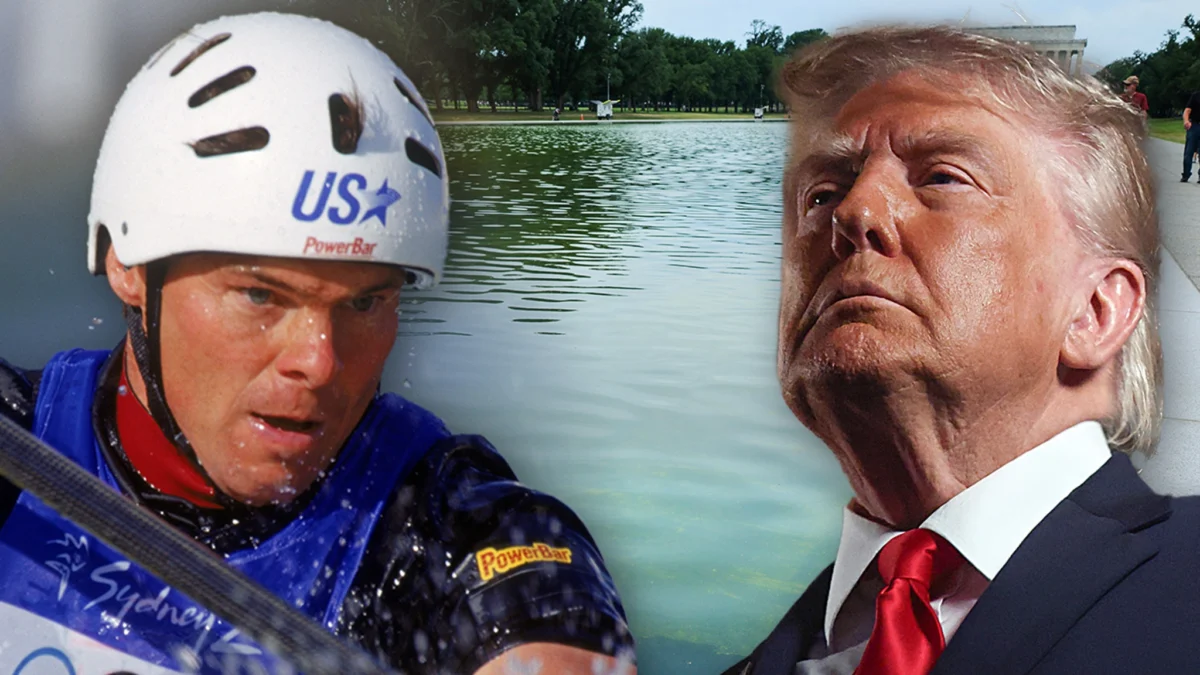
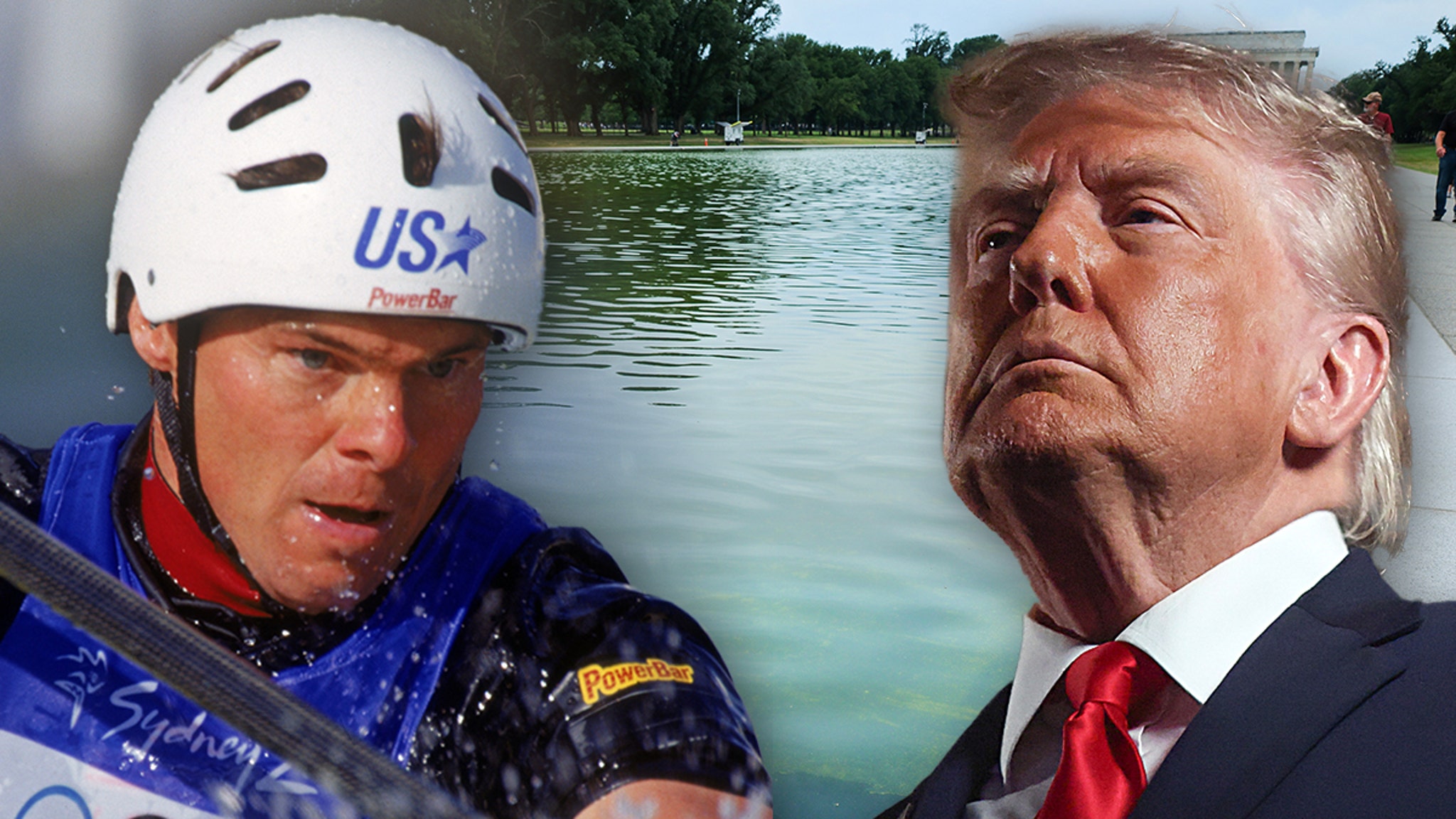
David Hearn, a revered three-time U.S. Olympian in canoe slalom, finds himself at the center of a national controversy after his arrest on Friday, June 20, 2026, for misdemeanor destruction of government property at the Lincoln Memorial Reflecting Pool in Washington D.C. The incident has drawn swift condemnation from President Donald Trump, who publicly announced the arrests of alleged vandals via his Truth Social platform, highlighting the political sensitivities surrounding national monuments and their upkeep. Hearn, 67, adamantly denies any malicious intent, stating he merely touched a piece of detached pool liner out of curiosity.
A Cyclist’s Stop Leads to Arrest
The events unfolded on Friday afternoon when Hearn, an avid cyclist, was on a challenging 52-mile bike ride through the nation’s capital. His route brought him past the iconic Lincoln Memorial Reflecting Pool, a site that had recently undergone a significant $14 million renovation. According to an exclusive report by The Washington Post, Hearn paused his ride to observe the newly refurbished pool. It was during this stop that he noticed a section of the pool’s liner appearing partially detached. Driven by what he described as simple curiosity, he reached into the water and touched the loose material "to see what it felt like."
His interaction with the liner, however minor Hearn claims it to be, did not go unnoticed. Within moments, officers from the U.S. Park Police, responsible for patrolling and securing national parks and monuments, intervened. Hearn was subsequently arrested on charges of misdemeanor destruction of government property. He was transported to a Park Police facility, where he was held for approximately five hours before being released late Friday night. Speaking to The Washington Post, Hearn vehemently denied actively destroying, breaking, or peeling off any portion of the Reflecting Pool’s lining, maintaining that his action was a harmless, exploratory gesture. The specific nature of the alleged damage, and whether it constituted actual "destruction" or mere "tampering," remains a central point of contention in the developing legal narrative.
An Olympian’s Distinguished Past
David Hearn’s name is synonymous with excellence in the demanding sport of canoe slalom. Born in 1959, Hearn’s career spanned decades, culminating in three Olympic appearances for the United States. He competed in the canoe slalom event, a discipline that requires immense skill, precision, and physical endurance as athletes navigate challenging whitewater courses. Hearn represented the U.S. at the 1980 Moscow Olympics (though the U.S. boycotted, he was named to the team), the 1988 Seoul Olympics, and the 1992 Barcelona Olympics. His participation in multiple Games underscored his consistent performance and dedication to the sport.
Canoe slalom, often described as a ballet on whitewater, involves negotiating a series of upstream and downstream gates suspended over turbulent currents. Athletes are penalized for touching gates or missing them entirely, with the fastest time determining the victor. Hearn was a prominent figure in the U.S. paddling community, known for his technical prowess and competitive spirit. Post-Olympics, he remained an active voice and participant in paddling circles, often contributing to coaching, event organization, and advocating for environmental conservation, particularly regarding waterways. His reputation as a respected athlete and citizen adds another layer of complexity to the current charges, prompting questions about the circumstances that led to his arrest and the discrepancy between his account and the official charges.
A Monumental Renovation and Its Significance
The Lincoln Memorial Reflecting Pool, stretching over 2,000 feet long and encompassing nearly 7 million gallons of water, is more than just a decorative feature; it is an integral part of the National Mall’s iconic landscape and a symbol of American democracy. Completed in 1922, it has served as a backdrop for countless historic events, including Martin Luther King Jr.’s "I Have a Dream" speech in 1963 and numerous protests and celebrations.
By the mid-2010s, the Reflecting Pool was showing significant signs of age and deterioration. Its original design relied on city water, leading to substantial water loss through evaporation and leaks, and requiring frequent refills. The shallow depth and lack of proper circulation also contributed to poor water quality, often resulting in algae blooms and a murky appearance. Recognizing the need for a comprehensive overhaul, the National Park Service (NPS) initiated a major renovation project. The $14 million endeavor, completed in 2012 (the article states "recent" and "2026", implying a second major renovation or a very significant maintenance effort shortly before 2026), aimed to address these critical issues.
Key aspects of the renovation included installing a new, impermeable liner to prevent water seepage, implementing a sophisticated recirculating water system, and drawing water from the Tidal Basin rather than the city supply, significantly reducing water consumption and improving environmental sustainability. The project also enhanced accessibility and reinforced the structural integrity of the pool’s basin and surrounding promenade. President Trump had publicly championed the pool’s revitalization, viewing it as a crucial investment in preserving national heritage and maintaining the grandeur of the capital’s monuments. His administration often highlighted infrastructure projects, and the successful completion and pristine condition of the Reflecting Pool served as a visible testament to such efforts. Any perceived damage to this recently restored landmark would naturally draw his attention and ire, especially given his public association with its successful refurbishment. The pride in its pristine condition likely fueled the swift and strong reaction to any alleged defacement.
Charges Filed and Legal Proceedings Ahead
The charge against David Hearn, misdemeanor destruction of government property, carries specific legal implications and potential penalties under federal law. Federal statutes related to the destruction or damage of government property are outlined in Title 18 of the U.S. Code. While a misdemeanor charge typically implies less severe damage compared to a felony, it can still result in significant consequences. These may include fines, probation, community service, or even incarceration for up to one year, depending on the extent of the damage and the discretion of the court.
The U.S. Park Police, operating under the National Park Service, have jurisdiction over federal lands and properties within their purview, including the National Mall and its monuments. Their officers are authorized to make arrests for violations of federal law. In Hearn’s case, the arrest was made based on their observation of his actions and their assessment that those actions constituted a violation of the law against damaging federal property.
Hearn’s release on Friday night suggests he was processed, likely issued a citation or formal charge sheet, and released on his own recognizance or on a nominal bond, pending a future court appearance. This is common procedure for misdemeanor offenses where the accused is not considered a flight risk or a danger to the community. The next steps in the legal process will involve his arraignment, where he will formally enter a plea. Should he plead not guilty, the case would proceed to discovery, potentially a motion to dismiss, and ultimately a trial. His defense will likely focus on arguing a lack of intent to damage, the minimal nature of the alleged interaction, and questioning whether his actions truly meet the legal definition of "destruction" of property. The "partially detached pool liner" itself will be a key piece of evidence, as its pre-existing condition could influence the assessment of Hearn’s culpability.
Presidential Intervention and Public Discourse
President Trump’s response to the incident was immediate and characteristic of his communication style. On Saturday, June 21, 2026, he took to Truth Social, his preferred social media platform, to condemn the alleged acts of vandalism at the Reflecting Pool. In his post, he explicitly mentioned the arrests of some of those involved. While he did not name David Hearn directly, the timing of his statement, coming just hours after Hearn’s arrest and public reporting of the incident, strongly suggested a direct reference.
Trump’s statement served multiple purposes. Firstly, it reinforced his commitment to maintaining law and order and protecting national symbols, themes that have been central to his political rhetoric. Secondly, it underscored his personal connection to the Reflecting Pool’s renovation, a project he had publicly championed. Any damage to it could be perceived as a direct affront to his efforts and a disrespect for the monuments he holds dear. His quick condemnation also aimed to set a firm tone, deterring others from similar actions and signaling that such acts would be met with severe consequences.
The President’s intervention immediately elevated the incident from a local police matter to a subject of national political discourse. His pronouncements often galvanize public opinion and draw heightened media scrutiny, placing greater pressure on the legal system and the individuals involved. This rapid politicization of the event could have implications for Hearn’s public image and the perception of his case, potentially shaping the narrative even before legal proceedings fully commence.
The Dispute Over Intent and Damage

At the heart of this unfolding story lies a fundamental dispute: Hearn’s claim of innocent curiosity versus the U.S. Park Police’s charge of destruction. Hearn’s account, as reported by The Washington Post, paints a picture of a concerned citizen observing an anomaly in a recently renovated public space. He claims he simply touched the detached liner, suggesting a lack of intent to cause harm or damage. This defense will likely hinge on the argument that his actions were not malicious, deliberate, or substantial enough to warrant a charge of "destruction."
Conversely, the U.S. Park Police’s decision to arrest and charge Hearn indicates their belief that his actions crossed a line. They would argue that even a seemingly minor interaction with a delicate component of a federal monument, especially one recently restored at taxpayer expense, could constitute damage or a violation of regulations designed to protect these sites. The critical question will be whether the liner was indeed "partially detached" before Hearn touched it, and if his action exacerbated any pre-existing condition or caused new damage. Experts, likely from the National Park Service or independent contractors involved in the renovation, would be called upon to assess the extent of any damage, its cost to repair, and whether it was directly attributable to Hearn’s actions. The definition of "destruction" in this context will be meticulously scrutinized by legal teams, as even minor interference with a structural element could be interpreted as damaging its integrity or aesthetic.
This incident also sparks a broader debate about public access to national monuments and the interpretation of rules governing visitor interaction. While monuments are meant to be experienced by the public, there are inherent limitations to ensure their preservation. The line between observation and interference can be thin, and this case highlights the potential for misinterpretation on both sides.
Security Concerns and the Path Forward
The arrest of David Hearn, coupled with President Trump’s public condemnation, brings renewed attention to the security and preservation of national monuments. Such incidents, regardless of their scale, often prompt a review of existing security protocols, surveillance measures, and public engagement policies. While the Reflecting Pool is an open, accessible public space, the incident may lead to discussions about increased signage, enhanced patrols, or even advanced monitoring technologies to deter future tampering.
For David Hearn, the path forward involves navigating the complexities of the federal legal system. He will require legal counsel to mount a robust defense against the misdemeanor charge. The outcome of his case could have implications beyond his personal record, potentially setting a precedent for how minor interactions with public property are treated. Should he be acquitted, it could signal a need for clearer guidelines on what constitutes "destruction" or a more nuanced approach to perceived minor transgressions. Conversely, a conviction could reinforce the strict enforcement of property protection laws at federal sites.
The incident also highlights the intersection of sports, politics, and public figures. A former Olympian, respected for his athletic achievements, now faces legal trouble in a highly publicized case with presidential involvement. This juxtaposition ensures continued media attention and public discussion, underscoring the delicate balance between public access to national treasures and their stringent protection. As the legal proceedings unfold, the nation will watch to see how this seemingly minor interaction with a pool liner ultimately impacts a celebrated athlete, national policy, and the ongoing dialogue about respect for America’s iconic landmarks.