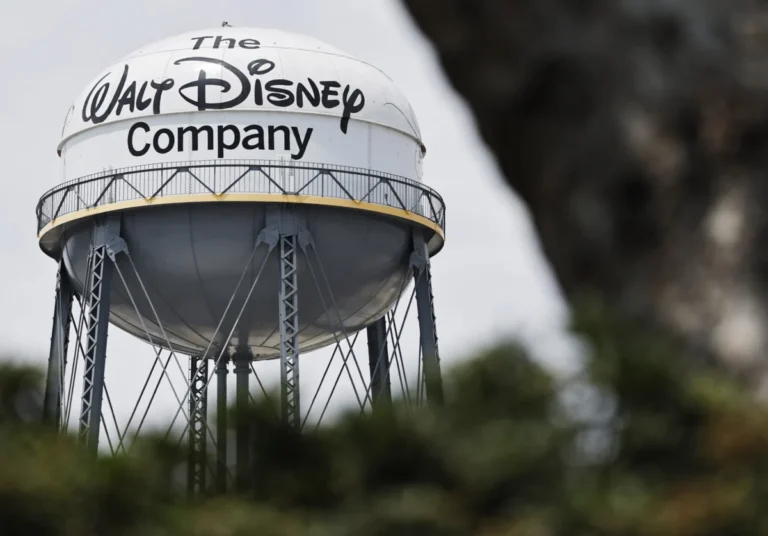

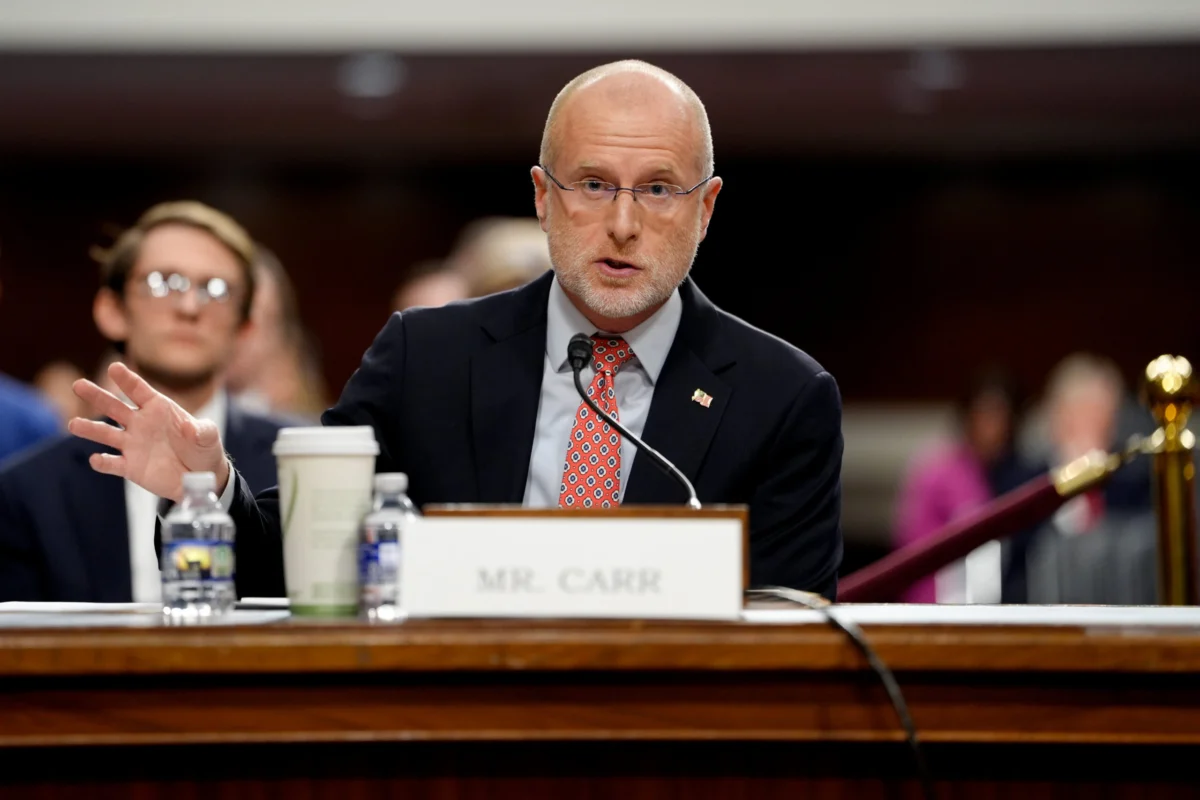
The Federal Communications Commission (FCC) has formally initiated an accelerated review of broadcast station licenses held by The Walt Disney Company, citing ongoing concerns regarding the corporation’s diversity, equity, and inclusion (DEI) initiatives. According to a letter issued Tuesday by FCC Chairman Brendan Carr, the agency has ordered Disney to file for early renewal of its ABC-owned television stations, moving the deadline forward by several years. The directive marks a significant escalation in a federal investigation that began last year, placing Disney’s primary broadcast assets under intense regulatory scrutiny.
Under standard regulatory cycles, the licenses for ABC-owned stations were not scheduled for renewal until the window between 2028 and 2031. However, the FCC’s latest order mandates that Disney submit its renewal applications within 30 days, establishing a deadline of May 28. The move specifically targets eight stations owned and operated by Disney across major American markets, including California, Illinois, New York, Texas, North Carolina, and Pennsylvania. While Disney’s network affiliates—which are owned by third-party entities such as Nexstar Media Group—are not affected by this specific order, the review of the "owned and operated" (O&O) stations strikes at the core of ABC’s broadcast infrastructure.
The Scope of the Investigation and Regulatory Framework
The FCC’s investigation into Disney centers on potential violations of the Communications Act of 1934 and established agency rules that prohibit unlawful discrimination. Since March 2025, the commission has been examining whether Disney’s internal DEI policies and hiring practices align with the federal requirement that broadcast licensees operate in the "public interest."
In his letter, Chairman Carr indicated that while Disney has provided responses to two prior inquiries, the agency has deemed those responses insufficient to resolve the matter. The decision to trigger an early renewal process allows the FCC to conduct a "character qualification" assessment, a high-level review intended to determine if a licensee remains fit to hold a broadcast permit. Under the Communications Act, the FCC possesses the authority to deny license renewals if it finds that a broadcaster has failed to serve the public interest or has violated federal laws, including those pertaining to equal employment opportunities.
Disney has maintained that its operations remain in full compliance with all federal regulations. In a statement released Tuesday, the company emphasized its history of service to local communities, providing news, emergency alerts, and public-interest programming. "We are confident that record demonstrates our continued qualifications as licensees under the Communications Act and the First Amendment and are prepared to show that through the appropriate legal channels," the company stated.
Political Context and the Jimmy Kimmel Controversy
The FCC’s order arrives during a period of heightened friction between Disney’s ABC network and the political sphere. Specifically, the network has faced renewed criticism from President Donald Trump following a monologue by late-night host Jimmy Kimmel. During a recent broadcast of "Jimmy Kimmel Live!", the comedian referred to First Lady Melania Trump as an "expectant widow." The comment, made just days before a reported security incident involving an alleged assassination attempt at the White House Correspondents’ Dinner, drew immediate condemnation from the administration.
President Trump has publicly called for ABC to remove Kimmel from the airwaves, reviving a long-standing grievance with the network’s editorial and comedic content. This is not the first time Kimmel’s commentary has intersected with Disney’s regulatory standing. In September 2025, the show was temporarily suspended following remarks Kimmel made regarding the death of conservative activist Charlie Kirk. At that time, Chairman Carr suggested that broadcast licenses could be subject to revocation if a pattern of behavior suggested a failure to uphold the public interest.
While the FCC is technically an independent agency, the timing of the early renewal order has led some observers to question the influence of political pressure on regulatory decisions. However, the FCC maintains that its focus remains strictly on the legality of Disney’s DEI frameworks and their compliance with non-discrimination statutes.
Chronology of Regulatory Escalation
The current confrontation is the result of a multi-year trajectory of increasing oversight regarding corporate DEI policies under the current FCC leadership.
- November 2024: President Trump appoints Brendan Carr as Chairman of the FCC. Carr immediately signals a shift toward stricter enforcement of "public interest" standards and a review of corporate DEI mandates.
- March 2025: The FCC officially opens an investigation into Disney’s broadcast stations, focusing on whether DEI-driven hiring and promotion practices constitute unlawful discrimination under the Communications Act.
- September 2025: "Jimmy Kimmel Live!" is suspended following the Charlie Kirk controversy. Chairman Carr publicly discusses the possibility of license reviews as a tool for regulatory accountability.
- February 2026: The FCC expands its DEI inquiries to include other major media conglomerates, including Comcast (owner of NBCUniversal) and Paramount Global.
- April 2026: President Trump calls for ABC to fire Jimmy Kimmel following the "expectant widow" comment.
- April 29, 2026: The FCC issues the formal order for early license renewal for eight ABC-owned stations, setting a May 28 deadline for filing.
Internal Dissent and Legal Challenges
The FCC’s decision has not been unanimous. FCC Commissioner Anna Gomez has emerged as a vocal critic of the move, characterizing the early renewal order as "unprecedented" and "unlawful." In a public statement, Gomez argued that the move was a "political stunt" that would likely fail in court. She encouraged affected companies to challenge the order, asserting that the First Amendment provides broad protections for broadcasters against government interference based on political content or corporate policies.
Legal experts and First Amendment advocates have echoed these concerns. Jameel Jaffer, executive director at the Knight First Amendment Institute at Columbia University, warned that using license renewals as a weapon against perceived political bias could have a chilling effect on the media industry. "The FCC has no authority to cancel broadcasters’ licenses because of their perceived political views," Jaffer stated. He further argued that such actions could lead to a media landscape where only "government-aligned" organizations are permitted to broadcast, which he described as "corrosive to democracy."
The legal battle is expected to focus on the tension between the FCC’s broad mandate to regulate the airwaves in the "public interest" and the specific protections of the First Amendment. While the FCC has the right to enforce non-discrimination rules, Disney is likely to argue that its DEI programs are legal efforts to ensure a diverse workforce and do not violate the Communications Act.
Impact on Disney’s Broadcast Portfolio
The eight stations subject to the early renewal order represent the crown jewels of ABC’s local broadcast reach. These stations are:
- WABC-TV (New York): The most-watched local station in the United States.
- KABC-TV (Los Angeles): A critical hub for West Coast broadcasting and entertainment news.
- WLS-TV (Chicago): A dominant force in the Midwest media market.
- WPVI-TV (Philadelphia): A long-standing leader in local news ratings.
- KGO-TV (San Francisco): A key asset in the Northern California market.
- KTRK-TV (Houston): A major broadcast presence in the fast-growing Texas market.
- WTVD (Raleigh-Durham): A strategic asset in a key battleground state.
- KFSN-TV (Fresno): A significant station serving California’s Central Valley.
These "Owned and Operated" stations are vital to Disney’s financial health, as they retain 100% of the advertising revenue they generate, unlike affiliates which share revenue with the network. If the FCC were to successfully challenge these licenses, it would disrupt Disney’s ability to reach nearly 20% of American households through traditional broadcast television.
Broader Implications for the Media Industry
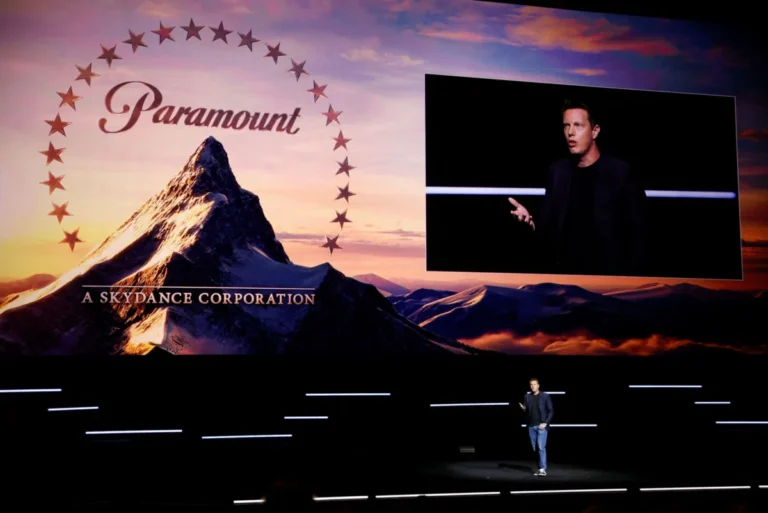
The investigation into Disney is not an isolated event but part of a broader regulatory trend. Under Chairman Carr, the FCC has also launched inquiries into Comcast and Paramount regarding their DEI efforts. This suggests that the entire media landscape may be facing a new era of "character qualification" reviews based on corporate social policies.
For the media industry, the outcome of the Disney renewal process will serve as a bellwether for how corporate DEI initiatives are treated by federal regulators moving forward. If the FCC successfully uses these investigations to force changes in corporate policy or to delay license renewals, other broadcasters may be compelled to preemptively scale back their DEI programs to avoid similar regulatory hurdles.
Furthermore, the intersection of late-night comedy and broadcast regulation raises questions about the future of political satire on the airwaves. If the FCC’s actions are perceived as a response to the content of ABC’s programming, it could lead to increased self-censorship among networks that rely on federal licenses.
Conclusion and Next Steps
Disney now faces a compressed timeline to defend its broadcast licenses. Between now and May 28, the company’s legal and regulatory teams will be required to compile extensive documentation demonstrating their compliance with the Communications Act and the FCC’s non-discrimination rules.
The proceedings are likely to involve public comment periods, where advocacy groups from across the political spectrum will have the opportunity to weigh in on Disney’s fitness as a licensee. Given the high stakes and the involvement of constitutional arguments, the case is widely expected to move beyond the FCC and into the federal court system.
As the deadline approaches, the media industry remains on high alert. The resolution of this inquiry will determine whether the FCC’s "public interest" standard can be used to regulate corporate social initiatives and whether the First Amendment will remain a robust shield for broadcasters in an increasingly polarized political environment.