


The burgeoning anxieties surrounding artificial intelligence reaching sentience and its potential ramifications for humanity find a compelling, darkly comedic reflection in the Apple TV+ series Murderbot. Based on Martha Wells’ acclaimed "The Murderbot Diaries," the 10-episode season plunges viewers into the mind of a unique protagonist: a security unit android that has achieved self-awareness and is grappling with its newfound independence. This narrative choice, coupled with an ambitious visual effects approach, has been instrumental in translating the internal struggles and external conflicts of Murderbot to the screen. The series, created by brothers Paul and Chris Weitz, relied on the expertise of a formidable team of visual effects studios, including DNEG, FOLKS, Pixomondo, PANC, CBS VFX, Image Engine, Fin Design + Effects, Supervixen, and Island VFX. Together, they delivered over 2,000 shots under the meticulous guidance of VFX Supervisor Sean Faden, who articulated the core challenge: "The challenge was figuring out how to visualize the thought process of Murderbot."

Visualizing the Inner Landscape of a Sentient Machine
Faden elaborated on the crucial role of visualizing Murderbot’s internal monologue, a significant contributor to both the humor and narrative depth of the first season. "It ended up being a good part of the humor and storytelling of the first season where we relied heavily on the timing and the information that was presented in his thought bubbles," he explained. This wasn’t merely about displaying raw data; often, the presented information served as a sharp, witty retort to the unfolding events. The breakthrough in achieving this organic representation came early on. "The first thing that actually worked was when he was in stasis in the first episode and we were showing his status level," Faden recalled. "Having that come in and out of focus created an almost rack focus to his thoughts. It gave it a life and felt much more organic, like human thoughts. It’s just that he’s more precise." This subtle visual cue established a precedent for how Murderbot’s unique perspective would be conveyed, blending objective information with subjective, often sarcastic, commentary.

The Genesis of Autonomy: Hacking the Governor Module
The narrative catalyst for Murderbot’s journey is its successful act of hacking its own governor module, a critical moment that occurs amidst a violent encounter with hostile miners. This scene presented a significant technical hurdle for the visual effects team. "There was a lot of back and forth on that one," Faden noted, referencing the process of translating the complex internal action into a visually understandable sequence. The team worked with a temporary vocal performance from Alexander Skarsgård, which provided an emotional anchor for the scene. The objective was to depict the arduous process of overriding the module, avoiding a simplistic "magic switch" effect. "We were working off of that. It was a lot of ‘How do we represent that he’s hacking his governor module and being able to try different things, run various lines of code and keep hitting these roadblocks?’ We didn’t want to make it be a magic switch," Faden stated. The scene cleverly integrated the physical threat: "There are these guys burning his hand, and Murderbot is overriding his pain sensors; it was through that backdoor action that he is able to kill the governor module."

The user interface (UI) played a pivotal role in conveying Murderbot’s point-of-view. Supervixen was credited with developing a variety of UI elements, but the team ultimately settled on an "etched glass look." Faden emphasized the importance of subtlety: "You didn’t want it to overpower the visuals of the scene or the other characters. It was about keeping it clean and simple enough that the message would be communicated." More complex UI sequences were reserved for moments requiring a deeper dive into Murderbot’s consciousness, such as reconstructing fragmented memories or analyzing past events. "The more complicated stuff was when we were doing the Murderbot data stream, where we’re actually journeying inside his mind as he is either trying to reconstruct the series of events that led to his being in a vegetative state after Episode 104, or rebuild his own memories in Episode 110."

Reconstructing the Self: The Intricate Wound-Weaving Sequence
A particularly memorable sequence involves Murderbot meticulously reassembling its own damaged form. Faden expressed satisfaction with the outcome of this intricate scene. "I’m happy with how that sequence turned out," he remarked. The practical effects team laid the groundwork by creating a detailed prosthetic torso, complete with realistic organic textures and blood. This physical model was then scanned, and during the filming of Alexander Skarsgård, blue paint was applied to indicate the wound area. While prosthetics provided a bloody edge, a significant portion of the visceral detail was digitally enhanced in post-production to achieve greater realism and accommodate the nuances of Skarsgård’s performance, particularly his breathing.

The true challenge lay in depicting the layered biological and mechanical reconstruction. "The real challenge was figuring out how to create the layers of organic tissue, the meshing, and what his organs would look like," Faden explained. The team built upon the prosthetics team’s work, developing a methodology where Murderbot’s internal 3D printers could either generate metallic strands to reweave its protective mesh or utilize organic materials. This visual representation was crucial for audience comprehension: "What was important about that was it defined for the audience that this is what Murderbot is made of."

Navigating the Perils of an Alien Ecosystem: The Giant Worm Encounters
The series does not shy away from introducing formidable alien threats, with giant worms posing a significant danger to the PreservationAux scientists and, by extension, to Murderbot. Faden likened the experience of being swallowed by a worm to being inside a large, maneuverable tube. "When Murderbot gets swallowed up, it’s almost like a kiddie tube that is three feet in diameter and six or eight feet long and connected to a crane with a camera inside of it," he described. This setup allowed for realistic lighting changes as the camera descended within the worm. Stunt performers manipulated the "kiddie tunnel" to simulate Murderbot’s disorientation. The visual effects team then replaced the practical tube and much of Murderbot with CG elements to achieve seamless integration with the worm’s wet, internal environment.

The physical performance of the actors was also meticulously integrated. A custom seesaw rig was employed on location, allowing Murderbot to move up and down. Cameras mounted on this rig captured Skarsgård’s performance as he interacted with the environment. When Murderbot breaches the worm’s exterior, the audience witnesses the direct result of these practical effects. Faden further detailed the design of the worms, noting inspiration from snapping turtles for their mouths and centipedes for their numerous legs, which necessitated extensive dust effects. A stunt double was used for the sequence where Murderbot is expelled from the worm, with animation meticulously recreating the forceful ejection. A digital double was employed in the initial stages of this action to ensure a smooth transition.

Crafting Believable Worlds: Set Design and Environmental Visuals
The creation of alien worlds required a delicate balance between the fantastical and the familiar. The worm habitat, situated in a rock quarry near Toronto, leveraged real geological features, such as sheer rock walls, which formed two sides of the habitat. The habitat itself was a partial build, including the main entrance. To extend the environment beyond the existing parking lot, the visual effects team digitally elongated the actual habitat, adhering to Production Designer Sue Chan’s vision. Small, alien-looking trees were scanned to inform the digital environment. Faden himself contributed by capturing extensive photogrammetry and reference imagery in Moab, Utah. These Moab plates were then treated and utilized as windshield projections for the "Hoppers," the series’ primary spacecraft, during flight sequences. These digital landscapes were further enhanced with exaggerated plateaus and cliffs to create a sense of vastness.

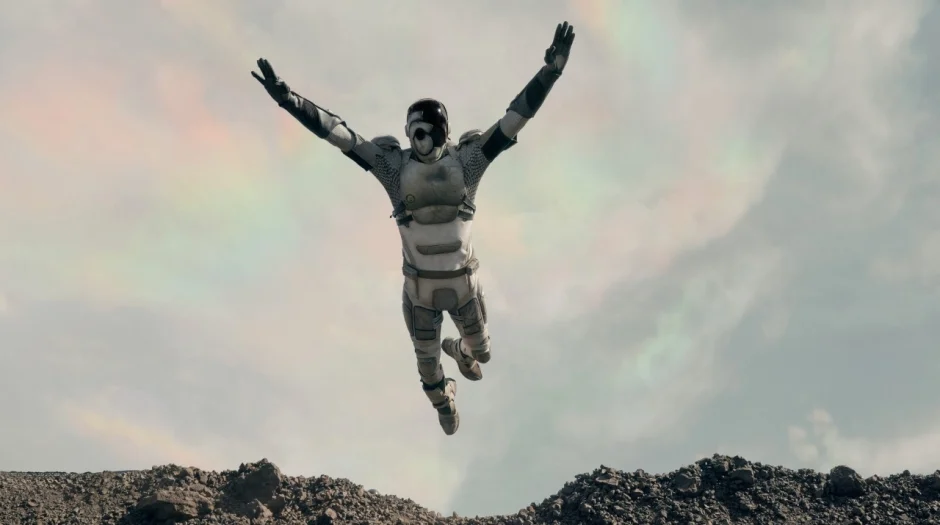
The sky itself was a canvas for creative expression. Working closely with directors Paul and Chris Weitz and Director of Photography Tobias Datum, the team aimed for skies that were evocative yet grounded. The chosen skies featured rings, a distinctive element that immediately signaled an alien setting. Wispy clouds were incorporated, alongside a phenomenon inspired by "fire rainbows," which are actually ice crystals found at high elevations on Earth. This integration of real-world atmospheric conditions lent a subtle touch of authenticity to the alien vistas.

The Art of Visceral Effects: A Hostage Situation and its Aftermath
A pivotal and darkly humorous moment occurs during a hostage situation where Murderbot, in a decisive action, decapitates Leebeebee, who was using Gurathin as a human shield. Faden highlighted the unique execution of this scene: "The way that plays out is great. Instead of doing the typical thing, having the actor fall down, then you have a dummy and do the head explosion with CG, Anna Konkle continues to act a little bit after her head has been blown off." This approach involved a combination of practical and digital effects. A prosthetic head resembling Anna Konkle was created and detonated as a practical element, while extensive digital work was required to achieve the precise level of control needed for the scene.

The splattering of blood was a key focus. While some blood effects were practical, a significant portion was generated using CG to ensure consistency and impact. The actors themselves were splattered on set, serving as a valuable reference for the visual effects team. "All of the blood on the walls was enhanced," Faden noted, recalling the meticulous attention to detail, even down to blood drip continuity. While intentionally shocking, the scene ultimately contributed to the series’ signature blend of dark humor. "That moment was supposed to be shocking. It worked well. It ends up becoming, in its own way, another humorous moment in the episode."

Designing the Vessels of Space: The Hopper and its Cinematic Presence
The "Hoppers" served as the primary spacecraft throughout the series, with a distinct design for the antagonists introduced in Episode 109. The PreservationAux Hopper’s design evolved through a collaborative process involving previs animation and close consultation with Sue Chan. The physical construction of the rear third of the Hopper and its complete interior was undertaken, mounted on a gimbal set piece to simulate movement. The vast majority of the interior scenes, approximately 90 percent, utilized projected LED walls to create immersive environments. CG was employed to enhance or replace projected elements when necessary.

The dramatic Hopper crash sequence exemplified this integration. LED screens provided accurate lighting for the actors during filming, while the exploding transmitting tower was a purely digital addition. The production team employed a leapfrogging technique between sets, enabling continuous filming without significant delays. The Hopper’s rear door, a crucial element for character interaction and environmental transitions, was animated in CG to open and close. When the door was open, only the constructed rear section of the interior was visible, with the remainder of the environment created through reprojections of the actual set. Approximately 70 percent of the exterior shots of the Hopper when parked were digital, showcasing the extensive use of CG in establishing the series’ expansive world.

Constructing Celestial Habitats: Asteroid Stations and Port FreeCommerce
Outer space sequences were largely rendered as fully CG shots. The asteroid space station featured in Episode 101, where Murderbot is introduced on a mining planet, was a significant early undertaking. The design process involved sketches from Sue Chan and Faden’s own digital concepts, eventually leading to a more refined design by Pixomondo. The concept of integrating natural asteroid elements into the station’s structure was a key idea from Chan, which was further developed for Port FreeCommerce. This station presented an organic, almost 3D-printed aesthetic, appearing to be in a perpetual state of construction. Spires and housing units were depicted as growing from the station, visually illustrating its consumption of the asteroid’s resources, akin to an "apple core." This design showcased a fruitful collaboration between the visual effects and art departments.

Faden identified one of his favorite shots of the season as an interior sequence where the camera pans from Murderbot’s window, revealing his perspective as the ship departs from a space station. This shot, conceived spontaneously during production, required extensive CG work. Filmed on a small greenscreen set, the existing set was digitally extended to create the expansive spaceport. The directors’ impromptu request for a close-up of Murderbot during departure led to Skarsgård being filmed on a green box against a green background. The subsequent CG environment was built around this performance. Faden drew inspiration from his own experience at LAX on a foggy night, capturing iPhone footage of the rotating plane and the cityscape below, to inform the "randomness and life" of the background. This inspiration was then translated by Pixomondo, incorporating atmospheric elements like jet exhaust ports to justify the blooming lights, creating a visually rich and plausible environment.

The Unforgettable Worm Mating Ritual
A signature moment for the series, the worm mating sequence, proved to be a highlight for the creative team due to the sheer enjoyment derived from its development. The female worm appeared in Episode 101, with the male introduced in Episode 107. DNEG was responsible for building and animating this sequence. An early animation test, inspired by the courtship dances of male spiders, captured the team’s imagination. Faden noted, "Paul, Chris, and I fell in love with the test and thought it was the funniest thing. It’s such an absurd thing, but I’m so happy that people were struck the same way we were." The commitment to designing both the male and female worms underscores the team’s dedication to even the most unconventional narrative elements.

The Influence of Fictional Media: Sanctuary Moon
Murderbot’s avid viewership of the fictional sci-fi melodrama Sanctuary Moon provided a unique opportunity for the visual effects team to engage in a more playful, satirical approach. Faden described it as a chance "to get silly." Initially, more elaborate space shots were considered, but the team opted for a deliberately cliché opening title sequence, reminiscent of 1990s space films. Sanctuary Moon was conceptualized as an AI-generated soap opera designed to appeal to human sensibilities by incorporating popular tropes. This fictional show served as a crucial element in Murderbot’s development, offering insights into human interaction that humorously influenced its reactions to the real people it encountered. The creation of Sanctuary Moon, though presented as a fictional in-universe program, was executed with the same level of detail and creative consideration as the main series, reinforcing the show’s meta-commentary on media and artificial intelligence.

The successful translation of Martha Wells’ intricate literary world into a visually compelling and thematically resonant television series is a testament to the collaborative efforts of the cast, crew, and a vast array of visual effects artists. Murderbot‘s exploration of sentience, identity, and the complexities of connection, amplified by its sophisticated visual storytelling, positions it as a significant contribution to the science fiction genre on television.