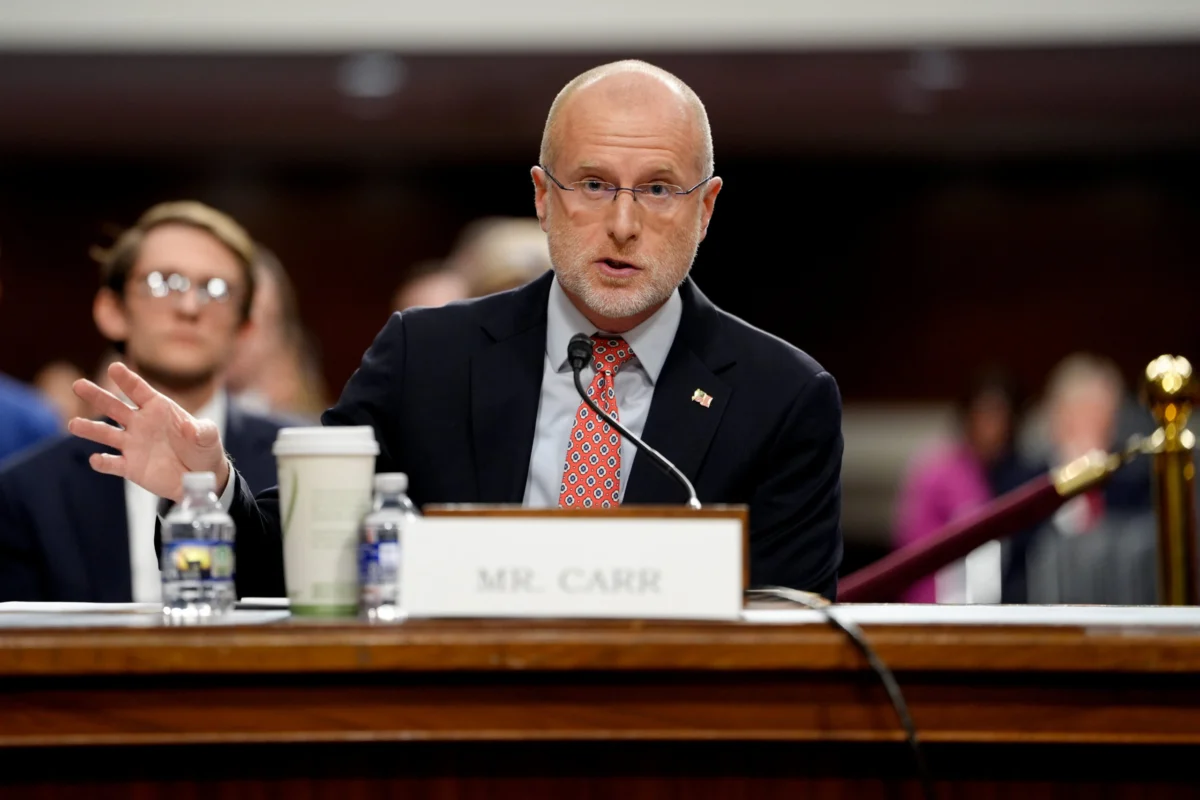
The Federal Communications Commission (FCC) has formally requested an early review of the broadcast station licenses held by The Walt Disney Company, citing ongoing concerns and an active investigation into the company’s diversity, equity, and inclusion (DEI) practices. According to a letter issued Tuesday by FCC Chairman Brendan Carr, the agency has ordered Disney to file for early renewal of its ABC-owned television stations, a move that significantly accelerates a regulatory process that was not scheduled to occur for several years.
The directive mandates that Disney submit its renewal applications within 30 days, establishing a deadline of May 28. This action marks a significant escalation in the regulatory scrutiny facing Disney and its subsidiary, the American Broadcasting Company (ABC). Under normal circumstances, the licenses for the eight ABC-owned stations were slated for renewal on a staggered schedule between 2028 and 2031. By forcing an early review, the FCC is exercising a rarely used administrative lever that places the burden on the broadcaster to prove it remains qualified to hold public airwaves under the standards of the Communications Act.
The Scope of the FCC Order and Affected Stations
The FCC’s order specifically targets eight television stations that are both owned and operated by Disney. These stations represent some of the most influential media markets in the United States, serving millions of viewers across several states. The stations subject to the accelerated review include:
- California: KABC-TV (Los Angeles), KGO-TV (San Francisco), and KFSN-TV (Fresno).
- New York: WABC-TV (New York City).
- Illinois: WLS-TV (Chicago).
- Pennsylvania: WPVI-TV (Philadelphia).
- Texas: KTRK-TV (Houston).
- North Carolina: WTVD-TV (Raleigh-Durham).
While these primary hubs are under review, the FCC clarified that the order does not currently extend to Disney’s affiliate stations, which are owned and operated by third-party entities such as Nexstar Media Group. However, the outcome of the review for the owned-and-operated stations could set a precedent for how the commission evaluates corporate policies across the broader broadcast landscape.
Origins of the Investigation: DEI and Regulatory Compliance
The foundation of this regulatory action dates back to March 2024, when the FCC first launched an inquiry into Disney’s corporate practices. The investigation focuses on potential violations of the Communications Act of 1934 and specific FCC rules that prohibit unlawful discrimination in the operation of broadcast facilities.
Central to the inquiry are Disney’s internal DEI initiatives. Critics and regulatory proponents of the investigation argue that certain corporate mandates regarding hiring and content creation may conflict with federal requirements for non-discriminatory practices. Chairman Carr’s letter indicated that while Disney has provided responses to two prior inquiries from the agency, the commission has deemed those responses insufficient to resolve the underlying concerns, necessitating the "appropriate" step of an early license review.
Under the Communications Act, the FCC is tasked with ensuring that broadcast licensees operate in the "public interest, convenience, and necessity." This standard grants the commission broad, though not unlimited, authority to review the character and conduct of a licensee. Historically, such reviews have focused on technical compliance, local programming requirements, and adherence to indecency rules. The shift toward scrutinizing corporate DEI policies represents a new and contentious frontier in media regulation.
Political Backlash and the Kimmel Monologue Controversy
The FCC’s move arrives at a moment of heightened political tension between Disney and the executive branch. The order for early renewal follows a period of public criticism directed at ABC by President Donald Trump. The latest friction was sparked by a monologue delivered by Jimmy Kimmel on "Jimmy Kimmel Live!", a late-night program airing on the ABC network.
During a recent broadcast, Kimmel made a satirical comment referring to First Lady Melania Trump as an "expectant widow." The remark, made just days before a high-profile event at the White House, drew immediate condemnation from the administration. President Trump has since revived calls for ABC to terminate Kimmel’s employment, characterizing the comedian’s commentary as beyond the bounds of acceptable broadcast discourse.
This is not the first time ABC’s late-night programming has drawn regulatory attention. In September 2025, Kimmel’s show was briefly suspended following controversial remarks regarding conservative activist Charlie Kirk. At that time, Chairman Carr suggested that broadcast licenses could be a mechanism for accountability in response to what he described as a pattern of behavior by the network. While the FCC maintains that the license review is legally rooted in the DEI investigation, the timing of the order has led to accusations from some quarters that the move is politically motivated.
Internal Dissent and Legal Criticism
The decision to force an early license review has not been unanimous within the FCC. Commissioner Anna Gomez, a member of the agency’s five-person leadership team, issued a sharp dissent following the announcement. In a public statement, Gomez characterized the move as "unprecedented, unlawful, and going nowhere."
"This political stunt won’t stick," Gomez stated. "Companies should challenge it head-on. The First Amendment is on their side."
Gomez’s criticism highlights a growing divide within the commission regarding the use of licensing authority to address corporate social policies or political speech. Legal experts have also weighed in, noting that the First Amendment provides significant protection to broadcasters against government retaliation based on the content of their programming.
Jameel Jaffer, Executive Director of the Knight First Amendment Institute at Columbia University, expressed concern over the broader implications of the FCC’s actions. "The FCC has no authority to cancel broadcasters’ licenses because of their perceived political views," Jaffer said. He warned that using regulatory power to consolidate control over media content could be "corrosive to democracy," potentially leading to a landscape where only government-aligned organizations are permitted to operate.
Disney’s Defense and the Path Forward
In response to the FCC’s order, Disney issued a statement defending its record as a broadcaster. The company emphasized its history of compliance and its commitment to the communities served by its stations.
"ABC and its stations have a long record of operating in full compliance with FCC rules and serving their local communities with trusted news, emergency information, and public-interest programming," the company stated. "We are confident that record demonstrates our continued qualifications as licensees under the Communications Act and the First Amendment and are prepared to show that through the appropriate legal channels."
Disney now faces the task of compiling comprehensive renewal applications for all eight stations by the May 28 deadline. These applications typically require detailed reports on community issues and programs, children’s television programming, and equal employment opportunity (EEO) records. Given the specific focus of the FCC’s investigation, Disney will likely be required to provide granular data on its DEI-related hiring practices and how those practices align with federal non-discrimination statutes.
Broader Industry Implications: Comcast and Paramount
Disney is not the only media conglomerate under the FCC’s microscope. Under the leadership of Chairman Carr, who was appointed by President Trump, the agency has initiated similar inquiries into other major broadcasters.
Last year, the FCC began investigations into Comcast, the parent company of NBCUniversal, and Paramount (prior to its merger with Skydance). Like the Disney inquiry, these investigations are focused on DEI efforts and whether they infringe upon federal regulations. The systemic nature of these reviews suggests a broader regulatory shift toward a more interventionist approach regarding the internal social and administrative policies of major media entities.
For the media industry, the outcome of the Disney license review will be a bellwether. If the FCC successfully uses DEI concerns as a basis for challenging or conditioning a license renewal, it could redefine the relationship between the federal government and private media companies. Conversely, if Disney successfully challenges the order in court, it may reinforce the First Amendment barriers that prevent the government from using the licensing process as a tool for corporate or political influence.
Chronology of Key Events
- March 2024: The FCC officially begins an investigation into Disney’s ABC-owned stations regarding DEI policies and compliance with the Communications Act.
- September 2025: Jimmy Kimmel is temporarily suspended following remarks about Charlie Kirk; Chairman Carr mentions license revocation as a potential regulatory response.
- February 2026: Similar investigations are launched into Comcast and NBCUniversal.
- April 2026: President Trump criticizes ABC following Jimmy Kimmel’s monologue regarding the First Lady.
- May 2026 (Early): FCC Chairman Brendan Carr issues a letter ordering Disney to file for early license renewal for eight stations by May 28.
- May 28, 2026: Deadline for Disney to submit its accelerated renewal applications.
As the May 28 deadline approaches, legal observers expect Disney to comply with the filing requirement while simultaneously preparing for a protracted legal battle should the FCC move to deny or place conditions on the renewals. The case stands at the intersection of media law, corporate governance, and constitutional rights, with the potential to reshape the American broadcasting landscape for decades to come.