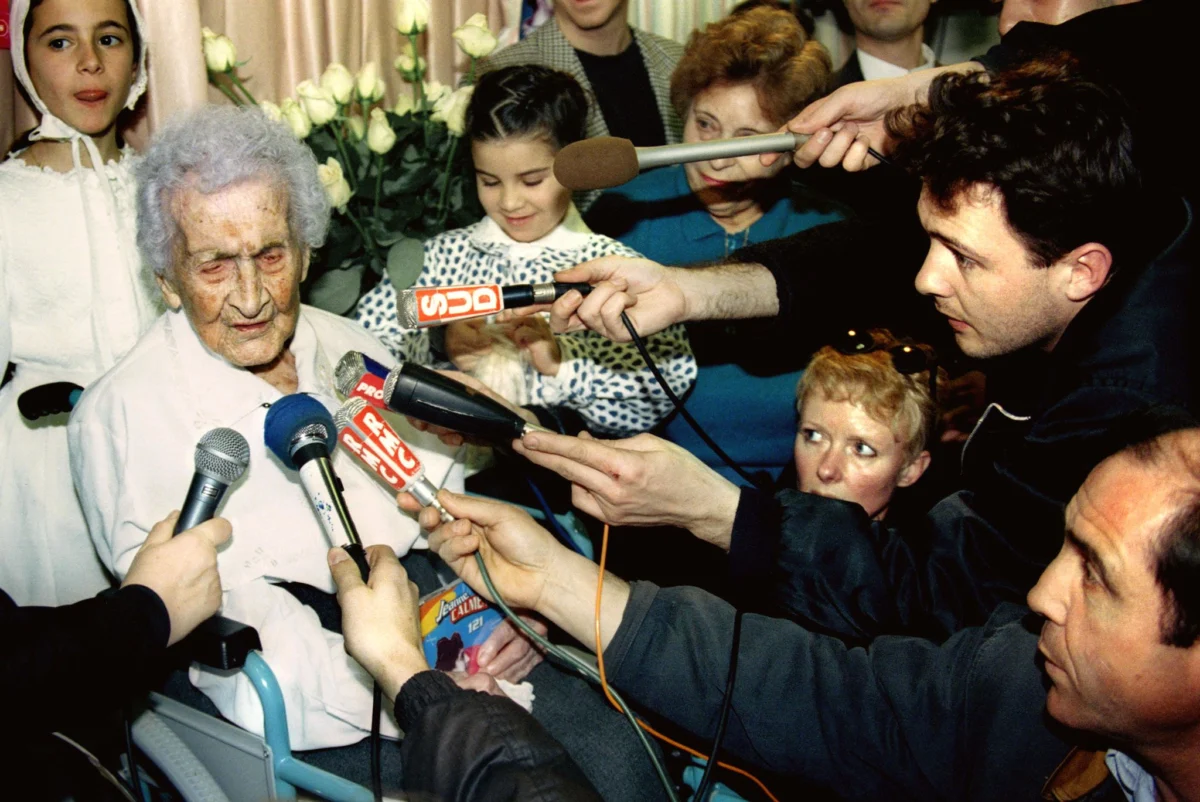
The intersection of cinematic art, scientific inquiry, and the historical weight of human mortality will converge this summer as WIRED announces its second installment of the WIRED@NIGHT event series. On Thursday, July 23, the publication will host an exclusive preview screening of the documentary The Oldest Person in the World, a film that explores the limits of human lifespan and the profound nature of existence. Directed by Academy Award nominee Sam Green, the documentary is scheduled for a wide theatrical release in September, making this Brooklyn-based event a rare opportunity for audiences to engage with the material ahead of its global debut. The choice of venue—the historic Green-Wood Cemetery—serves as a poignant backdrop for a film that grapples with the passage of time and the inevitability of the human lifecycle.
The Oldest Person in the World represents a decade-long cinematic undertaking. Sam Green, known for his innovative approach to the documentary form, spent ten years tracking the individuals who held the title of the world’s oldest living person. Because the title is, by definition, ephemeral, the film functions as a living record of a shifting demographic. What began as a journalistic chronicle of supercentenarians—those who have reached the age of 110 or older—evolved into a philosophical meditation. The narrative moves beyond the mere statistics of longevity to examine the randomness of fate and the resilience of the human spirit.
The Cinematic Journey of Sam Green
Sam Green’s filmography has often centered on themes of time, memory, and the human condition. His 2002 documentary, The Weather Underground, earned him an Academy Award nomination and established his reputation for handling complex historical narratives with nuance. In recent years, Green has pioneered the "live documentary" format, where he narrates films in person accompanied by live musical scores. The Oldest Person in the World continues this tradition of deep immersion.
By following various record-holders across the globe, Green captures a unique paradox: the individuals who have lived the longest are often the ones most aware of the fleeting nature of the present. The film documents the transition of the title from one individual to the next, often within months or weeks, highlighting the fragility of life even among those who seem most resistant to its end. The production’s ten-year timeline allowed Green to witness multiple "reigns" of the world’s oldest person, providing a perspective on aging that few other filmmakers have attempted.
The Significance of Green-Wood Cemetery
The selection of Green-Wood Cemetery as the screening venue is a deliberate thematic choice. Founded in 1838, Green-Wood was one of the first rural cemeteries in America and quickly became a prestigious place of rest for New York’s elite. Spanning 478 acres, it is a National Historic Landmark that houses the remains of over 570,000 people, including Jean-Michel Basquiat, Leonard Bernstein, and Horace Greeley.
Hosting a film about the world’s oldest living people in a place dedicated to those who have passed creates a striking juxtaposition. It invites the audience to consider the continuum of life and death while surrounded by the architectural and natural beauty of one of Brooklyn’s most storied locations. The event is co-presented with Rooftop Films, an organization dedicated to bringing underground and independent cinema to unique outdoor locations across New York City. The 7:45 pm start time ensures that the film will be viewed as dusk settles over the cemetery’s hills, enhancing the atmosphere of reflection.
Longevity and the Science of Super Agers
Following the screening, the event will transition into a discussion between director Sam Green and WIRED features director Reyhan Harmanci. The conversation will delve into the scientific and cultural obsession with longevity—a topic that has become a cornerstone of modern technological and biological research. The term "super agers" refers to individuals whose cognitive and physical abilities remain significantly higher than the average for their age group.
Current scientific data suggests that while genetics play a role in reaching extreme old age, environmental factors and lifestyle choices are equally critical. According to the Gerontology Research Group (GRG), which tracks supercentenarians, there are rarely more than a few dozen verified individuals over the age of 110 alive at any given time. The quest to understand their biology has led to massive investments in the "longevity economy." Companies like Altos Labs and Calico (a subsidiary of Alphabet) are currently spending billions of dollars to decode the aging process, with the goal of extending the "healthspan"—the period of life spent in good health—rather than just the lifespan.
The discussion between Green and Harmanci is expected to touch upon the ethical implications of this pursuit. As technology brings us closer to potentially "curing" aging, the documentary asks a more fundamental question: Is the goal to live for a long time, or to live for a good time? This tension between quantity and quality of life is a recurring theme in the film and a point of intense debate in the scientific community.
Chronology of the Global Quest for Long Life
The history of tracking the world’s oldest person is a relatively modern phenomenon, aided by the standardization of birth records in the late 19th century. The film highlights the rigor required to verify these claims.
- Late 1800s: Governments began implementing systematic birth registration, allowing for the future verification of centenarians.
- 1990s: Jeanne Calment of France gained international fame, living to the verified age of 122 years and 164 days, a record that remains unbroken.
- 2010s: Sam Green begins his decade-long journey, filming supercentenarians in Japan, Europe, and the United States.
- 2020-Present: The COVID-19 pandemic significantly impacted the global population of the elderly, bringing new urgency to the study of immune resilience in super agers.
The film’s timeline mirrors these developments, showing how the "list" of the oldest people is not just a collection of names, but a reflection of global health trends and historical survival.
Supporting Data on Aging and Demographics
The context of the film is supported by a rapidly aging global population. According to the United Nations, the number of people aged 80 years or over is projected to triple by 2050, reaching 426 million. In the United States, the 100-plus demographic is one of the fastest-growing age groups.
- Centenarians: There were approximately 593,000 centenarians worldwide in 2021.
- Supercentenarians: The odds of a centenarian reaching 110 are roughly 1 in 1,000.
- Gender Gap: Roughly 90% of supercentenarians are women, a biological discrepancy that remains a subject of intense scientific study.
These statistics provide a factual foundation for the emotional narratives presented in Green’s documentary. The film does not merely treat these individuals as curiosities; it uses their lives as a lens through which to view the broader human experience of time.
Event Logistics and Participation
The WIRED@NIGHT event is designed to be accessible to the publication’s community while offering exclusive benefits to subscribers. General admission for the event is priced at $22, but WIRED readers can access tickets for $12 using the discount code "WIRED." Subscribers receive first access to ticket sales and the maximum discount, reflecting the publication’s move toward fostering a more engaged, live-event-driven community.
Attendees are encouraged to arrive by 7:45 pm to secure seating within the cemetery grounds. The collaboration with Rooftop Films ensures high-quality projection and sound, transforming the historic site into a state-of-the-art outdoor theater. For those unable to attend the Brooklyn event, the film’s September theatrical release will provide a broader opportunity to engage with Green’s work.
Broader Implications and Fact-Based Analysis
The screening of The Oldest Person in the World comes at a time when society is reassessing its relationship with aging. In a culture often criticized for its "youth-obsessed" nature, Green’s film offers a counter-narrative that finds beauty and wisdom in extreme old age. However, the film also implicitly addresses the "longevity gap"—the reality that extreme lifespan is often a privilege tied to socioeconomic stability, access to healthcare, and environmental safety.
The partnership between WIRED and Sam Green underscores the publication’s commitment to exploring the "human" side of technology and science. While WIRED often covers the hardware of longevity—CRISPR, senolytic drugs, and AI-driven drug discovery—this event focuses on the "software": the memories, the grief, and the joy that accumulate over a century of living.
By analyzing the lives of those who have survived the longest, the film suggests that longevity is not merely a biological achievement but a psychological one. The "super agers" featured in the documentary often share traits of optimism, social connectivity, and a sense of purpose—factors that researchers now believe are as vital as physical health.
The July 23 event at Green-Wood Cemetery stands as a significant cultural moment for Brooklyn and the wider documentary film community. It serves as an invitation to slow down and consider the profound reality of our own mortality, viewed through the lives of those who have seen more of history than anyone else on Earth. As the second WIRED@NIGHT event, it sets a high bar for the series, blending high-level editorial themes with immersive, real-world experiences.