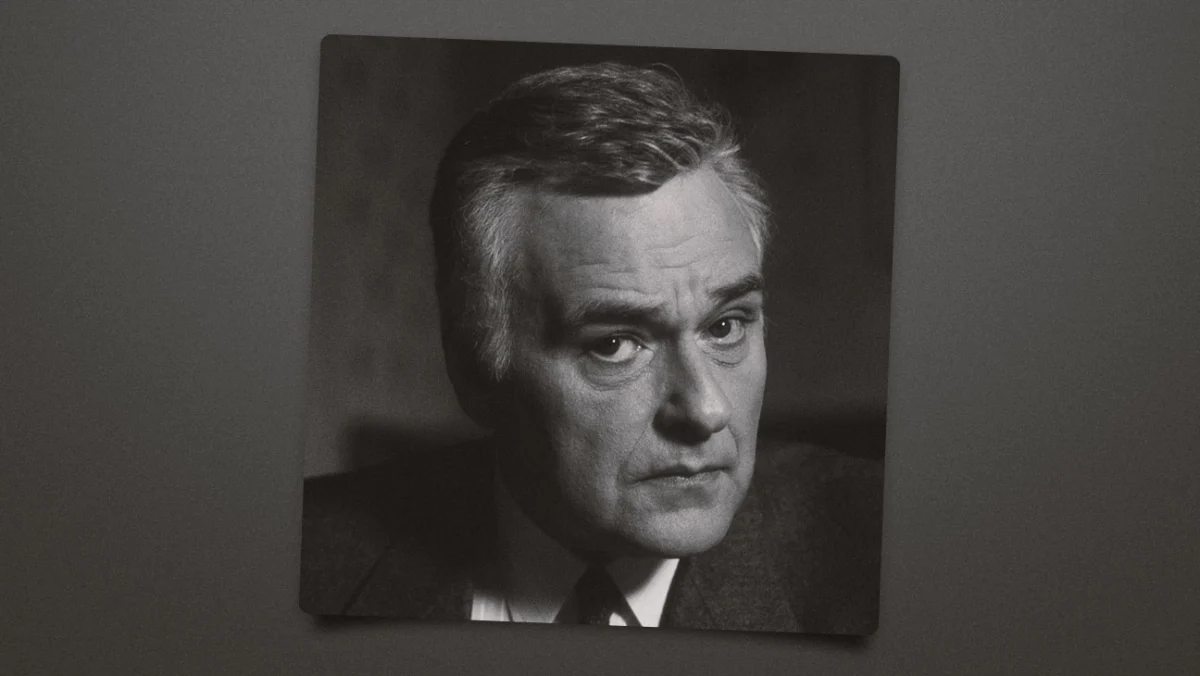
Charles Cioffi, the prolific and distinguished character actor whose commanding presence brought gravitas to an extensive array of roles across film, television, and stage, notably portraying memorable police officers, shrewd criminals, and authoritative figures in productions such as Klute, Shaft, Get Christie Love!, and The X-Files, passed away peacefully on Friday at his residence in Marina del Rey, California. He was 90 years old. His family announced his passing, marking the end of a remarkable career spanning over five decades, characterized by versatility, intensity, and an unwavering commitment to his craft. Cioffi’s ability to embody both the righteous enforcer and the shadowy antagonist made him a familiar and respected face to generations of audiences, leaving an indelible mark on some of the most iconic works of American cinema and television.
Early Life and Education
Born Charles Michael Cioffi in the vibrant borough of New York City on October 31, 1935, his early life was steeped in the rich cultural tapestry of the metropolis that would later serve as the backdrop for many of his most celebrated roles. Details of his formative years, while not extensively publicized, undoubtedly contributed to the grounded realism and urban grit he often brought to his characters. Following his high school education, Cioffi pursued higher learning at Michigan State University, an institution known for its strong arts programs. While the specifics of his studies there are not fully detailed, this period likely served as a foundational experience, honing his intellectual curiosity and refining his initial interest in performance.
His formal entry into professional acting began at the esteemed Guthrie Theater in Minneapolis, Minnesota. The Guthrie, founded by Sir Tyrone Guthrie in 1963, quickly established itself as a premier regional theater known for its classical repertoire and commitment to actor training. It was within this rigorous environment that Cioffi sharpened his stagecraft, developing the robust vocal projection, precise movement, and profound emotional range that would define his later work. This early immersion in classical theater provided him with a solid dramatic foundation, differentiating him from many contemporaries who might have begun their careers solely in film or television. His professional debut at such a prestigious institution underscored his serious approach to acting and his dedication to mastering the complexities of dramatic performance.
A Distinguished Broadway Career
Cioffi’s theatrical prowess soon brought him to the pinnacle of American stage acting: Broadway. His debut on the Great White Way came in 1968, a pivotal year for American theater and society, when he joined the Repertory Theatre of Lincoln Center’s production of William Shakespeare’s King Lear. This was a significant achievement for any actor, as performing Shakespeare on Broadway requires immense skill and presence. While the specific role he played in King Lear is not detailed, participating in such a major classical production further cemented his reputation as a serious dramatic actor.
However, it was his subsequent role as John Hancock in the groundbreaking musical 1776 that truly distinguished his Broadway career. The musical, which premiered in 1969 and ran until 1972, offered a unique and engaging historical account of the signing of the Declaration of Independence. Cioffi’s portrayal of John Hancock, the Massachusetts statesman and president of the Second Continental Congress, was central to the production. Hancock, known for his distinctive signature and his unwavering commitment to American independence, required an actor who could convey authority, conviction, and a touch of the flamboyant. Cioffi, with his commanding stage presence and resonant voice, was ideally suited to bring this historical figure to life. 1776 was a critical and commercial success, earning the Tony Award for Best Musical in 1969 and running for an impressive 1,217 performances. Cioffi’s participation in such a landmark production demonstrated his versatility, as he transitioned seamlessly from Shakespearean tragedy to historical musical theater. Over his career, he would appear seven times on Broadway, each role contributing to his formidable reputation as a versatile and reliable stage actor. His work on Broadway not only honed his skills but also provided him with the gravitas and experience that would prove invaluable as he transitioned more fully into film and television.
Breakthrough in Film: The Early 1970s
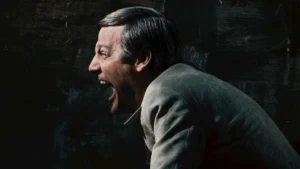
The year 1971 proved to be a watershed moment for Charles Cioffi, as he made indelible impressions in two seminal films that would define the era’s cinematic landscape: Alan J. Pakula’s neo-noir thriller Klute and Gordon Parks’ groundbreaking blaxploitation classic Shaft. In Klute, Cioffi delivered a chilling performance as the unnamed killer stalking call girl Bree Daniels, masterfully portrayed by Jane Fonda in an Academy Award-winning role. The film, a tense and atmospheric exploration of paranoia and identity, saw Cioffi embody the sinister, lurking threat that permeated Daniels’ world. His portrayal was understated yet profoundly unsettling, a testament to his ability to convey menace without resorting to overt villainy. Klute was celebrated for its psychological depth, its innovative cinematography, and its reflection of the societal anxieties of the early 1970s. Cioffi’s contribution was crucial to establishing the film’s pervasive sense of dread, making his character a pivotal element in the narrative’s suspense. The film remains a benchmark in the thriller genre, and Cioffi’s performance is often cited as a key component of its enduring power.
Simultaneously, Cioffi appeared in Shaft, a film that would revolutionize the depiction of African Americans in cinema and become a cultural phenomenon. In this iconic picture, he played Lieutenant Vic Androzzi, a cynical but ultimately pragmatic New York City police detective who finds himself reluctantly collaborating with Richard Roundtree’s suave and formidable private investigator, John Shaft. The dynamic between Cioffi’s hardened cop and Roundtree’s cool, independent detective was central to the film’s narrative tension and its commentary on race and authority in urban America. Androzzi represented the established, often flawed, institutional power structure, forced to navigate a world that was rapidly changing. Cioffi’s performance lent credibility to the character, portraying him not as a cartoonish villain, but as a man grappling with the complexities of his profession in a challenging environment. Shaft, directed by the pioneering Gordon Parks, was a massive box office success and spawned a franchise, cementing its place in cinematic history. Cioffi’s dual roles in Klute and Shaft within the same year showcased his remarkable range, establishing him as a compelling presence capable of shifting effortlessly between nuanced villainy and conflicted authority figures. These roles not only launched his film career into prominence but also set the stage for his subsequent casting in similar parts.
The Tough Guy Persona: Cops and Crooks
Following his impactful year in 1971, Charles Cioffi solidified his reputation as an actor capable of embodying complex figures on both sides of the law. His inherent gravitas and stern demeanor made him a natural fit for roles demanding authority, suspicion, or a hint of danger, leading to frequent casting as police officers, detectives, and, conversely, various shades of criminals and gangsters. This "tough guy" persona became a significant aspect of his screen identity, allowing him to explore the moral ambiguities inherent in such characters.
The mid-1970s saw Cioffi dive deeper into the crime genre, particularly in a series of gangster films that reflected the era’s fascination with organized crime. He appeared in Lucky Luciano (1973), a biographical crime drama about the infamous mob boss; The Don Is Dead (1973), another entry into the Mafia narrative; and Crazy Joe (1974), based on the life of mobster Joey Gallo. In these films, Cioffi was often cast in supporting roles that added authenticity and weight to the gritty, often violent, narratives. His presence in these productions helped to anchor them in a sense of realism, portraying characters who understood the brutal dynamics of power and loyalty within the criminal underworld. He brought a sense of world-weariness and cunning to these roles, making his characters believable components of the shadowy criminal landscape.
On the flip side of the law, Cioffi made a significant impact on television as Lieutenant Matt Reardon in the 1974-75 ABC cop show Get Christie Love!. This series was groundbreaking for its time, starring Teresa Graves as one of the first African American women to lead a network drama. Cio