



The leadership at Remedy Entertainment has signaled a significant shift in corporate strategy, as newly appointed CEO Jean-Charles Gaudechon acknowledges that while the studio’s flagship titles have garnered immense critical acclaim, they have yet to reach their full commercial potential. Gaudechon, who took the helm of the Finnish developer in February 2024, believes that the studio’s future hinges on a "transmedia" approach—utilizing film and television adaptations to propel its narrative-heavy intellectual properties (IPs) toward a broader global audience. This strategy aims to bridge the gap between the studio’s reputation as a premier "auteur" of the gaming industry and the actual sales figures of its most prominent releases, specifically the Alan Wake and Control franchises.
The Commercial Paradox: Critical Acclaim vs. Market Penetration
Remedy Entertainment has long occupied a unique niche in the video game industry. Known for blending surrealist storytelling, high-fidelity graphics via their proprietary Northlight engine, and innovative gameplay mechanics, the studio has built a cult-like following. However, the commercial reality has often been more complex than the reviews would suggest.

Gaudechon, a veteran executive formerly of Electronic Arts (EA) where he managed high-profile sports titles like FIFA, noted that titles such as Control and Alan Wake "should have sold more." Despite Control winning over 80 "Game of the Year" awards following its 2019 debut, it took several years to reach the 4 million unit milestone, eventually climbing to 6 million by mid-2024. Similarly, Alan Wake 2, which launched in October 2023 to near-universal praise, was identified as the company’s fastest-selling game to date, moving 1.3 million units in its first four months. Yet, despite this momentum, the game did not turn a profit for Remedy until 2025, over a year after its initial release.
This lag in profitability highlights the increasing cost of AAA game development and the challenges faced by single-player, narrative-driven experiences in a market often dominated by live-service models. Gaudechon’s mission is not to alter the creative "DNA" of the 30-year-old studio, but to "fix" the disconnect between artistic quality and financial return.
The Annapurna Partnership and the Transmedia Blueprint
A pivotal component of Remedy’s new growth strategy is a landmark deal signed with Annapurna Pictures. Under the terms of this agreement, Annapurna will finance 50% of the production costs for the upcoming Control 2. In exchange, Annapurna has secured the rights to adapt both the Control and Alan Wake franchises for film and television.

This move follows a successful industry-wide trend where high-quality adaptations serve as massive marketing engines for their source material. Gaudechon pointed toward recent successes in the industry as proof of concept. For instance, the debut of the Fallout television series on Amazon Prime Video led to a massive resurgence in player counts for the decade-old Fallout 4 and Fallout 76, with the former briefly becoming the best-selling game in Europe nearly ten years after its launch. Similarly, Nintendo saw a significant spike in software sales for Mario-related titles following the billion-dollar success of The Super Mario Bros. Movie.
By expanding into cross-media, Remedy aims to reach "an audience that doesn’t exist today" for their games. The goal is to transform the "Remedy Connected Universe"—a shared narrative world where the events of Alan Wake and Control intersect—into a recognizable household brand similar to the Marvel Cinematic Universe or the Witcher franchise.
A Chronology of Remedy’s Evolution (1995–2026)
To understand the weight of Gaudechon’s current mandate, one must look at the studio’s three-decade trajectory:

- 1995–2001: The Foundation and Max Payne. Founded in Espoo, Finland, Remedy gained international fame with the release of Max Payne. The game introduced "Bullet Time" to the medium and established the studio’s signature noir-inflected storytelling.
- 2010: The Cult Classic. After a long development cycle, Alan Wake was released as an Xbox 360 exclusive. While initially struggling against heavy competition, it eventually became a beloved cult classic, laying the groundwork for the studio’s future psychological thrillers.
- 2019: The New Era of Control. Control represented a shift toward more experimental, "new weird" fiction. It was the first major step in establishing the Remedy Connected Universe (RCU).
- 2023: Alan Wake 2. A technical powerhouse and a bold foray into survival horror, the sequel solidified Remedy’s standing as a top-tier developer but underscored the financial pressures of modern game production.
- 2024: Leadership Change and Annapurna Deal. Jean-Charles Gaudechon is appointed CEO. The partnership with Annapurna is finalized to secure the future of the Control franchise.
- 2025: Reaching Break-Even. Remedy announces that Alan Wake 2 has finally reached profitability, signaling a slow but steady return on investment for their most ambitious project.
- 2026 (Projected): Control Resonant. The next major entry in the Control series is slated for release, shifting the focus to a new protagonist and expanding the RCU lore.
Institutional Challenges and the Live-Service Experiment
While the studio’s narrative games have struggled to find mass-market volume, their attempts to diversify into the multiplayer space have met with internal and external friction. FBC: Firebreak, a multiplayer spin-off set in the Control universe, was designed to provide a steady revenue stream through ongoing support. However, the project failed to gain the necessary traction in a crowded multiplayer market.
In March 2024, Remedy announced the cessation of new content updates for FBC: Firebreak following its "Open House" update. This setback reinforced Gaudechon’s belief that the studio should focus on maximizing its existing "authored" IPs rather than stretching resources too thin on products that do not align with their core strengths. The studio is currently pivoting back to its roots with the "full production" phase of Max Payne 1 and 2 Remakes, a collaborative effort with original publisher Rockstar Games.
Industry and Fan Reactions: "Don’t Fuck It Up"
The appointment of an executive from a "corporate" background like EA initially sparked concern among Remedy’s dedicated fanbase. Gaudechon recounted that upon his announcement, he received numerous messages from industry peers and fans that carried a singular theme: "We love Remedy so much. Don’t fuck it up."

This sentiment reflects the high stakes of Remedy’s current transition. The studio is one of the few remaining independent developers of its size that focuses on high-budget, single-player auteurism. Fans fear that an over-emphasis on commercialization could dilute the surreal, often risky creative choices that define games like Alan Wake 2.
Gaudechon has sought to alleviate these fears by emphasizing that he does not want to change what Remedy is, but rather how many people see it. "Honestly, we haven’t achieved half of the potential in terms of the products that we make," he stated, suggesting that the "crazy stories and gameplay" the studio produces deserve a much larger stage.
Broader Implications for the Gaming Industry
Remedy’s strategy reflects a broader trend in the 2024-2025 gaming landscape. As development budgets for AAA games spiral toward the $200 million mark, critical success is no longer a guarantee of corporate stability. Developers are increasingly looking toward "IP synergy" to mitigate risk.

By partnering with Annapurna, Remedy is essentially offloading a portion of the financial risk of Control 2 while gaining access to Hollywood-grade production expertise. If successful, this could provide a blueprint for other medium-to-large independent studios—such as Larian Studios or CD Projekt Red—on how to maintain creative independence while scaling their brands.
Looking Ahead: Control Resonant and Beyond
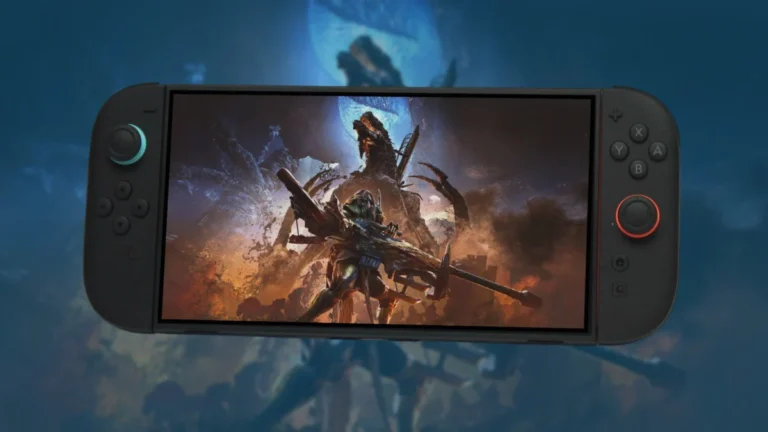
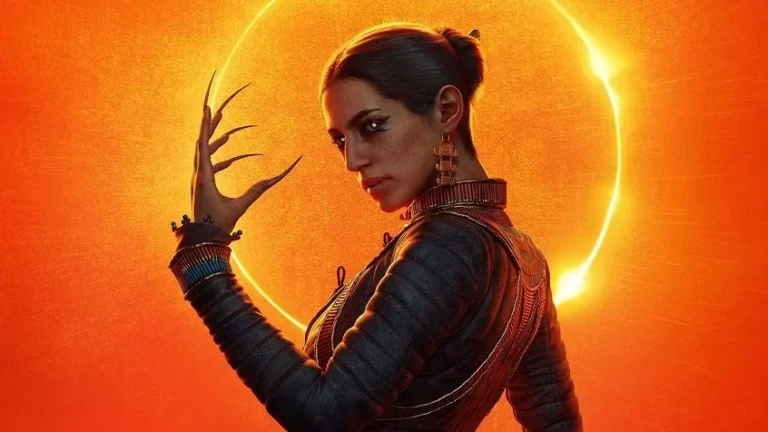
The immediate future for Remedy involves the continued development of Control Resonant, the sequel to the 2019 hit. Developers have confirmed that while the first game followed Jesse Faden, the sequel will center on her brother, Dylan Faden. This narrative shift is intended to deepen the lore of the Federal Bureau of Control (FBC) and offer a fresh perspective on the supernatural "Hiss" invasion.
Despite the lack of a firm release date, Remedy reaffirmed in May 2024 that the project remains on track for a 2026 window. With the Max Payne remakes also in the pipeline and the potential for Alan Wake or Control to appear on television screens in the near future, Remedy is entering its most ambitious era.

The success of this "transmedia" pivot will determine whether Remedy can remain a bastion of creative storytelling or if the financial pressures of the modern industry will force further consolidation. For now, Gaudechon remains optimistic that the studio’s "signature products" have only scratched the surface of their true market value.