The Walt Disney Company has formally escalated its legal and regulatory battle with the Federal Communications Commission, filing license renewal applications for eight of its primary broadcast stations under protest. In a series of filings submitted late Thursday, the media giant characterized the FCC’s recent demand for early license renewals as an "unlawful, arbitrary, and unconstitutional" maneuver, marking a significant intensification of the friction between the entertainment conglomerate and federal regulators. The dispute centers on the FCC’s ongoing investigation into Disney’s diversity, equity, and inclusion (DEI) practices, a probe that Disney contends is a politically motivated overreach designed to chill protected speech.
The controversy began to sharpen in late April 2026, when the FCC issued a rare order requiring Disney to submit renewal applications for its ABC-owned-and-operated stations years ahead of their scheduled expiration dates. Under normal circumstances, the licenses for these eight stations—located in major markets including New York, Los Angeles, and Chicago—were not set to expire until a window between 2028 and 2031. By pulling these dates forward, the FCC has effectively placed Disney’s broadcast future under immediate scrutiny, citing concerns that the company’s internal DEI mandates may violate federal anti-discrimination laws and the Communications Act of 1934.
The Scope of the FCC Mandate and Disney’s Defiance
The stations impacted by the FCC’s order represent the crown jewels of the ABC broadcast portfolio. These include WABC-TV in New York, KABC-TV in Los Angeles, WLS-TV in Chicago, WPVI-TV in Philadelphia, KGO-TV in San Francisco, KTRK-TV in Houston, WTVD in Raleigh-Durham, and KFSN-TV in Fresno. For a major media company, the broadcast license is a foundational asset, granting the exclusive right to utilize public airwaves. The threat of non-renewal, while historically rare for major networks, carries existential weight for the stations involved.
In its filings, Disney did not mince words regarding the FCC’s directives. The company argued that the agency’s order lacked a "legitimate purpose" and represented a departure from more than five decades of administrative precedent. According to Disney’s legal counsel, the FCC has not utilized an early renewal process in such a manner since the early 1970s. The company’s primary objection rests on the claim that the FCC is utilizing its licensing power as a tool for discovery in an investigation that could have been handled through traditional administrative inquiries.
"The order is inconsistent with a legitimate exercise of investigative authority and is plainly incompatible with the First Amendment," Disney stated in its filing. The company further asserted that any information the Commission sought regarding its hiring practices could have been obtained through other means without jeopardizing the stability of its broadcast licenses.
Chronology of a Regulatory Escalation
The roots of the current impasse can be traced back to early 2025. In March of that year, the FCC, under the leadership of Chair Brendan Carr, initiated an investigation into the DEI efforts of several major media entities, with Disney as a primary focus. The agency sought to determine if corporate policies aimed at increasing representation among minority groups had crossed the line into "invidious discrimination" against other protected classes, thereby violating the FCC’s Equal Employment Opportunity (EEO) rules.
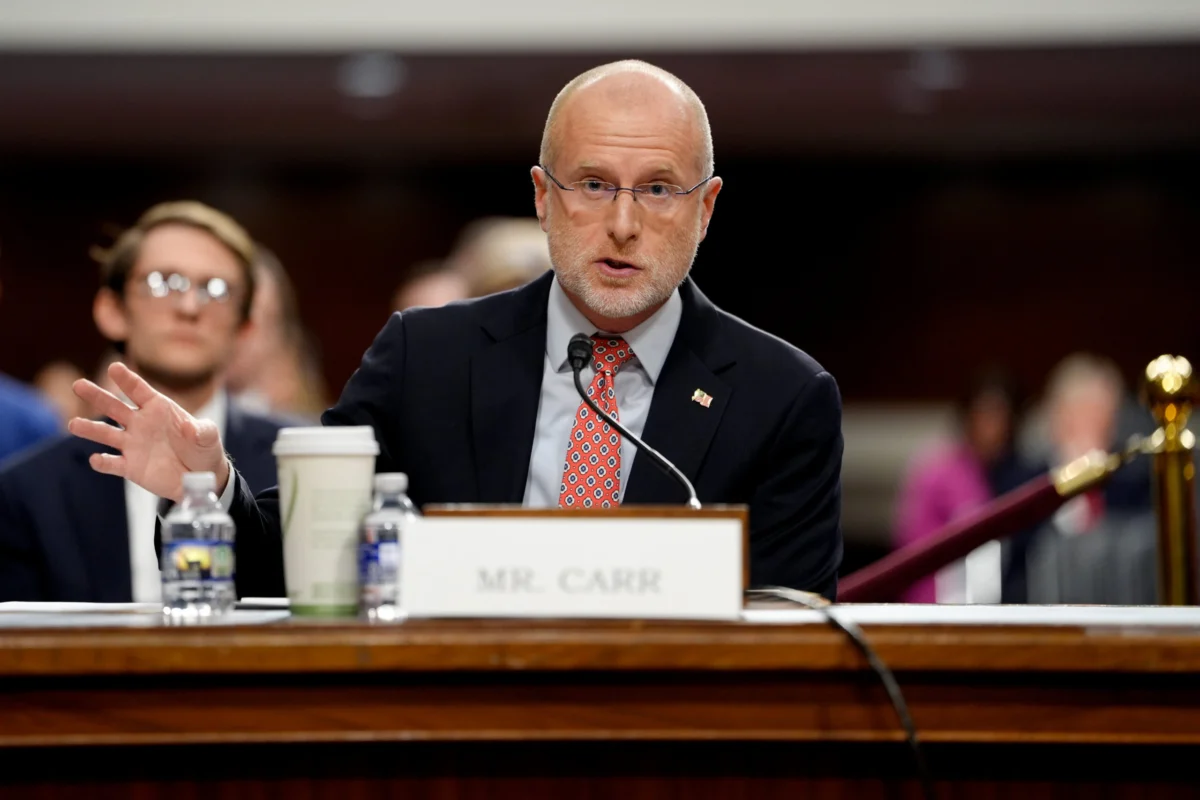
Throughout 2025, the relationship between Disney and the FCC soured as the agency repeatedly requested internal documents, hiring data, and communications related to the company’s DEI initiatives. In December 2025, during a Senate Commerce Committee oversight hearing, Commissioner Carr signaled that the agency was dissatisfied with the level of cooperation it was receiving from the private sector. By early 2026, the FCC determined that more drastic measures were necessary.
On April 28, 2026, the FCC officially notified Disney that it would be pulling up the license renewal schedule. This move followed a period of intense political discourse surrounding the ABC network. Specifically, the network had faced public criticism from the Trump administration following a series of monologues by late-night host Jimmy Kimmel, which the administration characterized as biased and inflammatory. While the FCC maintains its actions are purely regulatory and based on employment law, critics and some sitting commissioners have suggested the timing indicates a political subtext.
The Regulatory Framework: The Communications Act of 1934
The FCC’s authority to regulate broadcast licenses is rooted in the Communications Act of 1934. Under the Act, the Commission is tasked with ensuring that broadcast stations serve the "public interest, convenience, and necessity." Historically, this has involved oversight of signal interference, educational programming requirements, and adherence to EEO rules.
Chair Brendan Carr, appearing on CNBC’s "Squawk on the Street" on Friday, emphasized that the investigation is focused on whether Disney’s DEI practices constitute a violation of the prohibition on unlawful discrimination. Carr dismissed Disney’s claims of First Amendment infringement, framing the issue as one of corporate compliance and transparency.
"I understand Disney wants to make this about a lot of other things, and their PR machine has been in high gear, but we’ve been very clear about what this is: concerns about invidious forms of DEI discrimination," Carr told CNBC. He further alleged that Disney’s prior responses to agency inquiries were "disingenuous," "incomplete," and "nonresponsive," which necessitated the acceleration of the renewal process to ensure full accountability.
Political Context and the First Amendment Debate
The intersection of DEI policy and broadcast regulation has become a flashpoint for broader cultural and political debates. The Trump administration has frequently voiced opposition to corporate DEI programs, arguing that they often result in "reverse discrimination." By leveraging the FCC’s oversight of the airwaves, the administration has found a potent lever to exert pressure on media companies that it views as ideologically hostile.
However, this approach has drawn sharp criticism from within the FCC itself. Commissioner Anna Gomez, a Democratic appointee, has publicly questioned the motivations behind the early renewal order. In social media posts and official statements, Gomez suggested that the scrutiny appeared to be politically motivated, echoing Disney’s concerns that the regulatory process was being weaponized against a specific media outlet due to its content and corporate philosophy.
Legal experts suggest that Disney’s First Amendment argument hinges on the concept of "unconstitutional conditions." This legal doctrine prohibits the government from conditioning a public benefit—such as a broadcast license—on the relinquishment of a constitutional right, such as the right to free speech or the right to manage internal corporate policy without undue government interference. If Disney can prove that the FCC is using the license renewal process to punish the company for its editorial stance or its social initiatives, the case could move toward the Supreme Court.
Industry Implications and Economic Data
The outcome of this dispute has significant implications for the broader media and telecommunications industry. If the FCC successfully uses the license renewal process to enforce specific interpretations of DEI and EEO rules, other major broadcasters—including Comcast (NBCUniversal), Paramount Global (CBS), and Fox Corporation—could find themselves under similar scrutiny.
Data from the media sector suggests that broadcast television remains a vital, albeit challenged, component of the American information ecosystem. Despite the rise of streaming, local news and live sports—anchored by the very stations currently under review—account for a substantial portion of Disney’s domestic revenue. The uncertainty surrounding these licenses has already prompted analysts to adjust their risk profiles for Disney’s linear television segment.
Market reaction to the FCC’s aggressive stance has been cautious. Disney (DIS) shares have experienced volatility as investors weigh the potential for a protracted legal battle. Industry analysts note that while a total revocation of licenses is statistically unlikely given the historical precedent, the "cycle of opposition" now triggered by the FCC will lead to months of public hearings, petitions to deny, and administrative filings that will consume significant corporate resources.
The Road Ahead: Petitions and Public Notice
The next phase of the process begins immediately. As early as Friday, the FCC is expected to issue a public notice regarding Disney’s renewal applications. This triggers a formal window during which members of the public, interest groups, and political organizations can file "petitions to deny" the licenses.
This phase is likely to be highly contentious. Conservative advocacy groups are expected to file petitions detailing alleged instances of discrimination within Disney’s hiring practices, while civil rights organizations and First Amendment advocates are expected to file in support of the company, arguing against government overreach. Disney will then have the opportunity to file formal oppositions to these petitions.
When asked about the ultimate possibility of ABC losing its licenses, Chair Carr remained non-committal but firm on the agency’s resolve. "We will follow the facts and the law wherever they go," Carr stated. For Disney, the stakes could not be higher. Beyond the immediate operational impact on its eight stations, the company is fighting to maintain its autonomy in an era where regulatory bodies are increasingly willing to challenge the internal cultural policies of the nation’s largest corporations.
As the legal battle moves from the FCC’s hearing rooms to the federal courts, it will serve as a landmark test of the limits of regulatory power over the media in the 21st century. The resolution of this conflict will likely define the relationship between the federal government and the broadcast industry for the next generation, determining whether the "public interest" mandate of the 1934 Communications Act can be used to regulate the internal social agendas of private media enterprises.