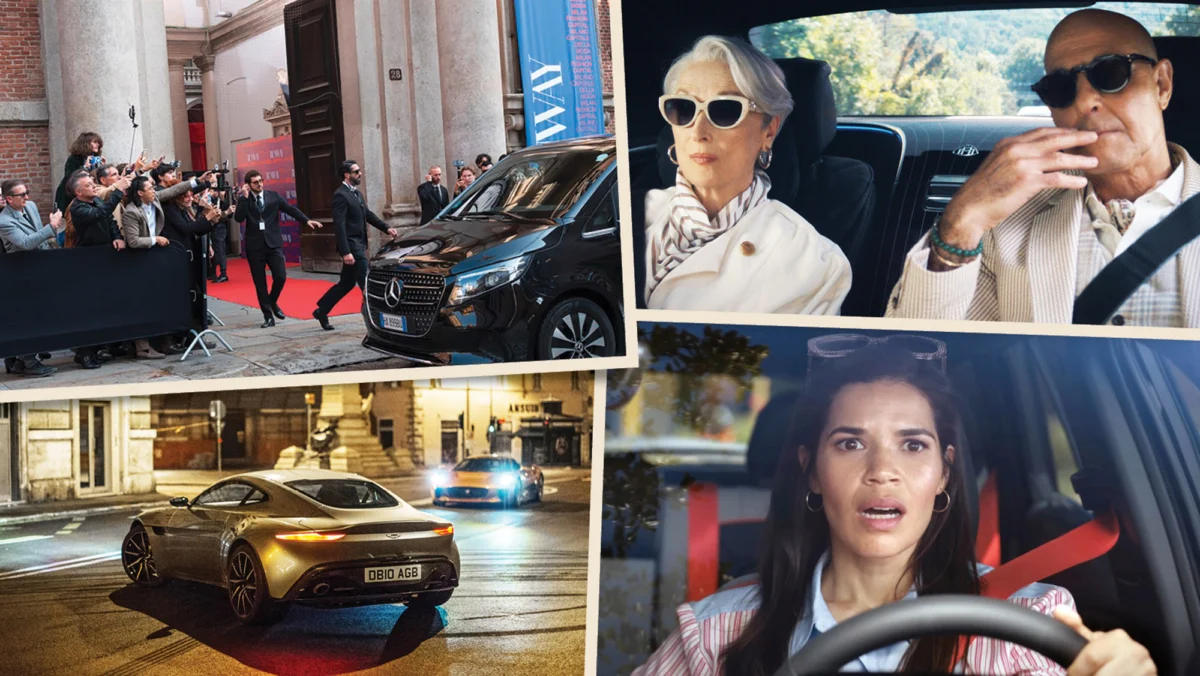
When Miranda Priestly, the formidable fictitious Runway editrix in The Devil Wears Prada 2, needs to navigate the bustling world of high fashion – be it a critical meeting, an exclusive photo shoot, or a grand Met Gala-like ball – she does so from the plush confines of a vehicle befitting her Wintourian status: a $300,000 Mercedes-Maybach S-Class. This meticulously crafted detail is no mere coincidence; it is the cornerstone of an extensive and strategically negotiated promotional campaign orchestrated by Mercedes with Disney, the studio behind the film. This symbiotic relationship between Hollywood and the automotive industry represents a sophisticated evolution of product placement, transforming simple brand visibility into deeply integrated cultural moments designed to resonate with audiences and drive tangible market impact.
The decision to feature the Mercedes-Maybach in The Devil Wears Prada 2 was a calculated move, as Mercedes chief marketing officer Melody Lee explains, "We knew it was the perfect fit." The sequel’s return of the original, beloved cast all but guaranteed a box office juggernaut, a prediction that materialized as the film soared past $400 million globally. Crucially, the movie’s release was timed to coincide with the launch of the latest iteration of Mercedes’ range-topping limousine, creating a powerful dual-pronged marketing thrust. Furthermore, the demographic alignment was impeccable. Lee notes that the audience of the original film, released two decades prior, had "grown up and become our target customers," making the Maybach a aspirational yet attainable symbol for a mature, affluent viewership. This precise targeting underscores the increasing sophistication of branded entertainment strategies, moving beyond simple exposure to cultivate brand affinity among specific, high-value consumer segments.
The Evolving Landscape of Branded Entertainment
The practice of integrating brands into cinematic narratives is far from new, with roots stretching back to the early days of cinema. However, what began as subtle background appearances or incidental mentions has blossomed into a multi-billion dollar industry characterized by strategic partnerships and creative collaborations. In the modern era, automakers and studios maintain dedicated branded entertainment teams that work in close conjunction, constantly seeking mutually beneficial opportunities. The ideal scenario dictates that this collaborative process commences well in advance of production. This early engagement is critical, ensuring that product placements are not perceived as overtly commercial or "laughably tacked on," but rather organically woven into the fabric of the story, enhancing its authenticity and character development.
Ty Ervin, VP of marketing partnerships, creative, and product placement at Disney, articulates this philosophy succinctly: "Cars aren’t just background. They tell us just as much about a character as their costume and environment." This perspective elevates vehicles from mere props to integral narrative elements. A character’s choice of car can communicate their status, personality, values, or even their aspirations, providing a subtle yet powerful layer of storytelling that resonates deeply with audiences. For instance, a rugged pickup might signify a down-to-earth persona, while a sleek sports car could denote an adventurous or ostentatious nature. This understanding is paramount in crafting placements that feel natural and impactful.
Beyond the Screen: Crafting Cultural Moments
The strategic planning behind these collaborations allows the integration to extend significantly beyond the confines of the silver screen. In the case of The Devil Wears Prada 2, this meant a comprehensive marketing blitz by Mercedes, featuring the Maybach prominently in advertising campaigns that explicitly highlighted its filmic connection. This multifaceted approach was part of a broader effort to elevate the sequel’s profile and, as Lee envisioned, help it – and its featured vehicles – become "a huge cultural moment." Such campaigns leverage the emotional connection audiences form with films and characters, transferring that goodwill and aspirational appeal directly to the brand. This cross-promotional synergy maximizes reach and impact, turning a cinematic appearance into a sustained brand narrative.
The global product placement market, estimated to be worth over $23 billion in 2021 and projected to grow substantially, underscores the financial significance of these partnerships. Brands are increasingly allocating significant portions of their marketing budgets to integrate their products into popular media, recognizing the unparalleled ability of film and television to embed brands into the cultural zeitgeist in an unskippable and enduring manner.
Case Studies in Automotive Cinematic Prowess
The Mercedes-Maybach in The Devil Wears Prada 2 is but one example of a thriving trend. Other prominent car manufacturers employ similar, meticulously planned processes to maximize their cinematic exposure. Sarah Schrode, who previously headed entertainment marketing for General Motors, highlights Chevrolet’s close collaboration with the 2023 blockbuster Barbie. This partnership was instrumental in introducing the 2024 Blazer SS EV and Hummer EVs, which were driven by America Ferrera’s and Ryan Gosling’s characters, respectively. Beyond showcasing new models, the collaboration also skillfully tapped into Chevrolet’s rich heritage, reviving the Mattel "Dream Car" legacy by providing Margot Robbie’s titular character with an iconic vintage pink Corvette. This multi-layered approach allowed Chevrolet to simultaneously project innovation with its EVs and celebrate nostalgia with a classic, resonating with a broad audience demographic. The sheer virality of Barbie translated into unprecedented brand visibility for Chevrolet, demonstrating the power of aligning with a cultural phenomenon.
Yet, in the grand pantheon of automotive product placement, perhaps no entity can rival the enduring legacy of James Bond. According to Alessandro Usielli, head of Ford global brand entertainment, iconic marques such as Aston Martin, Jaguar, Land Rover, and even Ford itself have forged long-standing partnerships with the Bond franchise. These collaborations have historically served as premier platforms for introducing new models, with cars provided not just for the superspy himself, but also for his alluring coterie of conquests and his villainous adversaries. The Aston Martin DB5, first appearing in Goldfinger (1964), remains one of the most famous and influential examples of product placement, transforming the car into an inseparable extension of Bond’s sophisticated, action-packed persona and imbuing the brand with an unparalleled aura of cool and desirability that persists to this day. The longevity and global reach of the Bond series offer car brands an almost unparalleled opportunity for sustained, aspirational brand building.
Innovative Integrations: Beyond the Traditional Roadway
The scope of product placement is not limited to road-safe vehicles or even physical products for sale. Disney’s Ervin points to Porsche’s innovative collaboration on the starship design for the 2019 Star Wars spinoff, The Rise of Skywalker. This exemplified a creative extension of brand identity, translating Porsche’s design philosophy and engineering prowess into a fantastical, futuristic context. Similarly, Melody Lee notes Mercedes’ involvement in the upcoming 2025 film F1, where the brand acts as an in-film sponsor of Brad Pitt’s fictional Apex racing team and provides a fleet of onscreen vehicles. This allows Mercedes to leverage its deep-rooted association with motorsport, extending its authentic performance credentials to a narrative context.
Even more surprisingly, Mercedes has successfully worked two of its cars into the recent hit cartoon GOAT. "You wouldn’t think Mercedes-Benz would be in an animated movie," Lee concedes, "but it’s part of our strategy to reach the next generation." This forward-thinking approach demonstrates an understanding of evolving media consumption habits and the importance of cultivating brand loyalty from an early age. By appearing in diverse media formats, brands can cast a wider net, engaging audiences across different demographics and age groups, thus ensuring long-term brand relevance.
The Tangible Returns: Affinity, Sales, and Unskippable Messaging
Ultimately, these strategic movie partnerships are designed to create affinity, relevancy, and relatability, which, as Melody Lee asserts, eventually translate into sales. The data supporting this claim is compelling: "In one study, three-quarters of viewers searched for a brand after seeing a placement, and more than half went on to buy a product from that brand." This direct correlation between onscreen exposure and consumer action highlights the efficacy of well-executed product placement as a powerful marketing tool. Unlike traditional advertising, which can be easily skipped or blocked, product placement is inherently integrated into the content, making it an "unskippable, unblockable" form of marketing that, as Schrode points out, "lives on in long-tail streaming." This endurance ensures that the brand message continues to reach new audiences long after a film’s initial theatrical run.
In an era characterized by diminishing box office returns for many films, such partnerships remain a critical lifeline for both studios and brands. However, the contemporary media landscape, marked by audience fragmentation, shorter attention cycles, and decreased cinema attendance, presents new challenges. Placements can no longer be merely present; they must be "more iconic." Schrode elaborates, "The bar is higher now. Many times, I’m looking for known IP or very innovative new IP." This means studios and brands must be more selective and creative, seeking out partnerships that offer genuine narrative integration and significant cultural resonance to cut through the noise.
Building Ecosystems: The Future of Branded Entertainment
These evolving challenges have propelled automakers and studios to adopt a more holistic approach to product placement. "Instead of a one-off, we build an ecosystem around it," Schrode explains. This comprehensive strategy encompasses a range of synergistic activities designed to amplify the onscreen moment and deepen consumer engagement. Key components of this ecosystem include:
- Social Content: Creating engaging posts, videos, and interactive experiences across platforms like Instagram, TikTok, and X (formerly Twitter) that highlight the product’s role in the film.
- Behind-the-Scenes Footage: Offering glimpses into the filmmaking process, showcasing the vehicles in action, and featuring interviews with cast and crew. This builds authenticity and provides valuable context.
- Partnerships with Talent: Leveraging the star power of actors and directors involved in the film for promotional activities, further linking the brand to desirable personalities.
- Digital Experiences: Developing augmented reality (AR) filters, virtual reality (VR) experiences, or interactive websites that connect onscreen moments directly to the brand’s world, allowing consumers to explore the vehicles or movie settings virtually.
This integrated "ecosystem" approach maximizes reach and engagement, transforming a single cinematic appearance into a multi-platform campaign. The results can be staggering. "When it’s done right, we see incredible amplification," Schrode confirms. Citing the Barbie partnership for GM, she reveals, "It saw 10 times the engagement on social media than any other posts in the history of the company. That’s a pretty powerful stat." Such figures underscore the immense potential of strategically executed branded entertainment to transcend traditional advertising metrics and achieve unprecedented levels of consumer interaction and brand impact.
In conclusion, the seamless integration of luxury vehicles like the Mercedes-Maybach into narratives such as The Devil Wears Prada 2 exemplifies the sophisticated evolution of product placement. Far from being a mere transactional exchange, these partnerships represent a deeply strategic alliance between the entertainment and automotive industries. They leverage cinematic storytelling to create enduring brand affinity, introduce new models, target specific demographics, and cultivate cultural moments that resonate long after the credits roll. As the media landscape continues to diversify and audience attention spans fragment, the ability to embed brands organically into compelling narratives, supported by comprehensive multi-platform ecosystems, will remain an indispensable and increasingly potent force in global marketing strategies. The road ahead for branded automotive entertainment appears paved with innovation and unparalleled opportunity.