


The landscape of the global entertainment industry underwent a seismic shift this Friday as David Ellison formally unveiled the identity of the combined Paramount and Warner Bros. media entity, officially rebranded under the banner of Skydance. During a high-stakes presentation, Ellison articulated his vision for the conglomerate, punctuating the announcement with a cinematic sizzle reel that underscored the sheer scale of the new library. Set to the driving, iconic Hans Zimmer score from Christopher Nolan’s Inception, the video served as a strategic statement of intent. The presentation concluded with a constellation of eight legacy brand logos surrounding the Skydance masthead. Most notably, positioned at the top tier alongside the legendary Paramount mountain and the Warner Bros. shield, sat the distinctive, iconic DC bullet. This visual hierarchy serves as a definitive signal: DC, encompassing both the film studio and the historic publishing house, is intended to be a foundational pillar of Ellison’s new corporate architecture.
The Stability of the Gunn and Safran Era
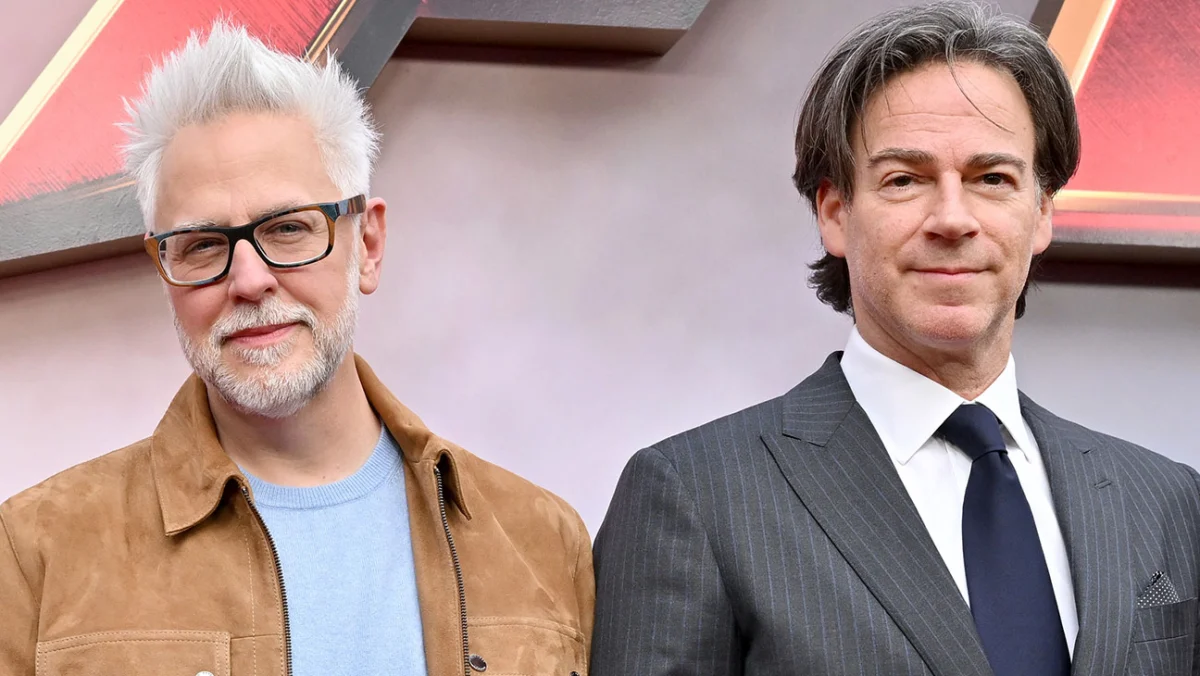
Perhaps the most critical takeaway for industry observers is the immediate job security afforded to DC Studios co-CEOs James Gunn and Peter Safran. Amidst a broader corporate reorganization that has already resulted in significant executive turnover, multiple sources have confirmed that the duo met with Ellison in person on Thursday. The discussions were described as highly constructive, with Ellison reportedly encouraging the pair to "keep doing what you’re doing."
This vote of confidence provides a crucial sense of continuity for a studio that has spent the better part of the last decade navigating leadership turbulence. Gunn and Safran, who previously reported directly to Warner Bros. Discovery CEO David Zaslav, now find themselves in a unique position within the Skydance ecosystem. While their reporting structure—specifically whether they will report directly to Ellison or be integrated into a layered management hierarchy—remains a subject of internal deliberation, the executive mandate is clear: they are tasked with maintaining their current trajectory.
Navigating the Executive Transition
The path forward is not without its complexities. As the dust settles on the merger, the organizational chart is being aggressively redrawn. Current reports indicate that Paramount film heads Josh Greenstein and Dana Goldberg are expected to oversee the unified film studio operations. Conversely, the transition has been less forgiving for other senior leadership; Warner Bros. film chiefs Pam Abdy and Michael De Luca are reportedly being phased out.
This shift has sent ripples through the Burbank and Hollywood communities. Insiders close to the situation note that the departure of Abdy and De Luca was unexpected for many, as the pair had received assurances regarding their status in the post-merger environment. "They met with David months ago and felt secure," one studio insider noted. "Clearly, a lot has changed since then." This stark contrast between the retention of Gunn and Safran and the displacement of established Warner executives highlights the high premium Ellison places on the DC brand’s specific IP-driven roadmap compared to broader film slate management.
Strategic Continuity and the 2027 Roadmap
Ellison’s strategy appears designed to avoid the strategic "limbo" that plagued the studio in 2023. The releases of The Flash and Aquaman and the Lost Kingdom served as painful case studies in how a lack of continuity can cripple a film’s commercial prospects. Both projects, developed under a previous management regime and released during a period of transition, suffered from a lack of internal advocacy and marketing focus, ultimately leading to significant underperformance at the global box office.
To prevent a repeat of this performance, Ellison has made a point of visible, hands-on support. His summer visit to the Atlanta set of Man of Tomorrow—the highly anticipated, high-budget Superman sequel slated for a July 2027 release—was a tactical move to signal to cast and crew that the project remains a primary corporate priority. Furthermore, the studio is moving forward with the horror thriller Clayface, currently scheduled for an October 23 release, serving as a test case for how the new management will handle mid-budget genre entries under the DC banner.
DC Comics and the Power of Intellectual Property
Beyond the box office, the prominence of the DC logo in the new Skydance branding serves as a major validation for DC Comics. The publishing division has experienced a remarkable resurgence over the past two years, successfully clawing back market share from Marvel Comics. This turnaround is largely attributed to the successful launch of the "Absolute Universe" imprint and a renewed focus on nurturing relationships with top-tier creative talent.
For years, speculation persisted regarding the possibility of Warner Bros. Discovery spinning off or selling the DC publishing arm. Those rumors appear to have been definitively put to rest. In the eyes of the new ownership, DC is viewed as an "IP generator"—a renewable resource of character and narrative equity that provides the raw material for films, television, merchandise, and digital gaming.
The integration of Paramount’s library with DC’s publishing muscle also opens new commercial doors. Industry analysts have pointed to the potential for cross-pollination, where DC could produce comic book adaptations based on Paramount-owned franchises such as Star Trek or Teenage Mutant Ninja Turtles. While the combination of Nickelodeon and Cartoon Network under a single operational roof is viewed as an inevitability to streamline costs, the prevailing consensus is that DC remains an untouchable, premium asset that will be kept as a distinct, high-priority division.
The Road Ahead: Challenges and Implications
As Skydance moves forward, the primary challenge will be balancing the aggressive consolidation of legacy studios with the need to maintain the creative momentum Gunn and Safran have built. The decision to retain the DC leadership suggests that Ellison recognizes the distinction between a "studio head" and a "franchise architect."
For investors and industry observers, the next eighteen months will be defined by the "Skydance effect." The company’s ability to leverage the immense back catalog of Paramount and the global reach of the Warner Bros. distribution machine, all while centering DC as the creative nucleus, will be the true test of this merger.
The immediate task for the newly formed entity is to reassure talent and stakeholders that the transition will be orderly. By signaling early that the "DC project" is safe, Ellison has mitigated the potential for a "brain drain" of talent that often follows large-scale media acquisitions. However, the fate of the wider organization remains fluid. As one source noted, "It’s a massive machine. The parts that are working, they are keeping. The parts that are redundant, they are pruning."
Ultimately, the inclusion of the DC bullet in the new Skydance constellation is more than a branding exercise; it is an economic declaration. It asserts that in an era of streaming fragmentation and theatrical volatility, ownership of evergreen, multi-generational intellectual property is the only true currency that matters. Whether Gunn and Safran can deliver the critical and commercial success required to justify this faith remains the single most important question in the current Hollywood narrative. As of Friday, however, the DC leadership has been given the strongest possible mandate to continue their mission, with the full backing—and, notably, the physical presence—of their new boss.