


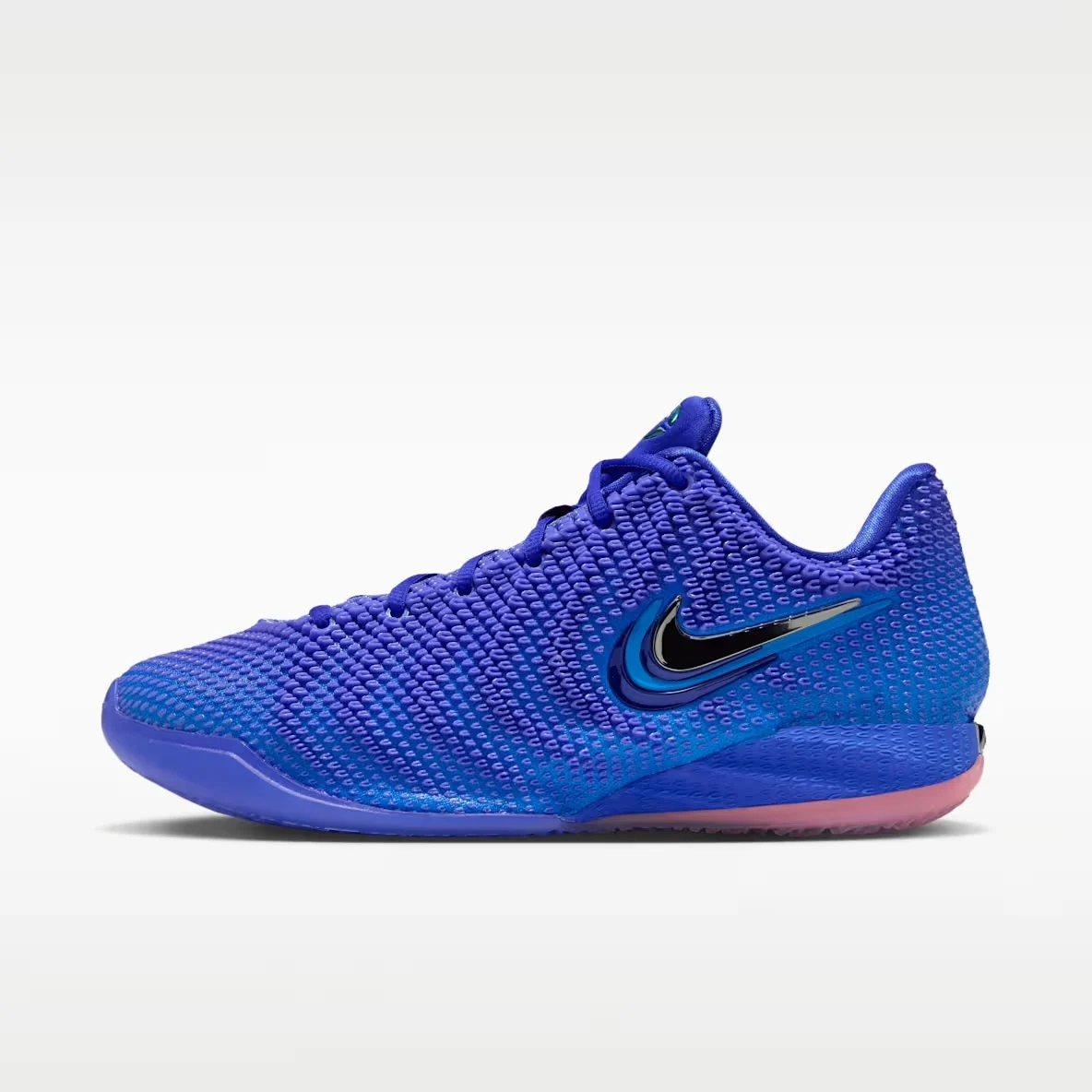
The release of the Caitlin 1, the debut signature basketball shoe for WNBA sensation Caitlin Clark, marks a pivotal moment in the intersection of professional sports, retail branding, and the rapid ascent of women’s basketball in the cultural zeitgeist. Following more than two years of development and a high-profile $28 million partnership between the athlete and Nike, the sneaker officially arrives at retail on October 1 at 7 a.m. PT/10 a.m. ET. This launch is not merely a product drop; it represents the culmination of a deliberate strategy to leverage Clark’s unprecedented influence on basketball viewership and fan engagement to reshape the landscape of signature athlete footwear.
The sneaker will debut in two distinct, vibrant colorways: “Caitlin Blue” and “Warning Yellow.” While both iterations are available in adult sizing for $140, the “Caitlin Blue” variant offers broader accessibility, being produced in little kids’ and big kids’ sizes for $105 and $115, respectively. The launch will be supported by a multi-retailer rollout, with inventory available through Nike’s official online portal, Foot Locker, and Dick’s Sporting Goods.
A Chronology of the Partnership
The trajectory leading to the Caitlin 1 began well before Clark’s professional draft entry. As she dominated the collegiate ranks at the University of Iowa, her influence on the sport’s popularity—frequently referred to as the “Caitlin Clark Effect”—became impossible for major athletic apparel companies to ignore.
In the spring of 2024, following a bidding war involving several major sportswear titans, Nike secured a multi-year deal with Clark reported to be worth $28 million. This agreement underscored Nike’s commitment to building a brand identity around a female athlete who, in many ways, has outpaced the traditional marketing metrics of the WNBA.
Over the last two years, the development process was characterized by intensive collaboration. Designers worked to translate Clark’s specific on-court requirements—notably her perimeter range and high-velocity passing—into a performance-based silhouette. During the interim period, Nike expanded the Caitlin Clark collection to include performance jerseys, logo-branded hoodies, and lifestyle apparel, priming the market for the eventual release of her signature footwear.
Design Elements and Technical Specifications
The Caitlin 1 is engineered to reflect the unique technical demands of Clark’s playing style. According to Nike’s design team, the shoe is constructed to support quick changes in direction, explosive bursts of speed, and the stability required for deep-range shooting.
Beyond the technical performance, the shoe serves as a canvas for personal storytelling. The design features a recurring “CC” logo, symbolizing her brand identity. A notable aesthetic detail is the double-stacked Swoosh, which serves a dual purpose: it pays homage to her initials while simultaneously functioning as a design nod to the three-point arc. The number 22, synonymous with her jersey, is molded directly into the upper.
The interior and heel construction include personal inscriptions that resonate with her narrative. Each pair features the phrase “It was never a long shot,” a reference to her journey from a standout high school prospect to a global icon. Furthermore, the shoes are marked with the mantras “Shoot More Threes” on the left foot and “From Anywhere” on the right, reinforcing the aggressive offensive identity that has defined her career.
Market Data and The Rise of WNBA Branding
The timing of the Caitlin 1 release coincides with a historic surge in WNBA attendance and television viewership. Throughout the 2024 season, the league saw record-breaking numbers, with Clark’s games consistently drawing audiences that rivaled or exceeded those of major professional men’s leagues.
Industry analysts point to this shift as a fundamental change in the marketability of female athletes. The average signature shoe deal for a female athlete has historically been lower in value and visibility compared to their male counterparts. However, the $28 million valuation of the Clark-Nike partnership suggests that brands are beginning to value the long-term potential of women’s sports as a primary, rather than secondary, pillar of their growth strategy.

Data from the retail sector suggests that demand for WNBA-branded merchandise has increased by over 300% in the last 18 months. By releasing the Caitlin 1 in family sizing—specifically targeting the younger demographic that makes up a significant portion of Clark’s fanbase—Nike is attempting to cement a multi-generational connection to the product line.
Official Perspectives and Industry Reaction
In a statement provided regarding the launch, Clark emphasized the collaborative nature of the project. “A lot of thought and time has gone into this shoe,” Clark stated. “I never thought I would have my own signature shoe, and now that I do, it’s pretty special. I can’t wait to share this moment with so many people.”
Representatives from Nike have highlighted the importance of the shoe in their broader “Caitlin Clark” collection. By integrating the footwear into an ecosystem of jerseys and apparel, the brand is creating a comprehensive “signature athlete” experience that mimics the successful models established by athletes like Michael Jordan and LeBron James.
Market experts observe that the success of the Caitlin 1 will likely serve as a barometer for future signature deals within the WNBA. If the shoe performs as anticipated, it could trigger a new cycle of investment, encouraging competitors like Adidas, Puma, and Under Armour to pursue similar long-term partnerships with other emerging stars in the women’s game.
Broader Implications for Women’s Sports
The release of the Caitlin 1 carries implications that extend well beyond the footwear industry. As the WNBA continues to negotiate new media rights deals and expand its footprint, the existence of a high-performance signature sneaker validates the league’s economic sustainability.
Historically, the lack of signature footwear was a primary critique of how the sports apparel industry treated the women’s game. By providing a product that is technically equal to—and aesthetically distinct from—men’s performance basketball shoes, Nike is signaling a shift toward equality in the performance footwear space.
Furthermore, the integration of “It was never a long shot” as a central marketing theme acknowledges the skepticism that once surrounded the commercial viability of women’s sports. The success of this launch is likely to be measured not only by units sold, but by the shoe’s ability to remain in the market rotation and its potential for future “colorway drops,” which keep product interest alive throughout the calendar year.
Strategic Retail Considerations
For consumers looking to secure a pair, the rollout is highly centralized. The decision to launch on October 1 at 7 a.m. PT/10 a.m. ET ensures a synchronized global release, preventing the logistical fragmentation that can occur with high-demand product drops.
Retail partners like Foot Locker and Dick’s Sporting Goods are expected to utilize a mix of physical in-store displays and online inventory management to handle the projected traffic. Given the limited availability of the “Warning Yellow” colorway at launch, analysts expect significant secondary market activity, which historically serves as an indicator of a product’s cultural resonance.
As the industry looks ahead, the Caitlin 1 serves as a foundational piece in a new era of sports marketing. Whether it will achieve the long-term status of other iconic basketball lines remains to be seen, but the initial reception suggests that the market is ready for a product that combines the technical rigor of elite performance gear with the personal narrative of one of the sport’s most influential figures.
For fans and collectors, the launch represents a tangible piece of basketball history. For Nike, it represents a strategic bet on the sustained growth of the women’s game. As the clock counts down to the official release, the Caitlin 1 stands as a definitive marker of how far the sport has come—and a strong indicator of where it is headed in the years to come.