


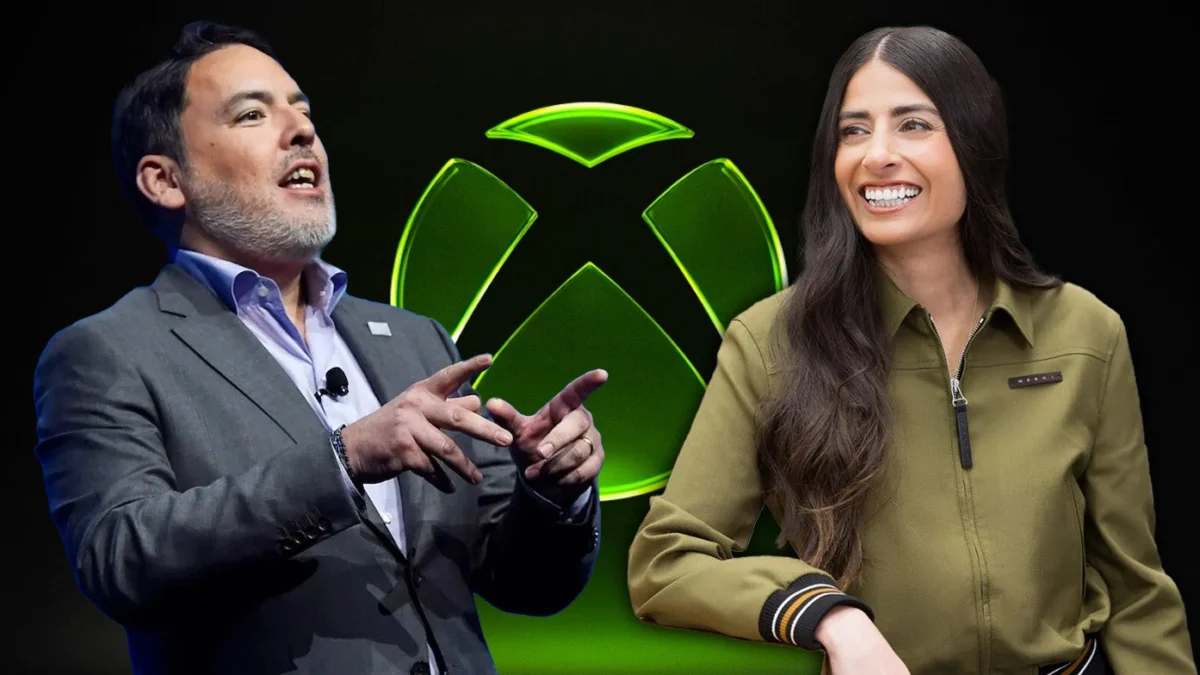
The gaming industry finds itself at a precarious crossroads, particularly regarding the strategic positioning of Microsoft’s Xbox division. Shawn Layden, the former chairman of Sony Interactive Entertainment Worldwide Studios and a veteran of the PlayStation brand, recently offered a stark assessment of the current state of Xbox. Speaking on The Expansion Pass podcast, Layden argued that the platform’s recent struggles stem from an inability to define its core business model. For Layden, the dilemma is binary: Microsoft must either commit to a robust library of platform-defining exclusives or pivot entirely toward a third-party publishing model that leverages its massive catalog across all available hardware.
The Divergence of Strategy
The fundamental friction point identified by Layden is the strategic "flip-flopping" that has characterized Microsoft’s approach to content distribution. Under the long-term leadership of Phil Spencer, Xbox shifted from a traditional console manufacturer—which relies on high-value, platform-locked titles to drive hardware adoption—to a subscription-first ecosystem. This transition included the aggressive acquisition of massive publishers, most notably the $68.7 billion purchase of Activision Blizzard and the earlier $7.5 billion acquisition of ZeniMax Media.
This expansion created a paradox. As Microsoft acquired these entities, the business necessity shifted. If one owns the largest intellectual properties in the world, such as Call of Duty, The Elder Scrolls, and Fallout, the fiscal logic of keeping those titles exclusive to a single hardware platform diminishes. However, as Layden points out, a hardware platform without unique, must-have software lacks a compelling value proposition. "A platform needs exclusives or else the platform has no meaning," Layden noted. "Or are you going to be the biggest publisher in the world? And if you’re the biggest publisher in the world, you almost have to be on every platform because that’s how the business model works. You can’t be successful at both."
A Chronology of the Xbox Pivot
To understand the current tension, one must examine the timeline of Xbox’s strategic evolution over the last decade.
- 2014: Phil Spencer takes over as head of Xbox, beginning a shift toward cross-platform play and the integration of the PC ecosystem via "Xbox Play Anywhere."
- 2017-2020: Microsoft launches Xbox Game Pass, a service that prioritizes subscription growth over individual unit sales, fundamentally changing how the company measures success.
- 2021-2023: The company completes massive acquisitions of ZeniMax Media and Activision Blizzard, significantly increasing its first-party studio headcount.
- 2024: Xbox begins releasing high-profile titles—previously considered exclusive—on competing hardware, such as the PlayStation 5, signaling a potential permanent move toward a multi-platform publishing strategy.
- 2024 (Mid-year): Under the guidance of newly appointed CEO Asha Sharma, the company initiates a massive corporate restructuring, resulting in approximately 3,200 layoffs, and reaffirms a commitment to hardware development despite declining sales.
Supporting Data and Market Realities
The urgency of Layden’s critique is underscored by the current market performance of the Xbox Series X/S hardware. In the United Kingdom, for example, console sales have hit their lowest point since the brand’s inception, reflecting a broader global trend where the Xbox hardware footprint is being outpaced by both the PlayStation 5 and the Nintendo Switch.
Data from market analysts suggests that while Xbox Game Pass has cultivated a loyal user base, it has not provided the necessary hardware sales momentum to compete with the Sony-Nintendo duopoly. The reliance on legacy franchises like Halo and the struggle to launch new, "system-selling" intellectual properties (IP) have left the platform in a vulnerable position. When high-profile titles like Starfield fail to move the needle on hardware sales in the way historical exclusives did, the incentive for Microsoft to keep these games exclusive evaporates. The resulting "third-party" pivot is not necessarily a failure of quality, but a rational response to the declining returns of the traditional console-hardware business model.
Leadership and the "Dreamcast Moment"
The reference to the "Dreamcast moment" is perhaps the most provocative aspect of Layden’s analysis. Sega’s departure from the hardware market in 2001, following the commercial disappointment of the Dreamcast, serves as a historical parallel for a major console manufacturer transitioning into a successful, high-volume third-party publisher. Layden posits that this is a viable path for Xbox, provided the company is willing to fully embrace the trade-offs.
Asha Sharma, who assumed the role of CEO earlier this year, has taken a firm stance against rumors of Microsoft exiting the hardware market entirely. Her leadership has been defined by a focus on "righting the ship," which has included significant workforce reductions to streamline operations and a renewed focus on core franchises. Furthermore, the securing of partnerships with industry titans like Hideo Kojima—whose upcoming project, Physint, is highly anticipated—suggests that Xbox is still attempting to court high-end talent to bolster its brand prestige.
However, the question remains whether these moves are enough to satisfy both the hardware-loyal user base and the shareholders demanding broader reach. By signing Physint and committing to long-term projects like Gears of War: E-Day, Sharma is attempting to signal that Xbox remains a home for premium gaming. Yet, as Layden observes, these actions must be accompanied by a clear, consistent philosophy.

Broader Implications for the Gaming Industry
The implications of Xbox’s strategic drift extend beyond Microsoft itself. The entire industry is watching to see if the "console warrior" era is finally reaching its conclusion. If one of the "big three" console makers decides that the cost of hardware manufacturing and the risk of platform exclusivity are too high, it could fundamentally reshape the economics of game development.
For developers, the shift away from strict exclusivity could be a boon, allowing for larger player bases and higher revenue potential for individual titles. For consumers, it may signal the end of the need to purchase multiple hardware platforms to access specific games, a long-standing desire of the gaming community. Conversely, it risks diluting the unique identity of each platform, potentially turning consoles into generic delivery devices for services, which may lead to a decrease in hardware innovation.
As the industry moves forward, the pressure on Microsoft to clarify its "lane" will only intensify. The company is currently balancing the legacy of the Xbox brand with the reality of a modern, multi-platform publishing environment. Whether Microsoft chooses to double down on the hardware experience—risking the potential for slower revenue growth—or fully commits to being a cross-platform content juggernaut, the decision will define the next decade of the gaming industry.
Conclusion
Shawn Layden’s warning serves as a reminder that in a high-stakes environment like modern gaming, indecision is often more costly than a failed strategy. Microsoft’s current approach, which attempts to bridge the gap between being a platform holder and a mass-market publisher, is clearly experiencing growing pains. As the company navigates this transition, the industry will be watching to see if they can effectively reconcile their hardware ambitions with their publishing reach. For now, the "Dreamcast moment" remains a theoretical possibility—a path available to Microsoft should it decide that the console wars are no longer a game worth playing. Whether Asha Sharma can forge a new path that sustains both the hardware and the software remains the most significant question facing the Xbox brand today. The challenge is not merely one of business strategy, but of identity; until Xbox can definitively state what its platform represents, it will continue to struggle to find its place in an increasingly fragmented, competitive market.