

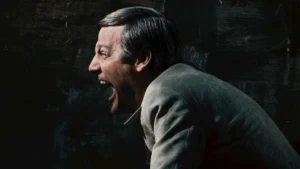


The recent passing of Yoshihiro Nishimura, a visionary force in contemporary Japanese genre cinema, leaves a void that is particularly poignant given the nature of his artistic output. Nishimura’s films, renowned for their audacious and relentlessly inventive depictions of bodily transformation and extreme violence, often seemed to defy the very concept of finality. Bodies in his cinematic universe were not merely destroyed; they were reimagined, mutated, and weaponized, existing in a state of perpetual, grotesque flux. This unique approach, which elevated splatter filmmaking to a form of visceral pop art, cemented Nishimura’s oeuvre as instantly recognizable, a testament to his singular vision that was at once bloody, excessive, hilariously offensive, and profoundly inspired.
Nishimura’s career stands as a singular achievement in the annals of special effects, makeup artistry, design, and direction. Few artists can claim to have so profoundly shaped and elevated the splatter genre, and fewer still with the sheer artistic dedication and technical mastery that Nishimura brought to his craft. His fascination with cinema began in childhood, profoundly influenced by a Salvador Dalí painting he encountered in elementary school, one that depicted distorted human forms. Despite pursuing a law degree, Nishimura’s creative drive led him to self-teach filmmaking, lighting, special effects, and modeling from his junior high school years. This autodidactic foundation would become a hallmark of his professional life.
Unlike directors who delegate special effects, Nishimura was intrinsically involved in every facet of his productions. He was not merely a director but a master of SFX, a visionary makeup artist, an editor, writer, producer, designer, and occasional actor. This comprehensive understanding of filmmaking, from its most granular elements to its overarching narrative, allowed him to construct elaborate and grotesque worlds even with limited resources. He once described directing as his true calling, a path he solidified after a period working for a commercial production company, where he honed his ability to manage multiple tasks concurrently, including crucial aspects like budgeting and production oversight.
While Nishimura achieved significant cult status internationally, his work often faced marginalization within Japan’s domestic film industry. He himself observed that the Japanese market favored more conventional genres like romance and yakuza films, with limited audience and financial backing for the extreme nature of splatter cinema. This "canceling," not in the sense of an official blacklist but rather a systemic distancing, meant his often too-extreme, too-messy, too-bodily, and too-strange creations struggled to find mainstream traction. However, beyond Japan’s borders, Nishimura found a fervent and receptive audience. Following the international release of “Tokyo Gore Police,” he became a celebrated cult figure, where audiences responded with immediate and visceral reactions—laughter, screams, and sheer exhilaration—a stark contrast to the more reserved Japanese viewers he described.
The latter years of Nishimura’s career were unfortunately shadowed by controversy and a sense of professional isolation. While the precise details remain somewhat opaque from an external perspective, there were increasing indications that he was being sidelined within certain segments of the Japanese film industry. Whether this constituted a formal blacklisting or a more informal estrangement, the outcome was clear: a director celebrated globally for pushing the boundaries of Japanese splatter found it increasingly difficult to secure the recognition and support commensurate with his international cult status. This context makes his later, self-produced works all the more significant, showcasing an artist’s unwavering commitment to creation despite diminished resources, restricted industry access, and an environment that seemed less willing to embrace his signature excesses.

Nishimura’s own description of his artistic intent remains the most potent: “What I create is entertainment.” His goal was to evoke a powerful emotional “wave” in the audience, a blend of the grotesque and the comical, aiming to shock and amuse simultaneously. He strived to present audiences with the unprecedented, ensuring their engagement and preventing boredom. This concept of the “wave”—a confluence of horror, laughter, disgust, shock, a sense of cheapness coupled with sincerity, slapstick, sensuality, and copious amounts of blood—defines his cinema. These elements often arrived in a whirlwind, sometimes clumsily, sometimes brilliantly, but always with an unmistakable signature.
The Genesis of a Splatter Masterpiece: "Anatomia Extinction" (1995)
To understand the full scope of Yoshihiro Nishimura’s artistic journey, it is essential to trace his origins. "Anatomia Extinction," an independently produced film written, directed, and featuring Nishimura’s groundbreaking special effects, serves as a pivotal starting point. Premiering at the Yubari International Fantastic Film Festival in February 1995, where it garnered a Special Jury Award, this film laid the groundwork for what would become his most internationally acclaimed work, "Tokyo Gore Police."
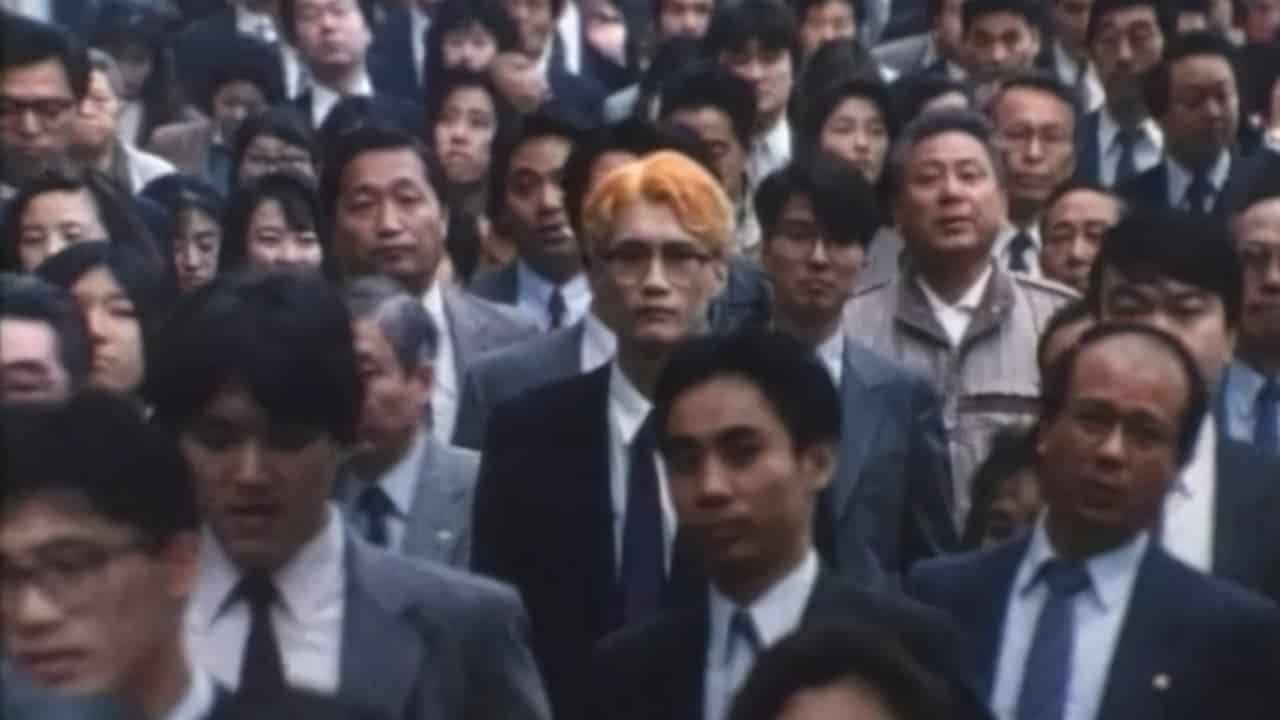
Set in a near-future Tokyo grappling with the psychological strains of overpopulation and overcrowding, the narrative of "Anatomia Extinction" explores the descent of ordinary citizens into serial killers. The story follows a seemingly ordinary businessman, isolated in his life, who becomes entangled in a nightmarish series of events. After being stalked and witnessing a murder on the subway, he finds himself pursued by a terrifying and bizarre killer. Instead of succumbing to death, the businessman is conscripted into an "Engineer" group—individuals possessing superpowers tasked with reducing the population through gruesome means. As strange transformations begin to alter his own body, particularly his heart, he gradually morphs into a monstrous entity, his newfound murderous impulses eventually pitting him against the authorities.
Nishimura’s direction in "Anatomia Extinction" operates on multiple levels, both thematic and technical. The pervasive themes of overpopulation and the ensuing brutal murders, conveyed through narration and televised news segments, form the narrative backbone. While Nishimura employs these elements for darkly comedic effect, the film also offers pointed social commentary on the alienation experienced by Tokyo’s inhabitants. The film’s central transformation sequence, beginning with the protagonist’s heart and progressively distorting his entire body into something both horrifying and absurd, culminates in a visually arresting battle with police officers, a sequence that stands as the film’s most impressive technical achievement. Viewers who can look beyond the surface-level grotesqueness of "Anatomia Extinction" will discover a richly textured work. It is an early, yet remarkably complete, manifestation of Nishimura’s enduring themes: flesh as a malleable, mechanical entity; violence as a form of satire; media as a vehicle for absurd commentary; and the human body as a battlefield where societal sickness is laid bare.
The Fiery Explosion of Global Recognition: "Tokyo Gore Police" (2008)
If "Anatomia Extinction" represented the spark, then "Tokyo Gore Police" was the inferno that propelled Yoshihiro Nishimura onto the international stage. Released in 2008, this film became his definitive calling card, forever cementing his name in the pantheon of cult cinema. After years of contributing his exceptional special effects and makeup skills to productions like Sion Sono’s "Suicide Club" and Noboru Iguchi’s "A Larva to Love," Nishimura finally directed his first feature film, "Tokyo Gore Police."
The film is set in a dystopian future Japan where a serial killer known as the Key Man has unleashed a virus. This pathogen transforms infected humans into monstrous hybrids driven solely by an insatiable urge to kill. The only recourse against these "Engineers" is to sever the infected body part, lest they regenerate. In response, the Tokyo police have privatized a specialized unit dedicated to hunting these mutated threats. The narrative centers on Ruka (portrayed by the iconic Eihi Shiina), a highly skilled hunter of Engineers, assigned to the specialized team due to her exceptional combat abilities. A solitary figure who struggles with interpersonal connection, Ruka is tasked with pursuing the Key Man, who is also responsible for her father’s murder. As she navigates this dangerous quest, she witnesses the loss of loved ones and grapples with the erosion of her own sense of justice as she uncovers the depth of corruption and depravity within the specialized force.
While the storyline can be seen as a mere pretext for extreme violence, it is the sheer artistry and flair with which the violence is depicted that elevates "Tokyo Gore Police." The film’s depiction of bloodletting is nothing short of oceanic; small wounds erupt into geysers of gore, transforming blood into not just an effect but the very essence of the visual experience. What truly distinguishes "Tokyo Gore Police" is Nishimura’s masterful use of gore not solely for shock value, but as a celebratory element. He consciously eschewed realistic blood effects in favor of a more stylized, showy, and abundant approach, a testament to his technical versatility as a professional capable of both realism and extreme exaggeration.
The casting of Eihi Shiina was instrumental to the film’s enduring legacy. Already renowned for her chilling performance in Takashi Miike’s "Audition," Shiina brought an unforgettable intensity to her role as Ruka. In an interview, she described Nishimura as a pivotal figure in her career, stating they had "fought through the world" together, with Japan itself often being their most challenging professional landscape. Shiina characterized Nishimura as direct, pure, somewhat self-centered, yet remarkably clever. While he could sometimes overreach or make minor missteps, these never detracted from the power of his work. Her description of his ability to find precise solutions under pressure, driven by intuition, perfectly encapsulates the spirit of "Tokyo Gore Police"—a film of intense obsession and fixation, yet executed with remarkable precision.
Exploring the Zombie Apocalypse: "Helldriver" (2010)
Nishimura’s penchant for preposterous splatter reached new, zombie-infested heights with "Helldriver." The film opens with a disturbing depiction of Taku and his sister Rikka, sadistic murderers who decide to kill Rikka’s abandoned husband. Their brutal act is interrupted by the arrival of the husband’s daughter, Kika, who attacks them. In the ensuing chaos, a meteorite strikes Rikka, releasing a toxic gas that transforms the populace of northern Japan into ravenous zombies, with Rikka herself becoming their queen.
Years later, the nation is divided by a wall separating the healthy population in the south from the zombie-infested north. The government enlists Kika, now a formidable zombie hunter, to lead a team of outlaws into the north to assassinate the zombie queen. The film posits a unique zombie lore: death can only be achieved by severing a distinctive Y-shaped appendage on their heads. Furthermore, this appendage, when powdered, becomes a highly addictive drug.
True to form, Nishimura injects an abundance of absurdity into "Helldriver." The film’s title, for instance, doesn’t appear until nearly thirty minutes into the runtime. The narrative is punctuated by bizarre elements such as a zombie boxer, guards with peculiar helmets, and a fight scene featuring pole dancing, among other irrational sequences. Underlying these elements are Nishimura’s characteristic relentless bloodbaths, surreal humor, impressive battle sequences, and a rudimentary but present social commentary, particularly concerning drug use and racism.
Yumiko Hara plays Kika, while Eihi Shiina, by then a frequent collaborator, portrays Rikka. Discussing acting in a splatter film like "Helldriver" often feels secondary, as performers largely serve as conduits for the violence and special effects. Nevertheless, Shiina’s presence adds to the film’s cult appeal, demonstrating Nishimura’s ability to transform actors into living extensions of his extraordinary special effects. "Helldriver" is a film tailored for a niche audience, but fans of Nishimura and slapstick splatter will find ample enjoyment. While not an ideal entry point for newcomers, it remains a pure distillation of his willingness to defy taste, patience, and logic. In retrospect, "Helldriver" stands as a clear example of Nishimura’s refusal to segregate horror from comedy, or gore from absurd political allegory.

Reviving a Classic: "Kodoku Meatball Machine" (2017)
"Kodoku Meatball Machine," a revival of the 2005 cult hit "Meatball Machine" for which Nishimura handled special effects, was met with immense anticipation from genre fans. Screening as part of the Asian selection at the Fantasia International Film Festival, the film more than lived up to the excitement. The statement, "I consider Yoshihiro Nishimura the undisputed master of Japanese splatter, a man who had moved the genre forward into new and exciting paths through all his roles in similar films, which include Special Effects, Makeup, animation and directing, among others," originally written in the context of this film, now serves as a concise summation of his entire career.
The story centers on Yuji, a 50-year-old bill collector whose life is a continuous cycle of humiliation and exploitation. He is consistently unable to collect debts, often finding himself stripped of his own meager possessions. His personal life is equally bleak, marked by a lonely existence and individuals who seek to take advantage of him—his boss, his mother, a woman named Kaoru from a bookstore who introduces him to a cult, and members of a sex club who initially offer solace but ultimately leave him with exorbitant bills. To compound his misery, Yuji is diagnosed with terminal cancer, with only months to live.
At this critical juncture, Earth faces an alien invasion. The extraterrestrials engulf an area in a glass-like structure and begin to possess human bodies, transforming them into "NecroBorgs"—biomechanical monsters that proceed to attack any remaining humans. Yuji, whose host body succumbs to his cancer, miraculously survives the transformation process and embarks on a quest to fight the aliens and save Kaoru.
Nishimura takes a remarkably restrained approach in the initial stages of "Kodoku Meatball Machine," with almost no gore for the first 20 to 25 minutes, adopting an aesthetic reminiscent of Sion Sono’s films. The scenes within the cult’s "church" and the "massage parlor" exemplify this tendency, though subtle nods to "Tokyo Gore Police" are present. This deliberate pacing allows for a more in-depth character analysis of Yuji and Kaoru, a rarity in the splatter genre. Simultaneously, Nishimura satirizes various facets of contemporary Japanese society: the police and martial artists are depicted as fanatical jingoists; cults and massage parlors are portrayed as predatory financial schemes; the dynamics between bosses and employees are scrutinized; and the public’s tendency to misjudge situations is highlighted. Most significantly, the film engages with the science fiction trope of alien invasion of human bodies. "Kodoku Meatball Machine" stands among the finest splatter works ever produced, a film that brilliantly showcases Nishimura’s distinctive style and boundless imagination. It reveals a layer often overlooked in his public persona: beneath the visceral gore, he could skillfully construct narratives exploring loneliness, humiliation, illness, exploitation, and the desperate fantasy of achieving power after a lifetime of subjugation.
Culinary Chaos and Yakuza Shenanigans: "Tokyo Dragon Chef" (2020)
Yoshihiro Nishimura continued to unleash his uniquely grotesque imagination with "Tokyo Dragon Chef," albeit in a less extreme fashion than "Helldriver" or "Kodoku Meatball Machine." This film masterfully blends yakuza tropes, culinary rivalry, musical elements, and exploitation cinema in a delightfully insane manner, executed with a low budget that precluded the full display of his signature special effects.
The narrative begins with Ryu and Tatsu, former yakuza members, reuniting after Tatsu’s release from prison. Their gang, along with others, was dismantled by a group wearing peculiar eye-bulb masks, led by a mysterious young man named Gizumo. Ryu persuades Tatsu to open a ramen restaurant, with Tatsu serving as the cook and Ryu managing the business. Their establishment quickly gains traction after a young girl assists with marketing in an unconventional way. However, their former yakuza rivals, brothers Jin and Kazu, open a nearby ramen canteen. After hiring a peculiar girl influencer, they manage to siphon all of Ryu and Tatsu’s customers. A violent confrontation ensues, forcing the struggling duo to hire their own influencer—a medium with dubious powers. Just as the situation escalates towards significant bloodshed, Gizumo and his gang reappear, compelling the ex-yakuza to form an unlikely alliance.

The characters are hilariously absurd, and the premise of hardened yakuza members attempting to cultivate customer-friendly service while leveraging social media influencers is both profoundly funny and a subtle social commentary on the pervasive influence of social media and the fates of retired or failed yakuza members. The initial influencer, a quirky girl with an insatiable appetite, is particularly memorable for her unique conception and execution, including her indignant reactions when anyone suggests she is not human. Naturally, action and violence are integral to any Nishimura film, and the latter half of "Tokyo Dragon Chef" is replete with them, though presented with a more sarcastically playful, rather than purely grotesque, tone. The "Ramen Rock" finale provides an unexpected, insane, and thoroughly entertaining conclusion. While perhaps a more modest entry in Nishimura’s filmography, "Tokyo Dragon Chef" demonstrates his remarkable ability to transform even a culinary rivalry into a stage for absurd masculinity, nostalgia, violence, and pure pop nonsense.
A Glimpse into Later Works: "Holy Mother" (2022) and "Onimanji" (2023)
Yoshihiro Nishimura’s later works, such as "Holy Mother" (2022) and "Onimanji" (2023), continued to explore his signature blend of wild, bloody, and fun cinema, though at times hinting at the creative boundaries of his established formula. "Holy Mother," which premiered at FANTASPOA, stars transgender actress Anna Nagasaki. While retaining Nishimura’s characteristic energy, the film, as with many of his later productions, felt somewhat recycled.
Describing the plot of a Nishimura film is inherently challenging. Character names are often absent, events unfold incongruously, and any moral ambiguity is further blurred. "Holy Mother" centers on a Chinese yakuza organization, facing discrimination from the Japanese community, which has recently lost its leader and several members. Cornered, the survivors are aided by a mysterious young pink-haired woman who emerges from nowhere and fights with formidable vigor. This mute woman, capable of miraculous healings, is named Maria by the oppressed Chinese inhabitants, who begin to worship her. However, the battle is far from over, as they must confront Hime, a business leader and torture enthusiast, along with her accomplices, Cloud Girl and Umbrella Man. A new threat from another dimension also looms.
As is typical with Nishimura’s productions, the characters are deliberately over-the-top and often ridiculous. From the grief-stricken yakuza to the sadistic villain wielding a laser, and the whimsical Cloud Girl, all elements signal that the film is not to be taken too seriously. However, the characters lack endearing qualities due to a scarcity of background information, despite the director’s attempts to incorporate darker themes. The film attempts a commentary on anti-Chinese racism in Japan, a subject handled clumsily from a Western perspective. Hime’s motivations, beyond the overt racism symbolized by repeated insults, are not clearly defined. The narrative also broadly addresses various forms of discrimination, including the poverty of the Chinese community in a futuristic setting and societal reactions to Maria’s trans identity.
A self-produced endeavor, "Holy Mother" embodies a free, creative, and generous form of filmmaking. It is as gory as Nishimura has always been, with organic, bloody bodies forming grotesque sculptures or serving as amusing objects. Dismemberments are frequent, and Nishimura’s practical effects remain impressive, though the film, like many of his later works, grapples with budget limitations that fall short of his ambitious visions. Eihi Shiina delivers a commanding performance as Hime, the sadistic, racist villain, even recreating an iconic sequence from "Audition." Anna Nagasaki proves a true talent as the powerful and revered Madonna figure, and Natsumi Tadano is entertaining as Cloud Girl.
"Onimanji" (2023), another self-produced project, is conceived as a spin-off of Nishimura’s action film "The Ninja War of Torakage." First screened internationally in Switzerland and Brazil, its lack of a Japanese release date, particularly poignant after Nishimura’s passing, underscores the paradoxical nature of his career—a Japanese cult director whose most vital circulation channels often lay outside his home country.
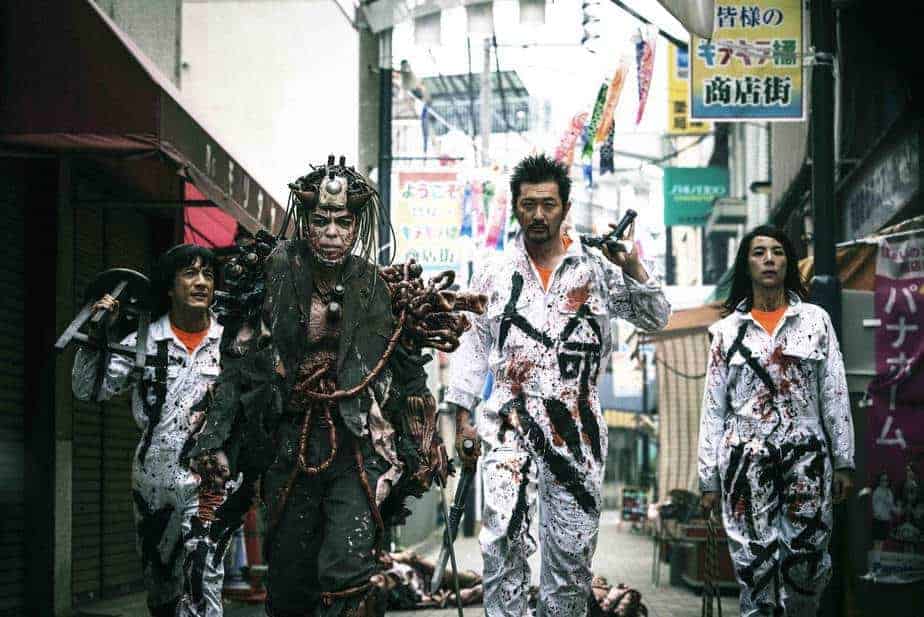
The ninja samurai Onimanji, cursed and imprisoned in an urn for centuries, is resurrected by the Kika Company, a hitman organization. Disoriented, Onimanji must adapt to modern Japan and assist his new associates: Kika, the impassive leader; Shigeru, a goofy assassin; and their mysterious informant. His ultimate challenge arises when he must confront the rival company Nutmeg and its boss, Natsumegu, with whom his employers have a fraught history.
The primary appeal of "Onimanji" lies less in its narrative or thematic depth and more in its visual experimentation. Prior viewing of "The Ninja War of Torakage" is not necessary, as "Onimanji" provides sufficient backstory, despite its chaotic storyline. The circumstances of Onimanji’s imprisonment are summarized, and all characters receive a flashback-driven backstory. However, these characters remain underdeveloped, relying on superficial traits. The humor between Onimanji and Shigeru, a running gag involving crab burgers and a decapitation scene, can be tiresome. The film’s nearly two-hour runtime also contributes to its uneven pacing, with many scenes potentially benefiting from tighter editing.
Fans of splatter and extreme gore may find the scarcity of blood spurts, often digital, disappointing. However, Nishimura’s other hallmarks—sexy shots of heroines, sudden bursts of extreme violence, and erratic humor—are present. The freedom of self-production allows for numerous split screens, aspect ratio changes, and blinding neon flashes. Fight sequences often employ techniques to distort the image, demonstrating impressive visual flair achieved with limited resources. Indoor fights are generally better executed than outdoor ones. The film’s budgetary constraints are evident in inconsistent lighting, questionable musical choices, and a lack of the extravagant costumes and sets that typically define Nishimura’s work. Nevertheless, the initial confrontation between the two companies, presented as an ultra-choreographed musical number, is remarkably impressive and catchy, showcasing the actors’ competence in action scenes. Despite its technical shortcomings, "Onimanji" offers a valuable experience, harkening back to the charm of low-budget Japanese productions. In the context of Nishimura’s death, its rawness, self-produced freedom, uneven humor, visual tricks, and defiance of conventional filmmaking conventions feel like a final testament to a sensibility that prioritized artistic integrity over polish.
The Enduring Patterns of a Blood-Soaked Career
A chronological examination of Yoshihiro Nishimura’s filmography reveals a consistent thematic and stylistic evolution, far beyond a mere succession of shocking images. Recurring motifs appear in various forms across his films. Overcrowding and alienation in Tokyo plague "Anatomia Extinction." Police corruption and privatization are central to "Tokyo Gore Police." "Helldriver" presents a nation divided between healthy citizens and zombies. A lonely, exploited bill collector transforms into a grotesque hero in "Kodoku Meatball Machine." Failed yakuza members navigate ramen and social media in "Tokyo Dragon Chef." Marginalized communities become subjects of religious fervor and splatter spectacle in "Holy Mother." A samurai from a bygone era struggles to adapt to modern Japan in "Onimanji."
In nearly all of Nishimura’s works, societal absurdity predates the onset of graphic violence. His gore does not instigate disorder; rather, it serves to expose existing societal fractures. His characters’ bodies mutate because their worlds are fundamentally broken. Themes such as capitalism, police brutality, loneliness, poverty, racism, the influence of social media, cult exploitation, failed masculinity, and family trauma are woven into his narratives, even when handled crudely or submerged in a torrent of blood.
A second significant pattern is the prominent role of women as powerful agents of violence. Nishimura consistently expressed the belief that women are inherently strong and preferred female protagonists, seeing them as better equipped to convey power. This is vividly demonstrated in characters like Ruka, Kika, Rikka, Maria, and Hime, as well as numerous other grotesque heroines and villains. While his female characters might be fetishized, ridiculous, monstrous, or underdeveloped, they are rarely passive within the visual architecture of his cinema.

Furthermore, there is a perpetual tension between the constraints of low budgets and grand artistic ambition. Nishimura possessed an exceptional talent for creating impressive special effects with minimal resources, and his most memorable sequences often arise from limitations that he ingeniously transformed into stylistic assets. However, his later works also bear the strain of production conditions that could not always accommodate his expansive creative visions. The budgetary constraints evident in "Onimanji" and the recurring thematic elements in "Holy Mother" are clear indicators. Yet, even in these instances, his persistence in making films on his own terms holds significant value.
The insights offered by Eihi Shiina provide a profound glimpse into the man behind the visceral madness. She described him as crucial to her career, a "treasure," peculiar and obsessive, yet also professional and trustworthy. This potent combination of obsession and professionalism was the bedrock upon which his unique cinematic world was built. The blood may have been ridiculous, but it was never carelessly applied. The monsters were absurd, but they were meticulously designed. The humor, though sometimes uneven, was always intentional. Nishimura’s most impactful work transcends notions of "good taste"; it is cinema that actively challenges and subverts conventional taste.
Epilogue: A Legacy of Explosive Creativity
Yoshihiro Nishimura’s passing leaves a distinct void in the cinematic landscape. The world has seen many horror directors, splatter artists, cult figures, and low-budget eccentrics. However, few have managed to construct such a uniquely recognizable body of work from the raw materials of blood pumps, mutated flesh, economical sets, warped humor, and unadulterated sincerity. His cinema could be overwhelming, juvenile, offensive, brilliant, repetitive, and exhilarating, often within the span of a single sequence. Yet, it was never anonymous.
The Japanese film industry did not always provide a comfortable space for his distinctive vision. Splatter cinema lacked a substantial domestic audience, budgets were often restrictive, working conditions were challenging, and his later productions frequently seemed to persevere through sheer force of will, curiosity from film festivals, and unwavering devotion from international cult followings. Nevertheless, this struggle is an integral part of his legacy. Nishimura was not a director who sought permission; he was a self-made artist. He taught himself, engineered his own effects, penned his own scripts, edited with frenetic energy, collaborated closely with friends, placed his trust in familiar actors, and made blood fly in ways that defied the limitations of his budgets.
From the early explorations in "Anatomia Extinction" to the explosive impact of "Tokyo Gore Police," the zombie-infested chaos of "Helldriver," the revitalized classic "Kodoku Meatball Machine," the genre-bending "Tokyo Dragon Chef," and the later, ambitious "Holy Mother" and "Onimanji," his work remains a rich catalog of grotesque invention. For the viewer willing to look beyond the sheer visceral impact, a profound context emerges—one brimming with social commentary, profound loneliness, existential absurdity, and an unwavering faith in cinema as a handmade spectacle.
In one of his most direct statements, Nishimura articulated his core artistic desire: to present something gross while simultaneously eliciting chuckles, to create a "wave." That wave, messy and crimson, continues to surge through Japanese cult cinema, carried by the actors who believed in his vision, the audiences who screamed and laughed in delighted shock abroad, and every filmmaker who understands that sometimes, the body must quite literally explode for an image to truly feel alive.