


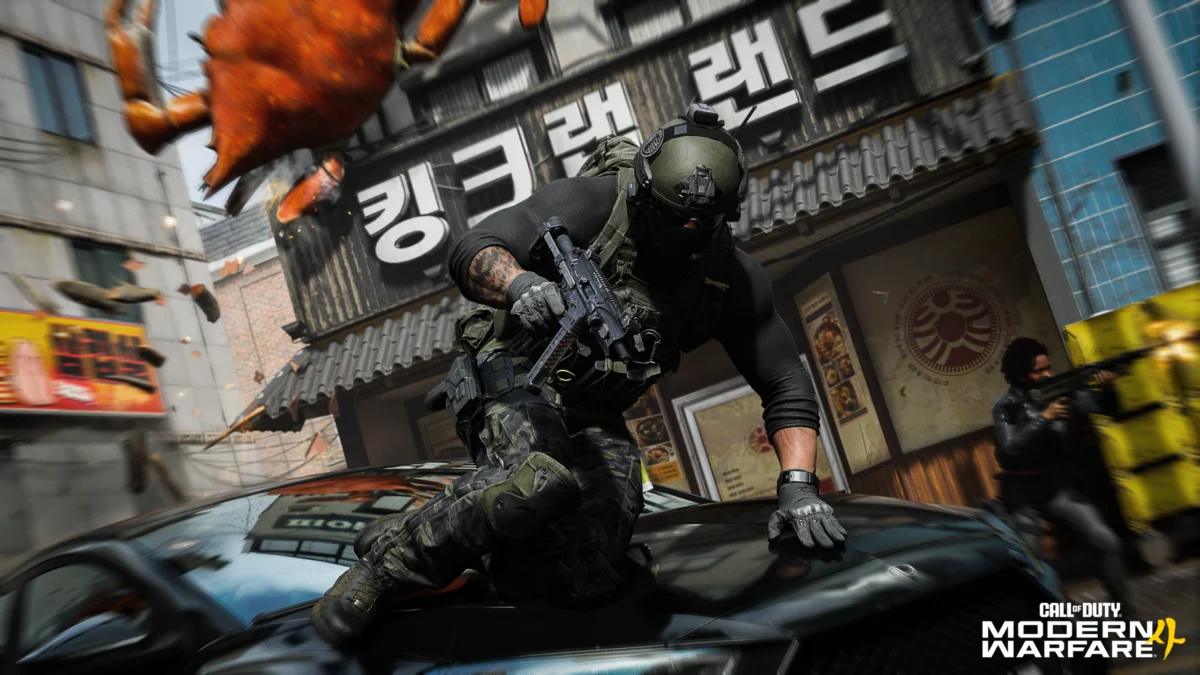
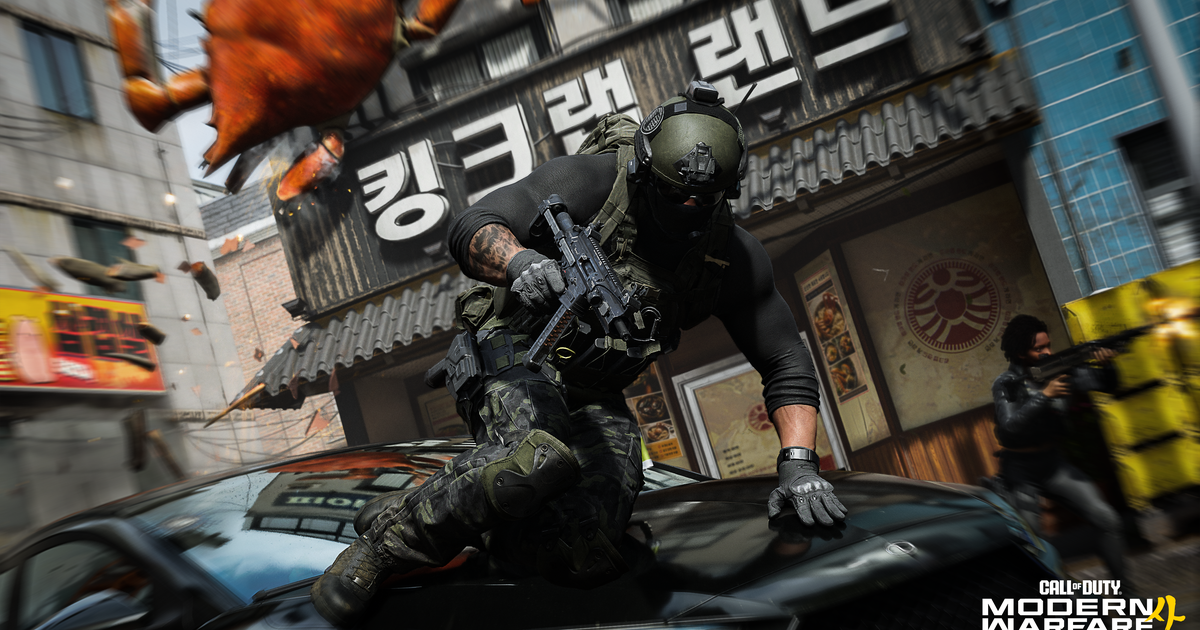
The global gaming community was recently met with a definitive declaration of intent from Activision and Infinity Ward regarding the future of the Call of Duty franchise. Following the official reveal of Call of Duty: Modern Warfare 4, set for release on October 23, 2026, the development team has signaled a rigorous return to the series’ roots. In a move that distinguishes the upcoming title from its immediate predecessors, the community management team has issued a stern promise to maintain tonal consistency, explicitly rejecting the "goofy" or "immersion-breaking" crossover cosmetics that have become a hallmark of the live-service era. The message to the fans was succinct: "No Lady Gaga. No Omni-Man. No Teletubbies. No SpongeBob. Keep the receipts."
This pivot comes at a critical juncture for the franchise. For several years, Call of Duty has faced internal and external criticism for its "Fortnite-ification"—a trend where high-stakes military realism was frequently punctuated by the presence of colorful, licensed characters ranging from Nicki Minaj to the cast of Beavis and Butthead. While these collaborations proved lucrative, they created a growing rift within the core player base, many of whom felt the gritty atmosphere of the Modern Warfare sub-series was being sacrificed for short-term monetization. With Modern Warfare 4, Infinity Ward appears to be drawing a line in the sand, prioritizing narrative integrity and atmospheric immersion over eclectic brand partnerships.
A Return to Narrative Authenticity
The foundational philosophy of Modern Warfare 4 is centered on what the developers describe as being "anchored in the game’s narrative." This approach dictates that every asset, from character skins to weapon blueprints, must logically exist within the established world of the Modern Warfare universe. According to marketing statements shared by the community team on social media, the goal is to ensure that every feature and every design decision feels authentic to the military thriller aesthetic that originally defined the brand in 2007 and was revitalized in the 2019 reboot.
The decision to move away from high-profile, non-military collaborations is not merely a cosmetic choice but a strategic one. By aligning the game’s monetization with its narrative, Infinity Ward aims to rebuild trust with a community that felt the series had "drifted" from its unique identity. This sentiment was formally acknowledged by the development team last summer, admitting that the pursuit of unusual partners had diluted the brand’s core appeal. The "keep the receipts" challenge issued to fans on X (formerly Twitter) serves as a high-stakes promise of accountability, suggesting that the studio is willing to be held to these standards throughout the game’s multi-year lifecycle.
Technical Innovations and Gameplay Evolution
While the aesthetic shift has dominated headlines, the technical advancements planned for Modern Warfare 4 represent a significant leap forward for the IW Engine. The 2026 title is being developed for a suite of high-performance platforms, including the PlayStation 5, Xbox Series X/S, PC, and notably, the Nintendo Switch 2. This marks one of the first times a flagship Call of Duty title will launch day-and-date on a Nintendo platform, a direct result of the long-term agreements signed following Microsoft’s acquisition of Activision Blizzard.
The End of Weapon Bloom
One of the most significant mechanical changes revealed for the multiplayer component is the introduction of a new bullet trajectory system. For years, the franchise has utilized varying degrees of "weapon bloom"—a mechanic where bullets have a randomized spread within a reticle, regardless of the player’s aim. This system was often criticized by competitive players for introducing an element of RNG (randomness) into gunfights.
Modern Warfare 4 will reportedly remove randomized bloom entirely, replacing it with a predictive physics-based system. In this new model, bullets follow a consistent trajectory influenced by the weapon’s muzzle velocity, gravity, and environmental factors. This change is expected to raise the skill ceiling of the game, rewarding players who can master recoil patterns and lead targets at a distance.
Apex Attachments and Movement Refinements
The "Gunsmith" system, a staple of the series, is being evolved through the introduction of "Apex Attachments." These are high-tier modifications that do not merely adjust stats like ADS (aim-down-sights) speed or recoil control but fundamentally alter the weapon’s function. For example, an Apex Attachment might convert a standard assault rifle into a specialized marksman tool or a high-capacity suppressive fire weapon, requiring players to make tactical trade-offs that impact their role within a squad.
Furthermore, movement mechanics are seeing a total overhaul. Following the "slide-canceling" controversies of previous years, Infinity Ward is introducing "Contextual Vaulting" and "Weight-Based Momentum." These systems aim to make the movement feel more grounded and deliberate, moving away from the "arcade-like" twitch movements that characterized Modern Warfare 3 (2023) and returning to a more tactical, heavy-hitting feel.
The Return of DMZ and Expanded Game Modes
Modern Warfare 4 will launch with three distinct pillars of play: a cinematic Campaign, traditional Multiplayer, and the return of the extraction-based mode, DMZ. The inclusion of DMZ is particularly noteworthy, as the mode was moved to "maintenance mode" during the previous game cycle.
The 2026 iteration of DMZ is being positioned as a direct competitor to the growing "extraction shooter" genre, which includes titles like Escape from Tarkov and Gray Zone Warfare. By leveraging the "grounded and transparent" philosophy, the new DMZ aims to offer a high-stakes, narrative-driven experience where players must scavenge for resources and complete objectives in a persistent war zone. The developers have hinted that the narrative of the single-player campaign will bleed directly into DMZ, with the choices made in one mode potentially impacting the world state of the other.
Chronology and Historical Context
To understand the weight of these promises, one must look at the timeline of the Modern Warfare reboot series.
- 2019: Modern Warfare reboots the franchise with a focus on realism and a new engine. It is a massive critical and commercial success.
- 2022: Modern Warfare 2 introduces more complex mechanics but begins to lean heavily into "celebrity" operators.
- 2023: Modern Warfare 3 is released amid reports of a shortened development cycle, leading to criticism that it felt like an expansion rather than a full sequel. It is during this year that crossovers with superhero franchises and pop stars reach an all-time high.
- 2026: Modern Warfare 4 is scheduled to launch, promising a return to the "Tactical Realism" that made the 2019 title a standout.
The three-year gap between Modern Warfare 3 and Modern Warfare 4 suggests a full development cycle for Infinity Ward, which fans hope will translate into a more polished and content-rich experience than the 2023 release.
Industry Implications and Competitive Landscape
The decision to double down on realism is likely a calculated response to the upcoming competitive landscape. Electronic Arts is reportedly working on a "back-to-basics" Battlefield title, and several tactical shooters are gaining traction on PC. By reclaiming the "tactical military" identity, Call of Duty is attempting to solidify its dominance over the "milsim-lite" market while leaving the "hero-shooter" and "wacky" aesthetic to competitors like Fortnite or even Activision’s own Overwatch 2.
Industry analysts suggest that the inclusion of the Nintendo Switch 2 is a major strategic move. Bringing a high-fidelity, grounded shooter to a mobile-capable platform requires significant optimization, but it opens the door to millions of players who have been historically underserved by the Call of Duty franchise. If Infinity Ward can maintain the promised visual fidelity on Nintendo’s new hardware, it could represent a massive new revenue stream that doesn’t rely on selling "silly" skins.
Official Stance and Community Reaction
The community reaction to the "no SpongeBob" stance has been overwhelmingly positive among veteran players. On various forums and social media platforms, the sentiment is that the franchise is finally listening to the "silent majority" who prefer a cohesive art style. However, some skeptics point out that Activision is a business driven by microtransactions. The challenge for Infinity Ward will be to create "authentic" cosmetics that are still appealing enough to drive the revenue levels the company has grown accustomed to.
The "Keep the receipts" comment from the CallofDutyCM account has already become a rallying cry for the fanbase. It represents a rare moment of bravado from a community team, setting a clear expectation for the years ahead. Whether the team can maintain this resolve in the face of post-launch revenue targets remains to be seen, but for now, Call of Duty: Modern Warfare 4 stands as a testament to the idea that sometimes, to move forward, a franchise must look back at what made it legendary in the first place.
With the October 23, 2026, release date firmly set, the countdown has begun for a title that promises to be the most grounded, technically advanced, and tonally consistent entry in the history of the Modern Warfare saga. The receipts, as they say, have been issued. The world is watching to see if they will be honored.