
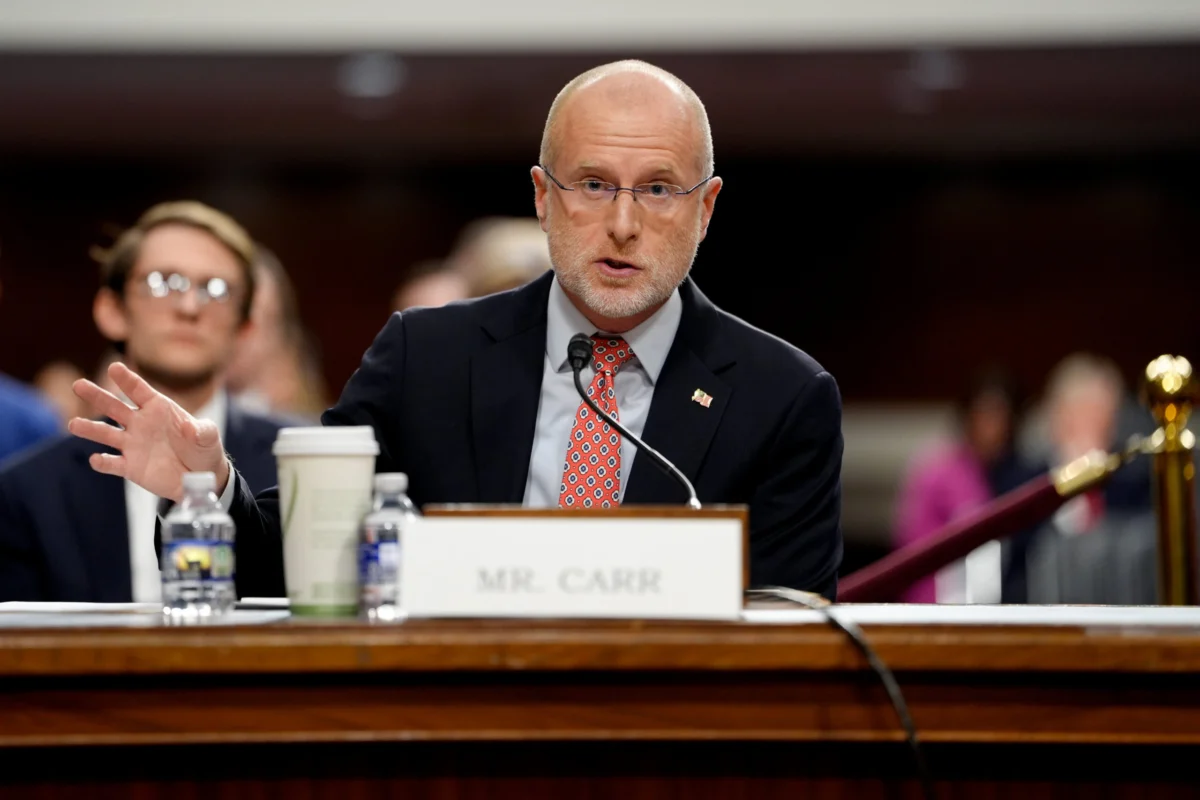
The Federal Communications Commission (FCC) has formally initiated an accelerated review of the broadcast licenses held by the Walt Disney Company, a move that significantly advances an ongoing investigation into the media giant’s diversity, equity, and inclusion (DEI) initiatives. In a letter issued Tuesday by FCC Chairman Brendan Carr, the agency ordered Disney to file for early renewal of its ABC-owned television stations, effectively pulling forward a process that was not scheduled to occur for several years. This administrative action marks a major escalation in the regulatory oversight of one of the world’s largest media conglomerates and highlights a growing intersection between federal telecommunications policy and cultural corporate governance.
According to the order, Disney is required to submit renewal applications for its ABC-owned and operated stations within 30 days, establishing a deadline of May 28. Under the standard regulatory calendar, these licenses—which grant the company the right to broadcast over public airwaves—were not slated for review until the period between 2028 and 2031. The FCC’s decision to bypass this timeline suggests a sense of urgency within the commission’s leadership to address concerns regarding Disney’s internal policies and their alignment with federal broadcasting standards.
The Scope and Legal Basis of the Investigation
The FCC’s inquiry centers on whether Disney’s DEI programs violate the Communications Act of 1934 or existing agency rules that prohibit unlawful discrimination in the operation of broadcast facilities. The investigation, which began in early 2024, focuses on how the company’s diversity mandates influence hiring, content creation, and general station management. Under Chairman Carr, the FCC has signaled a more aggressive stance toward "social engineering" within regulated industries, questioning whether such policies interfere with the requirement that broadcasters operate in the "public interest, convenience, and necessity."
The order specifically targets eight television stations directly owned and operated by Disney. These stations are located in some of the most influential media markets in the United States, including:
- Three stations in California (notably KABC-TV in Los Angeles and KGO-TV in San Francisco).
- WLS-TV in Chicago, Illinois.
- WABC-TV in New York City, the nation’s largest media market.
- KTRK-TV in Houston, Texas.
- WTVD in Raleigh-Durham, North Carolina.
- WPVI-TV in Philadelphia, Pennsylvania.
Notably, the order does not extend to ABC-affiliated stations owned by third-party companies, such as Nexstar Media Group or Sinclair Broadcast Group. These affiliates carry ABC network programming but are managed independently. By focusing strictly on "Owned and Operated" (O&O) stations, the FCC is applying pressure directly to Disney’s corporate leadership and its centralized policy-making apparatus.
Political Context and the Jimmy Kimmel Controversy
The timing of the FCC’s order has drawn significant attention, as it coincides with renewed friction between the Disney-owned ABC network and President Donald Trump. This week, the President intensified his criticism of the network following a monologue by late-night host Jimmy Kimmel. During a recent episode of "Jimmy Kimmel Live!", the comedian referred to First Lady Melania Trump as an "expectant widow." This comment, made just days before a reported security threat at the White House Correspondents’ Dinner, drew immediate condemnation from the administration and its supporters.
President Trump has publicly called for ABC to remove Kimmel from the air, characterizing the remarks as "incitement" and "disgraceful." While the FCC is an independent regulatory body, Chairman Carr was appointed by Trump, and his recent actions reflect the administration’s broader dissatisfaction with mainstream media coverage. This is not the first time Kimmel’s commentary has triggered regulatory threats; in September 2025, Carr suggested that broadcast licenses could be scrutinized following Kimmel’s comments regarding the death of conservative activist Charlie Kirk, which led to a temporary suspension of the show.
While the DEI investigation predates the most recent Kimmel controversy, the move to accelerate the license renewal process is viewed by many analysts as a strategic use of regulatory leverage to address both policy-level concerns (DEI) and content-related grievances.
Disney’s Defense and the Regulatory Timeline
In response to the FCC’s order, Disney issued a statement defending its record and the integrity of its broadcast operations. The company emphasized that ABC stations have historically operated in full compliance with federal law, providing essential services such as local news, emergency alerts, and public interest programming.
"ABC and its stations have a long record of operating in full compliance with FCC rules and serving their local communities with trusted news, emergency information, and public-interest programming," the company stated. "We are confident that record demonstrates our continued qualifications as licensees under the Communications Act and the First Amendment and are prepared to show that through the appropriate legal channels."
The investigation has progressed through several stages:
- March 2025: The FCC officially opens an investigation into Disney’s DEI practices, citing potential violations of non-discrimination rules.
- Mid-2025: Disney provides responses to two separate inquiries from the FCC regarding its internal diversity quotas and hiring metrics.
- Late 2025: Tensions escalate following Jimmy Kimmel’s comments on Charlie Kirk, prompting Carr to hint at license reviews.
- April 2026: The FCC determines that Disney’s prior responses were insufficient and orders the early license renewal filing for the eight O&O stations.
Dissent Within the Commission and Legal Challenges
The FCC’s decision is not unanimous. Commissioner Anna Gomez, a member of the agency’s Democratic minority, has emerged as a vocal critic of the move. In a post on the social media platform X, Gomez characterized the accelerated review as "unprecedented, unlawful, and going nowhere." She urged media companies to challenge the order, asserting that the action constitutes a "political stunt" that threatens the First Amendment rights of broadcasters.
Legal experts and First Amendment advocates have echoed these concerns. Jameel Jaffer, Executive Director of the Knight First Amendment Institute at Columbia University, warned that using license renewals as a tool for political retribution or ideological policing sets a dangerous precedent.
"The FCC has no authority to cancel broadcasters’ licenses because of their perceived political views," Jaffer said. "President Trump is trying to consolidate control over what Americans see and hear on the radio, television, and social media. If he gets his way, we’ll have only government-aligned media organizations that broadcast only government-approved news and commentary."
The legal battle is expected to focus on the "Public Interest" standard. Traditionally, the FCC has a high burden of proof to revoke a license, usually requiring evidence of serious crimes, lack of candor, or repeated technical violations. Using a company’s DEI policy—which many corporations argue is a voluntary effort to improve workplace culture—as a basis for license denial would be a novel and highly controversial application of the Communications Act.
Broader Industry Implications: Comcast and Paramount
Disney is not the only media entity facing this level of scrutiny. Under Chairman Carr’s leadership, the FCC has launched similar inquiries into other major broadcasters. Last year, the agency began investigating Comcast, the parent company of NBCUniversal, and Paramount Global (prior to its Skydance merger) over their respective DEI efforts.
This suggests a broader regulatory trend where the FCC is shifting its focus from technical compliance (such as signal interference and indecency) to corporate social policies. For the media industry, this represents a significant shift in the regulatory landscape. Companies that have spent years publicizing their diversity goals as part of Environmental, Social, and Governance (ESG) reporting now find those same policies being used as potential liabilities in license renewal proceedings.
Analysis of Potential Outcomes
As the May 28 deadline approaches, several scenarios could unfold:
- Compliance and Clearance: Disney files the renewals, provides exhaustive data on its DEI programs, and the FCC eventually clears the licenses after a period of intense oversight.
- Administrative Litigation: The FCC could move to designate the licenses for a hearing before an Administrative Law Judge (ALJ), a process that could take years and effectively freeze Disney’s ability to sell or transfer those stations.
- Federal Court Intervention: Disney may sue the FCC in federal court, seeking an injunction to stop the early renewal process on the grounds that it is arbitrary, capricious, and a violation of the First Amendment.
The outcome of this confrontation will likely define the boundaries of the FCC’s authority for the next decade. If the commission successfully uses DEI policies as a lever to challenge licenses, it could lead to a widespread "de-politicization" of corporate policies across the broadcast industry as companies seek to avoid regulatory friction. Conversely, if Disney prevails in court, it would reinforce the First Amendment protections that prevent the government from using the licensing process to influence the internal management or editorial tone of private media organizations.
For now, the focus remains on the May 28 filing. The information Disney discloses in these applications will provide the first clear look at the specific metrics and mandates that the FCC finds objectionable, setting the stage for a landmark legal and political showdown.