

The release of Christopher Nolan’s cinematic adaptation of Homer’s ancient epic, The Odyssey, marks a significant milestone in contemporary filmmaking, driven by the director’s enduring creative partnership with Oscar-winning editor Jennifer Lame. Over the course of three major motion pictures, the collaboration between Nolan and Lame has systematically dismantled traditional cinematic chronology, replacing linear storytelling with an impressionistic architecture of human memory and emotion. This partnership, which began with the 2020 sci-fi action thriller Tenet and continued through the historical biographical drama Oppenheimer in 2023, has culminated in a high-velocity, structurally complex exploration of antiquity that treats the classical text not as a museum piece, but as a visceral psychological journey.
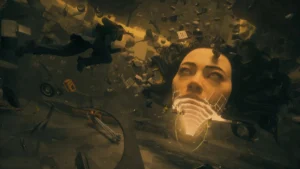
The roots of this unique editing methodology trace back to Lame’s transition from independent cinema to large-scale studio blockbusters. Prior to her involvement with Nolan, Lame earned critical acclaim editing smaller-scale character studies and dramatic features, including Noah Baumbach’s Frances Ha (2012), Mistress America (2015), and Marriage Story (2019), alongside Kenneth Lonergan’s Manchester by the Sea (2016) and Ari Aster’s Hereditary (2018). When Nolan recruited her for Tenet, Lame faced the daunting task of conceptualizing intricate action sequences filmed in reverse. To anchor these sequences in emotional logic, Lame famously treated inanimate objects, such as cars navigating high-speed pursuits, as characters engaged in dialogue. This conceptual shift allowed her to cut action with the rhythmic intensity and psychological urgency typically reserved for dramatic conversations.
That rhythmic intensity became the hallmark of Tenet, establishing a breathless editorial pace where scenes were cut to the bone, continuity was frequently sacrificed for sheer velocity, and narrative propulsion superseded traditional exposition. For Nolan, whose career-long fascination with non-linear storytelling began with his self-funded 1998 feature Following and evolved through the reverse-chronological framework of 2000’s Memento, the addition of Lame to his creative team unlocked a new echelon of formal precision. The director, who had previously collaborated extensively with editors Dody Dorn and Lee Smith, found in Lame a partner capable of merging structural complexity with visceral emotional resonance.

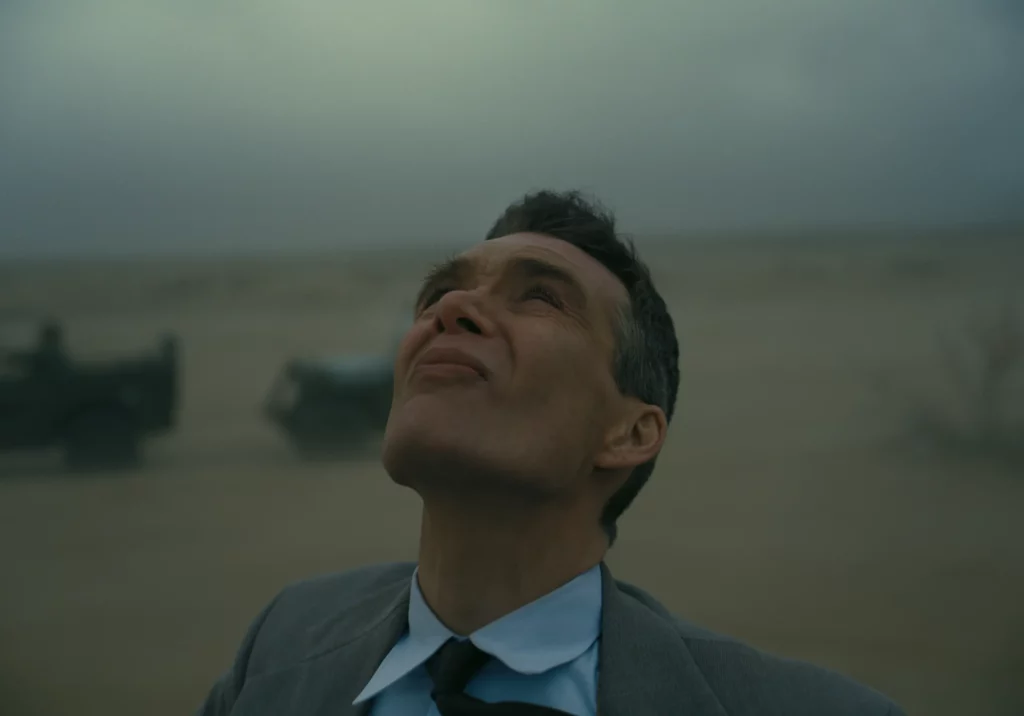
The methodology matured significantly during the production of Oppenheimer, a film that synthesized decades of biographical material through the subjective perspectives of multiple characters. Drawing upon her experience with flashback structures in Manchester by the Sea, Lame focused on ensuring that every temporal shift carried profound emotional weight rather than serving as a purely mechanical narrative device. In interviews surrounding the film’s release, Lame emphasized that the editorial team treated the audience with utmost respect, ensuring that transitions between timelines resonated on a gut level rather than functioning as confusing, superficial flourishes. This philosophy of emotional continuity over chronological strictness served as the direct proving ground for the complex temporal architecture required by The Odyssey.
In The Odyssey, this editorial philosophy reaches its most ambitious iteration yet. Homer’s original epic is itself famously non-linear, employing in media res storytelling, nested narratives, and shifting perspectives. Nolan and Lame capitalize on these inherent structural traits, streamlining the narrative without eliminating its temporal dislocations. The film begins with a bravura sequence featuring a bard, played by musical artist Travis Scott, relating the story of the Trojan Horse. Within the opening minutes, the audience is thrust into three simultaneous timelines: Odysseus, portrayed by Matt Damon, is glimpsed alongside Sinon, played by Elliot Page; the wooden horse juts ominously from a sun-bleached sandy beach; and Penelope, portrayed by Anne Hathaway, shouts from behind a metal screen, demanding that the bard cease recounting the frequently repeated tale of the war.
Rather than adhering to the opulent theatricality and leisurely widescreen lingering historically associated with classical Hollywood antiquity epics—such as The Robe (1953) or Kingdom of Heaven (2005)—The Odyssey deploys an immediate, almost claustrophobic sense of scale. Establishing shots of the Mediterranean Sea and expansive horizons are deliberately fleeting. The editing favors kinetic immediacy, mirroring the fractured cognitive state of Odysseus, whose harrowing journey is largely recounted to Calypso through flashbacks as he recovers from a years-long, drug-induced haze. By cutting rapidly between decontextualized moments from the sacking of Troy and present-day tribulations, Lame establishes continuous threads of loss and horror that ultimately converge in a unifying final shot.
The integration of subjective memory as a structuring principle reflects an ongoing evolution in Nolan’s filmography. The precise, puzzle-box nesting of flashbacks in Memento gradually yielded to more intuitive, psychological cutting in the opening acts of Batman Begins (2005) and The Prestige (2006). By the time of Interstellar (2014) and Tenet, the mechanics of the plot consistently served as conduits for base emotional experiences. With The Odyssey, this stylistic trajectory culminates in an impressionistic epic that operates akin to the collective unconscious. Chronology is entirely subordinated to the synaptic logic of the human mind, creating an audiovisual experience where ideas and emotions are linked not by the passage of calendar days, but by the raw impact of consecutive shots.

Industry analysts and film historians have noted that the commercial and critical success of Nolan’s recent works underscores a broader shift in contemporary audience reception toward complex, demanding editorial styles. Where mainstream studios historically feared that non-linear narratives or rapid, impressionistic cutting would alienate general audiences, Nolan and Lame have demonstrated that viewers readily engage with sophisticated structural experiments when anchored by rigorous emotional logic. The detailed character passes employed during the editing of Oppenheimer—where Lame and Nolan meticulously tracked minor historical figures like Boris Pash or Chevalier Lawrence through facial recognition and isolated narrative sweeps rather than expositional crutches—demonstrate a meticulous approach to audience comprehension that translates directly into the dense mythological landscape of The Odyssey.
The broader implications of this collaborative style suggest a lasting influence on how big-budget historical and speculative epics are constructed. By proving that classical texts and historical biographies can be translated to the screen through the subjective lens of memory rather than the objective lens of history books, Nolan and Lame have expanded the vocabulary of studio filmmaking. The film’s rare, sustained moments of stillness—such as a prolonged shot of Penelope working a strung loom while Antinous, played by Robert Pattinson, attempts his courtly advances—provide essential breathing room that highlights the human cost of prolonged absence and faulty memory. These intimate pauses, contrasted against the terrifying vastness of the sea and the chaotic violence of war, encapsulate the dual nature of an epic that functions simultaneously as an intimate character study and a monumental historical canvas.
Ultimately, The Odyssey stands as a testament to the maturation of a director-editor partnership that has continually challenged the boundaries of cinematic time and space. By stripping away conventional exposition and prioritizing the visceral, emotional weight of the edit, Christopher Nolan and Jennifer Lame have transformed a foundational text of Western literature into a startlingly modern psychological experience. As the film secures its place in contemporary cinema, its structural boldness reaffirms that the primary engine of storytelling is not the straight line of chronology, but the complex, reverberating architecture of human memory.