Juno Mak’s highly anticipated sophomore feature, Sons of the Neon Night, after a protracted development and production cycle spanning nearly a decade and a half, finally premiered at the 78th Cannes Film Festival in 2025. The film, which began principal photography in 2017, garnered significant pre-release attention owing to the critical and commercial success of Mak’s directorial debut, Rigor Mortis (2014). Despite facing considerable headwinds, including the global disruptions caused by the COVID-19 pandemic and intricate post-production challenges, the project’s eventual unveiling marked a significant moment for its ambitious creative team. While critical reception at Cannes was largely lukewarm, the film subsequently achieved notable recognition at the 44th Hong Kong Film Awards in 2026, clinching an impressive eight accolades.
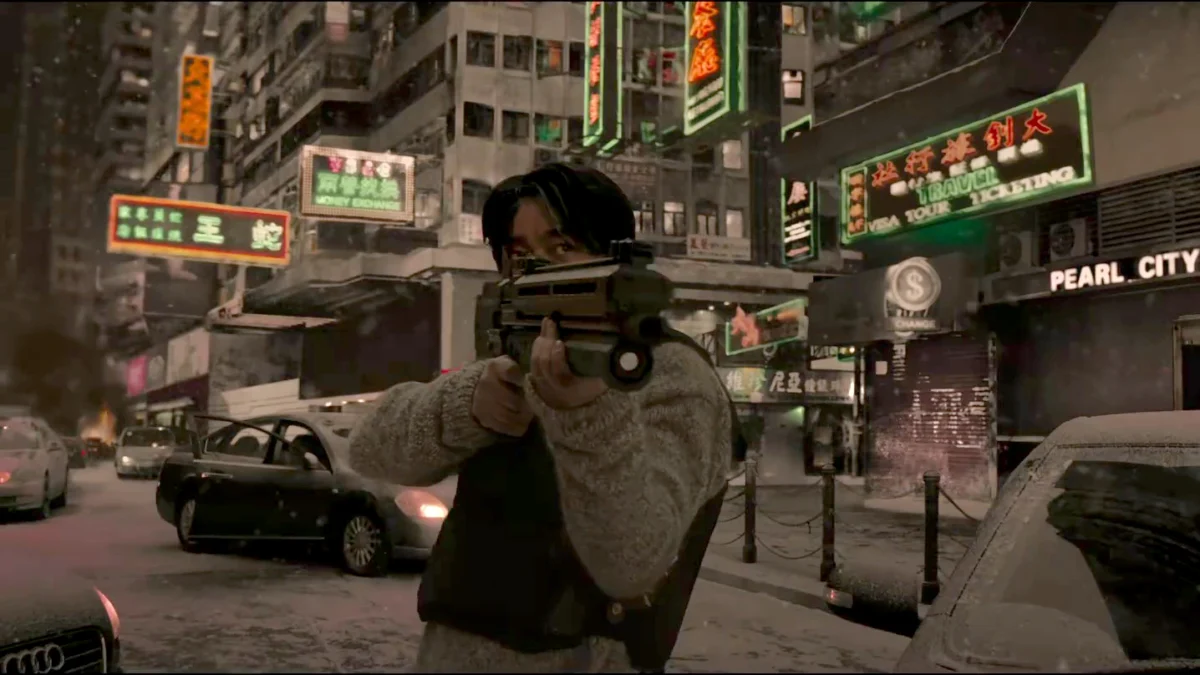
The film’s Chinese title, which translates to "Wind, Forest, Fire, Mountain," is a deliberate allusion to ancient military strategy, specifically drawing from a chapter on tactical maneuvering in Sun Tzu’s seminal work, The Art of War. This thematic undercurrent suggests a narrative steeped in strategic conflict and underlying chaos. Set against the backdrop of a desolate, snow-laden Hong Kong in 1994, a year marked by significant political and economic shifts in the region, the story plunges viewers into a starkly different cityscape than the bustling metropolis familiar to many. The narrative ignites with a brutal act of violence: two armed and hooded assailants open fire on the densely populated, neon-drenched streets of Causeway Bay. Leading the immediate police response is Wong Chi Tat, portrayed by veteran actor Sean Lau Ching Wan, who rushes to the scene of escalating pandemonium.
The ensuing confrontation is characterized by intense gunfire, during which Wong personally neutralizes the two attackers. However, the incident rapidly spirals into a more complex and far-reaching conspiracy. Mak, appearing in the film as a rogue undercover officer, orchestrates a devastating bombing within a nearby hospital. His precise target is Li Pak San, a powerful and wealthy businessman at the helm of Kiu Yin Group, a major pharmaceutical conglomerate. Li Pak San is under police custody at the hospital, making the assassination attempt a daring and audacious act. This calculated strike is designed to instigate a violent power struggle between rival factions within the city’s drug trade, thereby destabilizing the criminal underworld and plunging it into widespread turmoil. The choice of 1994 as the film’s setting is particularly resonant, as it precedes the 1997 handover of Hong Kong to China, a period of palpable uncertainty and underlying tension that often finds its way into cinematic narratives exploring the city’s identity and future.
Production Challenges and Creative Aspirations
The journey of Sons of the Neon Night from conception to screen was far from linear. Principal photography commenced in 2017, with Mak assembling a cast of considerable repute, a testament to the project’s initial promise and his growing influence in the film industry. However, the global pandemic, which began in early 2020, brought many film productions to a grinding halt, including this one. The subsequent delays not only impacted the shooting schedule but also extended the post-production phase significantly. Reports suggest that over six hours of footage were captured during the extensive filming period, indicating a wealth of material that presented both opportunities and challenges for the editing process. This vast amount of raw footage has led to speculation that the narrative, as presented in its feature-length format, may not fully realize its potential, with some suggesting a more expansive miniseries format could have better served the intricate plotlines and character development.
Critical Reception and Award Recognition
Upon its premiere at the 78th Cannes Film Festival in 2025, Sons of the Neon Night was met with a predominantly negative critical reception. Reviewers frequently cited issues with narrative coherence and pacing, noting that the film struggled to provide adequate depth for its ensemble of characters, leaving many underdeveloped or even overlooked. Mak’s directorial approach was often described as relying on familiar genre tropes, which, for some critics, limited audience engagement. The suggestion that a more innovative storytelling methodology might have yielded a more impactful result was a recurring theme in the reviews.
Despite the critical headwinds at Cannes, the film found a more appreciative audience and jury at the 44th Hong Kong Film Awards in 2026. Its haul of eight awards, including significant technical and acting honors, suggests that while the narrative may have faltered for some critics, the film’s artistic and technical merits were widely acknowledged. This disparity in reception highlights the subjective nature of film evaluation and the potential for a film to resonate differently across various platforms and audiences.
Visual Spectacle and Artistic Direction
Visually, Sons of the Neon Night is a tour de force, demonstrating Mak’s keen eye for atmospheric and striking imagery. From the opening sequence, where Moreton Li awakens within the confines of the Cross-Harbour Tunnel, to the explosive shootout in Causeway Bay, the film consistently delivers arresting visuals. A particularly memorable and symbolic image is the slow-motion depiction of a drop of blood colliding with a falling snowflake, blossoming into a crimson flower, an eerie and poetic metaphor that sets the tone for the film’s often surreal aesthetic. The cinematography, credited to Sion Michel and Richard Bluck, masterfully captures the stark beauty of the snow-covered Hong Kong landscape and the claustrophobic intensity of its criminal underworld.
The art direction by Ambrose Chow Sai Hung is a significant contributor to the film’s immersive atmosphere, meticulously recreating a stylized version of 1990s Hong Kong. Uma Wong’s costume design further enhances this visual tapestry, while the detailed set work grounds the fantastical elements in a tangible reality. The evocative soundtrack, composed by the late Ryuichi Sakamoto, whose contributions to film scores are legendary, adds a profound emotional layer, underscoring the film’s dramatic tension and melancholic undertones. The action choreography, executed by Xiong Xin Xin and Au Wing Hin, is seamlessly integrated into the narrative, providing visceral and impactful set pieces that complement the film’s overall aesthetic.
A Stellar Ensemble Cast
One of the undeniable strengths of Sons of the Neon Night is its star-studded cast, delivering performances that are consistently compelling. The presence of industry heavyweights such as Sean Lau Ching Wan, Takeshi Kaneshiro, Tony Leung Ka Fai, Louis Koo, and Gao Yuanyuan lends significant weight and credibility to the project. Each actor brings a nuanced performance to their respective roles, anchoring the film’s ambitious narrative.
The supporting cast also makes a memorable impact. Nina Paw Hee Ching shines as Sister Foon, a formidable gun handler, whose scenes, particularly a heartfelt exchange with Louis Koo, stand out. Michelle Wai, Richie Jen, and Lo Hoi Pang contribute significantly to the film’s rich tapestry of characters. Alex To earns particular praise for his portrayal of Maddox Li, the elder son of the Lei empire, a performance that was recognized with the Best Supporting Actor award at the Hong Kong Film Awards. Juno Mak himself makes a brief but impactful appearance as the suicide bomber, adding a layer of meta-commentary to his directorial effort. Notable moments include a poignant scene featuring Takeshi Kaneshiro and Lo Hoi Pang over a bowl of snake soup, showcasing the actors’ ability to convey subtle emotional depth amidst the film’s larger-than-life events.
Artistic Ambition Versus Narrative Cohesion
Juno Mak’s foray into feature filmmaking, particularly Sons of the Neon Night, is characterized by a palpable sense of ambition. Despite lacking formal filmmaking training, his background in music and fashion undoubtedly informs his distinctive stylistic approach. The film represents a bold departure from his established career, prioritizing atmosphere, craft, and visual artistry over strict narrative coherence. While this approach results in a visually stunning and thematically rich experience, it also leads to narrative shortcomings, as evidenced by the criticism regarding underdeveloped characters and pacing.
The sheer volume of footage reportedly shot suggests a creative process that was expansive, perhaps even unrestrained. This has fueled discussions about the film’s potential to be reimagined. A miniseries format, as previously mentioned, could have allowed for a more thorough exploration of the multi-layered plot and the intricate relationships between characters. However, as a standalone feature, Sons of the Neon Night is ultimately a work that demands to be appreciated for its audacious vision and aesthetic achievements, even if its storytelling falters at times. It stands as a testament to Mak’s willingness to push creative boundaries, offering a cinematic experience that is more about mood, style, and atmosphere than a tightly woven plot. The film’s journey from initial production to its eventual release and subsequent awards recognition underscores the complex and often unpredictable nature of filmmaking, particularly for projects with such ambitious creative goals. The film’s impact, therefore, is likely to be debated for some time, with its visual artistry and stellar performances continuing to be discussed, even as its narrative complexities remain a point of contention.