
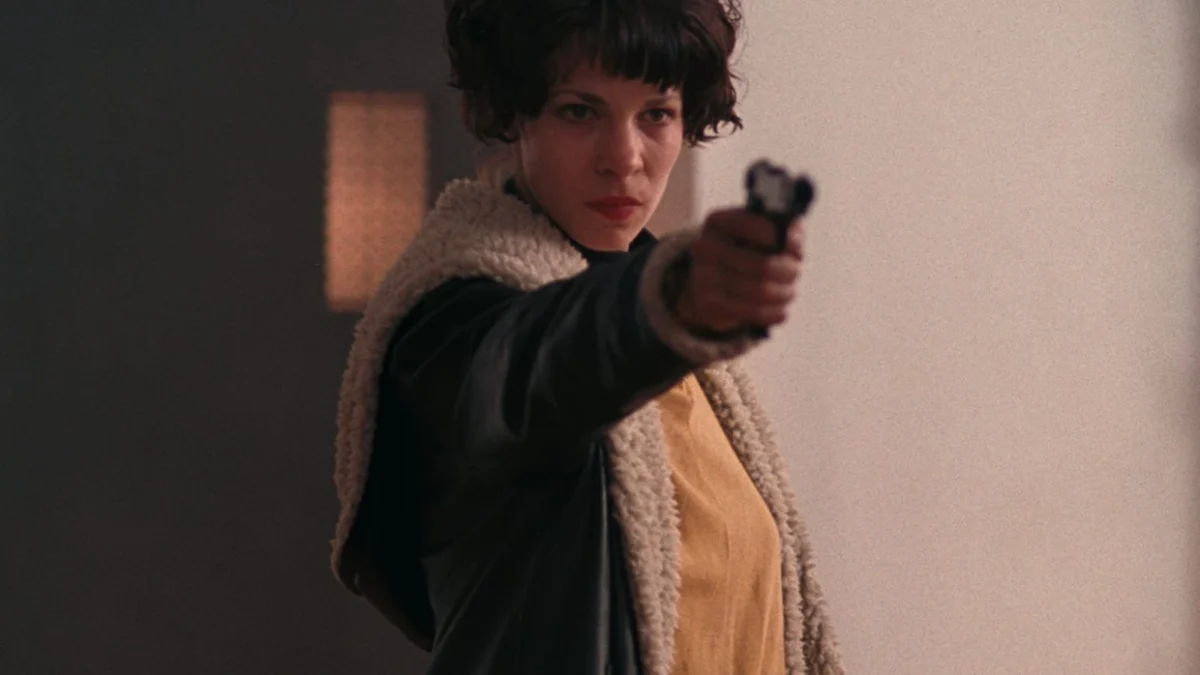
Long before she brought the chilling, slickly tailored corporate pathology of Patrick Bateman to cinematic life in 2000s American Psycho, director Mary Harron dissected an entirely different brand of mid-century American derangement. With her 1996 debut feature, I Shot Andy Warhol, Harron cast a sharp, unblinking eye on the downtown New York art scene of the late 1960s, anchoring her narrative around Valerie Solanas—the radical feminist writer who infamously shot pop art icon Andy Warhol in June 1968. Nearly three decades after its initial theatrical release, the indie classic is returning to theaters in a pristine new 4K restoration, inviting a fresh generation of cinephiles and cultural historians to grapple with its complex, thorny examinations of gender, power, and outsider desperation.
The film, which famously featured Lili Taylor in a career-defining, deadpan performance as Solanas, arrives back on the big screen at a time when debates surrounding feminist rage, artistic exploitation, and internet-era radicalization feel intensely contemporary. In a recent interview with critic Elissa Suh, Harron reflected on the long, arduous journey of bringing Solanas’s story to the screen, the meticulous technical achievements of the new restoration, and why the SCUM Manifesto continues to polarize and fascinate modern audiences.
Main Facts and the Genesis of an Indie Milestone
I Shot Andy Warhol emerged from the vibrant, scrappy landscape of 1990s American independent cinema, produced during an era when micro-budget films relied heavily on sheer grit, unconventional financing, and distinct aesthetic visions. The film tracks Solanas on the fringes of Manhattan’s cultural elite as she tirelessly hawks mimeographed copies of her self-published SCUM Manifesto—priced at two dollars for men and one dollar for women—while desperately trying to secure a production for her provocative play, Up Your Ass. Her eventual drift into the orbit of Warhol’s legendary studio, The Factory, sets the stage for a tragic collision of disparate worlds.
The production itself was a marathon of persistence. Harron, who began her career directing comedic satires and cultural essays for the BBC, spent five years attempting to get the project off the ground. Initial momentum arrived when a BBC producer offered £100,000 contingent on securing matching funds. The production ultimately found its footing when Harron aligned with foundational New York indie producers Christine Vachon and Tom Kalin.
Supported by an eclectic ensemble cast that included Martha Plimpton, Michael Imperioli, and Stephen Dorff as transgender icon Candy Darling, the film captured the texture of its era. When legendary Velvet Underground frontman Lou Reed denied Harron permission to use the band’s original recordings, composer John Cale stepped in to craft an original score. The result was a textural masterpiece that avoided sterile period-piece reconstruction in favor of a living, breathing documentary-style realism.
Chronology of a Cultural Flashpoint
To understand the weight of Harron’s film, one must examine the timeline of the historical events that inspired it:
- 1967: Valerie Solanas self-publishes the SCUM Manifesto, a blistering, satirical, and fiercely anti-male tract that argues for the systematic elimination of men and the overthrow of society.
- June 3, 1968: Solanas enters Andy Warhol’s Union Square studio, The Factory, and fires three shots at the artist, severely wounding him. She surrenders to police later that evening.
- 1969–1970s: Solanas is institutionalized and convicted of reckless assault with intent to harm, serving a three-year prison sentence. Throughout the decades, her manifesto circulates primarily within underground radical feminist circles.
- 1996: Mary Harron releases I Shot Andy Warhol to critical acclaim, positioning Solanas not as a one-dimensional villain, but as a complex, deeply alienated artist crushed by a patriarchal arts economy.
- Present Day: The film receives a comprehensive 4K restoration supervised by cinematographer Ellen Kuras, prompting renewed academic and cultural discourse surrounding Solanas’s writings and legacy.
Restoring the Grungy Magic of the Factory
The new 4K restoration brings fresh attention to the visual brilliance of cinematographer Ellen Kuras’s original lens work. Speaking about reviewing the playback without sound, Harron expressed admiration for how Kuras successfully balanced the dreamlike atmosphere of The Factory with a grounded, naturalistic grit.
"You’re just able to see Ellen’s beautiful lighting and the colors," Harron noted. "The Factory is this kind of dream world, but it’s all realistic… It looks both gritty and beautiful—but not too beautiful, which is important."
Rather than relying on the heavily stylized aesthetics typical of mainstream biographical films, Harron and Kuras drew inspiration from the gritty street photography of Diane Arbus and Magnum photo archives. By avoiding dramatic cinematic models and immersing themselves strictly in period-appropriate documentary materials, the filmmakers established an atmosphere of poetic realism that mirrored the harsh economic and social realities of late-1960s New York.
Analyzing the SCUM Manifesto: Satire, Rage, and Essentialism
At the heart of both the film and Solanas’s historical footprint is the SCUM Manifesto—a text that has continually resisted easy categorization. When asked about the cultural consensus surrounding the manifesto during the late 1980s and early ’90s, Harron recalled that it was viewed primarily as a dark, eccentric outlier, far removed from the mainstream academic feminist texts of figures like Shulamith Firestone.
"I first learned about it as a kind of joke, amid my obsession with Warhol, the Factory, and the Velvet Underground," Harron said. "This crazy woman had this manifesto. It felt darkly comic. She had formed this organization, of which she was the only member."
However, upon discovering a copy in a left-wing bookstore while working as a researcher on a Warhol documentary, Harron was struck by Solanas’s literary elegance and biting irony. Comparing its sophisticated prose to the style of Evelyn Waugh, Harron noted that the manifesto’s dissection of modern society’s foundational assumption of female inferiority struck a powerful nerve, echoing the professional condescension Harron herself fought against as a woman working in male-dominated media spaces.
Yet, the question of whether Solanas intended the manifesto as literal political doctrine, sheer satire, or the product of severe mental illness remains intentionally unsettled in Harron’s film. Harron deliberately resisted delivering a clean, moralistic narrative of heroes and villains.
"Leaving it open was always my instinct, because I don’t think you can categorize it," Harron explained. "Categorizing it as satire almost keeps it in a safe place it doesn’t really belong in… You have to take the whole package and make up your mind."
The Gendered Economy of the Factory and the Outsider Perspective
The film offers a nuanced critique of Andy Warhol’s inner circle, portraying the artist not as a malicious villain, but as a passive, elusive figure who operated with a studio dynamic remarkably similar to the ruthless economies of classical Hollywood. While Warhol famously opened doors for marginalized figures—including drag queens and transgender women—he also possessed a well-documented habit of cultivating hungry, attention-starved individuals before abruptly discarding them when they became too difficult to manage.
"When Edie Sedgwick becomes too difficult, she’s no longer the star. You bring in someone new and easier to deal with. That’s classically Hollywood," Harron observed. She noted that Warhol’s preference for nurturing trans artists over biological women was likely a profound source of rage and alienation for Solanas, whose strict biological essentialism blinded her to the evolving spectrum of gender identity.
Addressing contemporary debates surrounding whether the SCUM Manifesto holds trans-affirming or transphobic undertones, Harron maintained that modern audiences must contextualize Solanas within the rigid chromosomal and biological frameworks of 1968, rather than retroactively imposing twenty-first-century terminology. Nevertheless, she acknowledged the fluidity of cultural texts: "People get what they need from a text like that, and interpret it the way they need to for now. I’m open to it."
Broader Impact and Implications in the Modern Era
As I Shot Andy Warhol re-enters the cultural conversation via its 4K restoration, its thematic resonance has only intensified. Released during a 1990s backlash against mainstream feminist movements, the film now finds itself screening in an era defined by rapid ideological polarization, internet-driven radicalization, and intense scrutiny over the legitimacy of female anger.
Reflecting on how Solanas might navigate the digital landscape of the twenty-first century, Harron suggested that the radical writer might have actually thrived in an age where self-made fame and direct audience outreach are instantly accessible.
"You can make your own fame now in a way you couldn’t in the ’60s," Harron said. "Valerie could have found a voice, found an audience, in a way she really couldn’t then."
Ultimately, the enduring achievement of Harron’s debut feature lies in its refusal to sanitize its subject. By treating Solanas with intellectual rigor, empathy, and uncompromising artistic vision, I Shot Andy Warhol cemented itself not merely as a historical portrait of a troubled artist, but as an essential, living document of outsider survival that continues to challenge viewers to interrogate the uncomfortable intersections of art, power, and societal rejection.