


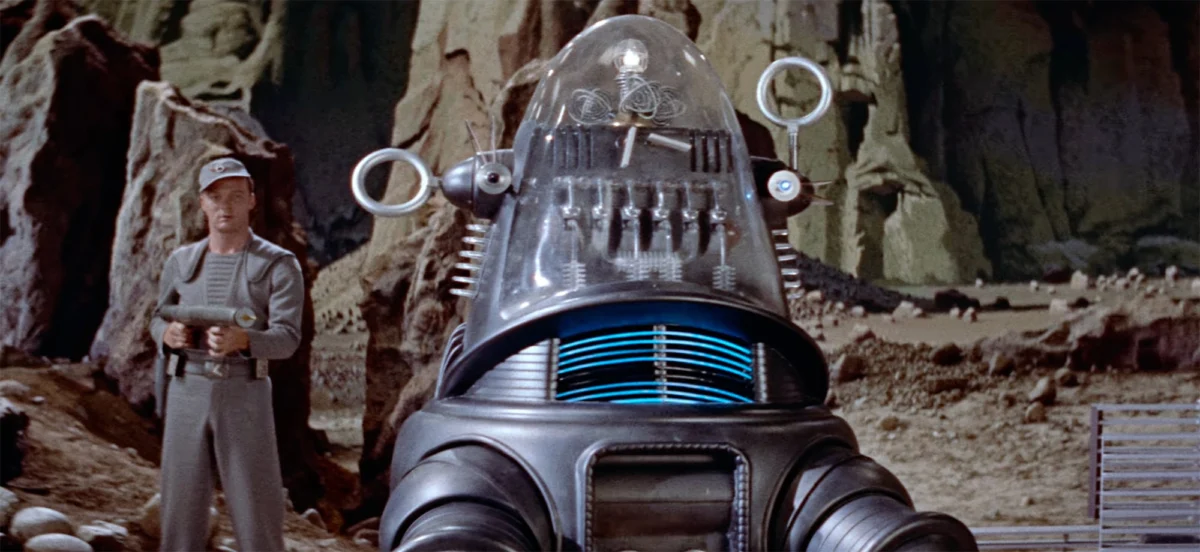
The landscape of cinematic science fiction underwent a permanent paradigm shift in March 1956 with the theatrical release of Metro-Goldwyn-Mayer’s Forbidden Planet. Directed by Fred M. Wilcox, the film boldly ventured where few motion pictures had gone before, trading the cheap monster-movie tropes of the early atomic era for sophisticated themes, elaborate technical design, and a cerebral narrative indebted to William Shakespeare’s The Tempest. Decades later, the benchmark classic is receiving the definitive home entertainment treatment. Boutique home video distributor Arrow Video has officially unveiled a brand-new trailer and release details for a comprehensive 4K Limited Edition Blu-ray package of Forbidden Planet, scheduled to hit the market on September 28, 2026.
This upcoming release promises to be a landmark event for classic film preservationists and science fiction aficionados alike. For the first time in home media history, the feature will be presented in its original, sweeping CinemaScope aspect ratio of 2.55:1, accompanied by its theatrical "Perspecta" stereo soundtrack. Painfully restored in 4K resolution, the new edition aims to bring the stark, crimson deserts and sprawling subterranean technological wonders of Altair IV into vivid, pristine focus. As physical media collectors increasingly demand uncompromising fidelity to original theatrical presentations, Arrow Video’s meticulous restoration marks a monumental achievement in preserving the golden age of Hollywood speculative fiction.
Main Facts of the Release and Technical Specifications
The upcoming Limited Edition 4K UHD release of Forbidden Planet is designed as the ultimate collector’s package. Beyond the breathtaking visual upgrade provided by the 4K scan of the original camera elements, the release honors the film’s pioneering audio legacy. Upon its initial theatrical run, the picture utilized the "Perspecta" stereophonic sound system, alongside an entirely electronic, avant-garde musical score composed by Louis and Bebe Barron. Often cited as the first all-electronic film score in cinema history, the distinctive auditory landscape—comprising circuit-bent sound generators and tape manipulations—paved the way for modern ambient and electronic sound design.

The physical package will feature newly commissioned artwork, extensive liner notes, archival featurettes exploring the creation of the film’s groundbreaking special effects, and audio commentaries that dissect the thematic depth of the screenplay. Written by Cyril Hume and based on a story by Irving Block and Allen Adler, the narrative translates the core dynamics of Prospero, Miranda, and Caliban from The Tempest into a futuristic, interstellar context involving atomic power, human hubris, and the suppressed monsters of the subconscious mind.
Chronology and Historical Context
To understand the immense cultural footprint of Forbidden Planet, one must examine the cinematic landscape of the mid-1950s. At a time when science fiction cinema was dominated by low-budget creature features driven by Cold War paranoia—such as Them! (1954) and Invasion of the Body Snatchers (1956)—MGM took a massive financial risk by greenlighting a big-budget, Technicolor space epic. Produced by Nicholas Nayfack, the production boasted a substantial budget of nearly $1.9 million, an extraordinary sum for a genre picture at the time.
The film’s timeline of production and release solidified its legendary status:
- Early Development (1954–1955): Irving Block and Allen Adler draft the initial treatment, titled "Fatal Planet," which is subsequently purchased by MGM and adapted into a screenplay by Cyril Hume. Fred M. Wilcox is brought on to direct, having previously helmed realistic family dramas and animal adventures like Lassie Come Home (1943).
- Principal Photography (1955): Production takes place largely on MGM’s soundstages, utilizing massive painted backdrops, miniature models, and elaborate hydraulic set pieces to construct the sprawling subterranean Krell machinery.
- Theatrical Premiere (March 1956): Forbidden Planet opens in theaters across the United States, captivating audiences with its state-of-the-art visual effects, Cinemascope presentation, and the breakout performance of a mechanical co-star.
- Cultural Milestone (1956–2006): Over the subsequent decades, the film serves as a direct stylistic and thematic precursor to monumental works of the genre, including Stanley Kubrick’s 2001: A Space Odyssey (1968), George Lucas’s Star Wars (1977), and Michael Anderson’s Logan’s Run (1976). A 50th-anniversary DVD edition is released in 2006, followed by various high-definition transfers over the years.
- The 4K Restoration Era (September 2026): Arrow Video secures the licensing rights to deliver the definitive 4K UHD release, establishing a new standard for home video preservation of mid-century cinematic treasures.
Plot Synopsis and Iconic Ensemble Cast

The narrative unfolds in the 23rd century, opening with the United Planets starship C-57D embarking on a long-range rescue and reconnaissance mission to the distant planet of Altair IV. The crew is tasked with discovering the fate of the exploratory vessel Bellerophon, which vanished twenty years prior. Despite explicit, ominous warnings transmitted from the surface by Dr. Edward Morbius—urging them not to land under threat of certain death—Commander John J. Adams, portrayed by a young and commanding Leslie Nielsen, orders the ship to touch down.
Upon arrival, Commander Adams and his landing party discover that only two survivors remain from the ill-fated Bellerophon expedition: the brilliant yet intensely reclusive philologist Dr. Edward Morbius (Walter Pidgeon) and his stunning, innocent daughter Altaira (Anne Francis), who has spent her entire life isolated from human society. Guiding their secluded household is Robby the Robot, an engineering marvel endowed with artificial intelligence, impeccable manners, and the physical strength to synthesize any material or object on command.
However, a creeping sense of dread pervades the planet. It is soon revealed that the rest of the Bellerophon crew perished violently at the hands of an invisible, highly destructive force that simultaneously tore their ship apart. As this unseen entity resurfaces to terrorize Commander Adams and his crew, a terrifying mystery unravels. The malevolent force is not an alien invader, but rather a manifestation of the id—the primal, destructive subconscious desires of Dr. Morbius himself, amplified to catastrophic proportions by the ancient, limitless technology of the extinct Krell civilization that once inhabited Altair IV.
Supporting Data and Industry Significance
Forbidden Planet was a technological tour de force that pushed the boundaries of visual effects artistry at MGM. The matte paintings, stop-motion animation, and intricate miniatures were executed under the supervision of legendary visual artists such as A. Arnold Gillespie, Warren Newcombe, and Irving Block. The realization of the Krell underground laboratory—a vast, labyrinthine machine city stretching for miles beneath the planet’s crust—remains one of the most astonishing achievements of practical art direction in cinema history.

Furthermore, the character of Robby the Robot transcended the film to become a foundational icon of popular culture. Designed by Robert Kinoshita, Robby cost an estimated $125,000 to build in the mid-1950s—an astronomical sum for a movie prop. His intricate inner workings, flashing lights, and distinct silhouette captured the public imagination, leading to numerous subsequent appearances in television shows and films, including episodes of The Twilight Zone and Lost in Space.
Broader Impact and Implications of the 4K Release
The arrival of Arrow Video’s 4K restoration of Forbidden Planet carries significant implications for the preservation and appreciation of classic cinema in the digital age. As major Hollywood studios increasingly pivot toward subscription-based streaming models—where older catalog titles frequently rotate in and out of availability—boutique physical media labels play an indispensable role in safeguarding cinematic history.
By rendering the film in its original 2.55:1 CinemaScope framing, the new release corrects historical compromises made during older standard-definition and early high-definition home video transfers, which frequently cropped the frame to fit older television aspect ratios. Film scholars and preservationists have long championed the preservation of widescreen formats to maintain the compositional integrity intended by cinematographers like George J. Folsey.
As cinephiles prepare to revisit Altair IV on September 28, 2026, the release serves as a timely reminder of the enduring power of imaginative storytelling. Forbidden Planet proved that science fiction could be intelligent, visually arresting, and philosophically challenging without sacrificing entertainment value. With Arrow Video’s comprehensive 4K Limited Edition Blu-ray, a new generation of viewers—as well as lifelong devotees—will have the opportunity to experience Fred M. Wilcox’s visionary masterpiece as it was meant to be seen: breathtaking, pristine, and entirely out of this world.