


When the life-simulation video game Paralives entered its early access phase, technical artist and developer Danielle Udogaranya experienced an immediate wave of physical exhaustion. Known globally in the gaming community as Ebonix, Udogaranya did not feel fatigued from a lack of passion; rather, her hands ached at the sheer prospect of manually sculpting, twisting, and rendering new Black hairstyles for the title. For over a decade, Udogaranya has dedicated her career to designing custom digital assets for life-simulation games, driven by a singular mission: ensuring that marginalized players can see accurate reflections of themselves on digital screens.
Her hesitation to begin the project stemmed from the arduous physical toll required to craft digital coils, braids, and kinks with absolute precision. Sculpting realistic Afro-textured hair has historically demanded painstaking hours of tedious micro-adjustments. Reflecting on the repetitive nature of this labor, Udogaranya remarked on the systemic oversight that forces creators to continuously solve a problem that mainstream software developers should have mastered decades ago. With a Patreon community boasting over 115,000 members and a catalogue featuring hundreds of free and paid digital assets, Ebonix has become a cornerstone of inclusive virtual styling. Yet, the necessity of her independent labor highlights a glaring, persistent deficiency in the multi-billion-dollar interactive entertainment industry.
The Historical Roots of Hair Exclusion in Digital Media
The systemic absence of authentic Afro-textured hair in video games is not a recent oversight; it is an issue baked into the foundational architecture of digital design. Since the inception of the medium, Black hair has been treated as a peripheral consideration at best, and a caricature at worst. During the rudimentary 8-bit era of the late 1970s, titles such as Sega’s Heavyweight Champ featured character models with hairstyles that leaned heavily into minstrel-like tropes and reductive visual shorthand.
As the gaming industry transitioned into the vibrant arcade fighting booms of the 1980s and 1990s, roster diversity remained severely restricted. Iconic franchises frequently limited Black representation to a single token character among dozens of choices, severely restricting stylistic variations. When Maxis launched The Sims in 2000, it introduced groundbreaking civilian customization, yet natural hairstyles remained virtually nonexistent. The game tied hair swatches rigidly to predefined facial structures, offering only a rudimentary choice of three skin tones—fair, medium, and dark—with zero room for authentic cultural expression.
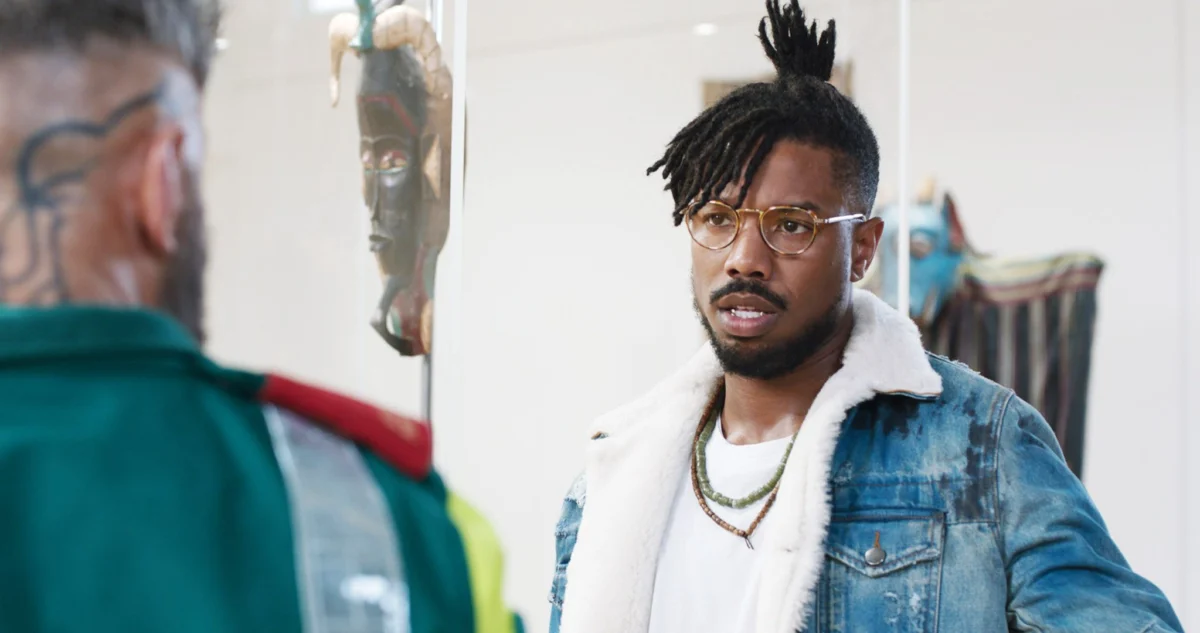
Even as 3D animation technology advanced exponentially through the 2000s and 2010s, digital hair generation tools remained strictly optimized for straight, European-texture hair strands. Developers found it mathematically simpler to render straight hair by tapering ends and applying physics engines built for linear movement. Conversely, attempting to simulate Afro-textured hair using legacy code often resulted in distorted, rigid, and aesthetically unappealing shapes. This technical shortcut popularized the ubiquitous, immovable cylindrical dreadlocks colloquially dubbed the Killmonger locs, named after Michael B. Jordan’s character in Marvel’s Black Panther. This specific style became the default fallback for dozens of major franchises, appearing universally across titles such as Tekken 8, Spider-Man 2, Apex Legends, and Horizon Zero Dawn, leaving players starved for genuine variety.
The Technical Breakdown: Why Textured Hair Broke the Engine
The root cause of this ongoing disparity lies in the fundamental physics algorithms utilized by 3D game engines. Rendering software calculates hair strands as individual curves or polygon strips that respond dynamically to environmental forces like gravity, wind, and character movement. Straight and wavy hair types conform naturally to these linear mathematical models, allowing software to easily calculate tension, weight, and collision detection against a character’s shoulders.
When applied to coiled, kinky, or tightly braided hair, however, standard rendering formulas fail catastrophically. The complex geometry of a tight coil requires thousands of interconnected micro-curves that frequently intersect with one another. Under traditional software engines, these intersecting points trigger rendering errors, causing the hair models to clip, stretch into unnatural polygons, or freeze entirely. Because major game studios operate under tight production schedules and strict budgets, engineering teams frequently bypassed the complex mathematics required for Afro-textured physics. Instead, they relied on hard-coded, static mesh models that lacked movement, elasticity, and stylistic diversity, passing the burden of authentic representation onto third-party modders and custom content creators.
Industry Milestones and Growing Demands for Equity
In recent years, external pressure from consumers, advocacy groups, and independent creators has forced major studios to slowly reevaluate their diversity pipelines. A significant milestone occurred in 2023 when consumer goods giant Dove partnered with the Open Source Afro Hair Library to launch Code My Crown. Promoted as the world’s first complete and free guide for coding textured hair and protective styles in video games, the initiative provided studios with comprehensive technical instructions to improve character creation tools.
Concurrently, major publishers have begun incorporating more diverse options into their flagship titles. Electronic Arts has steadily introduced free downloadable content alongside its paid expansion packs for The Sims 4, attempting to diversify character creator assets that were historically locked behind $10 to $40 expansion walls. Despite these corporate initiatives, progress remains frustratingly slow, often yielding token additions that fail to capture the vast spectrum of Black hairstyles. Frustrated by the glacial pace of institutional change, Udogaranya decided to tackle the root of the problem by revolutionizing the software tools available to creators.
A Technological Breakthrough: The Loc and Kinky Strand Generator
Determined to eliminate the arduous manual labor associated with crafting textured assets, Udogaranya immersed herself in academic research. Her breakthrough arrived when she discovered a 2024 scholarly paper titled Curly-Cue: Geometric Methods for Highly Coiled Hair, published by computer science researchers at Yale University. The paper introduced advanced geometric coding techniques designed to accurately simulate the complex physical behavior and visual depth of highly coiled hair within 3D animation environments.
Leveraging these insights, Udogaranya engineered a custom plug-in for Blender, the widely used, open-source 3D creation suite relied upon by digital artists worldwide. She developed the Loc & Kinky Strand Generator Tool, an innovative software utility designed to compress weeks of painstaking manual sculpting into a process lasting under an hour. By integrating a locally trained artificial intelligence model to automate repetitive mechanical processes—while strictly avoiding generative AI text prompts that require human oversight—Udogaranya created a system where artists can toggle seamlessly between curls, coils, and locs with just a few clicks.
When a creator draws a strand or applies the proprietary modifier within the tool, the software immediately generates accurate, physics-compliant kinks and textures. This technological leap bypasses the historical software limitations that previously forced artists to manually plot every individual twist and turn, democratizing the asset-creation process for independent developers globally.
Broader Industry Implications and Future Horizons
The implications of Udogaranya’s Blender plug-in extend far beyond the custom content community, capturing the attention of major game development studios. Having previously lent her expertise as a gaming consultant for prominent titles including The Sims 4, Life by You, and Love Island: The Game, Udogaranya is positioning her software to bridge the gap between indie modders and Triple-A game developers.
As studios working on massive interactive worlds—ranging from community-driven platforms like Roblox and Second Life to upcoming simulation titles like Paralives—face mounting consumer demands for authentic inclusivity, the demand for scalable hair-rendering solutions has skyrocketed. Udogaranya’s tool is currently undergoing rigorous beta testing with overwhelmingly positive feedback from professional creators, and key structural elements of the software are patent-pending. Her ultimate objective is to transition the Blender add-on into a standalone, licensable application available to development teams across the global gaming ecosystem.
Industry analysts note that as video games increasingly function as virtual social spaces where users construct digital alter egos, identity expression is no longer an optional feature—it is a baseline consumer expectation. By lowering the technical and financial barriers that have historically excluded Afro-textured hair from standard development pipelines, innovations like the Loc & Kinky Strand Generator threaten to permanently alter industry standards.
Udogaranya summarizes the sociological and psychological weight of her work by highlighting the intrinsic connection between digital self-expression and personal identity. When virtual environments fail to provide the fundamental tools necessary for self-representation, they inherently limit an individual’s capacity for identity exploration, self-love, and psychological belonging. Through her engineering breakthroughs and relentless advocacy, Udogaranya is systematically dismantling these digital barriers, ensuring that future generations of gamers and creators find themselves fully realized within the virtual worlds they inhabit.