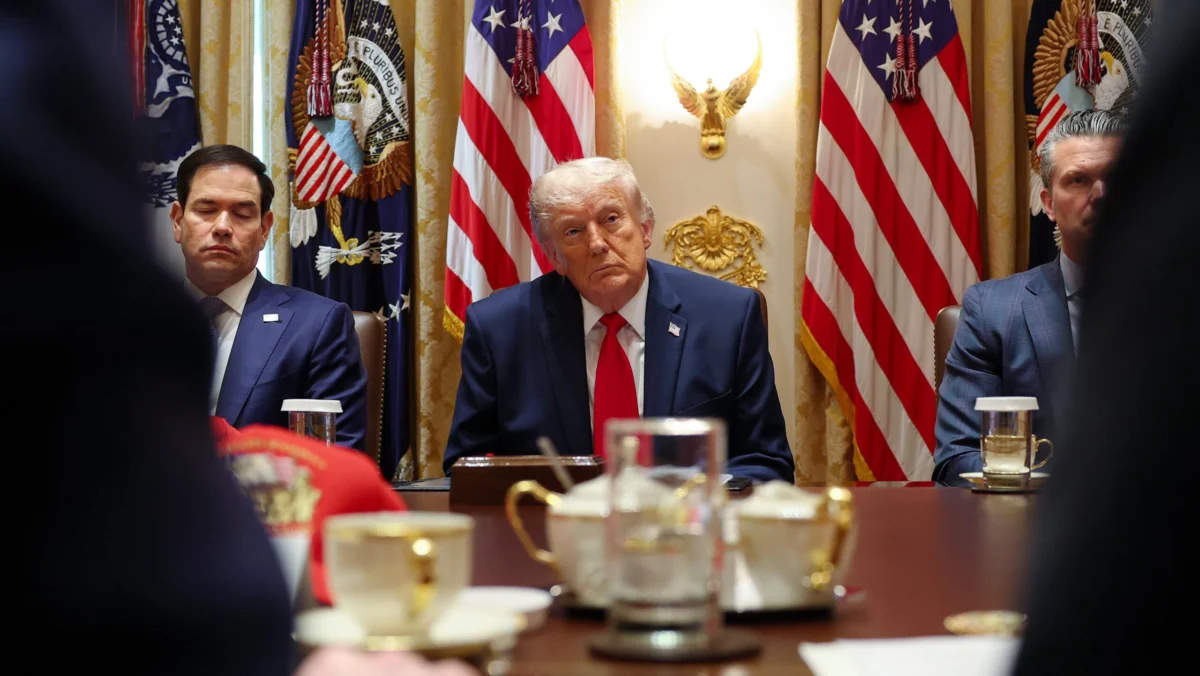
Former President Donald Trump has publicly called for the cancellation of the "Freedom 250" concert series, an event initially conceived as a multi-day celebration on the National Mall, following a wave of prominent musical artists withdrawing from its lineup. The dramatic shift in stance, communicated via his Truth Social platform on Saturday, June 8, 2024, signals a significant setback for the ambitious public-private partnership and underscores the increasing challenges of navigating politically charged cultural events in a deeply polarized nation. Trump’s declaration came after he initially criticized the departing artists as "third-rate" and suggested he might replace them himself with a speech, further intertwining the cultural event with his characteristic political rhetoric and a parallel dispute concerning the Kennedy Center.
The Genesis of "Freedom 250": A Patriotic Vision Encounters Reality
The "Freedom 250" concert series was envisioned as a grand spectacle, scheduled to run from June 25 to July 10 on the iconic National Mall in Washington, D.C. Positioned as a celebration of American heritage and values, the event was backed by a public-private partnership and explicitly linked to the Trump administration, suggesting a continuity of influence and a platform for conservative-aligned cultural expression. The National Mall, a revered stage for national gatherings, political protests, and celebratory events, was set to host a diverse array of musical talent, aiming to draw large crowds and foster a sense of national unity, albeit one often interpreted through a specific political lens.
Historically, presidential administrations, both current and former, have utilized cultural events to connect with the public and project their vision. These events often strive for a broad appeal, bringing together artists from various genres and political leanings. The "Freedom 250," however, from its initial announcement, appeared to navigate a more precarious path, given the intensely partisan political climate that has defined the post-Trump era. The lineup, as it was initially publicized, reflected an eclectic mix, seemingly designed to appeal to a wide demographic, ranging from classic rock to country and hip-hop. This approach, however, proved to be its Achilles’ heel as the political undertones of the event became increasingly pronounced and artists began to re-evaluate their participation.
A Cascade of Withdrawals: Artists Recalibrate Amidst Growing Scrutiny
The concert series began to unravel significantly in the days leading up to Trump’s cancellation directive. A steady stream of artists, some of whom had been prominent names in their respective genres for decades, announced their withdrawal, citing various reasons, many implicitly or explicitly referencing the event’s evolving political character.
Martina McBride, a multi-award-winning country music artist known for her powerful vocals and mainstream appeal, was among the first to distance herself. Her decision sent an early signal of discomfort within the entertainment community regarding the event’s perceived political alignment. Following her, Young MC and Morris Day, artists with roots in the 1980s and 90s music scene, also announced their exit. While their public statements were often brief, the cumulative effect of these withdrawals was undeniable, stripping the event of significant star power.
The exodus intensified on Friday, June 7, with two particularly notable withdrawals. Bret Michaels, the charismatic lead singer of the iconic rock band Poison, issued a comprehensive statement on his website. He articulated that "unfortunately, what was presented to us as a celebration of our country has evolved into something much more divisive than what I agreed to be a part of." Michaels’ direct reference to the event’s "divisive" nature provided a clear rationale for his departure, echoing sentiments likely shared by other artists and highlighting the challenge of maintaining a non-partisan facade for an event associated with a polarizing political figure.
Joining Michaels were The Commodores, the legendary R&B and funk band. Their withdrawal further underscored the broad discomfort felt across different musical genres. The band, known for hits like "Easy" and "Three Times a Lady," represents a legacy of music that often transcends political divides. Their decision to pull out added to the growing perception that the "Freedom 250" was becoming a lightning rod for political controversy rather than a unifying cultural celebration.
Adding another layer of confusion to the lineup was the inclusion of Milli Vanilli. Jodie Rocco, identified as a member of the group, expressed her "shock" to the Associated Press upon seeing Milli Vanilli’s name on the list, indicating a potential misrepresentation or misunderstanding in the event’s promotional efforts. This incident further highlighted the organizational challenges and the scramble for talent that appeared to plague the "Freedom 250" series.
As the list of departed artists grew, the event’s viability diminished considerably. While a few artists, notably Vanilla Ice and Flo Rida, remained publicly slated to perform, their presence alone seemed insufficient to anchor a multi-day festival of the scale initially envisioned for the National Mall. The cumulative effect of these withdrawals not only weakened the artistic appeal but also sent a clear message about the entertainment industry’s often cautious approach to overt political endorsements, particularly in a climate where such alignments can alienate significant portions of their fan base.
Trump’s Shifting Stance and Public Proclamations: From Criticism to Cancellation
The former president’s public commentary on the "Freedom 250" evolved rapidly over Saturday, June 8, reflecting a shift from defending the event by disparaging artists to outright calling for its termination.
In his initial Truth Social post on Saturday morning, Trump lashed out at the musical acts who had exited the series, labeling them "third-rate artists" who were experiencing "the yips" — a term often used in sports to describe a sudden, inexplicable loss of performance ability under pressure. He then offered a characteristic, self-aggrandizing solution: he would replace them himself. Trump suggested that "the Number One Attraction anywhere in the World, the man who gets much larger audiences than Elvis in his prime, and he does so without a guitar, the man who loves our Country more than anyone else, and the man who some say is the Greatest President in History (THE GOAT!), DONALD J. TRUMP," could deliver a major speech instead of a musical performance, rallying the country. This statement underscored his belief in his own unparalleled drawing power and his dismissive view of the artists he perceived as disloyal or weak.
However, by Saturday evening, Trump’s tone had hardened considerably, shifting from a proposed self-replacement to a definitive call for abandonment. In a second Truth Social post, he bluntly stated, "cancel it." He further suggested that instead of the concert series, a "giant MAKE AMERICA GREAT AGAIN RALLY, for 250," would be a more suitable alternative. His rationale for cancellation was equally scathing, describing the departing artists as "overpriced singers, who nobody wants to hear, whose music is boring, and yet who do nothing but complain." This public condemnation solidified the event’s fate, at least from his perspective, and painted a stark picture of his frustration with the artistic talent pool.
The Kennedy Center Parallel: A Pattern of Disengagement
Trump’s decision to call off the "Freedom 250" was notably linked in his own commentary to another recent public dispute: his involvement with the Kennedy Center. In his Saturday evening post, he stated, "Cancel it, just like I canceled my involvement with the failing and unsafe to be in Kennedy Center, because a Highly Conflicted, Crooked Federal Judge, said that I should not be allowed to spend my time and money in order to MAKE THE CENTER GREAT AGAIN, actually, far greater than it ever was before!"
This reference pertains to a ruling by U.S. District Judge Christopher Cooper on Friday, June 7, which ordered that Trump’s name must be removed from the Kennedy Center building. The dispute revolved around Trump’s efforts to potentially fund improvements or renovations at the prestigious national cultural institution, a move that became embroiled in legal and political controversy. Trump’s narrative, however, reframed the judge’s ruling as a reason for his withdrawal, portraying it as a proactive cancellation on his part due to perceived obstruction from a "Highly Conflicted, Crooked Federal Judge."
The parallel drawn by Trump is instructive. It reveals a pattern of his public response when faced with what he perceives as opposition or a failure to align with his vision. Whether it’s artists withdrawing from a concert series or a judge ruling against his interests at a cultural landmark, Trump’s default appears to be a decisive disengagement, often accompanied by strong rhetoric criticizing those he holds responsible and framing his actions as a strategic withdrawal from a flawed or "failing" endeavor. His consistent use of terms like "MAKE THE CENTER GREAT AGAIN" or "MAKE AMERICA GREAT AGAIN" reinforces his political brand and suggests that his involvement is conditional on his ability to exert control and implement his specific vision for improvement.
Broader Implications and Future Outlook: The Intersection of Politics and Culture
The effective collapse of the "Freedom 250" concert series carries several broader implications for the intersection of politics and culture in contemporary America.
Firstly, it underscores the increasing difficulty of organizing large-scale public events with overt political affiliations in a deeply divided nation. While presidential campaigns and political rallies inherently draw on partisan support, cultural events, particularly those on national stages like the National Mall, often strive for a broader, unifying appeal. The "Freedom 250" appears to have failed to achieve this, with the political baggage associated with its primary backer proving too heavy for many artists to bear. The experience highlights how artists are increasingly making decisions not just on artistic merit or financial compensation, but also on the perceived political message or divisiveness of the platforms they are asked to grace.
Secondly, the episode reflects the growing agency of artists in the political sphere. Unlike previous eras where artists might perform for presidents or at national events regardless of personal political leanings, today’s artists are often more attuned to their public image and the potential backlash from their fan bases or the wider public. Bret Michaels’ statement about the event becoming "divisive" is a potent example of this. Artists, through their withdrawals, effectively exercised a form of cultural soft power, influencing the trajectory of a significant public event.
Thirdly, the cancellation raises questions about the logistical and financial implications for the organizers of the "Freedom 250." A multi-day event on the National Mall would have required extensive planning, significant financial investment, and coordination with various public and private entities. Trump’s call for cancellation, even if not an official directive from event organizers (who have yet to issue a definitive statement on the event’s fate), creates immense uncertainty and likely leads to substantial losses for those involved in the public-private partnership. The prospect of pivoting to a "MAKE AMERICA GREAT AGAIN RALLY" at the same location and within the same timeframe also presents considerable logistical hurdles, requiring new permits, security arrangements, and an entirely different organizational structure.
Finally, Trump’s reaction itself offers insight into his political strategy. By dismissing the artists as "third-rate" and advocating for his own presence as "the Number One Attraction," he reinforces his populist appeal and his image as someone who doesn’t need "elite" or "mainstream" cultural figures to connect with his base. This narrative resonates with a segment of the electorate that often feels alienated by established cultural institutions and figures. The move to cancel and replace with a rally might, therefore, be seen not just as a reaction to failure, but as a strategic pivot to an event format where he maintains absolute control and can directly engage his core supporters without perceived interference or "divisiveness" from external cultural elements.
As of the immediate aftermath of Trump’s posts, the official status of the "Freedom 250" concert series remains in flux, with no definitive statement from the event organizers regarding an official cancellation or a transition to a rally. However, the former president’s unequivocal public declaration has cast a pall over the event, signaling its likely demise in its originally conceived form and marking another significant moment in the ongoing entanglement of American politics and popular culture.