

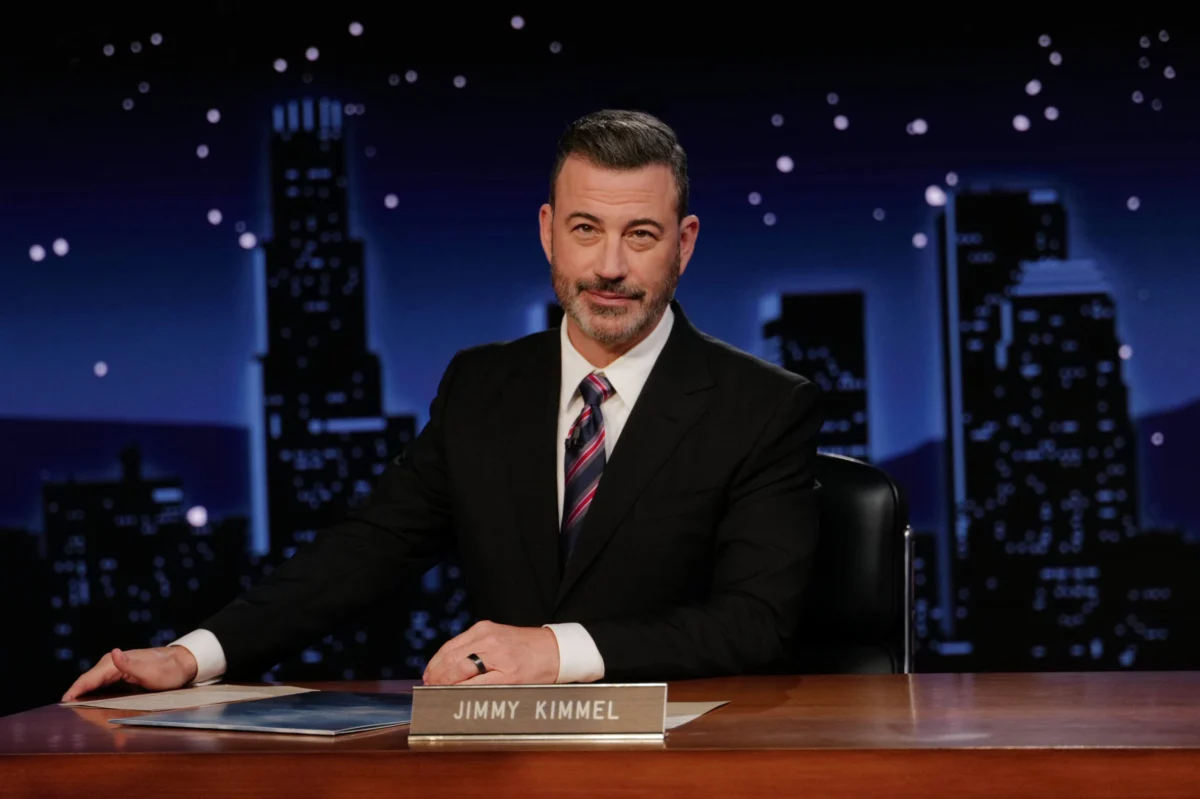
Late-night television host Jimmy Kimmel has announced a significant shift in the production and distribution strategy for his long-running ABC program, Jimmy Kimmel Live!, citing mounting pressure from the Federal Communications Commission (FCC). On Wednesday night, Kimmel informed his audience that an upcoming interview with Democratic U.S. Senate candidate James Talarico would be pulled from the national television broadcast. Instead, the segment is slated for release on the show’s digital YouTube channel on Thursday, a tactical pivot designed to circumvent potential regulatory entanglement.
The decision arrives amidst a period of heightened tension between the Trump administration and major media conglomerates. Kimmel characterized the move as a precautionary measure intended to protect ABC’s affiliate network from the administrative burden of responding to federal inquiries regarding political balance and broadcast regulations.
The Regulatory Tug-of-War
At the heart of the controversy is the FCC’s evolving interpretation of the “bona fide” news exemption. Under the Communications Act of 1934, specifically Section 315, broadcasters are generally required to provide equal airtime to opposing political candidates. However, programs classified as bona fide news events—such as traditional journalism broadcasts—are exempt from these requirements.
In January, the FCC, under the leadership of Chairman Brendan Carr, signaled an intent to re-examine whether late-night comedy talk shows meet the rigorous criteria for news program status. By questioning this classification, the commission has placed networks like Disney-owned ABC in a precarious position. Should the FCC formally strip these programs of their news exemption, any candidate interview could trigger an obligation to provide equivalent airtime to every other qualified candidate in the race, a standard that would be logistically and economically prohibitive for a nightly variety show.
Kimmel noted that his program has featured a wide spectrum of political figures, including Donald Trump, for years without facing such scrutiny. "Now that Trump is president, his FCC has threatened me, threatened our show, threatened our network, ABC, our affiliates, our local stations, based on simple, traditional editorial decisions," Kimmel stated during his Wednesday broadcast.
Chronology of a Mounting Conflict
The current friction between the Trump administration and Disney/ABC is not an isolated incident but rather the latest development in a protracted legal and regulatory struggle.
- September 2025: ABC suspended Jimmy Kimmel Live! for approximately one week following controversy surrounding a monologue concerning the death of Charlie Kirk. The hiatus followed a decision by several ABC-affiliated station owners to pull the program from their lineups.
- January 2026: The FCC formally initiated discussions regarding the classification of late-night talk shows, casting doubt on their eligibility for news-exempt status under federal election law.
- April 2026: The FCC launched an accelerated renewal process for ABC-owned broadcast licenses, citing an ongoing investigation into the network’s corporate diversity, equity, and inclusion (DEI) policies.
- August 2026: Disney filed a lawsuit against the FCC, alleging that the agency’s scrutiny and the accelerated license renewal process constitute a "retaliatory campaign" aimed at silencing editorial voices. The suit invokes First Amendment protections, arguing that the government is using its regulatory power to penalize the network for its content.
The Texas Senate Race Context
The interview in question features James Talarico, a Texas state representative currently engaged in a highly competitive race against Texas Attorney General Ken Paxton. The contest has garnered national attention due to the contrasting profiles of the candidates and the high stakes of the Texas seat.
Paxton, who has secured the formal endorsement of President Trump, remains a polarizing figure in state politics. His 2023 impeachment by the Texas House of Representatives over allegations of corruption—followed by his subsequent acquittal in the state Senate—has become a central point of contention in the campaign. Public polling data currently shows Talarico maintaining a narrow lead, placing significant pressure on both campaigns to maximize media exposure in the final months before the election.
Broader Implications for the Media Landscape
The tension between the FCC and broadcast networks carries profound implications for the future of political discourse on television. Media analysts suggest that if the FCC succeeds in redefining the parameters of political broadcasting, it could fundamentally alter the late-night format.
For decades, late-night television has served as a cultural venue where candidates could reach a broader, often younger, demographic outside the traditional news cycle. If networks are forced to apply strict "equal time" rules to these programs, producers may opt to avoid political content entirely to mitigate the risk of legal and administrative retaliation.
Furthermore, the ongoing litigation between Disney and the FCC serves as a bellwether for First Amendment jurisprudence in the digital age. The lawsuit is expected to explore the extent to which a government agency can use the threat of license revocation as a lever to influence editorial programming. Legal experts point out that the outcome of this case could redefine the boundaries of government oversight for the next several decades.
Official Responses and Industry Outlook
While the FCC has not issued a formal statement regarding Kimmel’s specific comments, the agency has consistently maintained that its actions are rooted in a mandate to ensure fairness and compliance with federal broadcast standards. In previous interviews, Chairman Carr has emphasized that the commission’s goal is to ensure that broadcasters serve the public interest and adhere to the letter of the law regarding political fairness.
For Disney and ABC, the path forward remains complex. The network must navigate the dual pressures of maintaining its editorial independence while protecting its broadcast license portfolio. The transition of the Talarico interview to YouTube highlights a growing trend among media entities: bypassing traditional broadcast regulations by shifting controversial or politically sensitive content to unregulated digital platforms.
As the November elections approach, the scrutiny on late-night broadcasts is expected to intensify. With the FCC’s investigation into ABC’s licensing status ongoing, the industry is watching closely to see if other networks will follow Kimmel’s lead in moving political segments to digital-only formats.
The incident underscores a significant transition in the relationship between the executive branch and the media. Historically, the FCC has maintained a degree of insulation from political pressure; however, the current climate suggests a more interventionist approach. Whether this strategy will lead to a long-term shift in broadcast standards or be struck down by the judiciary remains the primary question for media stakeholders.
For now, Kimmel’s audience will have to adjust to the new reality of his program’s distribution. By moving the Talarico interview to YouTube, the show avoids the immediate regulatory hurdles of the FCC’s equal-time guidelines, but it also acknowledges the constraints of the modern political environment. As Kimmel himself noted, the strategy is the most viable path forward "until November, of course," leaving the long-term future of political commentary on broadcast television firmly in the hands of the courts and the commission.