The New York Asian Film Festival (NYAFF) has once again positioned itself as a vital platform for showcasing the diverse and vibrant landscape of Asian cinema, with this year’s North American premiere of Chen Ta-pu’s "Kiss Me My Ghost Friend" serving as a heartwarming testament to the enduring appeal of Taiwanese filmmaking. Arriving as a standout inclusion in the festival’s 2026 lineup, the fantasy comedy artfully weaves together threads of Taiwanese opera, traditional folklore, and contemporary themes of ambition and unfinished business, creating a narrative that resonates with warmth and sincerity. This film, helmed by director Chen Ta-pu, who previously garnered acclaim for his cinematography at the Taipei Film Festival, marks a significant contribution to a cinematic tradition that consistently finds success by blending cultural heritage with genre conventions.
A Legacy of Storytelling and Supernatural Romance
Taiwanese cinema has a well-established history of drawing inspiration from the rich tapestry of local beliefs and traditional art forms, successfully integrating them into accessible and engaging genre narratives. "Kiss Me My Ghost Friend" exemplifies this enduring characteristic, presenting a supernatural romance intricately tied to "gezaixi," the vibrant and historically significant Taiwanese opera form, and the classic tale of Wang Baochuan. This integration of cultural elements provides a unique foundation for the film’s narrative, aiming to captivate a broad audience, a goal it demonstrably achieves.
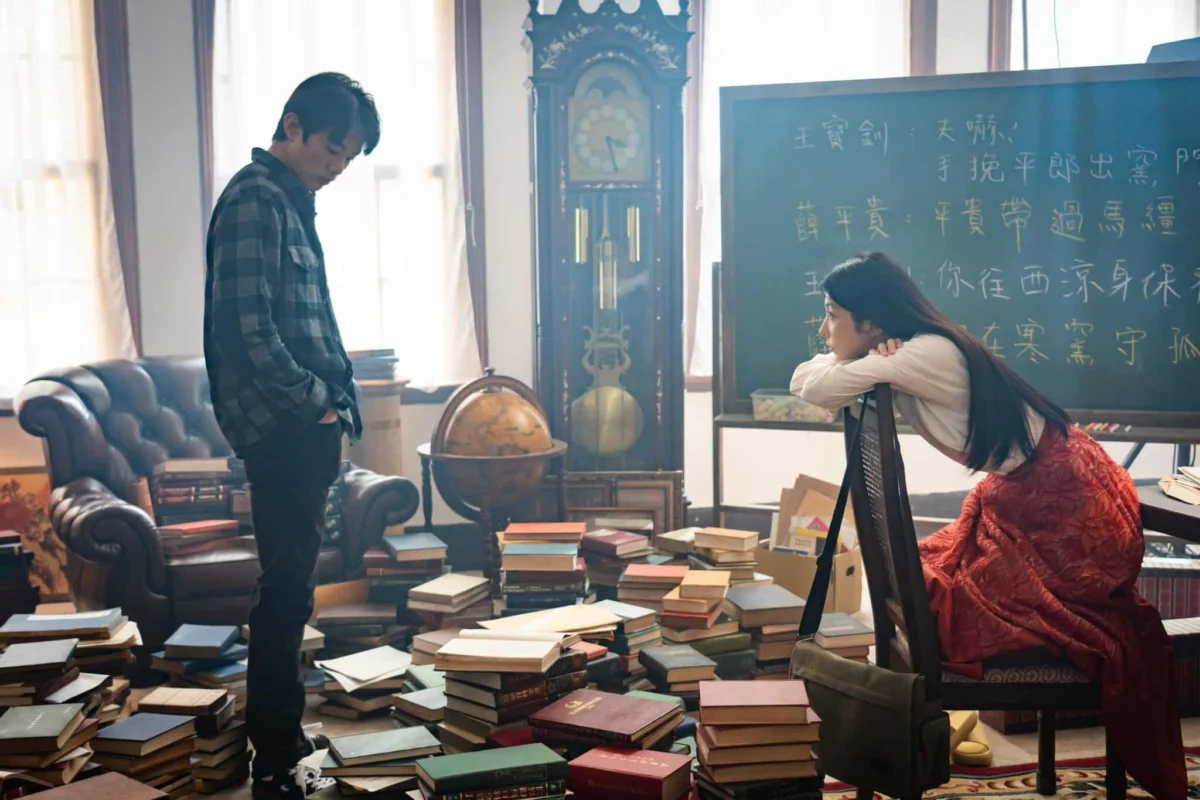
The narrative centers on a young, debt-ridden theatre director whose aspirations have been shattered by the failure of his troupe and the departure of his girlfriend. Under duress from his uncle, he is compelled to return to his family’s derelict, and reputedly haunted, playhouse. His objective is to stage "Pao-chuan," an opera his father had abandoned years prior, with the hope that a potential backer’s investment will alleviate his financial burdens. The rumors of the theater’s spectral inhabitants prove to be more than mere folklore. He soon encounters Caisi, an enigmatic and quick-witted assistant who materializes at his side. Caisi is revealed to be the ghost of the theater’s former leading lady, a prodigious opera performer who tragically died on that very stage eighteen years earlier, and who has been waiting ever since for her final, unfulfilled performance. From this whimsical and poignant premise, the film unfolds a compelling story of second chances, unresolved farewells, and an unexpected, yet profound, partnership between the living and the spectral realm.
Directional Nuance and Thematic Depth
Director Chen Ta-pu navigates the story with a breezy, youthful energy that ensures the film remains accessible and engaging throughout its runtime. The directorial approach adeptly balances the backstage chaos of a struggling theatre company with the subtle, gentle mischief of spectral activity, maintaining a brisk and lively pace. While touches of light horror are incorporated to heighten the stakes, Chen skillfully avoids venturing into gratuitous gore or genuinely frightening territory, consistently upholding a feel-good tone.
The narrative structure, while adhering to conventional genre beats, offers a predictable yet emotionally resonant arc. The eventual revelation concerning Caisi’s unfinished business is readily discernible for seasoned genre enthusiasts. However, where a less assured director might allow this predictability to dilute the dramatic impact, Chen opts to emphasize emotional depth and resonance over cheap thrills. This deliberate choice allows the audience to connect more profoundly with the characters’ journeys and the underlying themes.
Reinterpreting Tradition: A Feminist Undertone
A particularly clever aspect of the film’s storytelling lies in the symbolic mirroring of its protagonist, Caisi, with Wang Baochuan, the central figure in the opera being staged. The traditional opera depicts Wang Baochuan enduring eighteen years of waiting for a husband who ultimately takes another wife. Caisi, however, refuses to accept this narrative of passive waiting and insists that the troupe rewrite the opera’s conclusion. This pivotal decision transforms a familiar ghost story into a subtle yet powerful argument for a woman’s agency and her right to reclaim her own narrative and destiny. This thematic undercurrent culminates in a finale that is both touching and empowering, steering clear of manipulative sentimentality.
The film’s success is significantly bolstered by its strong ensemble performances, which effectively anchor the fantastical elements in relatable human emotion. Ivy Shao delivers a standout performance as Caisi, masterfully balancing sharp, comedic sparring with the profound ache of a woman denied her rightful ending. Her portrayal is further enhanced by her convincing execution of the demanding gezaixi movements and songs, showcasing both her acting prowess and dedication to the role. Chu Meng-hsuan provides a grounding presence as the young director, a character grappling with the desire to forge his own path without relying on his affluent family background. Cheng Jen-shuo makes a notable appearance in flashback sequences as the father whose past actions irrevocably shaped Caisi’s fate. Megan Lai rounds out the cast, contributing to the believable portrayal of the ensemble’s chaotic yet spirited theatrical camaraderie. Collectively, the cast navigates the delicate balance of humor and pathos, successfully selling the film’s emotional beats without succumbing to farce or mawkishness, a feat that speaks volumes about their collective talent.
Craftsmanship and Cultural Authenticity
The cinematography, helmed by Seven Tsai, imbues the crumbling playhouse with a palpable sense of lived history, transitioning seamlessly from the dusty emptiness of the auditorium to the vibrant colors of the opera performances. This visual approach effectively transforms the theater itself into a character within the narrative. The staging of the gezaixi sequences is handled with evident care and respect, with traditional costumes and intricate movements lending the supernatural elements a specific, culturally rooted texture. The musical score, composed by Jesse Tang and Kuo Li-chi, complements the film’s emotional landscape, underscoring both the comedic moments and the underlying melancholy. A recurring piano motif serves as an auditory thread, subtly binding the central bond between the living and the spectral characters. This meticulous attention to craft ensures that the production remains grounded in its unique setting, even as its narrative ventures into the realm of the fantastical.
Broader Implications and Festival Significance
The New York Asian Film Festival, which has a history dating back to its inception in 2000, continues to be a crucial cultural event for the global film community. Its consistent focus on discovering and promoting emerging and established talent from across Asia, including films like "Kiss Me My Ghost Friend," highlights the festival’s commitment to fostering cross-cultural understanding and appreciation for diverse cinematic voices. This year’s festival, running from [Insert hypothetical festival dates here, e.g., July 14th to July 31st, 2026], features a curated selection of films that explore a wide array of themes, genres, and directorial styles. The inclusion of "Kiss Me My Ghost Friend" signifies a broader trend in Taiwanese cinema towards producing films that are not only culturally specific but also possess universal appeal, capable of resonating with international audiences.
The film’s success at NYAFF, a significant event on the international festival circuit, portends positive outcomes for its broader distribution and critical reception. For Taiwanese cinema, such international exposure is invaluable, offering a platform to showcase its artistic merit and cultural richness beyond its borders. The film’s ability to blend genre conventions with heartfelt storytelling suggests a promising future for director Chen Ta-pu and the continued evolution of Taiwanese popular cinema.
Conclusion: A Feel-Good Spectacle with Heart
"Kiss Me My Ghost Friend" stands out as a highly watchable and uplifting ghost story that possesses a clear artistic vision. Director Chen Ta-pu has crafted a thoroughly entertaining Taiwanese comedy that skillfully balances supernatural hijinks with a surprisingly tender exploration of grief, ambition, and the often-difficult process of moving forward. While the film may not break entirely new narrative ground and its plot points are familiar to those acquainted with the genre, its infectious charm, consistent humor, and heartfelt climax more than compensate for any perceived predictability. The film ultimately serves as a poignant reminder that the most rewarding collaborations can indeed arise between the living and the dead, and that even a well-worn formula, when executed with genuine heart and skillful craftsmanship, can leave an audience with a lasting smile. The film’s journey through festivals like NYAFF is a testament to the enduring power of stories that connect us to our cultural roots while speaking to universal human experiences.