

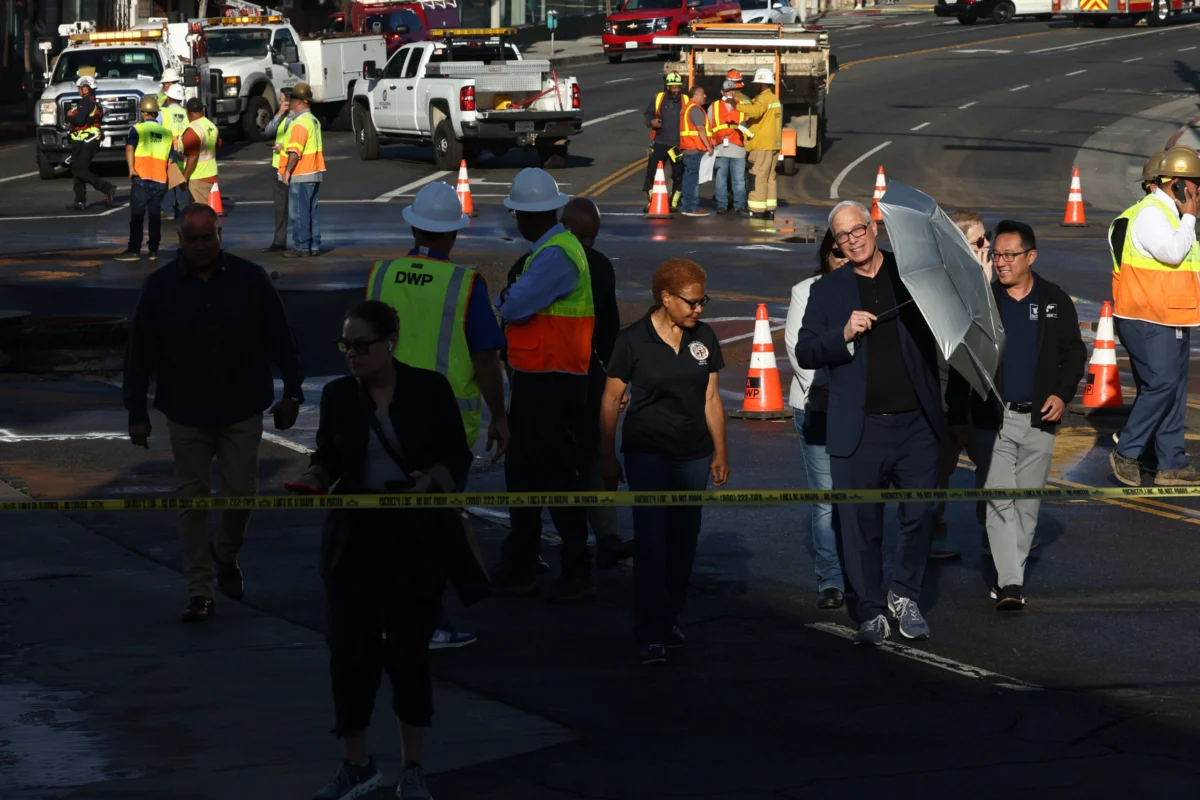
A catastrophic rupture of a 36-inch steel water main, a critical piece of infrastructure installed 110 years ago, unleashed hundreds of thousands of gallons of water across West Hollywood’s iconic Sunset Boulevard early Thursday morning, July 16, 2026. The incident, which occurred around 2:30 a.m., has paralyzed a highly trafficked section of the Sunset Strip, triggered extensive road closures, and prompted urgent calls for water conservation from city officials. As the Los Angeles Department of Water and Power (LADWP) grapples with the aftermath, including a significant sinkhole and widespread property damage, the event has cast a harsh spotlight on the pressing need for investment in the city’s aging utility systems.
Immediate Aftermath and Emergency Response
The colossal main, buried deep beneath the bustling thoroughfare, gave way in the pre-dawn hours, sending a torrent of water cascading down streets, engulfing sidewalks, and inundating businesses and residences in its path. Eyewitnesses described a scene of chaos as water rapidly transformed major arteries into raging rivers, with depths reaching several feet in some areas. The sheer force of the outflow was significant enough to erode the ground, leading to the formation of a substantial sinkhole on a West Hollywood sidewalk near Sunset Boulevard. Tragically, two men walking nearby fell into the newly formed chasm, though reports indicate they were quickly rescued with minor injuries.
The Los Angeles Department of Public Works, alongside LADWP personnel, rapidly deployed to the scene following initial reports. By approximately 7:30 a.m. local time, crews successfully managed to shut off the water flow from the ruptured trunk line, a complex operation given the immense pressure and volume involved. This critical step isolated a 0.7-mile section of the pipe, allowing for preliminary assessment and the commencement of water removal efforts. LADWP officials confirmed that approximately 195,000 gallons of water are being actively pumped out of the affected pipeline segment and surrounding flooded areas before repair work can safely begin. This initial phase involves crucial shoring operations to stabilize the ground and ensure worker safety prior to excavation.
Chronology of a Crisis
The timeline of Thursday’s events unfolded rapidly, escalating from an infrastructure failure to a full-blown urban emergency:
- 2:30 a.m.: The 36-inch steel water main, a century-old conduit, ruptures beneath Sunset Boulevard, initiating massive flooding.
- Early Morning: Emergency services receive multiple calls regarding flooding and property damage. Local law enforcement begins implementing initial traffic diversions.
- Pre-dawn Hours: Water continues to surge, creating a significant sinkhole near Sunset Boulevard. Two individuals fall into the sinkhole and are subsequently rescued.
- Dawn/Rush Hour: The full extent of the flooding becomes apparent. Commuters encounter severe traffic disruptions as major roads are closed. Mayor Karen Bass and West Hollywood Mayor John Heilman arrive on the scene to assess the situation firsthand.
- 7:30 a.m. (approx.): LADWP crews successfully shut off the water to the ruptured section of the pipe, stemming the immediate flow.
- Late Morning/Afternoon: LADWP begins the laborious process of pumping out the estimated 195,000 gallons of trapped water. Shoring operations commence to stabilize the excavation site. Official statements are released, urging water conservation and outlining road closures.
- Throughout the Day: LADWP establishes a dedicated claims center for affected residents and businesses. Local businesses, including the popular Dialog Cafe, announce indefinite closures. Hotels offer discounted rates for displaced residents.
Widespread Disruption and Public Safety Concerns
The rupture has brought significant portions of West Hollywood to a standstill. Traffic closures were immediately enacted on Sunset Boulevard between Larrabee Street and La Cienega Boulevard, with numerous adjacent streets also affected. The West Hollywood Sheriff’s Station detailed extensive hard street closures, prohibiting through access on critical routes such as Horn Avenue at Sunset Boulevard, San Vicente Boulevard and North Clark Street at Sunset Boulevard (blocking eastbound traffic), Larrabee Street at Sunset Boulevard (north and south sides) and at Santa Monica Boulevard, and Palm Avenue at Santa Monica Boulevard. The Sheriff’s Station issued a strong advisory, urging the public to avoid the entire area for several days to facilitate emergency and repair operations. Residents attempting to navigate soft closure points are advised to carry identification or proof of residency.
Beyond the immediate traffic gridlock, public safety remains a paramount concern. The formation of the sinkhole underscores the potential for ground instability following such a massive water event. While the main flow has been halted, the residual water and compromised ground conditions pose ongoing hazards. LADWP has confirmed that while no complete water service interruptions are anticipated for most residents or businesses, many customers, particularly those on higher floors, have reported experiencing significantly low water pressure. The department is actively working to adjust water operations across the network to restore pressure without inadvertently creating new issues or exacerbating existing ones. For the interim, West Hollywood continues to receive water supply through an 8-inch auxiliary pipe, a stark reduction in capacity compared to the primary 36-inch line.
Official Response and Community Support
Los Angeles Mayor Karen Bass, who visited the scene Thursday morning, relayed a clear message to West Hollywood residents later in the day. "As LADWP crews continue to work urgently to remove water to repair the pipe rupture in West Hollywood, people should avoid the area and conserve water as some may experience a loss of water pressure," Mayor Bass stated. She further advised, "Water to the pipe has been shut off, and anyone who has experienced damage should speak to LADWP personnel on the ground." Her presence underscored the severity of the incident and the city’s commitment to a swift resolution.
West Hollywood Mayor John Heilman, also present at the site, echoed the calls for patience and cooperation. While no direct statement from Mayor Heilman was immediately available, his presence alongside Mayor Bass and the coordinated efforts of local agencies signal a unified response to the crisis. The West Hollywood City Council is expected to address the incident and its broader implications in upcoming meetings.
LADWP has established a dedicated presence at 1010 Palm Ave., with staff available daily until 7 p.m. to respond to questions regarding property damage and claims. This direct point of contact is crucial for residents and businesses grappling with the immediate financial and logistical fallout.

Recognizing the significant impact on residents, particularly those whose homes have sustained damage, several local hotels have stepped forward to offer assistance. The Ziggy Hotel is providing a 25 percent discount off its best available rate, the West Hollywood Edition is offering 20 percent off the retail rate, and the London Hotel has extended a generous 40 percent discount. These special rates aim to provide temporary relief and accommodation for those displaced by the flooding, demonstrating a communal spirit in the face of adversity.
Economic Fallout for Local Businesses
The flooding has dealt a severe blow to West Hollywood’s vibrant business community. The closure of major roads and the physical damage from the water have forced many establishments to shut their doors, at least temporarily. Dialog Cafe, a popular influencer hotspot and a fixture in the community for 15 years, announced its indefinite closure via an Instagram post. "Right now, our entire focus is on cleaning up, assessing the damage and doing everything we can to restore the space that has been home to so many memories over the past 15 years," the message from the Dialog team stated, expressing uncertainty about when the cafe might reopen. This sentiment is likely shared by countless other businesses along the Sunset Strip and surrounding areas, facing not only cleanup costs but also significant losses in revenue, potential inventory damage, and uncertainty about their future operations. The economic ripple effect extends to employees, many of whom may face temporary unemployment or reduced hours.
Los Angeles’ Aging Infrastructure: A Recurring Challenge
The rupture of a 110-year-old steel main serves as a stark reminder of the chronic infrastructure challenges facing Los Angeles and many other major American cities. The LADWP manages a vast network of water pipes, many of which were installed during the city’s rapid expansion in the early to mid-20th century. While robust for their time, these pipes are well past their intended operational lifespan, typically estimated at 50 to 75 years for cast iron and steel mains.
Los Angeles has grappled with numerous water main breaks in recent years, often leading to significant water loss, property damage, and traffic disruptions. These incidents highlight a critical need for continuous, substantial investment in infrastructure upgrades. Factors contributing to these failures include:
- Age and Material Degradation: Over a century of continuous service, steel pipes are susceptible to corrosion, material fatigue, and structural weakening.
- Ground Movement: Los Angeles is seismically active, and even minor ground shifts can stress old pipes.
- Increased Pressure and Demand: A growing population places increasing demands on an aging system, sometimes beyond its original design capacity.
- Maintenance Backlog: Decades of underfunding or deferred maintenance can lead to a backlog of necessary repairs and replacements.
The current incident, involving a large-diameter trunk line, is particularly concerning due to its capacity for widespread damage and disruption. While LADWP has ongoing programs to replace aging infrastructure, the sheer scale of the network means that such incidents are likely to persist without accelerated investment. The cost of proactive replacement, though substantial, often pales in comparison to the economic and social costs of emergency repairs, water loss, and community disruption caused by catastrophic failures.
Water Conservation in a Drought-Prone Region
The loss of hundreds of thousands of gallons of water in a region perpetually grappling with drought conditions adds another layer of concern to this incident. California has faced persistent water shortages, prompting aggressive conservation measures across the state. While the water spilled from the main is not immediately recoverable for municipal use, the visual spectacle of so much water flooding city streets underscores the preciousness of this resource. The LADWP and Mayor Bass’s immediate call for reduced water usage by residents, even those unaffected by service interruptions, reflects a broader public consciousness around water scarcity. It serves as a reminder that every gallon counts, and that infrastructure failures have an environmental cost in addition to economic and social ones.
The Path Forward: Repairs, Claims, and Future Resilience
LADWP crews face a daunting task in the coming days and weeks. The repair of a 36-inch steel main of this age is a complex engineering challenge, requiring meticulous planning and execution. Once the immediate area is dewatered and stabilized, engineers will conduct a thorough assessment of the pipe’s condition, determine the precise cause of the rupture, and formulate a repair strategy. This could involve patching, replacing a section, or a more extensive overhaul depending on the damage. The entire process, from excavation to final repaving of Sunset Boulevard, is expected to take a considerable amount of time, further extending the period of disruption for West Hollywood residents and businesses.
For those who have suffered property damage, the LADWP’s claims process will be critical. The department’s proactive establishment of a claims center indicates an understanding of the immediate need for support. However, navigating property damage claims can be a lengthy and complex process for homeowners and business owners alike.
Beyond the immediate repairs, this incident will undoubtedly reignite discussions about the long-term resilience of Los Angeles’ water infrastructure. It underscores the urgency for sustained funding, innovative engineering solutions, and a strategic plan to replace and modernize the city’s aging pipes before they reach a critical point of failure. The Sunset Boulevard rupture serves as a costly lesson and a potent reminder that investing in invisible infrastructure is as vital to a city’s well-being as maintaining its visible landmarks. The collective efforts of city officials, emergency services, utility workers, and the community will be essential in navigating the aftermath and building a more resilient future for West Hollywood and the greater Los Angeles area.