


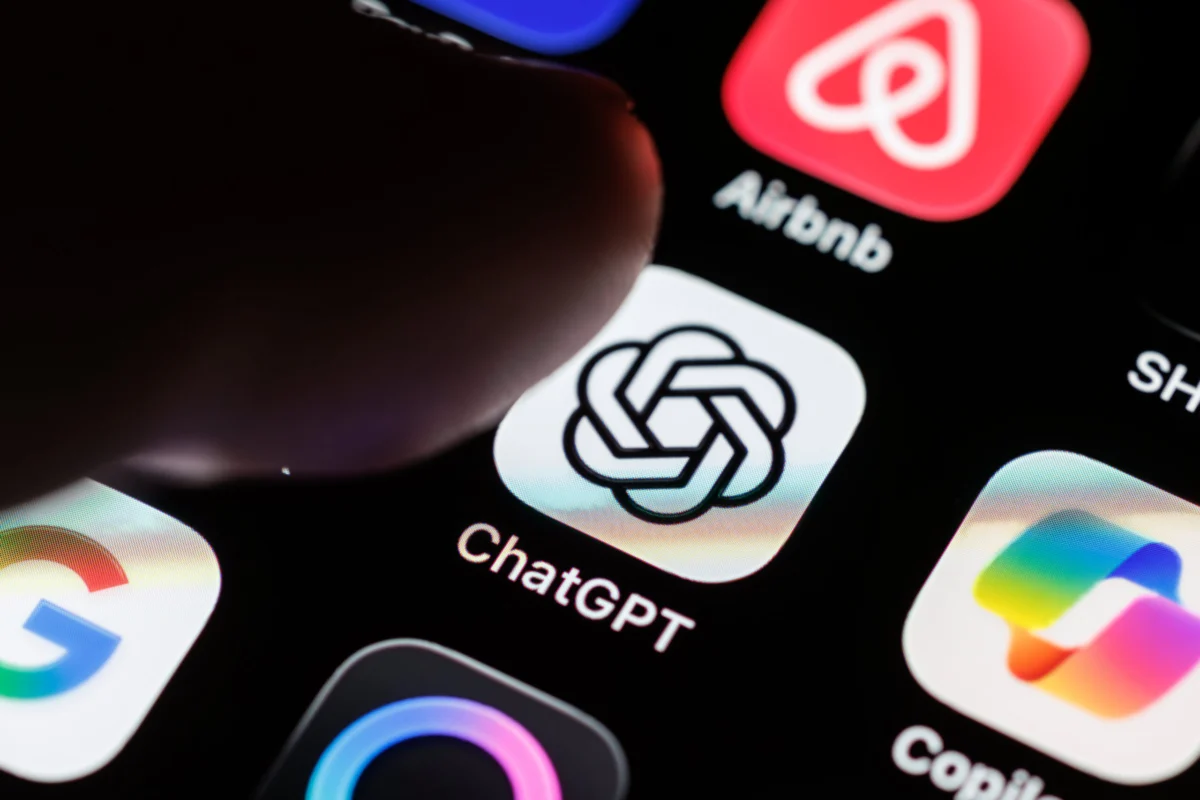
The friction centers on a pilot program that includes three of the global leaders in advertising: WPP, Omnicom, and Dentsu. These firms, representing some of the world’s most recognizable consumer brands, entered the partnership with the expectation of pioneering a new frontier in "conversational discovery." However, according to industry insiders who spoke on the condition of anonymity, the rollout has been characterized by a conservative pace that many feel is at odds with the high financial commitments required to participate.
The Financial Stakes of the Alpha Test
In the world of digital advertising, "alpha" tests for new formats are typically low-cost or "value-add" opportunities where brands provide feedback in exchange for early access. OpenAI, however, broke from this tradition by requiring unusually high financial commitments for its initial testing phase. Sources indicate that some brands were asked to dedicate between $200,000 and $250,000 to the program—roughly double the standard commitment for an experimental ad format.
For many CMOs, these funds were diverted from established channels such as Google Search or Meta’s social platforms, or drawn from "innovation" budgets specifically earmarked for emerging technologies. With the pilot program scheduled to conclude at the end of March, there is growing concern that the slow pace of ad delivery will prevent these budgets from being fully utilized. While OpenAI has committed to returning any unspent funds, the "opportunity cost" remains a point of contention. Money locked into the ChatGPT trial cannot be redeployed to other high-performing campaigns during the first quarter, and the lower-than-expected volume of ad impressions means agencies are receiving a fraction of the consumer insights they initially anticipated.
A Chronology of OpenAI’s Advertising Ambitions
The road to ChatGPT’s ad rollout has been a rapid transition from a subscription-only productivity tool to a potential rival for the global search engine market.
- Late 2023 – Early 2024: OpenAI began exploring "agentic shopping" features, signaling an interest in connecting users directly with commerce through partnerships with platforms like Etsy, Shopify, and Amazon.
- January 2026: OpenAI officially announced the rollout of ads within the ChatGPT interface for U.S. users, marking the first time the company sought to monetize its massive free-user base through traditional advertising.
- February 2026: Major holding companies, including WPP and Omnicom, began onboarding "alpha" clients into the system. High-level discussions between Madison Avenue and Silicon Valley focused on how to maintain the "human-like" feel of the chatbot while inserting brand messaging.
- March 2026: The pilot entered its critical final month. While data suggests a late-month surge in activity, the initial weeks were marked by such low volume that many agencies questioned the viability of the test.
Technical Restraint vs. Market Demand
OpenAI has defended its measured approach, emphasizing the need to protect the user experience. In a statement provided to CNBC, the company noted that the slow rollout was intentional, stating, "The goal right now is to learn and refine the experience for consumers before expanding it more broadly." This philosophy suggests that OpenAI is prioritizing long-term platform health over short-term revenue goals, a move that may be strategically sound but is currently causing logistical headaches for media buyers.

Dentsu, one of the participating agencies, has taken a more tempered public stance. Meredith Spitz, Dentsu’s Executive Vice President and Head of Paid Search, noted that the firm set "realistic expectations" for its clients. Spitz highlighted that while the start was deliberate, the environment is now scaling, with ad delivery building momentum week-over-week. This perspective suggests a divide within the industry: while some see the slow start as a failure of execution, others view it as a necessary phase of "learning and evolving" a completely new medium.
Data Analysis: The Inflection Point
Despite the early frustrations, recent data suggests that OpenAI is finally beginning to turn the dial. Research from Sensor Tower indicates that the number of ads served in the first half of March 2026 increased by approximately 600% compared to the beginning of the month. Furthermore, the reach of these ads has expanded from a mere 1% of ChatGPT’s mobile user base to roughly 5%.
This ramp-up aligns with projections from Truist Financial, which has labeled 2026 as the "inflection year" for Large Language Model (LLM)-powered advertising. Analysts at Truist forecast that OpenAI will generate just under $1 billion in ad revenue in its first year, a modest sum compared to Google’s estimated $252 billion in search revenue. However, the long-term trajectory is aggressive; Truist estimates OpenAI’s ad business could exceed $30 billion by 2030, potentially positioning it as the fourth pillar of digital advertising alongside Search, Social, and Retail Media.
The Competitive Landscape: Ad-Free vs. Ad-Supported AI
The friction in OpenAI’s rollout is occurring against a backdrop of intense philosophical disagreement within the AI industry regarding monetization. As OpenAI moves toward an ad-supported model, its primary competitors are carving out different paths.
Anthropic, the creator of the Claude LLM, has positioned itself as the "clean" alternative. In a high-profile Super Bowl commercial earlier this year, Anthropic criticized the move toward AI advertising, proclaiming that its platform would remain ad-free to ensure unbiased information delivery. Similarly, Perplexity, which had experimented with ads in 2024, recently pivoted away from the format to focus on a premium subscription and enterprise model.
Google remains the "elephant in the room." While the tech giant has not yet launched ads directly within its Gemini chatbot interface, it has successfully integrated "AI Overviews" into its traditional search results, surrounded by existing ad inventory. The central question for the industry is whether OpenAI can build a native ad experience that is more effective than Google’s hybrid approach, or if the slow rollout will allow Google to solidify its dominance before ChatGPT can reach critical mass.

Implications for the Future of Conversational Discovery
The frustration expressed by Madison Avenue highlights a broader shift in how brands think about consumer intent. In traditional search, a user types a keyword (e.g., "best running shoes") and receives a list of links. In conversational AI, the interaction is more nuanced and "agentic." A user might ask ChatGPT to "plan a five-day hiking trip in the Pacific Northwest and suggest the gear I need."
The value for advertisers lies in this precision. As Dentsu’s Meredith Spitz observed, the most significant potential comes from aligning ad relevance with highly specific user intent. If a brand can insert itself into a conversation at the exact moment a user is seeking a recommendation, the conversion rate is likely to be significantly higher than a standard banner ad or search link.
However, the "alpha" test’s slow pace suggests that the technology required to achieve this—without annoying the user or hallucinating brand claims—is more complex than OpenAI initially anticipated. The "agentic" nature of these ads means the AI must understand when an ad is helpful versus when it is intrusive.
Conclusion: A Sustainable Foundation or a Missed Opportunity?
As the March 31st deadline for the pilot program approaches, the mood on Madison Avenue is one of cautious optimism tempered by immediate operational annoyance. OpenAI’s willingness to listen to feedback and rapidly adjust its systems has been noted as a positive sign by its partners. The company appears to be building for the next decade, not the next quarter.
For brands, the lesson of the ChatGPT rollout is that the transition from traditional search to AI-driven discovery will not be an overnight revolution. It will be a meticulous, and at times frustrating, process of trial and error. While the $250,000 "buy-in" may feel like a steep price for a slow start, the data gathered in these early weeks—even if lower in volume than hoped—will form the blueprint for how $30 billion in annual ad spend is eventually deployed in the AI era. The industry’s frustration is ultimately a reflection of its enthusiasm; agencies are not upset because the ads don’t work, but because they are eager to prove that they do.