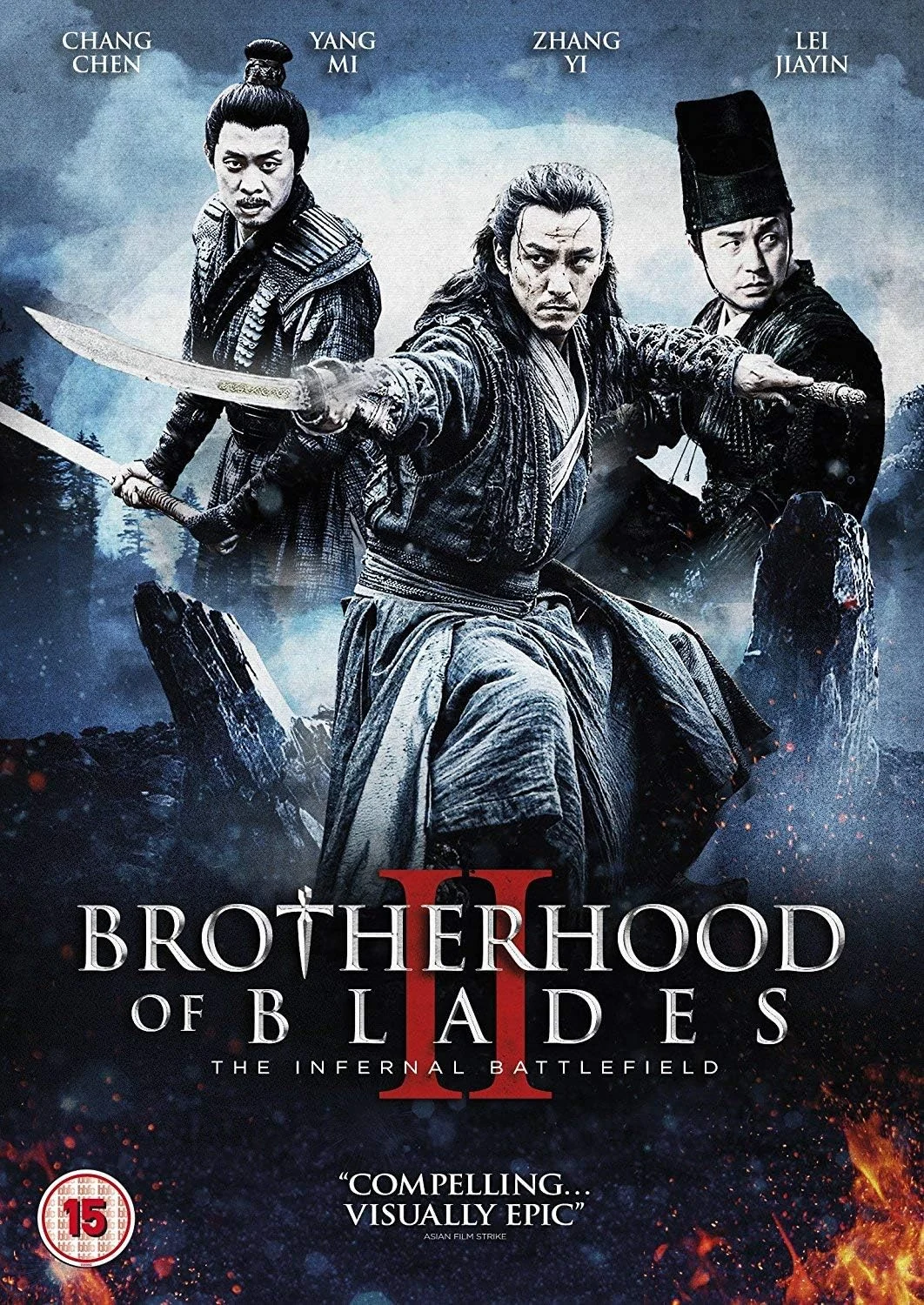
The late Ming dynasty, a period rife with political intrigue and imperial decay, serves as the atmospheric backdrop for Lu Yang’s critically acclaimed martial arts epic, "Brotherhood of Blades II: The Infernal Battlefield." Released in 2017, this prequel to the 2014 hit "Brotherhood of Blades" delves deeper into the shadowy machinations of the Jinyiwei, the Emperor’s elite secret police, and the perilous landscape of courtly power struggles. While the original film introduced audiences to the dangerous lives of these Embroidered Uniform Guards, the sequel, helmed once again by director Lu Yang and featuring the compelling performance of Taiwanese actor Chang Chen as Jinyiwei officer Shen Lian, not only expands upon the established narrative but also elevates the stakes with a more intricate plot and a profound exploration of loyalty, betrayal, and survival within the gilded cage of the imperial court.
A Kingdom on the Brink: The Historical Context of the Late Ming Dynasty
To fully appreciate the narrative tapestry of "Brotherhood of Blades II: The Infernal Battlefield," understanding the historical context of the late Ming dynasty (1368-1644) is crucial. This era was characterized by a weakening central authority, rampant corruption, and the growing influence of powerful eunuch factions within the imperial court. Emperor Wanli’s long reign, marked by his withdrawal from active governance, had created a power vacuum that eunuchs, particularly the formidable Wei Zhongxian, exploited to their advantage. Wei Zhongxian, who wielded immense power during the reign of the Tianqi Emperor, was notorious for his ruthlessness and his systematic purging of officials who opposed him. This period of political instability and factional infighting, coupled with external threats from Jurchen tribes in the north, created a volatile environment where personal ambition and survival often trumped justice and loyalty. The Jinyiwei, tasked with maintaining order and rooting out dissent, found themselves caught in the crossfire of these internal power struggles, often forced to navigate treacherous alliances and make impossible choices. The film’s depiction of the Jinyiwei’s operations and the omnipresent threat of powerful eunuchs like Wei Zhongxian is not merely a cinematic flourish but a reflection of the historical realities of the late Ming era.
Chronology of Intrigue: Unraveling the Narrative Threads
"Brotherhood of Blades II: The Infernal Battlefield" unfolds several months prior to the events of the first film, offering a crucial glimpse into the circumstances that shaped Shen Lian’s character and his complex relationship with the Jinyiwei. The narrative kicks off with a grim discovery: a massacre has occurred, leaving several individuals dead, including a eunuch from the Eastern Bureau loyal to the powerful Wei Zhongxian. Senior Jinyiwei officer Shen Lian, a member of the Northern Bureau, arrives at the scene, his investigative instincts immediately engaged. He finds himself in a tense standoff with a junior officer, Ling Yunkai, who attempts to usurp the investigation, highlighting the bureaucratic rivalries and the inherent competition for authority within the Jinyiwei itself.
The plot thickens when one of Shen Lian’s own men, Yin Cheng, drunkenly insults the Emperor. Ling Yunkai seizes this opportunity to arrest Yin Cheng, but in a shocking turn of events, Yin Cheng chooses a violent end at Shen Lian’s hand rather than face the Emperor’s judgment or the machinations of the court. This tragic sacrifice underscores the harsh realities faced by those within the imperial system and foreshadows the difficult moral compromises Shen Lian will be forced to make.
The investigation leads Shen Lian and his superior, Lu Wenzhao, a high-ranking officer with whom Shen shares a deep bond forged in past battles, to a suspected rebel named Beizhai. Believing that rebels associated with the Donglin Movement, a prominent political faction that opposed the eunuch faction, are plotting an overthrow, Lu Wenzhao dispatches Shen Lian and Ling Yunkai to apprehend her. The mission takes an unexpected personal turn for Shen Lian when he discovers that Beizhai is the same mysterious woman he previously encountered and for whom he harbors nascent romantic feelings. The already morally compromised Ling Yunkai attempts to sexually assault Beizhai, forcing Shen Lian into a desperate act of self-defense that results in Ling’s death.
To cover his tracks and protect Beizhai, Shen Lian fabricates a story of a rebel ambush. This fabrication, however, draws the suspicion of another Jinyiwei officer, Pei Lun, who is dispatched by Lu Wenzhao to conduct a thorough investigation. As Pei Lun relentlessly pursues the truth, Shen Lian finds himself ensnared in a web of deceit and danger. The Donglin rebels, aware of Shen Lian’s predicament, blackmail him into burning down the Jinyiwei Bureau’s records library in exchange for Beizhai’s safety. Simultaneously, Shen Lian uncovers a far more sinister conspiracy, one that implicates Wei Zhongxian, the Donglin rebels, and a plot to assassinate the Emperor himself. The narrative culminates in a high-stakes confrontation where allegiances are tested, and the true nature of power within the Ming court is brutally exposed.
Supporting Data and Critical Acclaim: A Predecessor’s Success and a Sequel’s Triumph
"Brotherhood of Blades II: The Infernal Battlefield" not only built upon the success of its predecessor but arguably surpassed it in both critical reception and box office performance. The original "Brotherhood of Blades," released in 2014, garnered significant attention for its gritty portrayal of the Jinyiwei and its well-executed action sequences. It established director Lu Yang as a filmmaker with a keen eye for historical detail and a talent for crafting compelling martial arts narratives.
The sequel, benefiting from this established foundation, received widespread praise for its intricate screenplay, penned by Chen Shu, Lu Yang, and Yu Yang. Critics lauded the film’s sophisticated exploration of political corruption, the absurdity of courtly bureaucracy, and the pervasive influence of the eunuch faction. This thematic depth, combined with convincing performances and visually arresting cinematography, contributed to its superior box office performance compared to the first film. While specific figures for the prequel’s earnings in China are not readily available in the original article, its stronger showing at the box office indicates a growing audience appreciation for its more complex narrative and mature themes.
Artistic Merit and Technical Excellence: Crafting an Immersive World
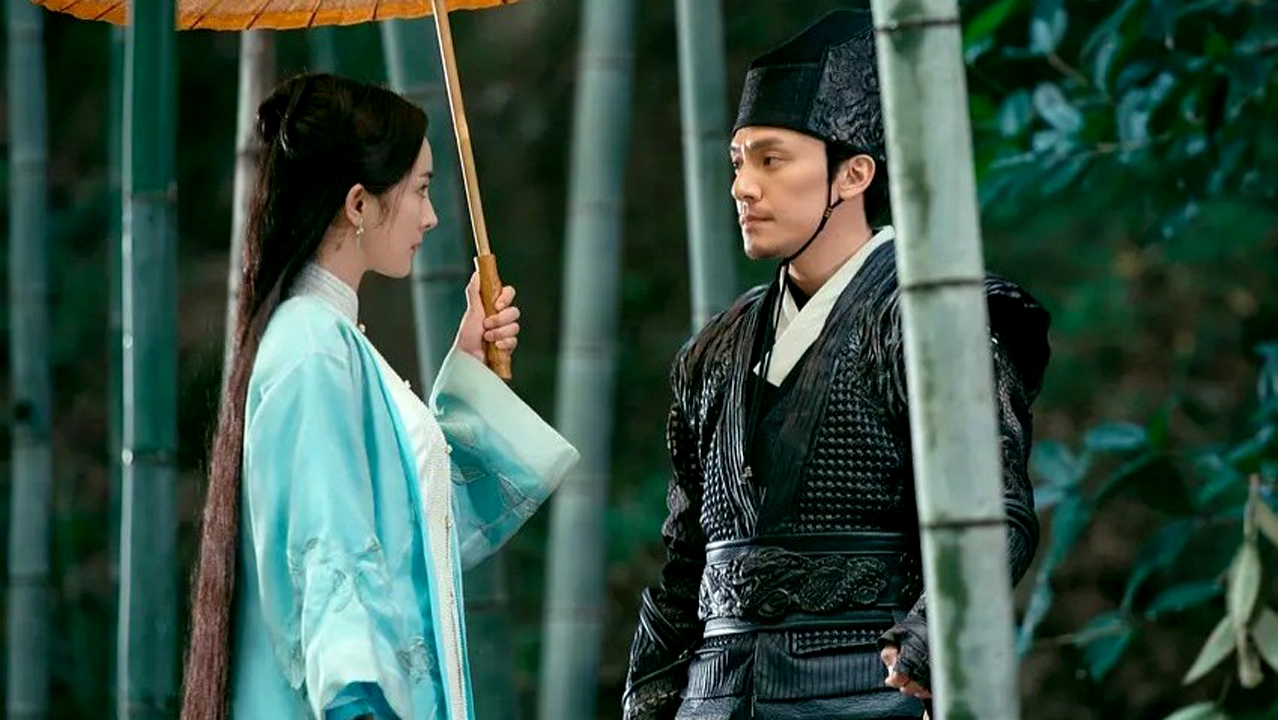
The visual splendor of "Brotherhood of Blades II: The Infernal Battlefield" is a testament to the meticulous craftsmanship of its production team. The costumes, designed by Liang Tingting, are a standout feature, with the Jinyiwei uniforms and those of their commanders rendered in vibrant colors and intricate detail, reflecting the opulence and hierarchy of the imperial court. Liang Tingting’s exceptional work earned her a nomination for Best Makeup and Costume Design at the prestigious 54th Golden Horse Awards, a significant recognition of her contribution to the film’s aesthetic.
The film’s action choreography, overseen by Sang Lin, is another critical element that elevates the viewing experience. Sang Lin’s skill in staging dynamic and impactful fight sequences, particularly the memorable clash involving the meteor hammer and the massive sword, contributed to the film’s overall visceral thrill. His win for Best Action Choreography at an unnamed awards ceremony (likely a significant Chinese film festival given the context) further solidifies the film’s prowess in this genre. The evocative musical score, composed by Kenji Kawai, also garnered critical attention, earning him a nomination for Best Original Film Score at the Golden Horse Awards. Kawai’s atmospheric compositions expertly enhance the film’s dramatic tension and emotional resonance, contributing significantly to its immersive quality.
Stellar Performances: Anchoring the Narrative with Depth and Nuance
At the heart of "Brotherhood of Blades II: The Infernal Battlefield" lies the performance of Chang Chen as Shen Lian. Chen, a seasoned actor known for his dedication and understated intensity, embodies the Jinyiwei officer with a compelling blend of stoicism and internal conflict. His commitment to embodying his characters is evident in his physical preparation and his ability to convey complex emotions through subtle expressions and precise movements. His mastery of swordsmanship, honed through dedicated study, shines through in the film’s meticulously choreographed fight scenes, making Shen Lian a believable and formidable protagonist.
The supporting cast also plays a crucial role in driving the narrative and enriching the film’s world. Zhang Yi delivers a particularly memorable performance as Lu Wenzhao, a high-ranking Jinyiwei commander who serves as Shen Lian’s ally and mentor. Zhang Yi imbues Lu Wenzhao with a captivating complexity, allowing the character to be both authoritative and occasionally humorous, a welcome contrast to the film’s pervasive tension. His nuanced portrayal earned him praise for bringing depth and wit to a character that could easily have been one-dimensional.
Lei Jiayin’s performance as the diligent investigating officer Pei Lun was also critically recognized, earning him a nomination for Best Supporting Actor at the Golden Horse Awards. His portrayal of a man driven by duty and a relentless pursuit of truth adds another layer of intrigue to the unfolding conspiracy. Chin Shih-chieh reprises his role as the chillingly effective court eunuch Wei Zhongxian, and despite his limited screen time, he commands attention with his palpable aura of menace and power, a testament to his commanding presence.
Liu Fengchao stands out as the Imperial Guard Zheng, whose climactic duel with Shen Lian is a highlight of the film, showcasing Liu’s impressive skill with the meteor hammer. Xin Zhilei delivers a powerful performance as Ding Baiying, a fierce rebel swordswoman, her presence on screen as commanding as the massive sword she wields. Yang Mi, as the painter Beizhai, Shen Lian’s love interest and a pivotal figure in the plot, delivers a competent performance, though her portrayal is described as more average compared to the standout supporting cast. Her character serves as the catalyst for many of Shen Lian’s decisions, embodying a blend of innocence and hidden strength that drives the romantic subplot and fuels the narrative’s central conflicts.
Analysis and Implications: A Reflection of Power and Survival
On its surface, "Brotherhood of Blades II: The Infernal Battlefield" functions as a gripping detective story, following Shen Lian as he unravels a series of murders. However, the film’s true strength lies in its deeper exploration of the corrupt Imperial Court, the relentless struggle for power, and the shifting sands of loyalty and betrayal. The narrative transcends a simple whodunit, offering a poignant commentary on the human cost of political ambition and the compromises individuals are forced to make to survive in a system rife with corruption.
The film’s success can be attributed to its ability to seamlessly blend historical accuracy with compelling storytelling. By grounding its narrative in the turbulent realities of the late Ming dynasty, Lu Yang and his team have created a world that feels both authentic and dramatically resonant. The attention paid to the minutiae of courtly life, the intricate power dynamics between different factions, and the pervasive threat of violence imbues the film with a gravitas that elevates it beyond typical genre fare.
The implications of Shen Lian’s journey are far-reaching. His actions, driven by a desire to protect Beizhai and navigate the treacherous currents of court politics, highlight the moral ambiguities inherent in a system that demands absolute loyalty while fostering rampant corruption. The film suggests that in such an environment, survival often necessitates a willingness to bend rules, make difficult choices, and confront one’s own moral compass. The ultimate fate of Shen Lian and the characters he encounters serves as a stark reminder of the fragility of life and the enduring consequences of power struggles.
In conclusion, "Brotherhood of Blades II: The Infernal Battlefield" is more than just an action-packed wuxia film; it is a meticulously crafted historical drama that offers a compelling glimpse into a pivotal era of Chinese history. Through its intricate plot, stellar performances, breathtaking visuals, and expertly choreographed action, the film not only entertains but also provokes thought about the enduring themes of power, corruption, and the human capacity for both great cruelty and profound loyalty. Its success is a testament to the enduring appeal of well-told stories that are rooted in historical context and delivered with artistic excellence. The film’s ability to weave together a personal narrative of love and survival with the grand sweep of political intrigue solidifies its position as a significant contribution to the wuxia genre and a captivating cinematic experience.