

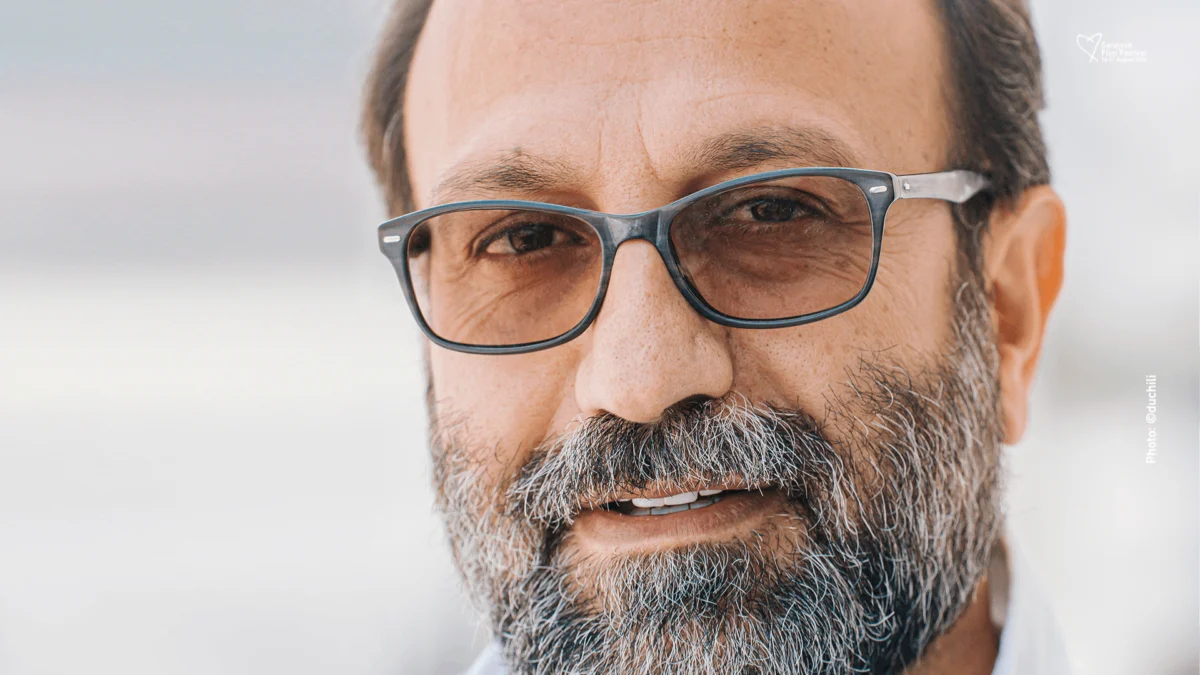
The esteemed Iranian filmmaker Asghar Farhadi, a two-time Academy Award winner, is set to be honored with the Honorary Heart of Sarajevo at the upcoming 32nd Sarajevo Film Festival, an accolade that recognizes his profound and enduring contributions to the art of cinema. The festival, a beacon of cultural resilience and cinematic excellence in Southeast Europe, will host Farhadi from August 14-21, providing a distinguished platform to celebrate his illustrious career. Farhadi is expected to accept the prestigious award in person, marking a significant moment for both the festival and the global film community.
A Celebration of Cinematic Mastery
The announcement underscores Farhadi’s revered status in contemporary cinema, acknowledging his unique ability to craft narratives that delve into the intricate moral dilemmas and social complexities of everyday life with unparalleled nuance and realism. As part of this recognition, the Sarajevo Film Festival will dedicate a comprehensive retrospective of his work, presented under its esteemed "Tribute to" program. This dedicated series will offer audiences a rare opportunity to revisit the breadth and depth of Farhadi’s filmography, exploring the thematic consistencies and stylistic evolutions that have defined his career.
Farhadi’s return to Sarajevo holds particular resonance, as it follows his previous engagement with the festival eight years prior. In 2018, he served as the jury president for the feature film competition, bringing his discerning eye and vast experience to the evaluation of emerging cinematic talents. That same year, his critically acclaimed film Everybody Knows, starring Penélope Cruz and Javier Bardem, was screened as part of the festival’s popular Open Air program, drawing significant attention and reaffirming his global appeal. His presence at the festival this year also places him alongside fellow Honorary Heart recipient Emily Watson, who will similarly be honored while also undertaking the crucial role of jury president for the festival’s 2024 edition. This dual recognition of two cinematic titans highlights the festival’s commitment to celebrating artistic excellence and intellectual rigor.
Jovan Marjanović, the director of the Sarajevo Film Festival, articulated the profound impact of Farhadi’s work on the international stage. "It is difficult to overstate Asghar Farhadi’s significance to world cinema," Marjanović stated. "His remarkable body of work reminds us that the most profound dramas are often concealed within everyday life. His films do not offer easy answers; instead, they invite us to look more closely, listen more carefully and engage with life’s complexities. We are honoured to welcome Farhadi back to the Festival." Marjanović’s words encapsulate the essence of Farhadi’s artistic philosophy: a commitment to portraying human experience with unflinching honesty, compelling audiences to confront uncomfortable truths and ponder the ambiguities of moral choice.
The Formative Years: From Youth Cinema to Pinter’s Influence
Born in 1972 in Esfahan, Iran, Asghar Farhadi’s journey into filmmaking began at a remarkably young age. His nascent interest in cinema blossomed during his teenage years, leading him to join the Youth Cinema Society of Esfahan in 1986. It was within this vibrant creative environment that he honed his foundational skills, producing a series of 8mm and 16mm short films that foreshadowed his later mastery of visual storytelling. This early immersion in practical filmmaking provided him with an invaluable understanding of the craft, setting the stage for his future academic pursuits and professional career.
Farhadi’s intellectual curiosity extended beyond practical filmmaking. He pursued higher education at the University of Tehran, where he delved into the intricacies of dramatic arts. His final thesis at Tehran University focused on the works of the seminal British playwright Harold Pinter, with a particular emphasis on the profound significance of silence and pauses within Pinter’s theatrical oeuvre. This academic exploration was not merely an exercise in literary analysis; it deeply informed Farhadi’s cinematic style. Pinter’s influence can be distinctly observed in Farhadi’s films, which frequently employ unspoken tensions, subtle gestures, and pregnant silences to convey complex emotions and reveal hidden truths. His characters often navigate situations where what is left unsaid is as crucial as what is articulated, creating layers of psychological depth and ambiguity that have become a hallmark of his storytelling.
A Rising Star: Early Features and International Recognition
Farhadi’s directorial debut came with Dancing in the Dust in 2002, a film that introduced audiences to his nuanced approach to character and narrative. This was followed by Beautiful City (2004) and Fireworks Wednesday (2006), each further solidifying his reputation within Iranian cinema as a filmmaker capable of exploring societal issues through intimate, character-driven dramas. These early works laid the groundwork for his eventual international breakthrough, showcasing his meticulous attention to detail and his ability to elicit powerful performances from his cast.
The turning point in Farhadi’s global recognition arrived with About Elly (2009). This suspenseful drama, centered around the mysterious disappearance of a woman during a group holiday, captivated critics and audiences alike. Its intricate plot, moral ambiguities, and incisive commentary on social expectations earned Farhadi the prestigious Silver Bear for Best Director at the Berlin International Film Festival. About Elly was lauded for its masterful build-up of tension and its exploration of how a single event can unravel the fabric of trust and expose the underlying truths of human relationships, establishing Farhadi as a significant voice in world cinema.
Oscar Glory and Unprecedented International Acclaim
However, it was A Separation (2011) that truly catapulted Asghar Farhadi onto the global stage, cementing his status as one of the most important directors of his generation. The film, a searing examination of a dissolving marriage amidst class divisions and legal complexities in contemporary Iran, garnered near-universal critical acclaim. It meticulously portrays the unraveling of a family unit and the escalating moral dilemmas faced by its characters, all while offering a profound commentary on truth, justice, and societal pressures. A Separation achieved unprecedented success for an Iranian film, winning the Golden Bear at the Berlin International Film Festival, making it the first Iranian film to do so. Its historic achievement continued with an Academy Award for Best Foreign Language Film, making Farhadi the first Iranian director to win an Oscar in this category. The film also secured a César Award for Best Foreign Film, among countless other accolades, marking a pivotal moment for Iranian cinema’s visibility and prestige on the international circuit.
Following the monumental success of A Separation, Farhadi ventured outside Iran to direct The Past (2013), a French-language drama shot in France. This film explored themes of lingering relationships, cultural displacement, and the complexities of memory through the story of an Iranian man who returns to Paris to finalize his divorce. The Past premiered in competition at the Cannes Film Festival, where Bérénice Bejo won the Best Actress award for her compelling performance. While different in setting, The Past retained Farhadi’s signature style of meticulous storytelling and profound psychological insight, demonstrating his ability to translate his thematic concerns across different cultural contexts.
Farhadi then returned to Iran to helm The Salesman (2016), a powerful drama that once again explored themes of revenge, honor, and the societal repercussions of a traumatic event. The film premiered in competition at the 2016 Cannes Film Festival, where it was met with widespread critical acclaim, earning Farhadi the award for Best Screenplay and Shahab Hosseini the award for Best Actor. The Salesman went on to achieve significant international success, culminating in Farhadi’s second Academy Award for Best Foreign Language Film, a remarkable feat that solidified his place in cinematic history as one of the few directors to win this prestigious award twice. The film’s intricate narrative, which subtly incorporates elements from Arthur Miller’s play Death of a Salesman, resonated deeply with audiences for its exploration of justice, dignity, and the erosion of human values under duress.
His more recent works include Everybody Knows (2018), which showcased his continued exploration of family secrets and moral ambiguities within a Spanish setting, starring global icons Penélope Cruz and Javier Bardem. This film, as noted, was screened at the Sarajevo Film Festival in 2018. His latest major cinematic release, A Hero (2021), also debuted in competition at the Cannes Film Festival, where it received the Grand Prix. A Hero delves into the intricate dynamics of public perception, social media, and the elusive nature of truth in contemporary society, demonstrating Farhadi’s enduring relevance and his capacity to engage with pressing societal issues through compelling human stories.
The Sarajevo Film Festival: A Testament to Resilience and Art
The Sarajevo Film Festival, now in its 32nd edition, holds a unique and poignant place in the global film landscape. Established in 1995 during the brutal siege of Sarajevo, the festival emerged as an act of profound cultural resistance and an affirmation of life amidst unimaginable adversity. Its founding was a powerful statement that even in the darkest of times, art and human connection could prevail. From its humble beginnings, the festival has grown into the premier film event in Southeastern Europe, a vital platform for showcasing regional talent and fostering international collaboration.
Over the decades, the Sarajevo Film Festival has played a crucial role in promoting the diverse cinematic voices of the region, while also attracting renowned filmmakers and industry professionals from across the globe. Its commitment to artistic integrity, social relevance, and fostering dialogue through cinema aligns perfectly with the thematic concerns present in Farhadi’s body of work. The festival’s "Tribute to" program, under which Farhadi’s retrospective will be presented, is a testament to its dedication to celebrating the masters of cinema whose artistry has left an indelible mark on the medium. Past recipients of the Honorary Heart of Sarajevo include an illustrious list of cinematic legends such as Isabelle Huppert, Wim Wenders, Nuri Bilge Ceylan, Pawel Pawlikowski, Ruben Östlund, Mads Mikkelsen, and Jesse Eisenberg, among others. By adding Asghar Farhadi to this distinguished roster, the festival reinforces its legacy as a vital cultural institution that champions excellence and innovation in filmmaking.
Broader Impact and Implications
The decision to honor Asghar Farhadi with the Honorary Heart of Sarajevo extends beyond a mere recognition of his individual achievements; it is a profound affirmation of the universal power of cinema to transcend geographical and cultural boundaries. Farhadi’s films, while deeply rooted in Iranian society and its specific cultural nuances, resonate globally because they explore fundamental human experiences: love, loss, betrayal, honor, truth, and the endless complexities of moral choice. His ability to craft narratives that are both intensely specific and universally relatable has made him a vital bridge between Iranian cinema and international audiences.
Farhadi’s signature style, characterized by observational realism, morally ambiguous characters, and a keen focus on human relationships, has had a discernible influence on contemporary filmmaking. He eschews simplistic narratives and clear-cut heroes and villains, instead inviting viewers to engage actively with the dilemmas presented, forcing them to confront their own biases and moral compasses. This nuanced approach has inspired a generation of filmmakers to explore similar thematic territories with greater depth and authenticity.
In a broader context, honoring a filmmaker of Farhadi’s stature reinforces the Sarajevo Film Festival’s vision as a platform for meaningful cinematic discourse. It highlights the festival’s commitment to showcasing cinema that is not merely entertaining but also thought-provoking, challenging, and reflective of the human condition in all its intricate facets. In a world often characterized by division, Farhadi’s films serve as a reminder of our shared humanity, prompting introspection and fostering empathy. His work exemplifies how cinema can act as a powerful mirror to society, reflecting its contradictions, celebrating its resilience, and urging a closer examination of the "most profound dramas concealed within everyday life." His presence at the 32nd Sarajevo Film Festival will undoubtedly inspire filmmakers, critics, and audiences alike, further enriching the cultural tapestry of this historic event.