


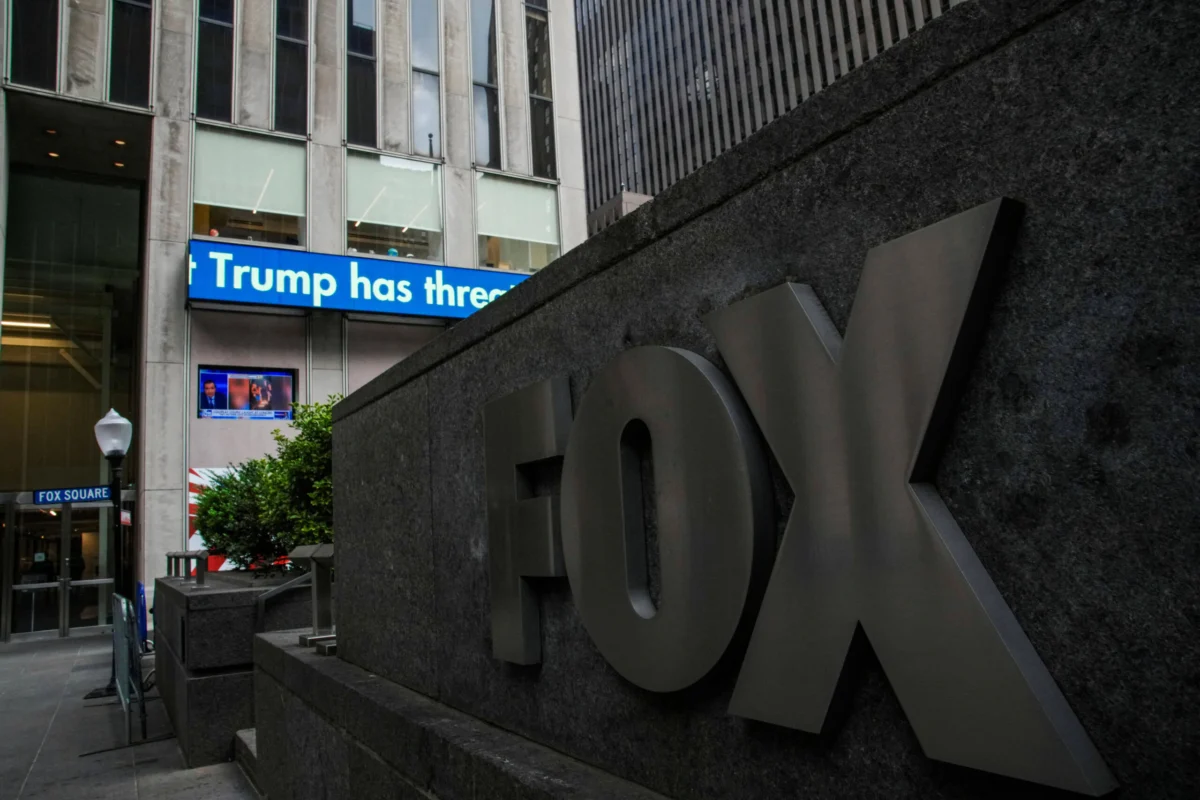
In a move that signals a massive realignment within the media and technology sectors, Fox Corporation officially announced on Monday its definitive agreement to acquire Roku Inc. for approximately $22 billion. The transaction, valued at $160 per share in a combination of cash and stock, represents one of the most significant consolidations in the streaming era, bridging the gap between traditional broadcast power and modern digital distribution infrastructure. The deal comes at a pivotal moment for Fox, which has spent the last several years refining its portfolio to focus on live news, sports, and free ad-supported streaming television (FAST).
Following the announcement, the equity markets reacted with immediate volatility. Fox Corporation’s shares saw a sharp decline of approximately 13% in premarket trading, as investors weighed the substantial capital outlay and the complexities of integrating a hardware-heavy tech company into a content-centric media giant. Conversely, Roku’s stock experienced a 2% uptick, reflecting shareholder approval of the premium offered over its recent trading price. The acquisition is expected to close in the first half of 2026, pending customary closing conditions and regulatory approvals from the Department of Justice and the Federal Trade Commission.
A Strategic Pivot Toward Integrated Distribution
The acquisition of Roku marks a fundamental shift in Fox’s corporate strategy. By bringing Roku under its umbrella, Fox secures not only a massive audience of streaming users but also the underlying operating system that powers millions of smart televisions across North America. This vertical integration allows Fox to control the entire consumer journey, from the creation of content in its news and sports divisions to the digital "piping" that delivers that content to living rooms.
Central to this deal is the synergy between Fox’s existing FAST platform, Tubi, and The Roku Channel. Both services have emerged as leaders in the burgeoning ad-supported streaming market, which has seen a resurgence as consumers experience "subscription fatigue" from paid services like Netflix and Disney+. The combination of Tubi’s massive library of licensed content and Roku’s native placement on its hardware devices creates a dominant force in the advertising-based video-on-demand (AVOD) space.
Furthermore, the deal provides a robust platform for "Fox One," the company’s direct-to-consumer initiative launched last year. While Fox has traditionally relied on cable and satellite providers for distribution, the Roku acquisition grants the company a sovereign digital ecosystem, insulating it from the ongoing decline of the traditional cable bundle.
Historical Context: From 21st Century Fox to the Roku Era
To understand the magnitude of this acquisition, one must look back at the trajectory of the Murdoch-led media empire over the last decade. In 2017, the industry was stunned when the then-21st Century Fox announced it would sell the majority of its entertainment assets to The Walt Disney Company. That $71 billion deal, which closed in 2019, saw Fox divest its film studios, its stake in Hulu, and its international cable networks, leaving behind a "New Fox" focused narrowly on the U.S. market, live sports, and national news.
In the years following the Disney divestiture, Fox’s strategy was characterized by lean operations and high-margin assets. However, the company quickly realized that even a "lean" media company required a digital future. In 2020, Fox acquired the free streaming service Tubi for $440 million—a price that many analysts now view as a bargain given the service’s subsequent growth.
The timeline of Fox’s digital evolution has been deliberate:
- March 2019: Completion of the $71 billion sale of entertainment assets to Disney.
- April 2020: Acquisition of Tubi for $440 million, establishing a foothold in FAST.
- 2021-2023: Expansion of Fox Weather and Fox Nation to bolster digital news subscriptions.
- Late 2024: Launch of Fox One, a unified streaming app for live news and sports.
- July 2025: Announcement of the $22 billion Roku acquisition.
This latest move suggests that Fox has concluded that owning the content is no longer enough; in a fragmented digital landscape, owning the gateway to that content is the ultimate competitive advantage.
Financial Breakdown and Market Data
The $22 billion valuation for Roku reflects a significant premium on the company’s enterprise value, though it remains well below Roku’s pandemic-era highs when its market capitalization briefly exceeded $60 billion. Under the terms of the deal, Fox will pay $160 per share, a move that analysts suggest is aimed at preempting other potential bidders, such as big-tech firms or retail giants looking to bolster their own advertising ecosystems.
Roku brings to the table an impressive data set. As of the most recent quarterly reports, Roku boasts over 80 million active accounts. More importantly, the Roku Operating System (OS) is the number one selling TV OS in the United States, Mexico, and Canada. This gives Fox a direct line of sight into the viewing habits of nearly a third of U.S. households, providing invaluable first-party data for its advertising sales division.
For Fox, the financial implications are twofold. While the 13% drop in stock price suggests investor anxiety over debt levels, the long-term revenue potential from Roku’s ad-tech platform, "The Roku City," and its sophisticated targeting capabilities could significantly offset the shrinking "retransmission fees" that Fox currently collects from dying cable providers.
Industry Reactions and Leadership Perspectives
While official statements from the executive suites have been carefully curated, the sentiment within the industry is one of cautious transformation. Lachlan Murdoch, Executive Chair and CEO of Fox Corporation, emphasized the "unparalleled reach" the combined entity would possess. In a memo to employees, Murdoch reportedly stated that the acquisition "completes the circle of our digital transformation," moving Fox from a participant in the streaming wars to a landlord of the streaming environment.
Industry analysts have offered a more nuanced view. "Fox is buying a seat at the table of the future," said one senior media analyst at a major New York brokerage. "They saw what happened to companies that stayed purely in linear TV—they were slowly bled dry by cord-cutting. By owning Roku, Fox is no longer just a tenant on someone else’s platform; they own the building."
Conversely, some critics point to the hardware aspect of Roku’s business as a potential liability. Roku’s margins on its streaming sticks and branded televisions have historically been thin, with the company often selling hardware at a loss to acquire users. Fox, a company accustomed to the high margins of cable news and sports broadcasting, will now have to manage the complexities of global supply chains and consumer electronics manufacturing.
Broader Implications for the Media Landscape
The Fox-Roku deal is likely to trigger a new wave of consolidation across the media and tech sectors. As the distinction between "content companies" and "distribution platforms" continues to blur, other legacy players may feel pressured to seek similar partnerships.
- The Ad-Tech Arms Race: With the integration of Roku’s ad-serving technology, Fox becomes a formidable competitor to Google and Amazon in the digital video advertising space. The ability to offer advertisers a package that includes a Super Bowl broadcast, Fox News segments, and targeted ads on the Roku home screen is a powerful proposition.
- The Future of FAST: The potential merger of Tubi and The Roku Channel could create a "super-service" that dominates the free streaming tier. This would put immense pressure on competitors like Paramount’s Pluto TV and Amazon’s Freevee.
- Live Sports Integration: Fox’s sports rights—including the NFL, MLB, and the current FIFA World Cup—can now be promoted and delivered with surgical precision. Roku devices could feature dedicated "Fox Sports" buttons or integrated betting interfaces via Fox Bet, further monetizing the viewing experience.
Regulatory Scrutiny and the Path to Closing
The road to finalization will not be without obstacles. Regulators in the current administration have signaled a skeptical view of "vertical" mergers that allow a company to control both the content and the means of distribution. Critics may argue that Fox could give preferential treatment to its own channels on the Roku interface, potentially disadvantaging rival news and sports networks.
To mitigate these concerns, Fox is expected to offer "neutrality" agreements, promising that the Roku platform will remain an open ecosystem for third-party apps like Netflix, Max, and Disney+. However, the data advantage remains a sticking point. Having access to the data of how consumers interact with rival apps is a strategic edge that regulators will likely scrutinize heavily.
Conclusion: A New Era for Fox
The acquisition of Roku for $22 billion represents the final stage of Fox Corporation’s post-Disney reinvention. By securing a dominant position in both content and distribution, Fox is betting that the future of media belongs to those who can bridge the gap between the mass-reach of traditional broadcasting and the data-driven precision of the digital age. While the market’s initial reaction was skeptical, the move positions Fox as a uniquely integrated player in an industry that is increasingly defined by the ownership of the consumer interface. As the 2026 closing date approaches, the media world will be watching closely to see if this $22 billion gamble pays off in the form of a new, digitized Murdoch empire.