The Artist as Digital Ethnographer
Marcus Batto, a 31-year-old artist, programmer, and self-described "YouTube ethnographer," has spent years navigating the overpopulated graveyards of lost media. His work frequently explores the intersection of subculture and shared social phenomena. Before embarking on his first feature, Batto gained recognition for his Certain Moments To Remember series (2020–present), which includes works like RANDOM WEBCAM DANCE @ DA IMAC STORE (2023). That project compiled 2011-era footage of individuals dancing in front of Apple Store display units, utilizing the then-novel front-facing cameras of the iPad 2 and iMac.
Batto’s methodology involves a process akin to "digital scavenging." In his 2024 short documentary Honeycomb, he examined the 2020–2022 phenomenon of catalytic converter thefts in the United States. By blending vlogs, security camera footage, and news broadcasts, Batto drew a parallel between the looters who strip precious metals like rhodium and palladium from car exhausts and the archivist who strips valuable cultural data from the bottom of a YouTube search result. This obsession with "untapped value" in neglected digital spaces informs the structure of There’ll Likely Be Michael Jackson Vigils Throughout the Night, where the mundane and the monumental coexist within the same frame.
Chronology of a Global Crisis: June 25, 2009
To understand the scope of Batto’s film, one must revisit the specific timeline of the day it chronicles. June 25, 2009, was a day of unprecedented digital congestion that nearly broke the infrastructure of the early social web.
- 9:28 AM PDT: Legendary actress Farrah Fawcett, one of the original Charlie’s Angels, passes away at St. John’s Health Center in Santa Monica after a long battle with cancer. For the first few hours of the day, the internet is focused on her legacy.
- 12:21 PM PDT: A 911 call is placed from Michael Jackson’s rented mansion at 100 North Carolwood Drive in the Holmby Hills neighborhood of Los Angeles. Jackson is reported to be not breathing.
- 1:14 PM PDT: TMZ breaks the news that Jackson has been rushed to the hospital after suffering cardiac arrest. The report is initially met with skepticism, as TMZ was then a burgeoning tabloid site.
- 2:26 PM PDT: Michael Jackson is officially pronounced dead at the Ronald Reagan UCLA Medical Center.
- 3:15 PM PDT – 5:00 PM PDT: Major news outlets, including the Los Angeles Times and CNN, confirm the death. Google’s search engine interprets the sudden surge in "Michael Jackson" queries as a DDoS (Distributed Denial of Service) attack and blocks searches related to the singer for approximately 30 minutes. Twitter reports that 15% of all tweets mention Jackson, a record-breaking frequency at the time.
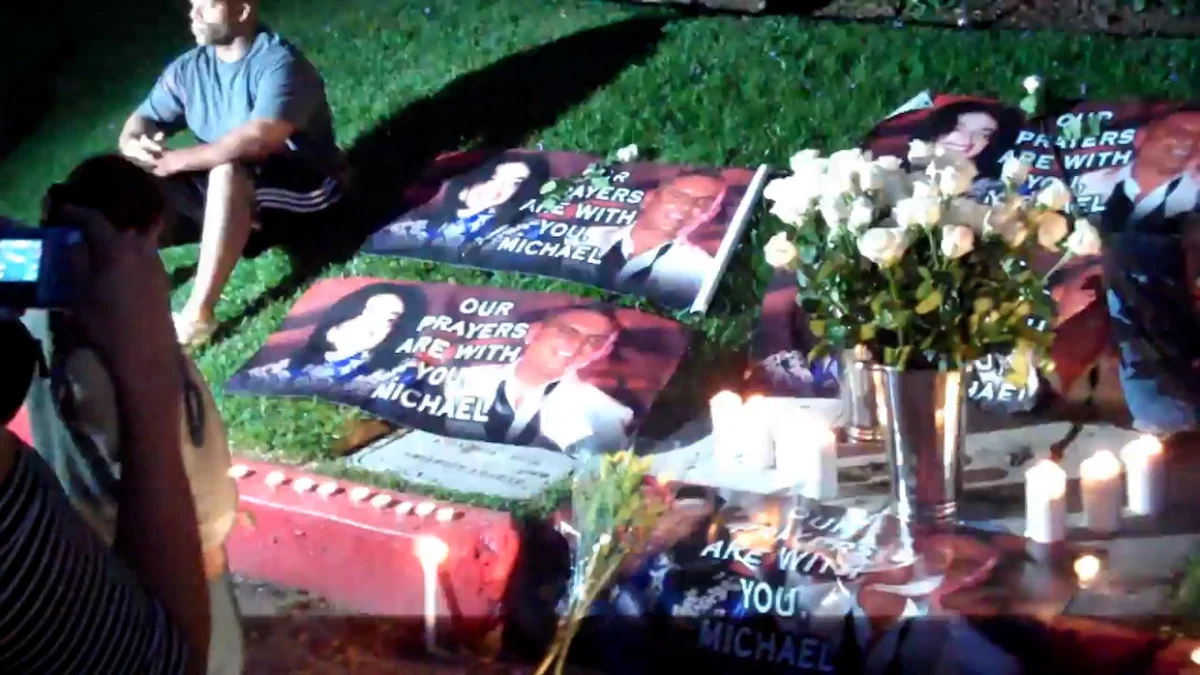
- The Evening Hours: Spontaneous vigils begin in Gary, Indiana; Harlem’s Apollo Theater; and the Hollywood Walk of Fame.
Batto’s film captures these hours not through the lens of polished news broadcasts, but through the raw, unedited reactions of the public. The film highlights the confusion of the era, such as mourners inadvertently gathering around the Walk of Fame star of a British radio DJ also named Michael Jackson, because the "King of Pop’s" star was covered by a red carpet for a movie premiere.
Technological Context: The Dawn of the Front-Facing Camera
The year 2009 represented a pivotal threshold in consumer technology. Just six days prior to Jackson’s death, Apple had released the iPhone 3GS, the first iPhone capable of recording video natively. YouTube was only four years old, and the concept of "vlogging" was still in its infancy, characterized by a lack of professional lighting, editing, or brand sponsorship.
Batto notes that the footage from this era contains a "through-line of innocence." In 2009, users were experimenting with webcams without the self-consciousness induced by modern "clout" culture or the pressure of the "attention economy." The film displays a wide array of these reactions: an emo teenager crying sarcastically for the camera, amateur film reviewers pivoting from Fawcett’s death to Jackson’s, and angry fans threatening blogger Perez Hilton after he initially suggested the death was a publicity stunt.
This "cacophony" is presented through a unique visual device: a rotating digital prism where each face is a grid of twenty simultaneous videos. This aesthetic choice reflects the overwhelm of the digital age, where information is no longer a stream but a flood. By placing these grids over a digital rendering of a rotating Earth, Batto emphasizes the global, simultaneous nature of the event.
Supporting Data and Digital Impact
The scale of the event Batto chronicles is supported by staggering data from the period. According to Akamai, global news traffic saw a 33% increase during the peak of the news cycle, the largest surge since the 2008 U.S. Presidential Election. Wikipedia reported that the Michael Jackson article saw over one million visitors in a single hour, and the site’s servers struggled to manage the volume of edits as users rushed to update the biography to the past tense.
In the film, Batto contrasts this massive, macro-level data with the micro-level experiences of individuals. He describes his own experience as a twelve-year-old, huddling around a desktop computer with friends after smoking for the first time. This juxtaposition—the global collapse of server infrastructures versus the private huddling around a flickering monitor—is the core of the film’s emotional resonance.
Comparative Analysis: The Evolution of Archival Cinema
Critics have noted a kinship between Batto’s work and that of Mitchell and Kenyon, the early 20th-century filmmakers who produced "local films for local people." Mitchell and Kenyon captured the faces of factory workers and children in Northern England, often documenting people who were seeing a camera for the first time. Batto’s subjects, staring into low-resolution webcams in 2009, share that same sense of technological novelty and "profound innocence."
The film also invites comparison to Ian Bell’s WTO/99 (2025), a found-footage documentary about the Seattle anti-globalization protests. Both films face the monumental task of boiling down hundreds of hours of disparate footage into a coherent narrative. Batto admitted that the process was addictive; even after a work-in-progress screening, he continued to add to a playlist of over 800 videos, finding it difficult to stop as more obscure fragments of June 25 surfaced.
Broader Implications and the Digital Dark Age
There’ll Likely Be Michael Jackson Vigils Throughout the Night serves as a warning about the "Digital Dark Age." As search engines become increasingly cluttered with advertisements and AI-generated content, the ability to find authentic, low-view-count footage from the early 21st century is diminishing. Batto’s work is an act of preservation against the "algorithmic myopia" that prioritizes current trends over historical records.
When asked about the possibility of creating a similar film for a contemporary event, Batto expressed skepticism. He argues that the modern internet is too "fleeting" and fragmented. In 2009, the world could still be unified by a single death or a single video like "Charlie Bit My Finger." Today, the "scroll" is too fast, and the algorithms are too personalized for a "single chorus" to emerge.
The film’s premiere, which featured a giveaway of refurbished third-generation iPod Touches preloaded with the movie, underscored this nostalgia for a tangible digital past. Batto’s work suggests that while we are capturing more of our lives than ever before, we are paradoxically losing the ability to "hold" onto those moments. By freezing June 25, 2009, in a 20-video grid, Batto allows the viewer to step out of the current of the modern internet and look back at a time when the digital world still felt like a shared, albeit chaotic, human experience.