



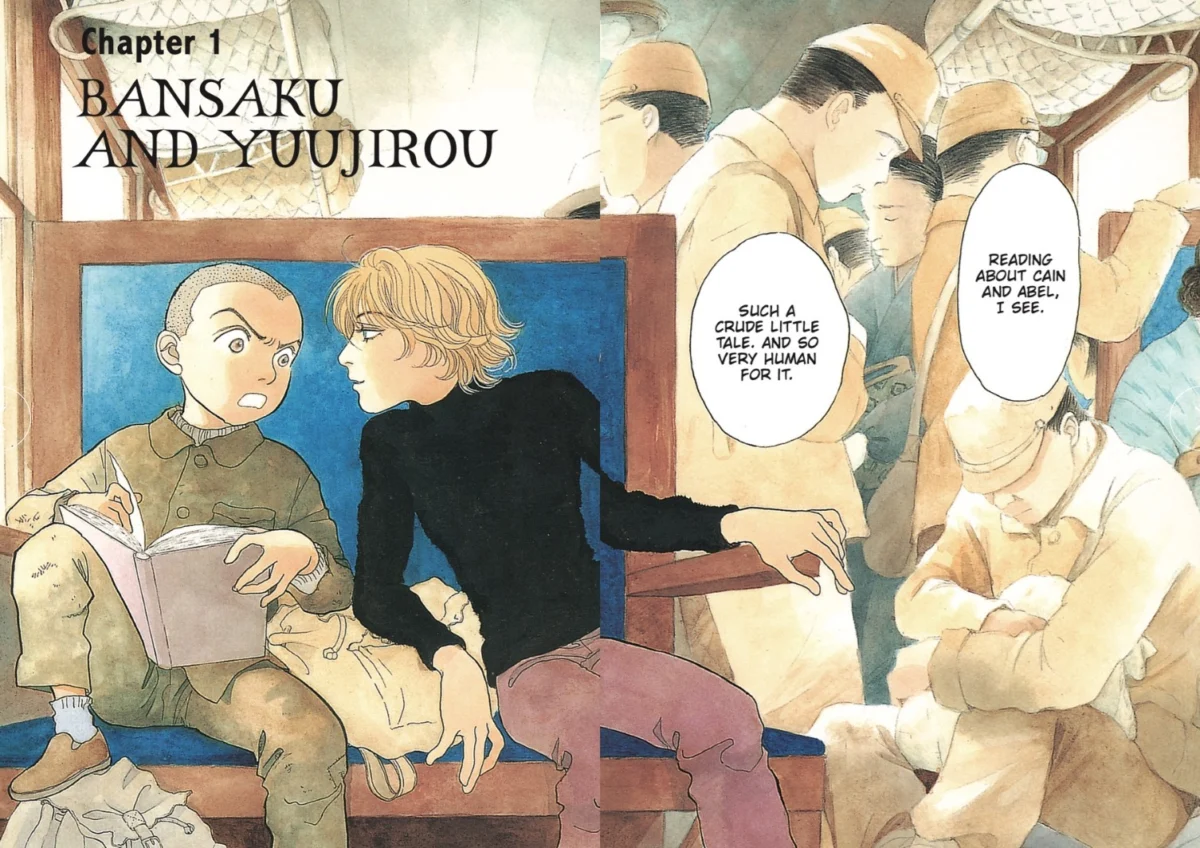
Kazumi Yamashita’s critically acclaimed manga, "Fushigi na Shonen," known internationally as "Wonder Boy," has made a significant mark on the manga landscape since its initial irregular serialization in Kodansha’s Weekly Morning in 2001. This Heisei-era masterpiece, which chronicles the enigmatic journeys of an immortal, time-traveling boy, has seen its publication history span multiple Kodansha imprints and a recent English-language debut, offering readers a profound exploration of human nature across diverse eras and cultures. The first volume of its English translation, published by Yen Press in December 2025, consolidates three compelling narratives, showcasing Yamashita’s distinctive artistic and thematic approach.
A Legacy of Serialization and Reimagining
The genesis of "Fushigi na Shonen" can be traced back to 2001, when it began its sporadic run in Weekly Morning. The manga later transitioned to Kodansha’s Monthly Morning Two in 2006, a period marked by frequent hiatuses that underscored the ambitious and intricate nature of Yamashita’s storytelling. After a considerable pause, the series resurfaced in Weekly Morning in its 42nd issue of 2020, signaling a renewed commitment to its conclusion.
The collected volumes have been published under Kodansha’s Morning Comics line, with nine volumes released to date. Recognizing the enduring appeal and narrative depth of the work, Kodansha initiated a new edition in its Kodansha Manga Bunko imprint in November 2017, releasing six volumes. This re-release strategy highlights the manga’s status as a significant literary work worthy of continued accessibility. The recent English publication by Yen Press, with the omnibus Vol 1-3 arriving in December 2025, signifies a major step in bringing this complex narrative to a global audience, fulfilling long-held anticipation among international fans and critics.
The Enigmatic Protagonist and His Purpose
At the heart of "Wonder Boy" lies a mysterious, blond-haired boy whose existence transcends mortal limitations. Possessing apparent immortality and the ability to traverse time and space, he serves as an ethereal observer and subtle catalyst in the lives of disparate individuals. Yamashita masterfully employs this character not as a conventional protagonist with a singular arc, but as a narrative device that allows for an anthology-like exploration of humanity. The boy’s protean nature, shifting from child to elder, male to female, enables him to seamlessly integrate into various storylines, probing the deepest instincts and subconscious desires of those he encounters.
His role is deliberately ambiguous, defying easy categorization as either a benevolent savior or a malevolent tempter. Instead, he functions as an entity driven by an insatiable curiosity about the human condition. He seeks to comprehend the intricate tapestry of human emotions, the paradoxes of desire, the inherent contradictions within individuals, and the peculiar coexistence of profound cruelty and tender compassion. His whispered words, often unsettling and provocative, do not invariably lead to destruction. Frequently, they instigate profound personal revelations or a form of fulfillment, even when such outcomes are achieved through suffering, loss, or the stark confrontation with one’s basest traits. This nuanced portrayal challenges readers to consider the complexities of moral development and the often-painful process of self-discovery.
Deconstructing Human Nature: Key Narratives from Volume 1
The initial volume of "Wonder Boy" presents three distinct narratives, each delving into a specific facet of human behavior and societal structures, guided by the presence of the titular character.
"Bansaku and Yuujirou": The Corrosive Influence of Power and Greed
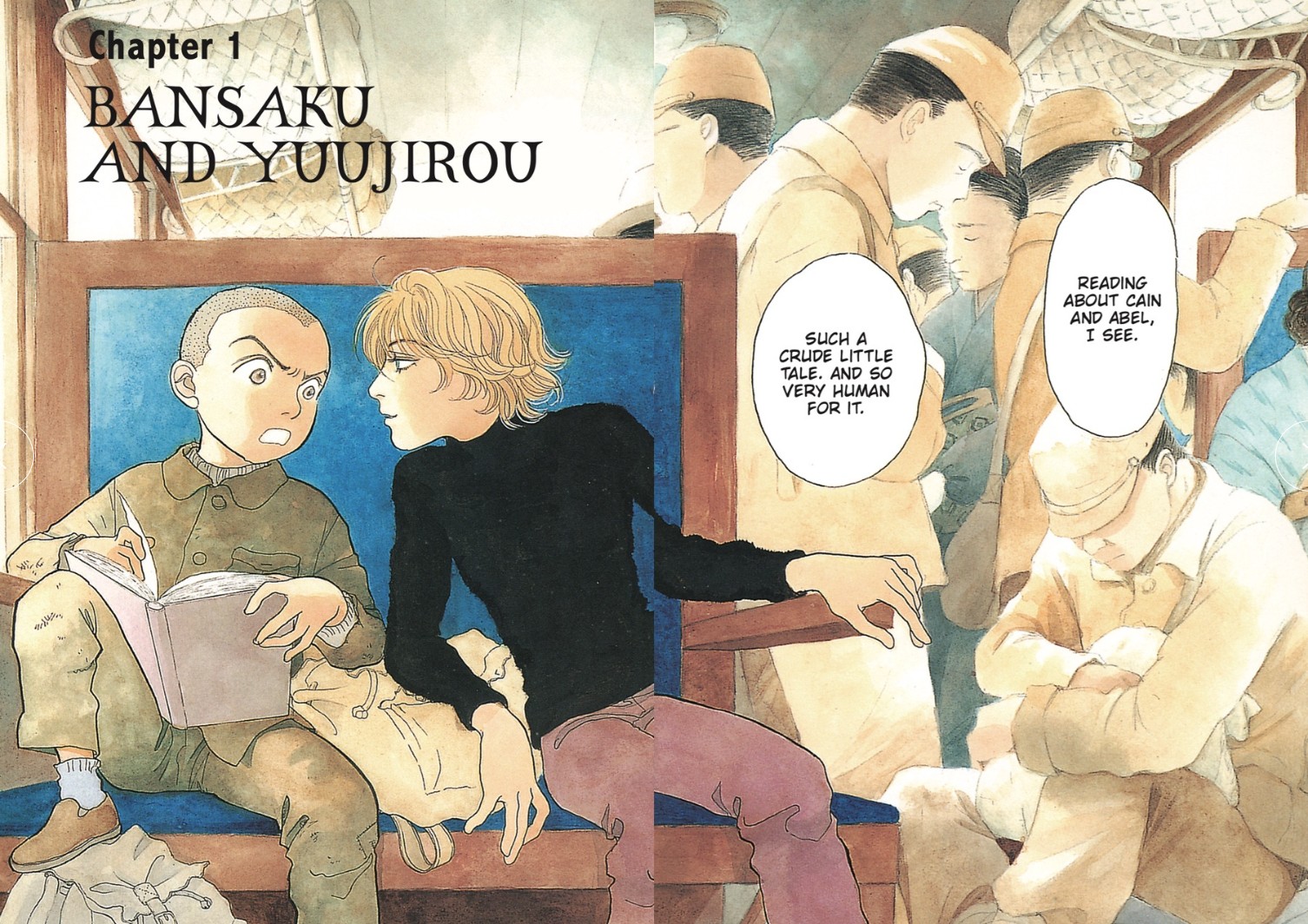
The first story, "Bansaku and Yuujirou," centers on two brothers, the elder Bansaku and the younger Yuujirou, whose roles are subtly altered by the appearance of Wonder Boy. The narrative unfolds during a family gathering at the patriarch’s country estate, where latent tensions between the brothers’ father and his own brother simmer from the outset. The presence of Tei, the household’s wet nurse, attempts to mediate the escalating familial discord while recounting the patriarch’s rise from poverty to immense wealth. This ascent, the story reveals, was achieved through ruthless ambition and the exploitation of others, including members of his own family.
Yamashita draws a direct parallel to the biblical narrative of Cain and Abel, illustrating how the dynamics of fraternal conflict and the corrupting influence of power and wealth transcend generations. Despite the apparent awareness of these destructive forces, characters remain susceptible to their allure. A surreal interlude, facilitated by Wonder Boy’s inexplicable abilities, momentarily blurs the narrative’s coherence, yet the story ultimately coalesces around a profoundly pessimistic commentary on human nature. The episode serves as a stark reminder of how unchecked ambition can fracture familial bonds and perpetuate cycles of exploitation. However, even within this bleak outlook, a flicker of hope emerges as the characters are compelled to confront the weighty legacy passed down to them, suggesting a potential for breaking these destructive patterns. The narrative’s exploration of inherited trauma and the burden of ancestral sin resonates deeply, prompting reflection on how past actions continue to shape present realities.
"Emily and Charlotte": The Deceptive Facade of Beauty
The second narrative, "Emily and Charlotte," introduces two orphaned girls who forge a deep friendship after being abandoned at the same orphanage on the same day. Emily, possessed of striking beauty, cultivates a belief in her noble lineage, using her perceived superiority to mock those she deems less attractive or of lower social standing. This inherent vanity, while rooted in a desire to transcend her circumstances, masks a profound inner ugliness. Wonder Boy’s intervention disrupts the girls’ bond, ultimately revealing that Charlotte is the one of noble birth. In a moment of cruel opportunism, Emily seizes Charlotte’s identity when her true father arrives to reclaim her. Years later, their paths cross again, with Charlotte now aware of Emily’s deceit.
This segment offers a poignant examination of beauty, both outward and inward, and the dangerous chasm that can exist between them. Yamashita avoids a simplistic condemnation of Emily’s vanity, instead contextualizing it within her need, her fantasies, and her desperate yearning for a life beyond her impoverished origins. The resolution, while providing a sense of closure, feels somewhat abrupt and incomplete, leaving the reader with the lingering impression that justice, when it arrives, is rarely a straightforward or untainted affair. The story probes the societal obsession with physical appearance and how it can be weaponized, leading to profound betrayals and a distorted sense of self-worth. The narrative’s subtle commentary on social stratification and the ways in which perceived status can be manipulated underscores the enduring power of these themes in contemporary society.
"Fox-Eyed Torakichi": The Paradoxical Nature of Evil and Redemption
The third story, "Fox-Eyed Torakichi," focuses on a titular 12-year-old boy who has already amassed a significant criminal record, his elusiveness attributed to his extraordinary speed. His early criminal endeavors include the theft of a Buddha statue from a temple, where he strikes the priest who attempts to dissuonade him. A decade later, Torakichi has become a formidable warrior, leading a band of bandits. During a raid that results in the abduction of several children, he unexpectedly encounters Wonder Boy.
This narrative explores the complexities of religion and the potential for spiritual awakening, even in individuals who appear to have renounced all moral grounding. The transformation of Torakichi from a hardened criminal to a protector of the children he once held hostage, albeit through his characteristic gruffness, is rendered with remarkable efficacy. Despite his undeniably wicked actions, Torakichi exhibits a peculiar clarity and purity in his conduct, making him one of the volume’s most memorable characters. The segment is also notable for its dynamic action sequences, showcasing the frenetic energy of battles and the visual dynamism of the panels, offering a thrilling experience for the reader. The story subtly questions the nature of inherent evil, suggesting that even those on the fringes of society may possess a capacity for redemption or a hidden moral compass. The juxtaposition of Torakichi’s brutal efficiency with his unexpected guardianship of the children creates a compelling character study that challenges conventional notions of good and evil.
Expanding the Thematic Horizon
The subsequent stories within "Wonder Boy" continue to broaden the narrative’s scope, venturing into more overtly philosophical territories. Through characters like Tetsuo and Socrates, Yamashita transitions from personal dramas to fundamental questions about the boundaries of good and evil, the true essence of love, and the very definition of humanity. The manga consistently explores themes of betrayal even within trust, hatred interwoven with remnants of love, and the existence of flawed individuals capable of regret and forgiveness. In this manner, "Wonder Boy" evolves into a profound meditation on mankind’s capacity for inhumanity, juxtaposed with startling instances of human resilience and unexpected kindness that can even surprise an immortal observer. The recurring observation by Wonder Boy, that humanity appears resistant to fundamental change, serves as a persistent refrain, anchoring the entire work.
Structural Brilliance and Artistic Mastery
A significant strength of "Wonder Boy" lies in its masterful anthology structure. Each story functions as a self-contained, high-quality narrative, akin to a miniature novel. This format allows Yamashita to seamlessly shift between historical dramas, family tragedies, orphanage melodramas, violent adventures, social allegories, and metaphysical inquiries, all while maintaining the central question of the series: what does it mean to be human? The temporal and geographical separation of these stories prevents narrative fatigue and enhances their distinctiveness. The extended intervals between chapters appear to have afforded Yamashita the time to maintain an exceptionally high standard of quality. While some individual segments may appear unfinished in isolation, they collectively contribute to a cohesive and impactful whole.
Yamashita’s artistic style complements the thematic depth of the manga. His detailed yet uncluttered drawings effectively capture subtle facial expressions, social stratification, and the hidden violence beneath seemingly polite exteriors. The action sequences in "Fox-Eyed Torakichi" are visual triumphs, but the quieter moments are equally compelling, particularly when characters are confronted with their own reflections. Wonder Boy’s character design is particularly effective; his inherent beauty and serene demeanor create an unsettling aura, making him stand out regardless of the narrative setting. This visual consistency and expressive detail are crucial in conveying the emotional weight of each story.
Enduring Significance and Future Implications
"Wonder Boy Vol 1" is a testament to the power of manga as a medium for profound storytelling. It is a beautiful, peculiar, and often deeply moving exploration of humanity at its most flawed and, occasionally, at its most surprising. The series does not shy away from depicting greed, betrayal, vanity, violence, and cowardice, presenting a worldview that is often pessimistic. However, it simultaneously posits that humans are not solely driven by base desires and cruelty. The inherent capacity for regret, forgiveness, endurance, and the potential for spiritual elevation suggests a more complex and hopeful reality. This pervasive tension between despair and hope imbues the work with its considerable power. "Wonder Boy" is not a fleeting narrative; it is a work destined to endure, its insights into the human condition likely to resonate for generations to come, solidifying its place as a significant contribution to the literary and artistic canon of the 21st century. The recent international release promises to foster new critical dialogues and introduce a broader audience to Yamashita’s enduring masterpiece.