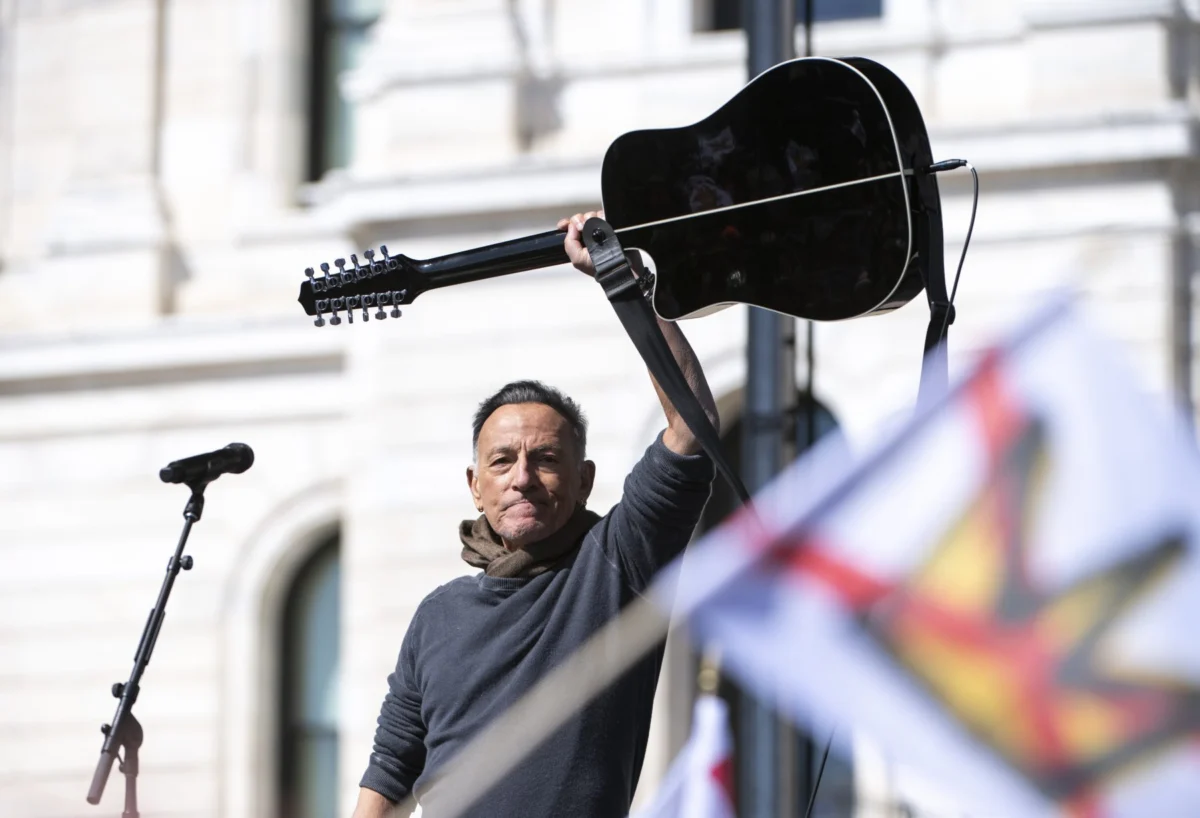
Lower Manhattan buzzed with a palpable energy on June 13th, the concluding day of the 2026 Tribeca Festival, as a constellation of cultural luminaries gathered to celebrate Bruce Springsteen. The iconic musician, affectionately known as "The Boss," was presented with the prestigious Harry Belafonte Voices for Social Justice Award, an honor that underscores his enduring commitment to advocacy and his powerful use of art to address societal inequities. The ceremony, held at the BMCC Tribeca Performing Arts Center, featured a compelling conversation between Springsteen and U2 frontman Bono, alongside heartfelt tributes from Tribeca Festival co-founders Robert De Niro and Jane Rosenthal, and a moving performance by Patti Smith.
The award ceremony itself served as a focal point for discussions surrounding the state of democracy in America and the increasingly contentious issue of federal overreach. This theme resonated deeply with Springsteen’s recent "Land of Hopes & Dreams Tour," which has been characterized by its explicit socio-political commentary. The evening provided a platform for Springsteen to articulate his perspectives on these critical issues, drawing parallels between his artistic journey and his role as a concerned citizen.
A Tribute to a Voice for the Voiceless
Tribeca co-founder Robert De Niro, an Academy Award-winning actor and vocal critic of the current administration, introduced Springsteen with a powerful endorsement. "This is a man who knows how to use his voice," De Niro stated, emphasizing Springsteen’s consistent dedication to amplifying the concerns of marginalized communities. "He uses it to give voice to the powerless and he uses it to lead the resistance. He is fearless and direct. He knows what the problem is and he names it: Donald Trump. Donald J. Trump and his feckless enablers." De Niro’s assessment highlighted the award’s significance in recognizing artists who engage directly with political realities, framing Springsteen’s work as a vital counterpoint to what he described as "the corruption and megalomania of one person." He further lauded Springsteen’s ability to imbue these potent messages with the lyrical depth of a poet, a hallmark of his songwriting.
The Harry Belafonte Voices for Social Justice Award, named in honor of the legendary singer, actor, and activist, is presented annually to individuals who have demonstrated an unwavering dedication to using their platforms for positive social change. Belafonte, a lifelong champion of civil rights and humanitarian causes, set a formidable precedent for artists using their influence to advocate for a more just and equitable world. This year’s recognition of Springsteen signifies a continuation of that legacy, acknowledging an artist whose career has been intrinsically linked to the struggles and aspirations of the American working class.
A Candid Conversation on Democracy and Artistic Integrity
The centerpiece of the evening was an intimate conversation between Bruce Springsteen and Bono, a fellow artist who has also navigated the complexities of using a global platform for social advocacy. Bono, describing himself as a "fan masquerading as a friend," posed thoughtful and at times probing questions, delving into the challenges faced by artists who engage in political discourse.
A key point of discussion revolved around the perceived disconnect between rock music and the working class, a demographic that has historically been a core audience for both Springsteen and Bono. Bono reflected on the potential for artists, particularly those who achieve international fame, to become perceived as out of touch. "I fear sometimes we on the left lost a little bit of it and that the accusations of elitism that are out there for people like me are not inaccurate," Bono admitted. He then directly addressed Springsteen, asking, "Has it cost you? Do you feel torn at all thinking there’s people in this town that used to come see my shows who don’t now? Or have you made peace with that?"
Springsteen’s response was characteristically candid and reflective. "I’m not sure," he stated. "You have to do two things. There’s the classic folk song, ‘Which Side Are You On?’: you have to make your stand and follow your beliefs and you have to have the faith in them that they will be explicable and understandable by your fellow citizens. And you have to believe that America is a sacred argument and a compromise." This sentiment echoed his ongoing commitment to articulating his convictions while trusting in the eventual understanding and resonance of his message with the broader populace.
Springsteen also addressed the explicit political nature of his recent "Land of Hopes & Dreams Tour." He acknowledged that audiences attending his shows, particularly those with a keen awareness of his long-standing engagement with social issues, should not have been surprised by the tour’s overt political messaging. "I warned everybody what the tour was gonna be like so they didn’t waste their money before they came," Springsteen said with a chuckle. "I figured I did my job and it was every man for himself after that." This lighthearted remark underscored his transparent approach to his activism, ensuring that his audience was informed and making conscious choices about their engagement.
Navigating the Landscape of Activism and Commerce
The conversation also touched upon the delicate balance between artistic integrity and the commercial demands that can arise from an artist’s public profile. Bono recounted instances where he had approached Springsteen for his support on various initiatives, including a request to license his 2007 song "Girls In Their Summer Clothes" for a Gap commercial as part of the (RED) campaign, which aimed to raise funds for the fight against HIV/AIDS in Africa. Springsteen had initially declined the request.
In a moment of self-reflection that surprised Bono, Springsteen admitted, "That was a big mistake, too. I should have said yes." He explained that the song, despite not being a chart-topping hit, held a special place in his heart. "I should have f***ing done it. I have to apologize," Springsteen declared, acknowledging a missed opportunity to contribute to a significant cause through a platform he later realized could have been impactful. This candid admission highlighted Springsteen’s willingness to critically assess his past decisions and acknowledge potential oversights in his pursuit of social justice.
A Musical Interlude of Solidarity and Hope
The evening’s program transitioned from conversation to performance with the arrival of Rock & Roll Hall of Famer Patti Smith. Joined by Tony Shanahan on keys, Smith delivered a poignant rendition of "Peaceable Kingdom," a song inspired by the tragic story of Rachel Corrie, an American activist who was killed by an Israeli military bulldozer in 2003 while protesting the demolition of Palestinian homes in the Gaza Strip. The performance served as a powerful reminder of the human cost of conflict and the enduring need for peace.
Following this moving performance, Smith captivated the audience with her electrifying live favorite, "People Have the Power." This anthemic call to action resonated deeply with the assembled audience. Springsteen and Shanahan provided acoustic guitar accompaniment, and Bono, who had briefly left the stage, was called back by Springsteen to contribute backup vocals, creating a moment of profound artistic solidarity. The collective performance underscored the shared commitment of these artists to empowering individuals and fostering a sense of collective agency.
While the festival’s advance program did not explicitly promise a live musical performance from Springsteen, the anticipation among the attendees was palpable. Unlike the overtly vocal fans at a previous Tribeca event featuring Miley Cyrus, where audience members actively heckled until a performance was delivered, the crowd at Springsteen’s event maintained a respectful, albeit hopeful, silence. Their quiet expectation was rewarded when Springsteen, to the delight of all present, offered an utterly mesmerizing solo rendition of his beloved song, "Land of Hope and Dreams." This unannounced performance became a highlight of the evening, showcasing Springsteen’s ability to connect with his audience on an emotional and spiritual level through his music.
A Lingering Message of Civic Engagement
As Bruce Springsteen concluded his performance and prepared to leave the stage amidst a thunderous standing ovation, he left the New York City audience with one final, characteristically understated yet significant message: "Go Knicks." This simple exhortation, a nod to the city’s beloved basketball team, served as a subtle reminder of the importance of local pride and collective spirit, echoing the broader themes of community and shared identity that have long been central to his music and activism. The Tribeca Festival, through its recognition of Springsteen and its engagement with vital social and political issues, once again demonstrated its commitment to fostering dialogue and celebrating voices that inspire positive change. The event served not only as an honor for a legendary artist but also as a powerful testament to the ongoing role of art in shaping public discourse and advocating for a more just society.