


Abramorama has officially unveiled the trailer for Mohammed Ali Naqvi’s intensely riveting documentary film, Hanging by a Wire, set to bring the harrowing true story of a mid-air rescue in Pakistan to select U.S. theaters, beginning August 28th, 2026, with an initial launch in New York City. The film, which garnered significant attention at its 2026 Sundance Film Festival premiere and subsequently captivated audiences at the Seattle, Sydney, and Tribeca film festivals, offers a pulse-pounding account of an extraordinary event, while simultaneously delving into the intricate social and economic fabric of rural Pakistan. It stands as a testament to human resilience, community spirit, and the often-overlooked realities of life in the world’s most challenging terrains.
The Perilous Incident: A Community Stranded Above the Abyss
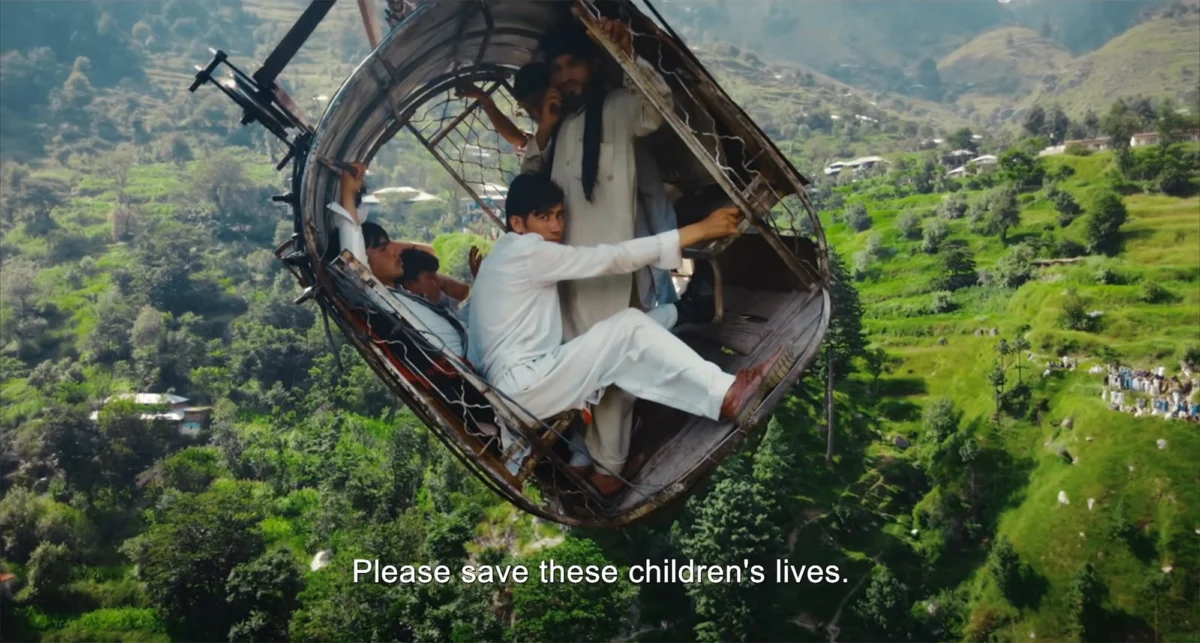
The core of Hanging by a Wire revolves around a terrifying incident that unfolded deep within the rugged and unforgiving Pakistani Himalayas. A makeshift cable car system, a vital yet precarious lifeline for many remote communities, suffered a catastrophic malfunction. Eight individuals, including six schoolchildren on their routine commute, found themselves trapped hundreds of feet above a treacherous valley, suspended by a single, rapidly failing cable. This scenario, a chilling testament to the dangers inherent in improvised infrastructure, immediately triggered a desperate race against time, transforming a mundane journey into a life-or-death struggle. The incident quickly captured national and international attention, galvanizing a rescue effort that stretched the limits of human ingenuity and courage.
In the remote mountainous regions of Pakistan, where conventional roads are often non-existent or impassable, especially during adverse weather, cable cars, often locally constructed and maintained, serve as indispensable transportation arteries. They connect isolated villages to schools, markets, and healthcare facilities, bridging vast distances and challenging terrain. However, their informal nature often means a lack of stringent safety regulations, proper maintenance protocols, and professional oversight, rendering them susceptible to mechanical failures and structural compromises. The cable car in question, typical of such systems, was a product of necessity rather than advanced engineering, a daily gamble undertaken by its users for the sake of connectivity. The snapping of one of its primary cables was a stark reminder of this precarious balance, plunging its occupants into an immediate and terrifying crisis.
A Race Against Time: The Multi-Layered Rescue Operation
The narrative of Hanging by a Wire meticulously reconstructs the unfolding of this dramatic rescue, detailing the frantic efforts that began the moment the cable car became immobilized. Initial alarms were raised by villagers on the ground who witnessed the terrifying incident. The immediate response was driven by local residents – an "unlikely band of local rescuers" – who, despite lacking sophisticated equipment or formal training, instinctively mobilized. Their intimate knowledge of the treacherous terrain, coupled with an unwavering sense of community responsibility, proved invaluable. These early efforts, characterized by improvised solutions and sheer determination, laid the groundwork for what would become a complex, multi-agency operation.
As news of the stranded passengers filtered beyond the immediate vicinity, the scale of the crisis became apparent, necessitating the involvement of government authorities. Both local district administration and national emergency services, including elements of the Pakistani military, were called upon to intervene. The deployment of specialized rescue teams, often involving helicopter support and highly trained personnel, underscored the severity of the situation. However, the rescue was fraught with challenges: the extreme altitude, unpredictable mountain weather conditions, dwindling daylight, and the inherent difficulty of accessing the stranded gondola in such a remote location. Each passing hour heightened the tension, as the integrity of the remaining cable became increasingly questionable, threatening a catastrophic freefall.

The documentary vividly portrays the minute-by-minute struggle, drawing on eyewitness accounts, firsthand testimony, and remarkable on-the-ground footage captured during the actual event. It documents the intricate planning, the agonizing delays, the moments of near failure, and ultimately, the triumphant extraction of each individual. The film effectively places the viewer on the edge of their seat, replicating the suspense and anxiety that permeated the rescue efforts. While the outcome – the safe rescue of all eight individuals – is known, the film’s power lies in its ability to immerse the audience in the terrifying uncertainty of those critical hours, celebrating the courage of both the trapped individuals and their saviors.
Beyond the Spectacle: Exploring Societal Fault Lines
While the immediate focus of Hanging by a Wire is the thrilling rescue operation, director Mohammed Ali Naqvi masterfully uses this singular event as a powerful lens through which to examine broader, more profound societal issues within Pakistan. The film transcends the conventional disaster narrative, evolving into a poignant commentary on the social and economic realities of life in the nation, particularly in its marginalized rural and mountainous regions. The very existence of such a makeshift cable car system speaks volumes about the infrastructure disparities that plague developing nations, where necessity often outweighs safety in the absence of robust public services.
Naqvi’s documentary delves into the stark class divides that complicated the rescue effort and, by extension, define much of Pakistani society. The initial reliance on local, untrained villagers for the most immediate response highlights the self-sufficiency forced upon communities in areas often neglected by centralized governance. The eventual intervention of national military resources, while crucial, also implicitly raises questions about the speed and accessibility of state support for all its citizens, particularly those in remote locales. The film thoughtfully explores the tension between local resourcefulness and the broader responsibilities of the state, showcasing how the crisis exposed the fault lines in service delivery and social equity.
Furthermore, the documentary offers a sobering portrayal of the daily struggles faced by residents of these remote areas. The children’s commute via a precarious cable car is not an anomaly but a reflection of the lengths families go to ensure their children receive an education, despite the inherent risks. This aspect of the film serves as a powerful reminder of the sacrifices made and the systemic challenges that persist, even in the wake of a successful rescue. The "tragic depicting the social & economic realities of life in Pakistan and especially rural areas," as noted by early viewers, provides a vital layer of context, transforming a thrilling survival story into a compelling piece of social commentary.
Director’s Vision and Acclaimed Journey Through Festivals
Mohammed Ali Naqvi, an award-winning Pakistani documentary filmmaker, brings a wealth of experience and a distinctive directorial voice to Hanging by a Wire. Known for his incisive explorations of complex societal and political issues within Pakistan, Naqvi’s previous works include critically acclaimed films such as Shame, Among the Believers, Insha’Allah Democracy, and The Accused: Damned or Devoted?. His filmography demonstrates a consistent commitment to shedding light on narratives often overlooked or misunderstood, offering nuanced perspectives on human rights, religious extremism, and democratic struggles. This background equips him uniquely to navigate the dual objectives of Hanging by a Wire: to deliver a suspenseful account of survival and to provide a deeper analytical framework for its underlying causes and implications.
The film’s journey through prestigious international film festivals underscores its critical reception and artistic merit. Its premiere at the 2026 Sundance Film Festival, a highly competitive platform for independent cinema, immediately signaled its significance. Subsequent selections at the Seattle, Sydney, and Tribeca film festivals further cemented its status as a must-see documentary. Such festival exposure not only validates the film’s quality but also amplifies its reach, attracting the attention of distributors like Abramorama, known for their discerning selection of impactful non-fiction cinema.

Director Naqvi articulated his vision for the film: "This film is a tribute to the ordinary people who became extraordinary when it mattered most. To have Abramorama bring Hanging by a Wire to theaters means this story will reach audiences as we intended – together, in the dark, holding their breath as a real-life disaster thriller unfolds through the voices and footage of the people who lived it." This statement encapsulates the film’s dual purpose: to honor the human spirit displayed during the crisis and to foster a shared, immersive experience for the audience, thereby enhancing the emotional and intellectual impact of the narrative. The theatrical release, as envisioned by Naqvi, allows for a collective engagement with a story that is both terrifying and profoundly inspiring.
The Broader Context: Infrastructure and Safety in Remote Regions
The incident depicted in Hanging by a Wire is not an isolated anomaly but rather symptomatic of broader challenges related to infrastructure development and safety standards in remote, geographically challenging regions globally, and particularly within Pakistan. The film implicitly prompts a critical examination of the factors that lead communities to rely on such precarious transport systems. Mountainous terrains, while stunningly beautiful, pose immense logistical hurdles for conventional infrastructure. Constructing and maintaining roads, bridges, and modern transportation networks in areas prone to landslides, flash floods, and seismic activity is prohibitively expensive and technically complex.
Consequently, communities in these regions often resort to ingenious, albeit often unsafe, solutions. Beyond rudimentary cable cars, one might find rickety footbridges, improvised river crossings, or treacherous mountain paths that are daily navigated out of necessity. The economic realities of these regions mean that resources for robust, engineered solutions are scarce, and regulatory oversight is often minimal or non-existent. This creates a cycle where communities are left to their own devices, constantly balancing risk against the need for connectivity. The Hanging by a Wire incident serves as a stark illustration of the catastrophic consequences when this delicate balance is disrupted.
The film’s exploration of these themes holds significant implications for policy discussions surrounding rural development, disaster preparedness, and equitable access to safe infrastructure. It implicitly calls for greater investment in sustainable and secure transportation solutions for remote communities, alongside enhanced regulatory frameworks and emergency response capabilities tailored to specific geographic challenges. The successful rescue, while heroic, should not overshadow the underlying systemic vulnerabilities that made such an incident possible in the first place.
Governmental Response and Accountability
A crucial aspect of Hanging by a Wire, as hinted by its synopsis, is its examination of how the government—both local and national—handled the crisis. The documentary likely scrutinizes the initial response mechanisms, the coordination between various administrative tiers, and the effectiveness of the resources deployed. In any major crisis, the efficiency and transparency of governmental actions are paramount. The film offers an opportunity to assess the strengths and weaknesses of Pakistan’s emergency response protocols in a remote, high-stakes environment.
Questions arise regarding the speed of information dissemination from the local level to national authorities, the allocation of specialized assets (such as military helicopters and mountaineering experts), and the logistical challenges of deploying them to an inaccessible location. The interplay between local community efforts and state-led operations is particularly insightful, potentially revealing instances of synergy and, perhaps, friction or delays. While the ultimate outcome was positive, the film provides a platform for reflection on whether the system worked optimally or if improvements are necessary for future crises. This analysis, framed within the documentary, contributes to a broader understanding of governance in challenging contexts and the continuous need for robust, adaptive disaster management strategies.

Abramorama’s Distribution and Anticipated Impact
The acquisition of Hanging by a Wire by Abramorama, a distributor renowned for its focus on thought-provoking and impactful documentaries, signals a strong belief in the film’s quality and its potential resonance with a wide audience. Abramorama’s strategy often involves targeted theatrical releases, leveraging critical acclaim and festival buzz to build momentum before wider distribution. The initial release in select U.S. theaters, starting in New York City on August 28th, 2026, is a strategic move to generate early engagement and facilitate word-of-mouth recommendations.
The decision for a theatrical release, rather than a direct-to-streaming debut, underscores the film’s cinematic power and the distributor’s intent to create a collective viewing experience. As Director Naqvi expressed, watching the film "together, in the dark, holding their breath" is central to its intended impact. This communal experience amplifies the suspense and fosters a shared emotional connection to the harrowing events depicted. For audiences, it promises not just a captivating story of survival but also an immersive journey into the heart of a community facing unimaginable adversity, forcing a confrontation with uncomfortable truths about global inequalities and human resilience.
Conclusion: A Must-Watch Documentary of Courage and Commentary
Hanging by a Wire is poised to be more than just a gripping account of a miraculous rescue; it is a profound piece of documentary filmmaking that uses a single, extraordinary event to illuminate broader societal narratives. Mohammed Ali Naqvi’s skillful direction transforms a real-life disaster thriller into a nuanced exploration of courage, community, governmental response, and the stark realities of life in Pakistan’s remote regions. Its journey through major film festivals has already cemented its status as a critically acclaimed work, and its upcoming theatrical release offers audiences the opportunity to witness a truly remarkable story. This film is an essential watch for anyone seeking a powerful, thought-provoking narrative that challenges perceptions and celebrates the indomitable spirit of humanity in the face of overwhelming odds. Prepare to be on the edge of your seat, deeply moved, and profoundly enlightened.