

The Narrative Architecture of Leviticus
The film opens with a sequence that establishes its primary thematic concerns through a "little death" that precedes a literal one. A lesbian lifeguard, seeking a moment of illicit intimacy in a poolside shower, falls victim to an invisible entity. This predator is not a random slasher but a manifestation of a curse cast upon queer youth by a local religious collective. The creature’s primary attribute is its ability to appear as the person its victim desires most, transforming the private sanctity of attraction into a lethal trap. This premise serves as a literalization of the homophobic rhetoric often used to police queer bodies: the notion that one’s innate desires are inherently self-destructive.
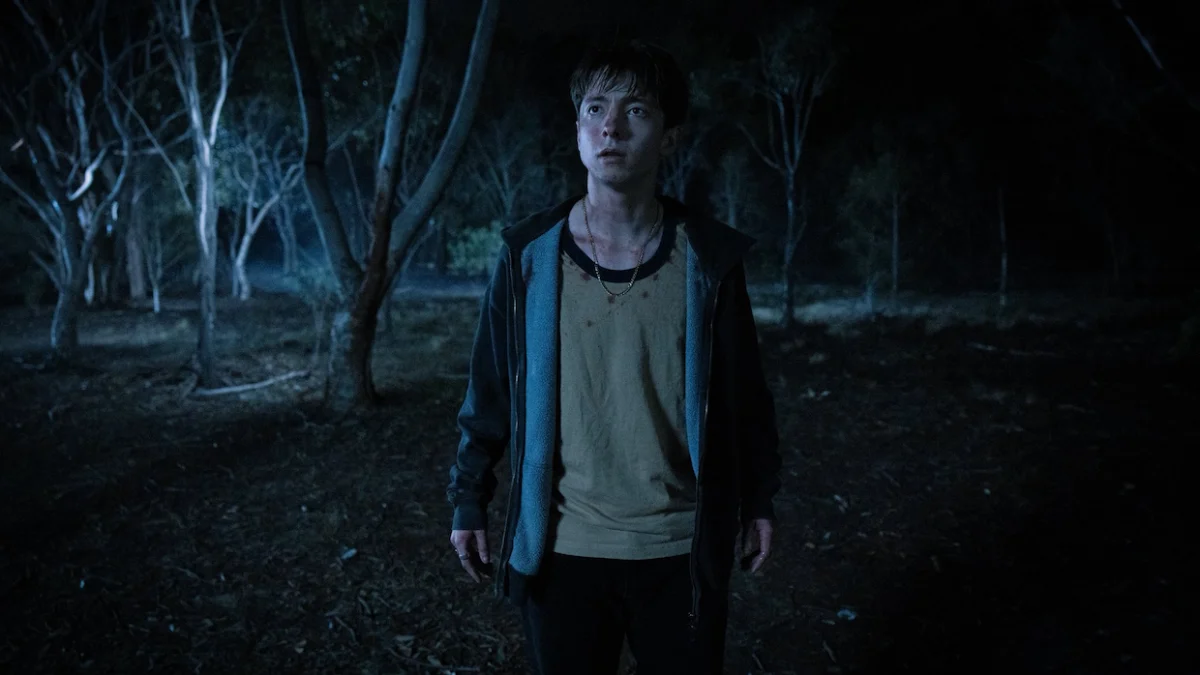
As the plot moves into the primary narrative arc, the audience is introduced to Naim (played by Joe Bird), a reserved newcomer to a desolate Australian town dominated by a cult-like religious community. Naim’s burgeoning relationship with the charismatic Ryan (Stacey Clausen) serves as the emotional core of the film. Their romance is shadowed by the presence of Hunter (Jeremy Blewitt), the closeted son of the local preacher, whose violent encounter with Ryan triggers a chain of events rooted in jealousy and betrayal. When Naim "tattles" on the pair, hoping for a minor intervention, he inadvertently subjects them to the full force of the community’s supernatural and psychological wrath.
The Resurrection of Queer Horror Tropes
Chiarella’s creative impetus for the film stems from a desire to reclaim the horror genre, which has historically served as a refuge for queer audiences. In promotional interviews and director’s statements, Chiarella has cited the Nightmare on Elm Street franchise—specifically the 1985 sequel Freddy’s Revenge—as a foundational influence. That film has long been analyzed by scholars and fans as an allegory for the "closet," where the protagonist’s internal struggle manifests as a physical threat. Similarly, Chiarella points to John Carpenter’s The Thing (1982) as a masterclass in the paranoia of the "other," where the inability to trust one’s neighbor reflects the lived experience of marginalized individuals in hostile environments.
By drawing on these "forbidden" cinematic lodestars, Leviticus positions itself within a lineage of films that use the monstrous to represent the marginalized. However, Chiarella subverts the "Bury Your Gays" trope—a long-standing criticism of media where queer characters are killed off for shock value or plot progression—by making the survival of his protagonists dependent on their ability to navigate a world of "false allyship" and "predatory love."
Chronology of Production and Thematic Development
The development of Leviticus mirrors a broader shift in the Australian film industry toward "elevated horror"—genre films that prioritize thematic depth and aesthetic precision.
- Conceptualization (2022-2023): Chiarella began drafting the script as a response to the global "backward slide" in LGBTQ+ rights and the continued existence of conversion therapy in various jurisdictions.
- Casting and Pre-production (2024): The attachment of Mia Wasikowska, an internationally recognized star known for her work in Crimson Peak and Alice in Wonderland, provided the project with significant "prestige" backing. Her role as Naim’s mother serves as a bridge between the film’s indie roots and its broader commercial ambitions.
- Principal Photography (Late 2024 – Early 2025): Filming took place in the Australian "boondocks," utilizing weathered architecture and barren landscapes to create an atmosphere of "dreary, vacant hostility."
- Post-Production and Festival Circuit (2025): The film’s visual language, heavily reliant on mirrors, windows, and "the act of seeing," was refined to emphasize the theme of perceptual empathy.
- Theatrical Release (2026): Leviticus debuted to critical acclaim, noted for its refusal to provide easy catharsis.
Statistical Context: The Persistence of Conversion Practices
While Leviticus is a work of fiction, its central conceit—a community-enforced "hex" to "cure" homosexuality—is a metaphor for the real-world practice of conversion therapy. Despite being condemned by major medical and psychological associations worldwide, these practices remain a reality.
In Australia, several states have moved to ban conversion practices, including Victoria (2021) and the ACT (2020), but the film highlights the cultural and religious pockets where such ideologies persist. According to data from the Trevor Project and various human rights organizations, LGBTQ+ youth who are subjected to conversion efforts are more than twice as likely to report having attempted suicide. By framing these statistics through the lens of a supernatural monster, Leviticus forces the audience to confront the lethality of "pious" intervention.
Visual Language and Aesthetic Symbolism
The production design of Leviticus is a study in "industrial vs. pastoral" tension. Chiarella and his cinematographer utilize the vast, uncaring landscape of the Australian interior to dwarf the characters, reflecting their isolation. The man-made structures—abandoned buildings, clinical hospitals, and sterile church halls—represent the "rules and edicts" of society, while the woods and water represent a more primal, if dangerous, universe.
Cinematically, the film employs a motif of "mediated sight." Many of the film’s most harrowing moments are glimpsed through reflections or camera lenses. This serves two purposes: it reinforces the paranoia of being watched and it underscores the "willful ignorance" of the town’s adults. In the world of Leviticus, those who are not "cursed" (i.e., those who conform to heteronormative standards) are literally unable to see the monster. This blinkering mirrors the way societal structures often ignore the trauma of queer youth, dismissing their struggles as a "phase" or a choice.
Cast Performances and Character Dynamics
The performances of Joe Bird and Stacey Clausen have been singled out for their "tersely tender" portrayal of teenage intimacy under siege. Bird’s Naim carries the weight of the film’s moral complexity; his act of "tattling" is not born of malice but of a desperate desire for acceptance within a broken system. His subsequent journey of atonement forms the film’s emotional backbone.
Mia Wasikowska’s performance provides a chilling look at "predatory love." As Naim’s mother, she embodies the banality of evil, delivering lines about the "need for fear" with a misplaced sense of maternal protection. Her character blurs the line between the protector and the oppressor, illustrating how even those closest to a victim can become conduits for institutional harm.
Broader Impact and Industry Implications
The release of Leviticus (2026) comes at a time when queer cinema is often expected to move "beyond the struggle." Many modern films focus on queer joy and post-acceptance narratives. However, Chiarella’s debut suggests that the "crisis" narrative remains essential as long as the underlying threats persist.
The film’s ending is particularly significant in this regard. Eschewing the traditional horror trope of the monster’s definitive defeat, Leviticus concludes with an "ambiguously hopeful" note. As Chiarella noted, the trauma these boys have endured "may never go away." By refusing a clean resolution, the film aligns itself with the reality of psychological recovery, where the "monster" of memory and trauma continues to linger in the periphery.
In the broader context of the film industry, Leviticus demonstrates the commercial and critical viability of "social horror"—a subgenre popularized by films like Get Out and Smile—which uses genre conventions to dissect systemic issues. As an Australian production, it also reinforces the country’s reputation for producing high-quality "Gothic" cinema that utilizes its unique geography to tell universal stories of isolation and identity.
Conclusion: The Modernity of Ancient Parables
Leviticus (2026) succeeds by fusing the visceral tremors of the horror genre with a sophisticated figurative design. It is a film that demands attention, not just for its scares, but for its "brute-force appeal for empathy." By translating the "pious dictum" of religious oppression into a tangible, stalking threat, Adrian Chiarella has created a work that unearths something "terrible and intimate and true." The film serves as a reminder that while progress has been made, the shadows of the past—and the monsters they birthed—are often closer than they appear.