


Filmmaker Zulian Tjuatja’s latest narrative short, “The Dumpling Club,” a poignant 20-minute exploration of grief, cultural heritage, and the enduring power of human connection, recently garnered attention as part of Asian Movie Pulse’s “Submit Your Film Initiative.” The film delves into the profound journey of an Asian American man grappling with loss as he endeavors to decipher a treasured cookbook inherited from his parents. This deeply personal project, as revealed in an exclusive interview with Asian Movie Pulse, draws heavily from Tjuatja’s own life experiences and his observations within the vibrant multicultural landscape of Washington, D.C.
A Community Forged in Language and Loss
The genesis of “The Dumpling Club” can be traced back to Tjuatja’s personal experience of relocating to Washington, D.C., approximately three and a half years prior to the film’s creation. Arriving in a new city with limited social connections, he actively sought to build a community by attending language-exchange meetings. These gatherings, intended for individuals seeking to improve their foreign language skills, unexpectedly became fertile ground for forging deep friendships and finding inspiration for his cinematic endeavors.
It was within one such group, a Chinese-speaking cohort comprised of native Chinese speakers, Chinese Americans, and Asian Americans eager to enhance their Mandarin proficiency, that Tjuatja met Siwei Kwok. Kwok, who would eventually embody the central character of “The Dumpling Club,” shared with Tjuatja the profound grief he was experiencing following the death of his parents. This personal revelation, coupled with Kwok’s expressed desire to reconnect with his cultural heritage through the medium of his parents’ native tongue, struck a chord with Tjuatja.
“A lot of ‘The Dumpling Club’ is based on his real life,” Tjuatja disclosed, emphasizing the autobiographical underpinnings of the narrative. This profound connection to reality extended to the film’s production itself. In a testament to the authenticity Tjuatja sought, the film was actually shot within Kwok’s childhood home, allowing the environment to resonate with genuine memories and emotions. Rather than imposing fictional personas upon the performers, Tjuatja opted to cultivate characters that mirrored the inherent personalities and lived experiences of his cast. This approach fostered a palpable sense of naturalism, allowing the actors to inhabit their roles with an organic authenticity that is rarely seen in conventional filmmaking.
Tjuatja further elaborated on the significance of language acquisition as a means of honoring one’s heritage. Siwei’s commitment to improving his Mandarin was not merely an academic pursuit but a deeply personal act of remembrance and a way to maintain a connection with his deceased parents. Tjuatja himself had found solace and a strengthened sense of identity through learning Chinese, a shared experience that ultimately became the pivotal catalyst for conceiving and writing “The Dumpling Club,” placing Siwei at the heart of this deeply resonant story.
Food and Language: Universal Bridges to Cultural Understanding
For Tjuatja, the symbiotic relationship between culinary arts and linguistic expression has always been a cornerstone of cultural immersion. “Food and language, to me, are the two most important gateways to any culture,” he articulated, underscoring their fundamental role in fostering understanding and connection. He posits that these elements possess a unique ability to bridge divides, enabling individuals from disparate backgrounds to forge meaningful connections.
Tjuatja recounted a personal anecdote from a trip to Greece, where despite a language barrier, his most indelible memories were woven from shared experiences involving local delicacies like spanakopita and moussaka, the ubiquitous presence of Athenian cats, and the simple yet profound conversations he managed to have with local vendors. These instances, he suggests, highlight how common ground, whether found through a shared language or a universally appreciated dish, can significantly facilitate the development of deeper relationships.
This philosophy is intrinsically woven into Siwei’s narrative arc in “The Dumpling Club.” The act of translating the recipes within his inherited cookbook becomes a process of discovery, a way for Siwei to unearth layers of his family history. However, Tjuatja makes it clear that the mere recreation of these dishes is insufficient. The recipes, he argues, attain their full resonance and significance only when they are prepared and, crucially, shared with others, transforming a solitary endeavor into a communal experience.
The Enigmatic Family Cookbook: A Catalyst for Connection
The cookbook featured in “The Dumpling Club” draws inspiration from Tjuatja’s own childhood memories. His ethnically Chinese family, having emigrated from Indonesia to the United States, relied heavily on Chinese-language cookbooks published in the 1980s. These volumes, characterized by their Chinese text accompanied by limited or absent English translations and a scarcity of photographs, presented a captivating enigma to young Tjuatja. He perceived them as portals into aspects of his parents’ lives that remained just beyond his grasp, imbued with a sense of mystery that fueled his curiosity.
Tjuatja’s intention was to imbue the film’s cookbook with a similar aura of mystique, while simultaneously ensuring it was written entirely in Chinese to provide Siwei with a compelling impetus to attend language classes. The practical challenge of sourcing such a book proved more arduous than anticipated. Many potentially suitable cookbooks were either bilingual, thus undermining the narrative’s premise, or had gone out of print. Tjuatja eventually located a rare copy on eBay, investing a significant sum which he deemed a worthwhile expenditure for the film’s integrity. He readily acknowledged that contemporary translation applications could have swiftly resolved Siwei’s practical dilemma. However, he consciously eschewed this convenient solution, recognizing that the reliance on technology would have obviated the need for the language classroom, thereby dismantling the very foundation of the film’s central story.
From Classroom Awkwardness to Communal Warmth
The initial depiction of the language classroom in “The Dumpling Club” is intentionally imbued with a sense of awkwardness and impersonal detachment, a space populated by individuals yet to forge genuine connections. As Siwei gradually becomes more comfortable and engaged, this same environment undergoes a subtle yet profound transformation, evolving into a nascent community.
Tjuatja masterfully illustrates this shift through his deliberate use of recurring, fixed camera positions. Eschewing the dynamism of close-ups or tracking shots, he adopted a more observational, almost documentary-style perspective. This consistent framing allows viewers to readily recognize the setting, thereby enabling them to focus their attention on the evolving atmosphere and the burgeoning relationships within the space. The audience becomes a silent witness to the gradual unfolding of human connection.
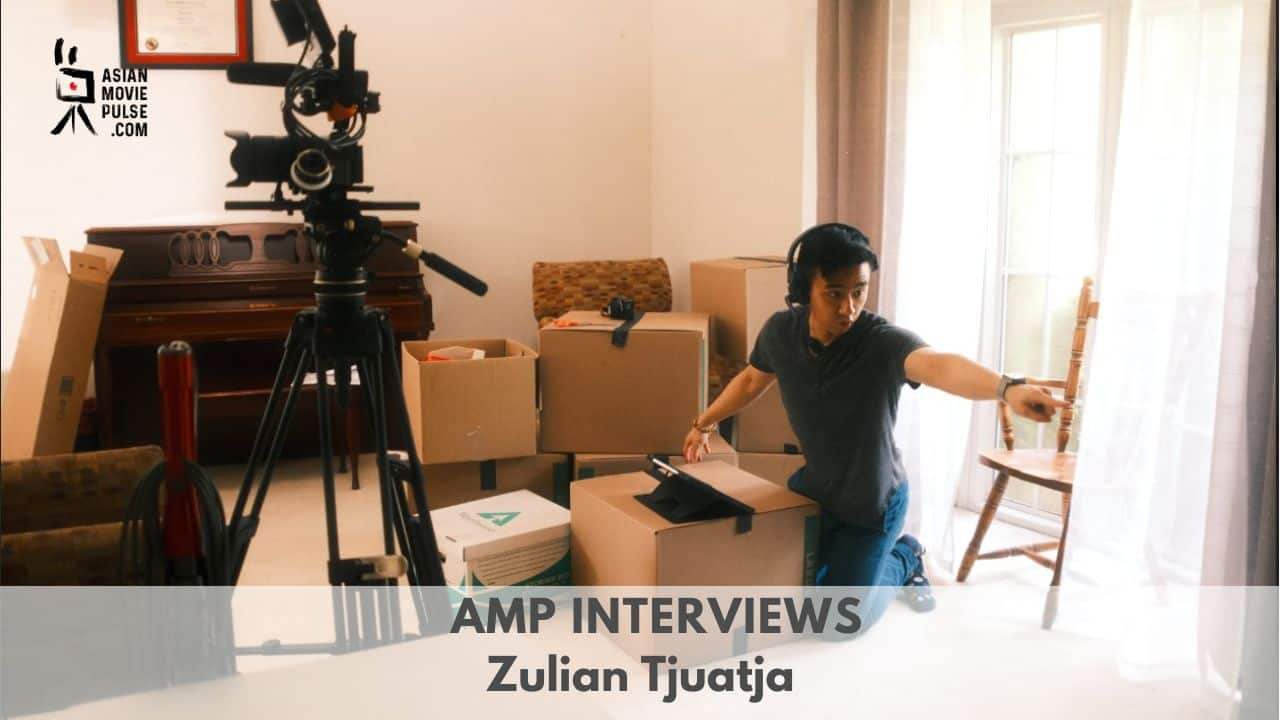
A parallel metamorphosis occurs within Siwei’s home. Initially, the house serves as a poignant relic of his past life, a constant and somber reminder of his parents’ absence. However, as the narrative progresses and Siwei extends an invitation to his classmates to share a meal, the space transforms into a welcoming and vibrant hub of communal activity. This emotional and spatial evolution is subtly underscored through visual cues: boxes that initially clutter the home gradually recede, and the lighting becomes progressively brighter, mirroring Siwei’s process of confronting and navigating his grief.
A Cast of Familiar Faces: Embracing Non-Professional Actors
With the exception of Sophia and Zach, who appear in minor supporting roles, the cast of “The Dumpling Club” is comprised entirely of individuals with no prior professional acting experience. The majority of the performers were individuals Tjuatja had encountered through his involvement with Washington, D.C.’s diverse Chinese American community.
Jess An, who delivers a warm and natural performance as the language teacher Jenny, was a fellow attendee of the same language-exchange group. Originally from Beijing, An frequently assisted beginners with fundamental Chinese concepts during their meetings. Her inherent patience and natural aptitude for teaching led her peers to affectionately dub her “Teacher Jess,” a moniker that perfectly encapsulated her genuine disposition. Tjuatja recognized that her authentic personality made her an ideal candidate for the role, and her performance reflects this astute observation. Poignantly, following her participation in the film, Jess An transitioned from her position in Washington’s nonprofit sector to become a dedicated Chinese language teacher, a testament to the personal impact the filmmaking experience had on her life.
Chris, who portrays one of Siwei’s classmates, is a close friend of Tjuatja’s, of half-Chinese and half-Salvadoran heritage. Beyond his acting contribution, Chris also composed the film’s evocative soundtrack, continuing a collaborative partnership that has seen him create music for all of Tjuatja’s previous films.
Other cast members, including Grace and Jessica, were individuals Tjuatja befriended while working on a documentary focused on Washington’s Chinese American community. This documentary project led him to a church in Chinatown, where he forged friendships with several younger members of the congregation. While the decision to cast friends and acquaintances was partly a pragmatic choice for a low-budget independent production, it significantly contributed to the film’s overall naturalistic performances and its authentic portrayal of a genuine community.
An Observational Cinematographic Approach
In collaboration with cinematographer Andrew Huang, Tjuatja made a conscious decision to imbue the camera with the role of an objective observer, deliberately refraining from actively directing the audience’s gaze. Tjuatja characterizes “The Dumpling Club” as a narrative where the how of events unfolding holds greater significance than the events themselves. The deliberate use of static shots and repeated compositions encourages viewers to actively engage with the subtle, gradual transformations occurring within the characters and their environment. This understated visual strategy also proved highly effective given the production’s constrained shooting schedule, which spanned a mere three days. By meticulously selecting a limited number of carefully considered angles, the filmmaking team was able to work with remarkable efficiency without compromising their artistic vision.
During the pre-production phase, Tjuatja and Huang engaged in extensive discussions regarding the film’s color palette. Their cinematic inspirations were notably drawn from the works of acclaimed directors such as Hirokazu Koreeda and Edward Yang, particularly their masterful observational techniques and their willingness to allow narrative situations to develop organically within the frame, fostering a sense of unforced realism.
The Multifaceted Role of Writer, Director, and Editor
Tjuatja’s creative control over “The Dumpling Club” extended beyond writing and directing; he also undertook the role of editor. He views writing, directing, and editing as the three most critical functions that shape the ultimate realization of a film, and consequently, he sought to maintain a cohesive vision across all these domains. The editing process served not only to assemble the narrative but also as a valuable opportunity to refine his filmmaking acumen. The post-production phase spanned approximately three to four months, during which Tjuatja meticulously worked to achieve a final cut that met his exacting standards.
The sound design proved to be a particularly demanding aspect of post-production. Although a dedicated sound crew was initially expected to handle certain elements, unforeseen circumstances led to several planned aspects of the sound work remaining incomplete. This necessitated Tjuatja taking on a significant portion of the remaining tasks himself. Despite the extended timeline, he prioritized dedicating the necessary time and effort to ensure the film accurately represented his artistic intentions, rather than compromising on quality for a premature release.
Looking Ahead: A First Feature and Evolving Artistic Vision
Tjuatja has since completed post-production on another short film, which he shot in Japan in late 2025. This project, he notes, represents a departure from “The Dumpling Club,” embracing a more philosophical approach and a narrative structure reminiscent of a parable. Concurrently, he has entered the pre-production phase for what he hopes will be his debut feature film, signaling a significant step forward in his directorial career.
For “The Dumpling Club,” however, the intimacy afforded by the short film format proved instrumental in enabling Tjuatja to transmute personal experiences, genuine friendships, and familiar locales into a compelling narrative about the process of recovering from loss. By artfully interweaving themes of food, language, and community, the film posits that cultural heritage is not merely a static inheritance from the past, but a dynamic entity that continues to evolve and flourish through the act of sharing it with others. This enduring message of connection and remembrance solidifies “The Dumpling Club” as a significant contribution to contemporary cinematic storytelling.