


Versant Media Group, the newly independent media powerhouse recently spun off from Comcast’s NBCUniversal, delivered its inaugural quarterly earnings report on Thursday, signaling a resilient start to its life as a standalone public company. Despite the well-documented headwinds facing traditional linear television, the company’s stock surged nearly 10% as investors reacted favorably to a significant revenue beat and a clear strategic roadmap toward digital diversification. The report, covering the first quarter ended March 31, 2026, showcased a company in transition—one that is leveraging its legacy cable assets to fund a high-growth future in digital platforms and content licensing.
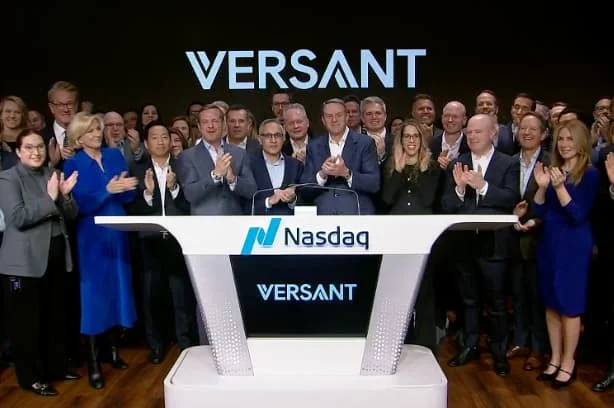
The financial results represent a critical milestone for Versant, which began trading on the Nasdaq earlier this year under the ticker VSNT. The spin-off was designed to allow Comcast to focus on its core connectivity and theme park businesses while giving Versant the autonomy to navigate the rapidly evolving media landscape. Early indications suggest that the market views this independence as an opportunity for more agile decision-making and aggressive capital allocation.
Financial Performance and Revenue Streams
For the first quarter of 2026, Versant Media Group reported total revenue of $1.69 billion. While this figure represents a modest 1% decline compared to the same period in the previous year, it comfortably exceeded the $1.62 billion consensus estimate provided by analysts polled by LSEG. This outperformance was largely driven by an explosive growth in content licensing and steady gains in the company’s digital platform segment, which helped mitigate the ongoing erosion of the traditional pay TV bundle.
The company’s net income attributable to Versant was $286 million, or $1.99 per share. This marked a 22% decrease from the prior year, a drop the company attributed to several factors related to its new corporate structure. These included the costs of operating as a standalone public entity, increased interest expenses following the spin-off, and lower overall revenue. However, these pressures were partially offset by a more favorable tax position during the quarter.
Adjusted EBITDA (earnings before interest, taxes, depreciation, and amortization) fell 7% to $704 million. However, management provided a "standalone adjusted EBITDA" metric to offer a more direct comparison of the current portfolio’s performance against its pre-spin results. On this basis, adjusted EBITDA actually rose by 5%. This improvement was credited to disciplined cost management, including lower entertainment programming expenses and a reduction in selling, general, and administrative (SG&A) costs.
The Linear Challenge and the Licensing Surge
The core of Versant’s business remains its portfolio of influential cable networks, including CNBC, MS NOW, the Golf Channel, USA, E!, Syfy, and Oxygen. This segment, referred to as linear distribution, generated $1.01 billion in revenue, a 7% decline. The company noted that while it was able to implement rate increases with distributors, these gains were not enough to fully offset the continued decline in total subscribers—a trend affecting the entire media industry as consumers migrate to streaming services.
Advertising revenue also saw a decline, falling 5% to $368 million. While a decrease is rarely a positive sign, executives pointed out that this was a marked improvement from the 12% decline recorded in the same quarter the previous year. This suggests a stabilizing advertising market, particularly for high-value live news and sports content.
The standout performer of the quarter was the content licensing division. Revenue in this segment skyrocketed by 113.5% to reach $121 million. This massive jump was primarily fueled by a lucrative deal with Disney-controlled Hulu for the rights to the long-running reality hit "Keeping Up With the Kardashians" and its associated library. This "arms dealer" strategy—selling high-value content to third-party streaming platforms—is becoming a cornerstone of Versant’s effort to monetize its vast intellectual property library.
Digital Platforms and the Path to 50/50
Versant’s "Platforms" business, which includes the movie-ticketing service Fandango, the golf booking site GolfNow, and several nascent direct-to-consumer units, showed promising growth. Revenue for this segment rose 9.5% to $192 million. CEO Mark Lazarus emphasized that these businesses are central to the company’s long-term viability.
Currently, more than 80% of Versant’s revenue is derived from the traditional pay TV business. However, the leadership team has set an ambitious goal to rebalance this mix. The objective is to reach a 50/50 split, where half of the company’s revenue comes from digital, platform, subscription, ad-supported, and transactional businesses.
"Yes, we hope that comes with a large base of subscribers, and we’ll gauge ourselves as to how revenues look across all of our various forms of distributing content," Lazarus told investors during the earnings call. He added that the company is laser-focused on "revenue diversification within each of our verticals" to ensure that the company is not overly dependent on any single distribution model.

Strategic Chronology: From Spin-off to Standalone
The journey to this first earnings report began on November 20, 2024, when Comcast officially announced its intention to spin off its cable networks into a separate entity. The move was seen by industry analysts as a way for Comcast to insulate its balance sheet from the structural decline of cable TV while providing the new entity with the flexibility to pursue mergers, acquisitions, or a different strategic path.
Following the announcement, a year-long transition period ensued, culminating in Versant’s debut on the Nasdaq on January 5, 2026. Since its listing, the company has worked to establish its own corporate identity and operational infrastructure. The first-quarter results are viewed as the first real test of whether the "pure-play" cable and media model can thrive in a landscape dominated by tech giants and massive streaming platforms.
Management Outlook and M&A Strategy
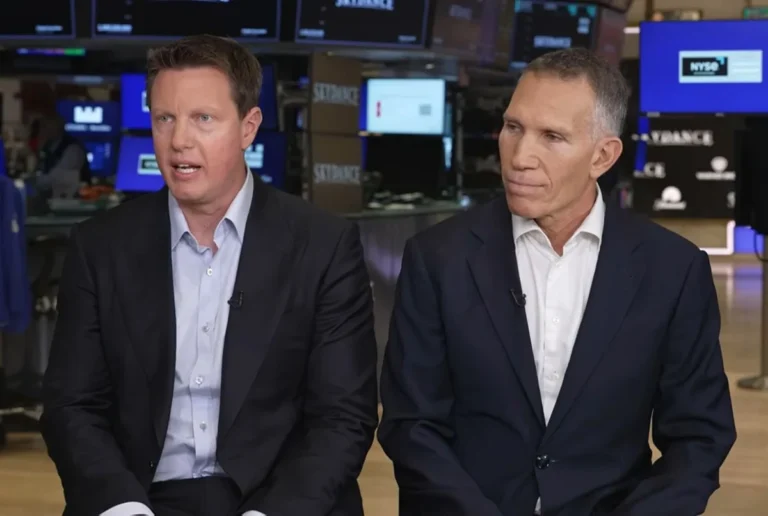
During the call with analysts, the management team, led by Lazarus and CFO/COO Anand Kini, struck a tone of cautious optimism combined with a commitment to fiscal discipline. While the company is exploring growth through potential mergers and acquisitions, particularly in the realms of sports rights and digital media, it is not in a rush to overpay for assets.
Kini highlighted that the growth in the platforms segment this quarter was "really organic," driven by the internal performance of GolfNow and Fandango. "So we’re going to look when there’s opportunities that are inorganic, but they have a very high threshold even as they fit within those markets and those strategies," Kini explained. This suggests that while Versant is open to deals, it will prioritize its balance sheet and organic growth over transformative, high-risk acquisitions.
The company also reiterated its focus on live content. CNBC and MS NOW both saw viewership increases during the quarter, and the Golf Channel continues to benefit from the consistent demand for live sports. These assets are considered the "moat" that protects Versant’s cash flow as it builds out its digital future.
Shareholder Returns and Capital Allocation
One of the most significant takeaways from the report was Versant’s aggressive commitment to returning capital to its shareholders. Unlike many media companies that are burdened by heavy debt loads from past acquisitions, Versant emerged from the Comcast spin-off with a relatively light debt profile. This has allowed the company to implement a robust shareholder return program immediately.
The board declared a quarterly cash dividend of 37.5 cents per share, payable on July 22 to shareholders of record as of July 1. This marks the second consecutive quarter the company has issued a dividend. Furthermore, Versant announced an accelerated share repurchase agreement worth $100 million, set to begin shortly and conclude within the second quarter. This follows the repurchase of 2.7 million shares during the first quarter. As of March 31, the company still has approximately $900 million remaining in its share repurchase authorization.
Broader Industry Implications and Analysis
The performance of Versant Media Group is being closely watched by the broader media industry as a bellwether for the "standalone cable" model. For years, the narrative in Hollywood and on Wall Street has been that cable networks are "melting ice cubes"—assets that are inevitably disappearing. However, Versant’s strategy suggests a more nuanced reality.
By focusing on "sticky" content like news (CNBC, MS NOW) and niche sports (Golf Channel), Versant is maintaining a level of necessity for the traditional bundle that general entertainment networks lack. Simultaneously, by aggressively licensing its library to competitors and growing transactional platforms like Fandango, it is proving that there is significant value in media assets outside of the traditional broadcast window.
The 10% jump in stock price suggests that investors are beginning to see Versant not as a declining legacy business, but as a cash-flow-positive entity with a disciplined management team and a clear exit strategy from the "cable trap." If Versant can successfully reach its 50/50 revenue diversification goal over the next few years, it may provide a blueprint for other media companies looking to decouple their legacy assets from their high-growth divisions.
As the second quarter progresses, the industry will be looking to see if the licensing momentum can be sustained and if the platform business can continue its double-digit growth trajectory. For now, Versant has successfully navigated its first major hurdle as an independent company, proving that there is still plenty of life—and profit—to be found in the shifting tides of the media world.