Marcia Lucas, the Academy Award-winning film editor whose keen sense of rhythm and emotional storytelling helped shape the foundations of modern cinema, has passed away at the age of 80. According to official reports, Lucas died of cancer at her home in California on May 27, surrounded by her family and loved ones. Known widely as the "secret weapon" behind the success of the original Star Wars trilogy, her death marks the end of an era for the "New Hollywood" generation of filmmakers who redefined the industry in the 1970s.
In a formal statement released following her passing, her family celebrated her multifaceted legacy: "Marcia will be remembered as a brilliant storyteller, a trailblazer for women in film, a loving mother and grandmother, a generous host, and a loyal friend whose humor and sparkle filled every room she entered. Her influence on film is indelible, but those who knew her best will remember the way she made life feel more vivid, more beautiful, more fun, and more full of love. Her work was known for its emotional intelligence, rhythm, and humanity—a rare ability to find the truth of a scene and bring heart, momentum, and clarity to the screen."
The news of her passing has resonated deeply within the film community, where she is regarded not only as a master of the craft of editing but as a pivotal figure in the creation of the Star Wars mythos. While her former husband, George Lucas, is credited with the vision of the galaxy far, far away, film historians and collaborators have long maintained that Marcia was the grounding force that gave the spectacle its human heart.
The Formative Years and the Rise of New Hollywood
Born Marcia Lou Griffin in 1945, her journey into the film industry began during a period of radical transition in Hollywood. She started her career in the mid-1960s, working as an apprentice editor at a commercial film library. It was during this time that she met George Lucas, a young, ambitious filmmaker from the University of Southern California. The two married in 1969, forming a creative partnership that would eventually change the landscape of popular culture.
In the early 1970s, Marcia Lucas became a central figure among the "Movie Brats"—a group of young directors including Steven Spielberg, Martin Scorsese, and Francis Ford Coppola. Her ability to navigate complex narratives and find the emotional core of a story made her a sought-after collaborator. Her first major credit came with American Graffiti (1973), directed by her husband. The film’s innovative structure, which wove together four disparate storylines over a single night, relied heavily on Marcia’s editing to maintain its energetic pace and nostalgic tone. The film became a massive critical and commercial success, earning her an Academy Award nomination for Best Film Editing.
Saving Star Wars in the Cutting Room
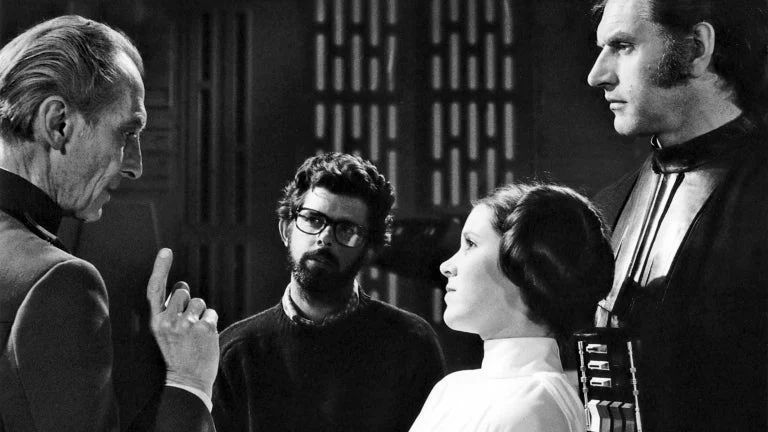
The production of the original Star Wars (1977), later subtitled A New Hope, is legendary for its troubled beginnings. Early cuts of the film were reportedly sluggish and lacked the tension required for a space opera. It was Marcia Lucas, along with fellow editors Richard Chew and Paul Hirsch, who transformed the raw footage into the masterpiece that captivated the world.
Marcia’s contributions to Star Wars were both structural and narrative. Perhaps her most significant achievement was the re-editing of the climactic Battle of Yavin. In the original script and early cuts, the trench run lacked a sense of urgency. Marcia restructured the sequence, meticulously building the tension by intercutting between the rebel pilots, the Imperial command, and the ticking clock of the Death Star’s countdown. This "Hail Mary" approach in the editing room is widely credited with saving the film’s finale.
Beyond the technical aspects, Marcia provided critical narrative feedback. It was her suggestion that Obi-Wan Kenobi should die during his duel with Darth Vader on the Death Star. She argued that the character had no significant role to play in the final act and that his sacrifice would provide a more powerful emotional motivation for Luke Skywalker. George Lucas initially resisted the idea but eventually conceded, recognizing the dramatic weight it added to the story.
Mark Hamill, who portrayed Luke Skywalker, often spoke of Marcia’s influence on the set and in the edit. He recalled that she was instrumental in keeping the "kiss for luck" scene between Luke and Princess Leia before they swung across the Death Star chasm. Hamill noted that her influence was so profound that "if she wanted to keep it, it was in."
Collaboration with Martin Scorsese and Cinematic Versatility
While her name is synonymous with Star Wars, Marcia Lucas’s body of work extended into some of the most critically acclaimed films of the 1970s. She developed a strong professional relationship with Martin Scorsese, serving as an editor on several of his most influential projects.
She edited Scorsese’s Alice Doesn’t Live Here Anymore (1974), a film praised for its raw, naturalistic performances. Her work on the film demonstrated her range, moving from the high-concept world of sci-fi to intimate, character-driven drama. She followed this by working as a supervising editor on Taxi Driver (1976), a film that remains a cornerstone of American cinema. Her ability to capture the fractured psyche of Travis Bickle through jarring yet purposeful cuts contributed to the film’s haunting atmosphere.
She also worked on Scorsese’s ambitious musical New York, New York (1977). Her career during this decade was a testament to her versatility; she was equally comfortable handling the explosive action of a space battle as she was the subtle nuances of a dramatic dialogue scene.
The Academy Award and Industry Recognition
In 1978, Marcia Lucas reached the pinnacle of industry recognition when she won the Academy Award for Best Film Editing for Star Wars. Sharing the Oscar with Richard Chew and Paul Hirsch, she became one of the few women at the time to receive such high honors in a technical field that was then largely dominated by men.
The win was a validation of her unique approach to the craft. Marcia was known for "editing with her heart," often prioritizing the emotional resonance of a shot over technical perfection. This philosophy allowed her to connect with audiences on a visceral level, a quality that her colleagues frequently cited as her greatest strength. Throughout her career, she remained a member of the American Cinema Editors (ACE), an honorary society representing the best in the profession.
Personal Life and the End of a Creative Partnership
The professional and personal lives of Marcia and George Lucas were deeply intertwined for over a decade. During the production of The Empire Strikes Back (1980) and Return of the Jedi (1983), Marcia continued to play a vital, if sometimes uncredited, role in shaping the sequels. However, the pressures of building the Lucasfilm empire took a toll on the relationship.
The couple divorced in 1983, shortly after the release of Return of the Jedi. The split was a significant turning point for both individuals and for the future of the Star Wars franchise. Following the divorce, Marcia largely stepped away from the film industry to focus on her personal life and raising her children. Despite her departure from the limelight, her impact on the original trilogy remained a subject of intense interest for film historians and fans alike.
In the years following her retirement from active editing, Marcia remained a private figure, though she occasionally surfaced to share her perspectives on the evolution of the film industry and the legacy of the projects she helped create.
Criticism of the Modern Era and Later Perspectives
In her later years, Marcia Lucas became known for her candid and sometimes critical views on the direction of the Star Wars franchise under Disney’s leadership. In interviews and authorized biographies, she expressed frustration with the sequel trilogy, specifically criticizing the handling of legacy characters and the overall narrative direction.
She famously voiced her disapproval of Lucasfilm president Kathleen Kennedy and director J.J. Abrams, stating that they "don’t get it" when it came to the core essence of the story. Her critiques were rooted in her belief that the original films were successful because they had a clear emotional "heart"—something she felt was lacking in the newer installments. While her comments were controversial among some segments of the fanbase, they were viewed by others as the honest reflections of a woman who had been instrumental in building the foundation of the series.
Legacy and Influence on the Craft of Editing
Marcia Lucas leaves behind a legacy that continues to influence editors and filmmakers today. Her work on Star Wars and Taxi Driver is studied in film schools globally as a masterclass in pacing, tension, and emotional storytelling. She proved that the editor is not merely a technician but a co-author of the film, capable of reshaping a narrative and finding "the truth" within the footage.
As a woman in a high-stakes technical role during the 1970s, she also served as a pioneer for female filmmakers. Her success paved the way for future generations of women in post-production, demonstrating that a keen editorial eye and emotional intelligence were essential components of cinematic greatness.
Marcia Lucas is survived by her daughters, her grandchildren, and a close-knit group of friends she referred to as her "chosen family." While she may have stepped away from the editing bay decades ago, the "rhythm and humanity" she brought to the silver screen ensure that her influence will remain a permanent fixture in the history of cinema. As the film world mourns her passing, her work stands as a reminder that behind every great cinematic vision, there is often a "secret weapon" turning light and shadow into lasting human emotion.