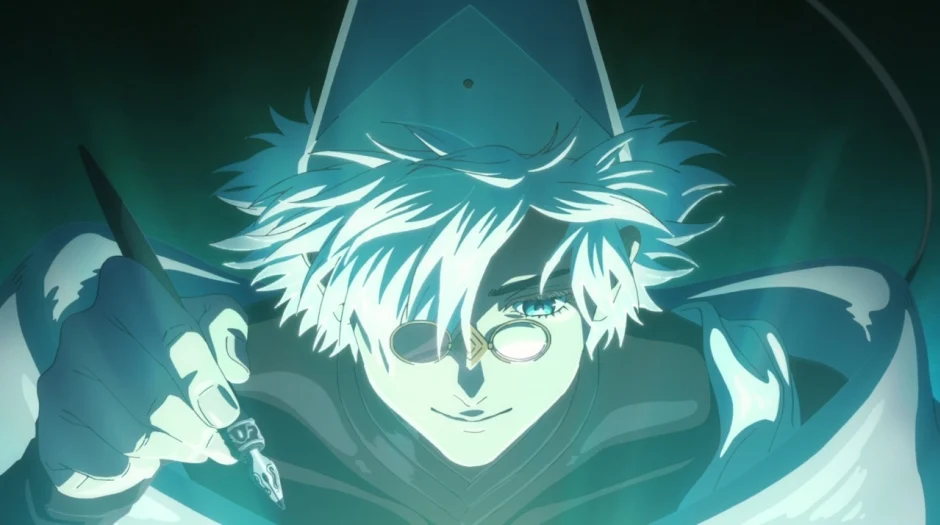
The landscape of animated storytelling continues to expand, offering a diverse range of narratives that challenge conventional perceptions of genre and audience. This review delves into three notable releases: the visually stunning fantasy Witch Hat Atelier, the action-packed mythological saga Daemons of the Shadow Realm, and the nostalgic animated spin-off Stranger Things: Tales from ’85. Each series, while distinct in its approach, reflects evolving trends in animation production and storytelling.

Witch Hat Atelier: A Spellbinding Journey of Magic and Discovery
Witch Hat Atelier, available on Crunchyroll, emerges as a vibrant counterpoint to the prevalence of action-heavy anime. This fantasy series, adapted from Kamome Shirahama’s acclaimed manga, eschews the typical combat-driven narratives for a more nuanced exploration of magic, learning, and personal growth. The story centers on Coco, a spirited young girl living in a world where magic is an innate gift, inaccessible to those without it. Coco, a dressmaker’s daughter with a talent for drawing, finds her world irrevocably altered when she witnesses the enigmatic witch Qifrey perform magic. The series masterfully depicts the revelation that magic is, in essence, drawing, a revelation that ignites Coco’s desire to wield this power.
The narrative’s strength lies in its deliberate pacing and focus on character development. While the series is not devoid of action—Coco and her companions have already faced a formidable dragon—its core lies in Coco’s journey of understanding her place in a world governed by arcane rules. The introduction of a masked antagonist with a single, baleful eye hints at a larger conflict, adding layers of mystery and potential intrigue to the unfolding plot. This figure’s ambiguity, whether a villain, a misunderstood entity, or a pivotal ally, underscores the series’ commitment to complex characterizations and unpredictable narrative turns.

The animation, produced by Bug Films, is a standout feature. The studio, formed in 2021, has dedicated a remarkable three and a half years to the production, a testament to their commitment to quality. Director Ayumu Watanabe, known for his work on Children of the Sea and Summer Time Rendering, brings a seasoned hand to the project, evident in the fluid character animation and expressive facial work. The linework and shading, reminiscent of Shirahama’s original art, create a visually rich tapestry. Particular praise is due to the subtle character interactions, which possess a hypnotic, liquid quality often associated with Kyoto Animation’s works, as seen in Hyouka. The delicate micro-movements and troubled expressions in moments of quiet reflection offer a stark contrast to more superficial anime tropes.
The series’ visual artistry extends to its environmental design and action sequences. From the rugged, rainswept landscapes to the dynamic aerial sequences, each frame is meticulously crafted. Coco’s struggles to fly in Episode 3, rendered with a beautifully ungainly realism, evokes the charm of Studio Ghibli’s Kiki’s Delivery Service, while simultaneously holding its own against more bombastic displays of animation. The attention to detail in Coco’s movements, such as her descent down a ladder in Episode 1, and the classic establishing shots, like the animated background rushing beneath the viewer in Episode 4, contribute to a sense of immersive world-building.

Thematic parallels can be drawn to Fullmetal Alchemist, another series that began with young protagonists wielding powerful forces with unintended consequences. The supporting cast of apprentice witches, though initially appearing as archetypes, are poised to develop into complex characters, mirroring the dynamic ensembles found in series like Puella Magi Madoka Magica. The underlying premise—an elite group maintaining control over magical knowledge—presents a fertile ground for subversion, hinting at the potential for the masked puppeteer to emerge as an unexpected hero. While the series currently presents as enchanting family fare, its narrative trajectory suggests the possibility of darker, more mature themes emerging.
A significant concern for Witch Hat Atelier is its potential to remain an incomplete adaptation, serving primarily as an advertisement for its source material. The history of anime is replete with beautifully animated but unfinished adaptations, such as Flowers of Evil, Land of the Lustrous, and Heavenly Delusion. However, the dedication shown by Watanabe and Bug Films suggests a strong commitment to seeing this story through.

Daemons of the Shadow Realm: A Mythic Confrontation in Modern Times
Daemons of the Shadow Realm, also available on Crunchyroll, offers a starkly different experience, delving into a world where moral ambiguity and escalating conflict are paramount. The series challenges viewers to question allegiances, drawing parallels to the complex ethical landscapes of Princess Mononoke and the classic Gundam series. The narrative centers on Yuru, a skilled hunter from a seemingly medieval Japanese village, whose world is shattered by a brutal attack involving helicopters and monstrous creatures.
The initial episode sets a dramatic tone, revealing Yuru’s village to be a hidden sanctuary, protected for centuries. This isolation, however, becomes a vulnerability as modern factions vie for control of twins born within the village, twins prophesied to alter world history. Yuru discovers he is one of these twins, his sister Asa having already aligned herself with an external faction. The series then follows Yuru’s bewildered journey into the modern world, grappling with technology and the complex geopolitical machinations that threaten his existence. While Yuru’s displacement might suggest a "reverse isekai" scenario, the narrative emphasizes his inherent connection to our world.

The production is helmed by Bones Film, a subsidiary of the renowned Studio Bones, and is based on a manga by Hiromu Arakawa, the celebrated creator of Fullmetal Alchemist. This pedigree alone suggests a high standard of animation and storytelling. Arakawa’s previous work, Fullmetal Alchemist, explored themes of consequence, military power, and the moral compromises individuals make in times of conflict. Daemons of the Shadow Realm appears to continue this exploration, with the helicopter attack on Yuru’s village evoking the grim realities of modern warfare, reminiscent of the Vietnam War and the My Lai massacre. The series posits that even ordinary individuals can be capable of profound atrocities.
While the series begins with a dark, introspective tone, recent episodes have introduced more lighthearted elements and a wider array of daemons, some bearing a striking resemblance to characters from Studio Ghibli’s Spirited Away. The introduction of comedic relief, alongside moments of genuine tension, creates a dynamic, if occasionally uneven, viewing experience. However, the reliance on stock anime jokes and the development of certain character arcs, such as Asa’s brother complex, can sometimes detract from the narrative’s impact.

The animation, while competent, is characterized by immaculate backgrounds that occasionally feel overshadowed by the more dynamic, cartoonishly flexible character designs. Director Masahiro Ando, a veteran animator with credits on Fullmetal Alchemist and Sword of the Stranger, brings a wealth of experience to the project. His direction is evident in the series’ visual flair, though the overall presentation sometimes lacks a distinct, groundbreaking aesthetic. The challenge for Daemons of the Shadow Realm going forward will be to maintain a cohesive balance between its horror, humor, and expanding cast of characters.
Stranger Things: Tales from ’85: A Nostalgic Detour into the Upside Down
Stranger Things: Tales from ’85, a Netflix animated spin-off, offers a decidedly different experience, leaning into nostalgia and a lighter interpretation of its source material. Unlike the anime reviewed, this series is a CG-animated production by Australia’s Flying Bark Productions, known for its work on a CG Heidi adaptation. Set between Season 2 and Season 3 of the live-action Stranger Things, this midquel series focuses on a group of young protagonists navigating the familiar threats of the Upside Down.

The series’ tone is significantly lighter than its live-action counterpart, eschewing the horror and gore for a more light-hearted, albeit occasionally preachy, adventure. The narrative emphasizes "teachable moments," a characteristic often found in children’s programming, which, while earnest, can feel somewhat didactic. The show’s conceptual approach is perhaps its most intriguing aspect. It functions as a companion piece for existing fans, assuming a prior understanding of the Stranger Things universe, its characters, and its lore. This approach mirrors certain anime series that rely heavily on established continuity, making it less accessible to newcomers.
The series’ connection to its source material is evident, yet it also highlights a generational shift in animation and its target audience. While the live-action Stranger Things was rated for older teenagers, Tales from ’85 carries a 10+ rating. This demographic shift, coupled with the narrative’s reliance on pre-existing knowledge, creates a curious disconnect. The series is not a straightforward children’s show like The Real Ghostbusters, but rather a more self-aware production aimed at an adult audience that grew up with 1980s cartoons. This conceptual ambiguity has led to mixed reception, with some critics finding the narrative repetitive or a missed opportunity for a more broadly accessible family-friendly entry.

The animation style, while functional, does not break new ground. The character designs are recognizable, and the action sequences are energetic, but the overall visual presentation feels somewhat conventional for CG animation. The decision to create an inserted story, rather than a condensed reboot of the original series, means that the stakes are inherently lower for viewers familiar with the live-action show’s ultimate trajectory.
The influence of anime on the Stranger Things franchise is acknowledged, with the Duffer Brothers citing Elfen Lied as an inspiration for the character of Eleven. However, Tales from ’85 diverges significantly from the darker, more mature themes present in anime like Elfen Lied, which was known for its graphic content and psychological complexity. Instead, the animated spin-off opts for a more sanitized, albeit entertaining, adventure.

Ultimately, Stranger Things: Tales from ’85 serves as an interesting case study in franchise expansion and the evolving landscape of animated content. It demonstrates how a well-established property can be reimagined for a different medium, catering to a specific segment of its fanbase while potentially alienating others. The series’ success lies in its ability to capture the nostalgic spirit of the original while carving out its own distinct, if somewhat niche, identity.
In conclusion, these three series—Witch Hat Atelier, Daemons of the Shadow Realm, and Stranger Things: Tales from ’85—represent the diverse and dynamic nature of contemporary animation. From the artistic finesse of Witch Hat Atelier to the thematic depth of Daemons of the Shadow Realm and the nostalgic charm of Stranger Things: Tales from ’85, each offers a unique viewing experience that contributes to the ever-broadening spectrum of animated storytelling. The continued commitment to visual artistry, complex narratives, and diverse genre exploration ensures that animation remains a vital and engaging medium for audiences worldwide.