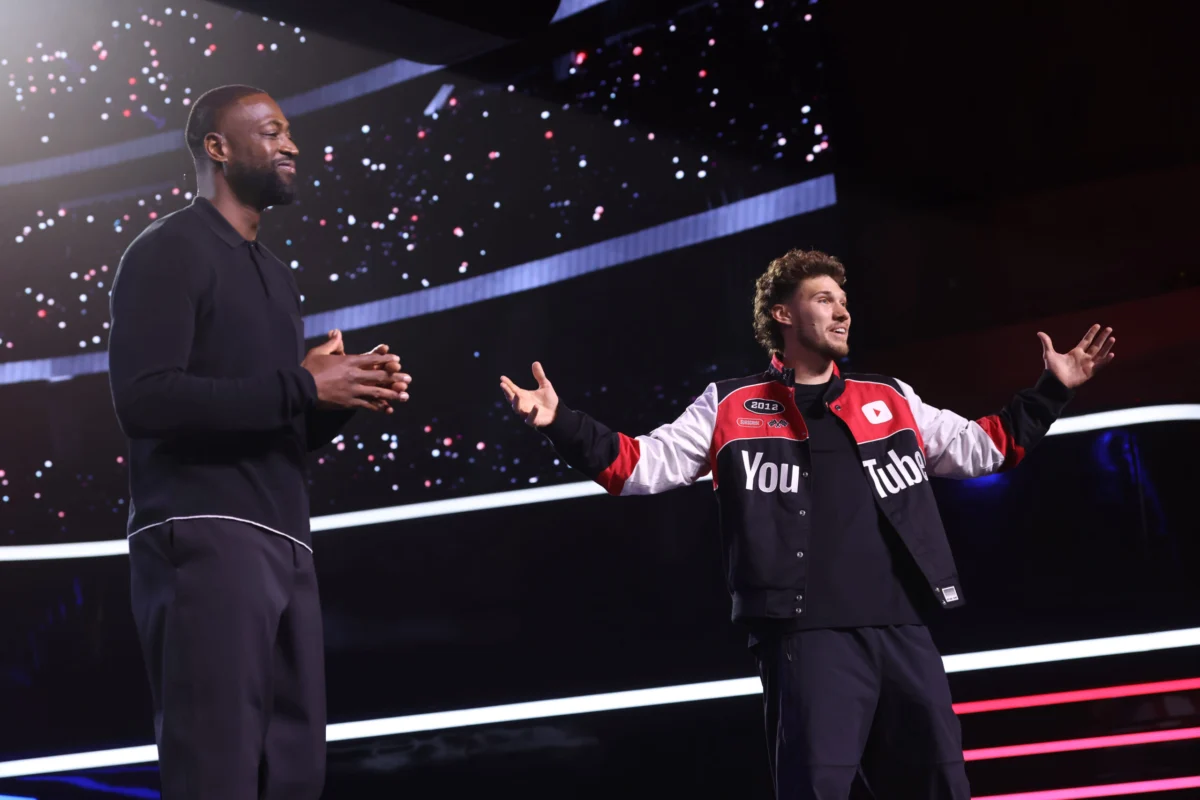
The landscape of American media reached a significant turning point during the May 2026 "upfront" season, as the traditional boundaries between Hollywood studio productions and independent creator content effectively dissolved. For decades, the upfronts served as a high-glamour showcase where major networks like ABC, CBS, and NBC pitched their upcoming scripted dramas and sitcoms to advertisers. However, this year’s presentations at iconic venues like New York’s Lincoln Center told a different story—one where YouTube personalities, podcast hosts, and social media influencers shared equal billing with A-list movie stars and professional athletes.
The shift is driven by a massive reallocation of capital. According to a recent report from the Interactive Advertising Bureau (IAB), advertiser spending on creator-led content reached $37 billion in 2025. Projections for 2026 suggest that figure will climb to $44 billion, representing a nearly 19% year-over-year increase. This surge in spending highlights a fundamental change in how brands perceive "premium" content, moving away from high-budget studio sets toward the high-engagement, trust-based environments fostered by digital creators.
A Week of Convergence: The 2026 Upfront Chronology
The 2026 upfront week began with Fox Corp. setting a hybrid tone on Monday. Alongside NFL legend Tom Brady, the network prominently featured celebrity chef Gordon Ramsay, who utilized the stage to tout "Fox Creator Studios." This new, digital-first division is designed specifically to bridge the gap between traditional broadcast television and social media platforms.
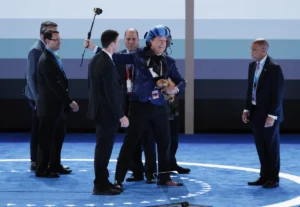
By Wednesday, the momentum shifted toward the digital giants and legacy conglomerates leaning into the trend. YouTube hosted its "Brandcast" event, featuring a roster of talent that included NBA legend Dwyane Wade, YouTube sensation Jesse "Jesser" Riedel, comedian Trevor Noah, and podcast powerhouse Alex Cooper. Simultaneously, Warner Bros. Discovery (WBD) integrated digital-first personalities into its Food Network and HGTV presentations, signaling that even the most established cable brands now view creators as essential to their ecosystem.
Amazon’s Prime Video also played a pivotal role in this chronological shift, highlighting its multiyear deal with Oprah Winfrey. Through Amazon’s Wondery division, Winfrey is distributing "The Oprah Podcast" in both audio and video formats, effectively blending her legacy media status with the modern "360-degree" content consumption model.
Data-Driven Dominance: Why Advertisers Are Moving to Creators
The pivot toward creator content is not merely a trend in talent preference; it is supported by rigorous viewership data. Nielsen’s "The Gauge" report for February 2026 revealed that YouTube has maintained its position as the top streaming platform in the United States, accounting for 12.7% of total streaming viewership. Netflix followed in second place with 8.4%, while traditional platforms continued to see a fragmentation of their linear audiences.
Brian Albert, Managing Director of YouTube Solutions, emphasized that the value proposition for advertisers has evolved. "They are this generation’s storytellers, tastemakers, and stars," Albert stated during the Brandcast event. He noted that creators do not just provide "eyeballs" but offer "communities that trust them."
For advertisers, the economics of creator content are increasingly attractive. Industry executives noted that while media companies pay massive premiums for live sports rights—such as the NFL—streaming platforms offer a higher "bang for the buck." Whether through exclusive video podcasts or children’s programming like "Ms. Rachel," streaming allows for targeted, data-rich ad placements that traditional linear television struggle to match.
The Strategic Pivot of Legacy Media Houses
Traditional media companies are no longer treating creators as competition but as vital partners for survival. Warner Bros. Discovery has been working to integrate influencers into its unscripted portfolios for several years. Karen Bronzo, Chief Global Marketing Officer for U.S. Networks and News at WBD, explained that this programming allows networks to expand their reach into demographics that may not own a traditional cable box.

"When you’re experiencing the content from a creator, you do feel it is personal," Bronzo said. "It is a much more, sort of, one-to-one relationship and a different kind of connection."
WBD’s strategy involves expanding Food Network originals onto social media channels, such as a new series featuring chef Esther Choi. Similarly, Fox has leveraged its free, ad-supported streaming service (FAST), Tubi, to act as an incubator for creator talent. Tubi has successfully attracted Gen Z viewers—a demographic notoriously difficult for traditional media to capture—by inking deals with personalities like Jesse Riedel to create exclusive series, such as his recently premiered soccer-focused program.
Analysis of Market Implications: The "Singular View" of Content
The integration of creator content into the upfronts signifies a permanent shift in the media hierarchy. Julie Clark, a senior vice president at TransUnion and a veteran of the ad industry, observed that the distinction between "studio-led" and "creator-led" is vanishing.
"It’s merging into a singular view," Clark said. "If you look at the rise of things like long-form video podcasts to quick-hitting tutorials, there is an understanding that the content landscape has shifted dramatically."
This shift has several long-term implications for the industry:
- Democratization of Production: The high production values once exclusive to Hollywood are now being replicated by creators with smaller, more agile teams. This forces traditional studios to justify their overhead costs in an increasingly competitive market.
- The Rise of FAST Services: Platforms like Tubi and Amazon’s Freevee are becoming the "new cable," providing a bridge for creators to enter the living room via smart TVs without the barriers of a subscription fee.
- Ad-Supported Tiers as the Standard: As the demand for ad-supported inventory grows, creators provide a steady stream of "brand-safe" yet highly engaging content that can be easily monetized through programmatic advertising.
- Legacy Talent Rebranding: Figures like Oprah Winfrey and Gordon Ramsay are reinventing themselves as "creators" to maintain relevance, proving that the medium—whether it is a 30-minute broadcast or a 10-minute YouTube clip—is secondary to the personality.
Official Responses and Industry Reactions
The reaction from the advertising community has been largely positive, though tempered by a demand for better measurement tools. Marketers at the upfronts expressed enthusiasm for the "trust equity" that creators bring to the table. However, they also called for more standardized metrics that can compare a "view" on a social platform with a "rating" on a traditional network.
Angie More, Head of Creator Advertising Partnerships at Amazon, highlighted the versatility of the modern creator. "The landscape has changed so much over the past year. Podcasting is now pretty 360," she noted. More explained that creators now demand the ability to reach audiences across short, mid, and long-form formats simultaneously.
For Fox, the launch of "Tubi for Creators" represents a formal pathway for digital stars to enter the Hollywood ecosystem. By providing creators with the tools to transition from social platforms to a major streaming service, Fox is positioning itself as a talent scout for the next generation of media icons.
Conclusion: The Future of the Upfronts
As the 2026 upfront presentations concluded, the consensus among media buyers was clear: the "creator economy" is no longer a niche sub-sector of the internet; it is the backbone of the modern entertainment industry. The projected $44 billion in ad spend for 2026 is likely just the baseline for a future where digital-first talent dictates the programming schedules of legacy networks.
The success of these presentations will be measured in the coming months as ad dollars are committed. However, the visual of Dwyane Wade and Jesse Riedel standing on the same stage at Lincoln Center serves as a lasting image of a media world that has finally embraced the blurring lines between the studio and the smartphone. In this new era, the "upfront" is no longer a preview of what will be on TV, but a showcase of where the culture—and the money—is moving.