


Stephen Colbert’s final episode as host of The Late Show marked not only the conclusion of his 11-year tenure but also, significantly, the end of the long-running CBS late-night franchise itself. This momentous occasion placed a definitive cap on over a decade of his incisive comedic takes on current events, solidifying his place as a pivotal voice in American media during a period of unprecedented political and social upheaval. His departure leaves a substantial void in the competitive landscape of late-night television and signals a potential strategic recalibration for CBS in the post-midnight slot.

The Weight of a Legacy: Taking the Reins from a Legend
Colbert inherited a monumental legacy when he took over The Late Show from David Letterman in September 2015. Letterman, a titan of late night, had anchored the program for 33 years, cultivating a unique blend of ironic humor, celebrity interviews, and a deeply personal connection with his audience. Following such an icon presented an immediate and formidable challenge. The transition required Colbert to shed the highly stylized, satirical persona he had perfected for nine years on Comedy Central’s The Colbert Report, where he played a right-wing pundit. While wildly successful in that role, the move to network television demanded a more authentic, unvarnished version of himself, a shift that proved initially jarring for some viewers and critics alike.

The early months of Colbert’s Late Show were characterized by a period of adjustment. He grappled with finding his rhythm, balancing the expectations of a broad network audience with his innate sharp wit and intellectual bent. Initial ratings reflected this struggle, as he often trailed competitors like NBC’s Jimmy Fallon and ABC’s Jimmy Kimmel. Media analysts and industry observers closely scrutinized his every move, debating whether his brand of intelligent, politically aware comedy could thrive in the mainstream late-night slot traditionally dominated by lighter, more celebrity-focused entertainment. The pressure was immense, with many questioning whether he could ever truly fill Letterman’s shoes or carve out his own distinct identity.
The Catalyst: Finding His Stride in a Tumultuous Political Climate

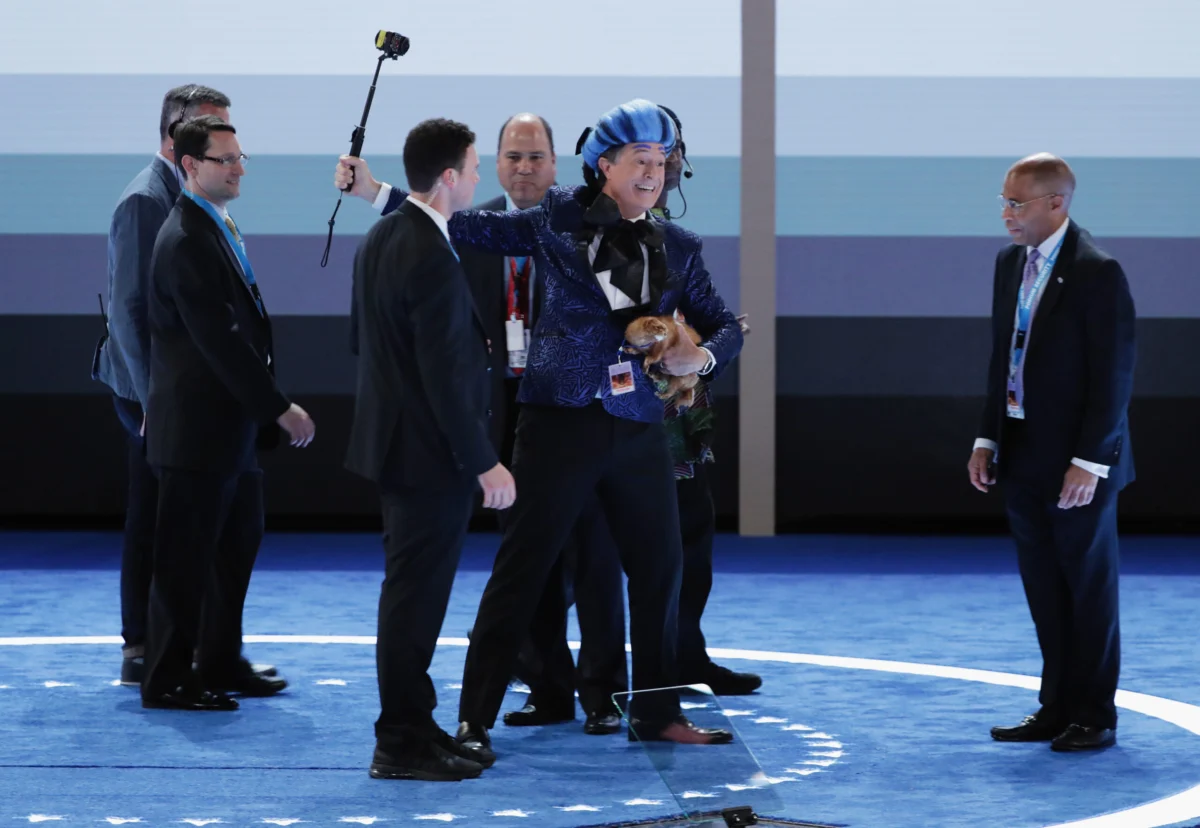
The turning point for Colbert and The Late Show arrived with remarkable clarity around the 2016 political conventions. As the presidential election cycle intensified and the political discourse grew increasingly polarized, Colbert found his authentic voice as a host, one that was both deeply personal and fiercely engaged with the day’s events. His comedic commentary on the emerging political landscape, particularly the rise of Donald Trump, resonated profoundly with a significant segment of the American public. This era allowed him to leverage his strengths: sharp political analysis, a quick wit, and a genuine earnestness that often broke through the comedic facade.
By 2017, The Late Show with Stephen Colbert had soared to become the most-watched program in late-night television, a position it would largely maintain for several years. This surge in viewership was not merely incidental; it was a direct reflection of a public hunger for nuanced, often cathartic, commentary on an administration that generated daily headlines and intense emotional responses. Colbert’s monologues became essential viewing for many, offering a blend of outrage, bewilderment, and comedic relief that mirrored the sentiments of his audience. His ability to articulate complex political issues through humor, without shying away from direct criticism, differentiated him from many of his peers who often opted for more broadly appealing, less confrontational approaches.

Despite the professional triumph, Colbert frequently expressed a nuanced perspective on his show’s success during this period. In a notable 2017 interview with The Hollywood Reporter, he stated, "I would trade good ratings for a better president." This sentiment encapsulated the paradox of late-night political comedy: while a turbulent political climate often provides abundant material and boosts viewership, it also reflects societal challenges that many, including the hosts themselves, would rather see resolved. He further elaborated on this, acknowledging his staff’s readiness to adapt: "We were ready for something that galvanized people’s attention and changed their priorities. The thank-you note is to my staff for being ready — that’s the thank-you note. Because if it’s not Donald Trump, it’s something else. There will be something else that we care about, hopefully happy, possibly tragic. But we’re ready to talk about what just happened, whenever it happens now. And that’s what we’ve learned." This statement underscored his commitment to immediate, relevant commentary, regardless of the subject matter, positioning The Late Show as a nightly forum for processing the contemporary world.
Navigating Crises: From COVID-19 to Capitol Hill

Colbert’s tenure extended beyond the initial Trump administration, proving his adaptability and resilience in the face of unprecedented global and national crises. The onset of the COVID-19 pandemic in early 2020 presented an entirely new set of challenges for late-night television. Like many of his counterparts, Colbert swiftly transitioned to broadcasting from home, initially from his bathtub and later from various rooms in his house. These "A Late Show with Stephen Colbert from the Comfort of His Home" episodes provided a unique, intimate connection with his audience, who were themselves grappling with lockdowns and uncertainty. He shared glimpses into his personal life, interviewed guests remotely, and maintained a sense of normalcy and humor during an acutely abnormal time. This period demonstrated his ability to pivot and connect with viewers on a deeply human level, moving beyond the studio spectacle to offer comfort and shared experience.
As the pandemic continued, so did political tensions, culminating in the contentious 2020 presidential election and its aftermath. Colbert’s reactions to President Trump challenging the election results and, most notably, the January 6th Capitol riot, were some of the most raw and emotional moments of his entire run. He famously went live at the end of that historic day in 2021, delivering a monologue steeped in palpable grief, anger, and a desperate plea for democratic integrity. These moments transcended typical late-night comedy; they were instances of a public figure processing national trauma in real-time alongside his audience, solidifying his role as a trusted, empathetic voice during times of crisis. His willingness to express genuine emotion, sometimes even to the point of tears, resonated deeply and underscored the show’s capacity to be more than just entertainment.

A Pantheon of Guests: Memorable Interviews and Cultural Impact
Throughout his 11 years, Colbert hosted an impressive array of figures from politics, entertainment, science, and culture, conducting interviews that often went viral and provided significant insights. His ability to engage deeply with his guests, whether through witty banter or earnest inquiry, became a hallmark of his show. Memorable interviews included conversations with cinematic luminaries like Christopher Nolan and Keanu Reeves, where Colbert often delved into their creative processes with genuine curiosity.

Perhaps even more impactful were his interviews with political heavyweights. He sat down with then-Vice President Joe Biden in 2015, early in his Late Show tenure, in a conversation that touched upon personal grief and political aspirations. His multiple interviews with former President Barack Obama and former First Lady Michelle Obama were consistently insightful, offering glimpses into their post-presidency lives and reflections on leadership. These high-profile political sit-downs were not mere promotional appearances; they were often substantive discussions that offered rare access and revealed new facets of these influential figures. Colbert’s background in political satire gave him a unique edge, allowing him to ask probing questions while maintaining a respectful, yet challenging, rapport. These interviews contributed significantly to The Late Show‘s gravitas and its perception as a serious platform for public discourse, alongside its comedic mandate.
Colbert’s Philosophy: Laughter as the Ultimate Goal

Despite the profound political and social commentary that defined much of his Late Show era, Colbert consistently maintained a humble perspective on his own impact. In a candid exit interview cover story with The Hollywood Reporter, he reiterated his core ambition: "I want to be remembered as a comedy show. We harvest laughter for a living, and ultimately that’s the thing I want more than anything else. I just want to make the audience laugh." This statement underscores a foundational philosophy that has guided his decades in late night, beginning with The Daily Show and continuing through The Colbert Report.
He famously minimized his perceived political influence, even in the face of widespread praise for his critical commentary. "We’re not changing the damn world," he asserted. "Have you seen the world? I promise you, if you think that I’m on some kind of agenda, then I’m really shitty at it because nothing has gone in the direction that I had hoped. I mean, nothing for 25 years." This self-deprecating analysis reflects a common sentiment among late-night satirists who, while often seen as influential, grapple with the tangible impact of their work on policy or societal change. It highlights the inherent tension between the role of a comedian and that of a political commentator, suggesting that while laughter can provide solace, insight, or even a call to action, its power to unilaterally alter global trajectories is limited. For Colbert, the primary objective remained the communal experience of humor, a shared moment of levity and perspective in a often-heavy world.

The Broader Implications: A New Era for CBS Late Night
The conclusion of Stephen Colbert’s Late Show tenure, coupled with the end of the franchise itself, marks a significant juncture for CBS and the broader late-night television landscape. For CBS, it leaves a prominent 11:35 PM time slot open, a move that suggests a strategic reevaluation of its traditional late-night programming model. The network has yet to announce its plans for the slot, prompting speculation across the industry. This could range from introducing an entirely new format or host, to potentially ceding the slot to syndicated programming or reallocating resources to other dayparts or streaming initiatives. The decision to end the franchise, rather than simply replace a host, indicates a more profound shift in CBS’s approach to the highly competitive and increasingly fragmented late-night arena.

For the industry, Colbert’s departure removes a dominant, intellectually driven voice at a time when late-night programming faces evolving challenges. Traditional linear television viewership for late-night shows has been on a gradual decline for years, with younger audiences increasingly turning to digital clips and streaming platforms for their comedic and news content. While Colbert managed to buck some of these trends for a period, his exit may accelerate the redefinition of what "late night" means in the digital age. It forces networks to reconsider the value proposition of a nightly, hour-long broadcast in an on-demand world. The era of a single, dominant late-night king, as exemplified by Letterman or Carson, has largely faded, replaced by a more diverse and fragmented ecosystem. Colbert’s ability to blend deep political engagement with celebrity interviews and musical performances showcased one successful model, but its discontinuation prompts questions about the sustainability of that model on traditional broadcast.
A Look Back: Defining Moments and Enduring Legacy

As The Late Show concludes, its legacy will undoubtedly be defined by its host’s remarkable adaptability and his unwavering commitment to using humor as a lens for understanding the world. From the initial struggles to the meteoric rise during the Trump years, and through the shared anxieties of the pandemic and political unrest, Colbert cultivated a program that was both timely and timeless. His monologues, often delivered with a blend of indignation and hope, became a nightly ritual for millions. Whether it was his earnest attempts to explain complex legislative issues, his celebratory musical numbers, or his heartfelt tributes to fallen icons, The Late Show under Colbert provided a consistent source of laughter, reflection, and communal experience.
His impact transcends mere ratings; he fostered a space where intelligent discourse and heartfelt emotion could coexist with slapstick and satire. He demonstrated that a late-night host could be both a comedian and a significant cultural commentator, bridging the gap between entertainment and public service. While he may claim not to have "changed the damn world," he certainly changed how millions of Americans processed it, one laugh, one sigh, and one thoughtful insight at a time. Stephen Colbert’s Late Show will be remembered as a program that fearlessly engaged with the complexities of its era, delivering laughter and understanding in equal measure, and leaving an indelible mark on the history of television.