


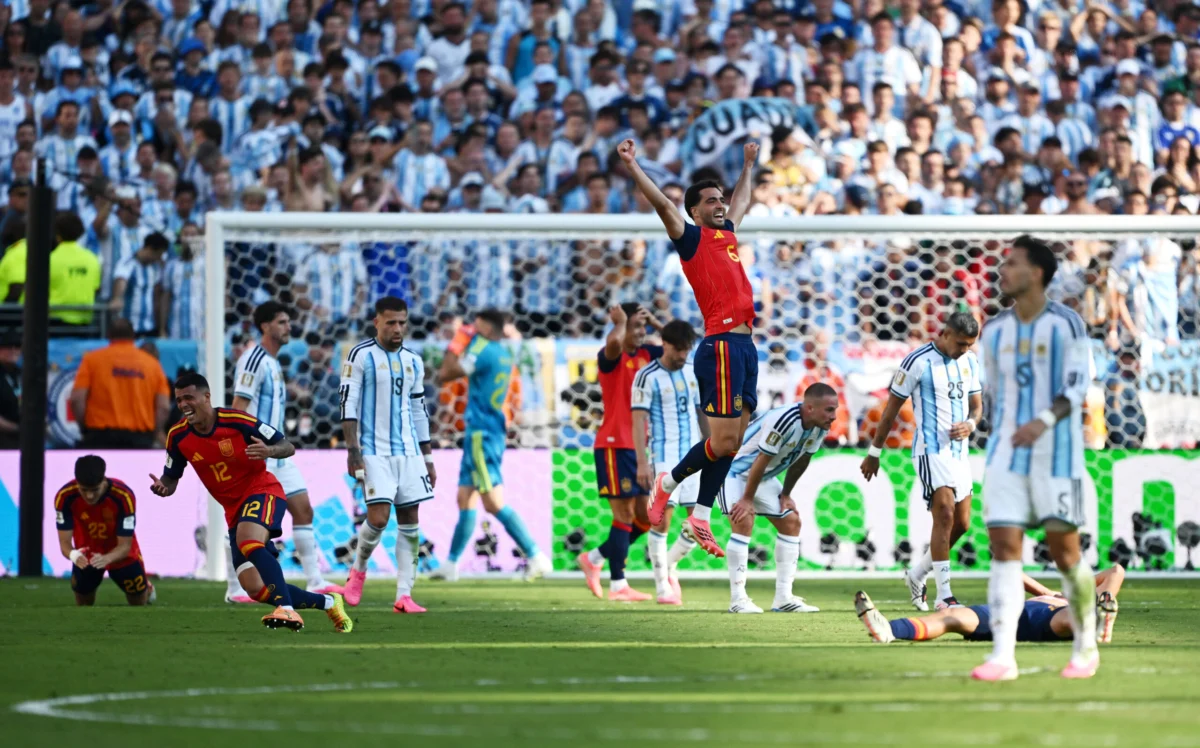
The 2026 FIFA World Cup has concluded as a watershed moment for the American media landscape, delivering unprecedented viewership figures and cementing the role of live sports as the primary engine for streaming growth. Following the final match on July 19, 2026, at MetLife Stadium in East Rutherford, New Jersey—where Spain secured a 1-0 victory over Argentina—broadcast partners Fox Corp and NBCUniversal’s Telemundo reported record-breaking engagement. Beyond the immediate excitement of the pitch, the tournament has validated a multi-year strategic pivot for NBCUniversal, demonstrating that Spanish-language content is no longer a niche auxiliary but a central pillar of its domestic streaming strategy through Peacock.
According to data provided by Nielsen, the World Cup final established new benchmarks for both English and Spanish-language telecasts in the United States. Fox’s coverage, spanning its broadcast network and digital outlets, drew nearly 39 million viewers. Simultaneously, the Spanish-language broadcast across Telemundo, Peacock, and other NBCUniversal properties attracted approximately 24 million viewers. This combined reach of 63 million viewers for a single match underscores the massive cultural footprint of the tournament. For Telemundo and Peacock, the figures represented the most-watched Spanish-language broadcast of a soccer match in U.S. history, with the tournament as a whole averaging 6.3 million viewers across all 104 matches.
The Economic Impact of the North American Tournament
The financial windfall of the 2026 World Cup was as significant as its viewership. Mark Marshall, NBCUniversal’s chairman of global advertising and partnerships, confirmed that the tournament more than doubled the revenue generated during the 2022 World Cup in Qatar. This surge is attributed to several factors, including the favorable North American time zones, which allowed for more matches to be aired during domestic prime-time and daytime slots, and a broader advertiser base eager to tap into the tournament’s diverse audience.
The 2026 event arrived at a critical juncture for Peacock. Launched in 2020, the streaming service has trailed behind industry giants like Netflix and Disney+ in terms of total subscribers. However, the World Cup provided a massive influx of new users. As of April 30, 2026, Peacock reported 46 million subscribers, and the service is projected to reach profitability in the second quarter of the year. This milestone is a direct result of the "halo effect" created by live sports, which not only drives initial sign-ups but also increases the time spent on the platform through ancillary content.
Cesar Conde, chairman of NBCUniversal News Group (which oversees Telemundo), noted that the World Cup served as a gateway for viewers to explore Peacock’s broader library. The platform utilized interactive features such as "multiview" capabilities and real-time trivia to deepen engagement. "It not only brought so many new audiences and subscribers to Peacock, but it also introduced them to so much additional programming that they weren’t familiar with," Conde stated. This cross-promotion strategy is essential for streaming services looking to reduce "churn"—the rate at which subscribers cancel their service after a specific event ends.
Chronology of NBCUniversal’s Strategic Evolution
The success of the 2026 World Cup is the culmination of a series of aggressive moves by NBCUniversal to dominate the sports and Spanish-language markets. A look at the timeline reveals a calculated effort to integrate these two sectors:
- 2020: Launch of Peacock, with a focus on integrating NBC Sports and Telemundo content.
- 2022: Peacock airs the World Cup in Spanish for the first time, seeing a larger-than-anticipated boost in subscriber engagement despite the tournament’s location in Qatar.
- 2024: NBCUniversal expands its Olympic coverage, making every event available on Peacock, which serves as a testing ground for high-volume live streaming.
- 2025: NBCUniversal secures rights to the NBA, significantly increasing the year-round value proposition of Peacock for sports fans.
- June 29, 2026: Comcast announces plans to spin off NBCUniversal, signaling a new corporate structure designed to allow the media entity to pursue more agile growth and potential mergers.
- July 2026: The 2026 World Cup breaks all previous U.S. soccer viewership records.
- July 2026: Telemundo announces the acquisition of exclusive U.S. Spanish-language rights for all UEFA men’s club competitions, including the Champions League, starting in the 2027-28 season.
This chronology highlights that the World Cup was not an isolated success but part of a broader "sports-first" philosophy. By securing the UEFA Champions League rights, Telemundo is ensuring that the momentum generated by the World Cup continues through the end of the decade.
The $4 Trillion Hispanic Consumer Market
A key takeaway for industry analysts and advertisers is the undeniable power of the Hispanic demographic. Nielsen’s 2025 report highlights that Hispanic consumers now make up 20% of the U.S. population and represent a staggering $4.1 trillion in purchasing power. For decades, Spanish-language advertising was often treated as an afterthought or a secondary budget line. The 2026 World Cup has fundamentally challenged that paradigm.
Mark Marshall emphasized that the World Cup should act as a "reset" for how brands approach marketing. "The fact is this is a $4 trillion spending cohort that needs to be a centerpiece of your media plan, not an afterthought," Marshall said. The data suggests that Hispanic viewers are increasingly "fluid" in their media consumption, moving seamlessly between linear television and streaming platforms, and often engaging with both English and Spanish content depending on the context.
Stacie de Armas, Nielsen’s head of inclusive content and insights, noted that authenticity is the primary driver for this demographic. Brands that invest in high-quality, culturally relevant programming—rather than just translated versions of English ads—see significantly higher returns on engagement. This is reflected in the advertising rates for the World Cup, which saw a premium for spots that aired during Telemundo’s coverage.
Crossover Appeal and the Subtitle Revolution
One of the more surprising trends noted by NBCUniversal executives is the growing number of English-dominant viewers who are consuming Spanish-language content. This "crossover" effect was previously seen on platforms like Netflix with global hits such as "Squid Game" and "Money Heist." NBCUniversal is now successfully replicating this model with its own intellectual property.
For example, prior to the tenth season premiere of the popular Telemundo series "El Señor de los Cielos" in July 2026, the company launched a marketing campaign specifically targeting English speakers. By providing English subtitles and promoting the show’s prior seasons on Peacock, the network saw a 42% increase in English-subtitle viewing. Even more striking, the "English-dominant" viewership for the show jumped from 9% to 25%.
This trend indicates that language barriers are becoming less relevant in the streaming era. For Peacock, this means that every dollar invested in high-end Spanish-language production has the potential to attract a much broader audience than previously thought. This strategy provides a competitive advantage over services that remain strictly siloed by language.
Future Implications for Media Rights and Consolidation
The massive success of the 2026 tournament has set the stage for an intense bidding war for the 2030 and 2034 World Cups. Industry experts anticipate that FIFA will change its selling strategy for the U.S. market, likely bundling English and Spanish-language rights into a single, massive package. Estimates suggest these rights could command between $1.5 billion and $2 billion per tournament.
Lee Berke, CEO of LHB Sports, Entertainment & Media, noted that the distinction between English and Spanish feeds is blurring in the streaming world. "There seemed to be a lot of cannibalization in Spanish language for this World Cup," Berke observed. "You may as well sell the rights together… Then it’s just a question of which feed the viewer is going to."
The performance of the 2026 World Cup also provides a strong foundation for Comcast’s planned spin-off of NBCUniversal. As the company prepares to operate as an independent entity, its ability to prove the profitability of Peacock and the strength of its sports portfolio will be critical for investor confidence. With the NBA, the Olympics, the World Cup, and now the UEFA Champions League in its arsenal, the new NBCUniversal is positioning itself as a dominant force in the global "attention economy."
As the dust settles on MetLife Stadium, the 2026 World Cup will be remembered as the moment when soccer truly arrived as a top-tier media property in the United States, comparable to the NFL in its ability to aggregate massive, diverse audiences and drive billions in economic activity. For NBCUniversal and Peacock, the tournament was more than just a game; it was a successful proof of concept for the future of television.