



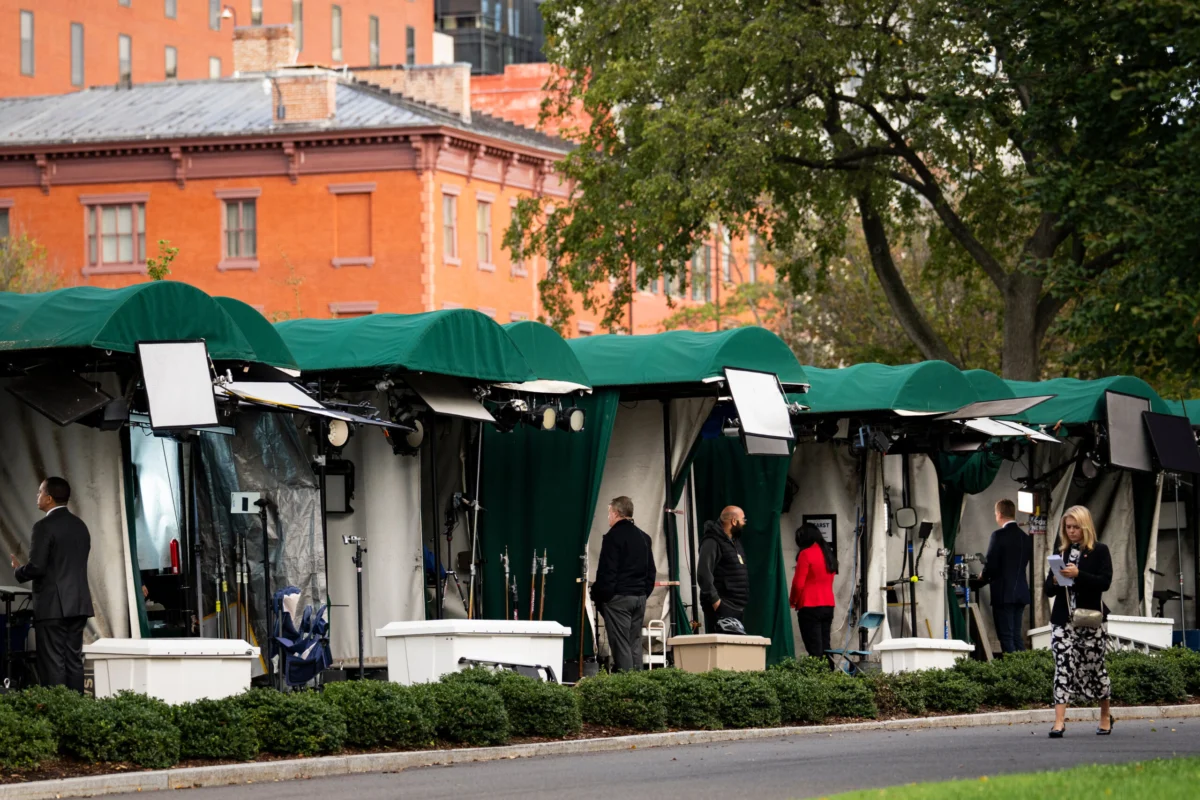
A federal judge has indefinitely extended a block on the Trump administration’s attempt to bar three prominent media organizations from the White House complex, signaling a significant legal setback for the executive branch’s effort to restrict press access. In a ruling issued late Tuesday, U.S. District Court Judge Timothy Kelly granted a preliminary injunction that prevents the White House from enforcing the revocation of "hard passes"—the credentials necessary for daily, unescorted access to the White House grounds—for reporters representing MS NOW, CNN, and Politico.
This judicial action replaces the temporary restraining order previously issued by Judge Kelly, ensuring that the legal battle over constitutional press freedoms will continue without the immediate threat of exclusion for the affected journalists. The ruling highlights a deepening conflict between the administration’s stated desire for favorable coverage and the long-standing legal protections afforded to the press under the First and Fifth Amendments.
Chronology of the Dispute
The controversy stems from an announcement made by President Donald Trump in mid-September, when he publicly declared that he would revoke the press credentials of the three outlets. The President cited frustration with what he termed "fiction and lies" in their reporting, eventually stating on social media platform Truth Social that he had become "sick" of their "cumulative stories."
The timeline of the escalation is as follows:
- September 18, 2026: President Trump announces the revocation of hard passes for journalists associated with MS NOW, CNN, and Politico, accusing them of unfair coverage.
- September 19, 2026: The ban goes into effect. Secret Service officers begin confiscating permanent passes from journalists attempting to enter the White House grounds.
- September 21, 2026: The three media organizations file a civil lawsuit, arguing the ban violates the First Amendment and due process rights.
- September 23, 2026: Judge Timothy Kelly issues a temporary restraining order, forcing the restoration of access for 14 days.
- September 24, 2026: Journalists return to the White House complex.
- October 13, 2026: Judge Kelly issues a preliminary injunction, extending the protection indefinitely while the litigation proceeds.
Legal Reasoning and the "National Security" Argument
Judge Kelly, an appointee of President Trump, delivered a rebuke of the administration’s legal strategy. Central to the government’s defense was the claim that the revocation was motivated by national security concerns and a desire to ensure the accuracy of information within the secure perimeter of the White House.
However, Judge Kelly found no evidence to support this claim. In his written opinion, he noted that the administration had failed to articulate a national security rationale at the time the decision was made. He described the Department of Justice’s subsequent pivot to national security arguments as a "post-hoc justification" designed to shield the administration from the legal fallout of the initial, politically motivated decision.
"President Trump’s own comments suggest that he intended the revocation of Plaintiffs’ hard passes to alter their reporting on him," Judge Kelly wrote. He emphasized that under existing U.S. Court of Appeals for the District of Columbia Circuit precedent, journalists possess a due process right to notice and an opportunity to respond before their credentials are removed. Because the administration summarily barred the outlets without such a process, the judge concluded they were highly likely to succeed on the merits of their lawsuit.
First Amendment and Retaliation Claims
Beyond due process, the lawsuit introduces significant First Amendment arguments. The outlets contend that the revocation was a clear act of retaliation aimed at punishing them for their editorial stances. Judge Kelly’s ruling is notable for acknowledging that the media organizations have a strong likelihood of proving both retaliation and viewpoint discrimination.
Theodore Boutrous Jr., the lead attorney representing the media coalition, praised the ruling as a victory for constitutional principles. "When the President issued his ‘ban on the free press,’ he blatantly and explicitly violated due process and the First Amendment," Boutrous stated. He argued that the President’s own public statements have confirmed that the goal was to force journalists into covering his administration in a more favorable light.
Contextualizing Press Access at the White House
The White House press pass system is governed by a long-standing framework designed to balance the security needs of the Secret Service with the public’s right to access information about the executive branch. Historically, the revocation of a hard pass is a rare event, usually reserved for serious security infractions or violations of conduct codes, rather than editorial disagreement.
The involvement of 78 journalists whose passes were initially threatened by the administration’s broad policy shift underscores the scale of the confrontation. The "hard pass" system allows journalists to move freely through the West Wing and briefing areas; restricting this access limits a reporter’s ability to engage in spontaneous questioning, observe official events, and build the relationships necessary for independent oversight of the executive branch.
Official Responses and Future Implications
While the White House and the Department of Justice have remained relatively quiet regarding the specifics of the ruling, the administration has previously signaled its intent to appeal any decision that limits its authority over the White House complex.
In his opinion, Judge Kelly was careful to delineate the boundaries of his ruling. He clarified that his decision does not prevent the government from enforcing legitimate security protocols, nor does it imply that the President is barred from criticizing the media. "No one should interpret the Court’s decision to suggest that President Trump’s concerns about accuracy and fairness in the media’s reporting are unfounded," he wrote. However, the judge maintained that the government cannot use the machinery of the state to suppress unfavorable coverage under the guise of security or administrative authority.
Broader Impact on Press Freedom
The legal precedent being set in this case is likely to have lasting implications for how future administrations interact with the press. If the courts ultimately rule in favor of the media outlets, it will solidify the principle that the White House press corps operates under a protected status that cannot be easily revoked by a sitting president.
Conversely, if the administration manages to successfully argue that "national security" or "accuracy" are sufficient grounds for restricted access, it could provide a blueprint for future presidents to exert greater control over the information ecosystem surrounding the presidency.
For now, the status quo is preserved. Journalists from the affected outlets will continue to hold their credentials and maintain their presence at White House briefings. As the case moves toward a final judgment on the merits, constitutional scholars are closely watching the proceedings. The central question remains whether the First Amendment provides a shield against executive retaliation or if the White House, as a workplace for the President, retains the absolute authority to curate the journalists who cover it.
The outcome of this case will likely serve as a definitive guide for the limits of presidential power regarding media management. While Judge Kelly’s injunction is not a final resolution, it serves as a robust judicial check, reinforcing the idea that even the highest office in the land is subject to the constitutional constraints of due process and the foundational necessity of a free press. As the litigation continues, both the administration and the media organizations are preparing for a protracted legal battle that may eventually reach the highest courts in the land.