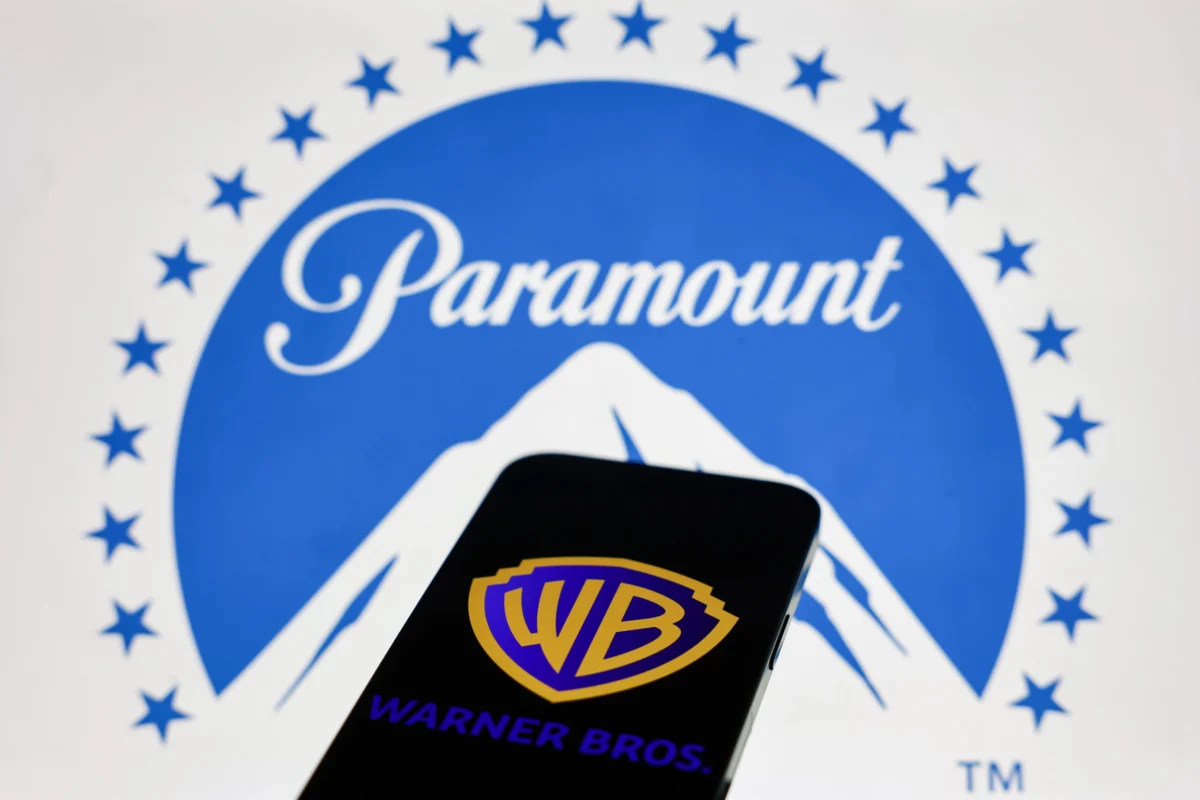
In a move that signals a seismic shift in the global media landscape, shareholders of Warner Bros. Discovery (WBD) have formally approved a proposed merger with Paramount Skydance. The preliminary vote, conducted on Thursday, represents a critical milestone in a high-stakes acquisition process that has captivated Wall Street and Hollywood for months. The deal, valued at approximately $31 per share for the entirety of Warner Bros. Discovery, aims to consolidate some of the most storied assets in entertainment, including the Warner Bros. film studio, the HBO Max streaming platform, and a massive portfolio of cable networks such as CNN, TNT, and the Discovery Channel.
The approval comes after a turbulent bidding war that saw industry titans Netflix and Comcast vie for control of WBD’s premium assets. While the shareholder vote marks a definitive step toward closing the transaction, it was not without significant internal friction. Despite the "overwhelming" support for the merger itself, stockholders voiced a sharp rebuke regarding executive compensation, specifically the massive "golden parachute" payouts earmarked for CEO David Zaslav and other top leadership.
The Financial Architecture of the Merger
The path to Thursday’s vote was paved with aggressive financial maneuvering. Paramount Skydance’s offer of $31 per share represents a significant premium over WBD’s unaffected share price, a factor that ultimately swayed the influential proxy advisory firm Institutional Shareholder Services (ISS) to recommend approval. According to ISS, the cash consideration provides shareholders with "liquidity and certainty of value" in an increasingly volatile media market defined by the decline of linear television and the high costs of streaming growth.
The deal’s structure includes several protective layers designed to mitigate risk for WBD. Most notably, Paramount Skydance has agreed to a $7 billion breakup fee if the merger fails to secure the necessary regulatory approvals. Furthermore, the acquiring entity has committed to covering the $2.8 billion breakup fee that WBD owed to Netflix after a previous, tentative agreement with the streaming giant was terminated in favor of the Paramount offer.
This financial commitment underscores the strategic importance Paramount Skydance places on WBD’s library. By acquiring WBD, Paramount Skydance is positioning itself as a "next-generation media and entertainment company," a sentiment echoed by Paramount leadership following the vote. The company noted that the merger builds on successful equity and debt syndications, suggesting that the capital required to finalize the multi-billion dollar transaction is already largely secured.
A Timeline of the Bidding War
The battle for Warner Bros. Discovery began in earnest in September, as several major players recognized the potential for consolidation in a crowded streaming market. Initially, both Comcast and Netflix expressed interest in WBD’s studio and streaming assets, seeking to bolster their own content libraries against the dominance of Disney and Amazon.
By late February, the competition reached a fever pitch. Paramount Skydance increased its offer to the $31-per-share mark, a move that fundamentally altered the dynamics of the race. This superior proposal prompted Netflix to formally walk away from its bid for WBD’s studio and streaming divisions, clearing the way for Paramount to enter exclusive negotiations.
Throughout the spring, WBD and Paramount leadership worked to finalize the terms, navigating complex regulatory landscapes and shareholder expectations. The process culminated in Thursday’s preliminary vote, which, while non-binding regarding certain executive matters, provides the legal mandate necessary to proceed with the final stages of the acquisition.
Executive Compensation and the "Golden Parachute" Controversy
While the merger itself received a green light, the compensation packages for WBD’s executive suite became a flashpoint for shareholder dissent. The proposed payouts to CEO David Zaslav and other top officials total more than $800 million, a figure that includes hundreds of millions in severance and stock awards triggered by the change in control.
Institutional Shareholder Services had specifically advised against approving these "golden parachute" packages. The ISS report highlighted approximately $500 million in proposed stock awards and a $335 million "excise tax gross-up." This gross-up is an obscure but controversial corporate mechanism designed to cover the taxes executives owe on large payouts, effectively ensuring they receive the full intended amount without being penalized by the "golden parachute tax" established by Congress in the 1980s.
Section 280G of the Internal Revenue Code was originally intended to discourage massive payouts to CEOs during company sales by imposing a 20% excise tax on "excess parachute payments." However, many corporations bypass this by including tax gross-ups in executive contracts, shifting the tax burden from the executive to the company—and by extension, the shareholders.
Despite the "no" vote from shareholders on these specific payments, the payouts are expected to proceed. Because the vote on executive compensation is non-binding, the board of directors retains the authority to fulfill the contractual obligations established during Zaslav’s tenure. Critics argue that these payouts are particularly jarring given the aggressive cost-cutting measures and layoffs that have defined WBD since its formation via the merger of Discovery and AT&T’s WarnerMedia assets.
Strategic Objectives and the New Media Giant
The merger is designed to create a powerhouse capable of competing in an industry where scale is increasingly viewed as the only defense against the "big tech" encroachment of Apple and Amazon. The combined entity will possess a formidable content engine, pairing Paramount’s CBS and Paramount+ assets with WBD’s HBO and Warner Bros. film studio.
In a statement following the vote, David Zaslav characterized the merger as a "historic transaction" that would deliver "exceptional value." He noted that WBD’s teams have spent the last four years transforming the company and returning it to industry leadership. The goal of the new combined company is to create a "next-generation" platform that serves both the creative community and consumers more effectively.
Industry analysts suggest the merger will allow for significant "synergies"—corporate shorthand for cost reductions. By combining back-office operations, marketing departments, and streaming infrastructures, the new company hopes to find billions in savings. However, these synergies often result in further workforce reductions, a prospect that has caused anxiety within the Hollywood creative guilds.
Regulatory Hurdles and the Road Ahead
While shareholder approval is a major victory, the deal still faces significant scrutiny from federal regulators. The Department of Justice (DOJ) and the Federal Trade Commission (FTC) under the Biden administration have adopted a more aggressive stance toward large-scale corporate mergers, particularly in the tech and media sectors.
The primary concern for regulators will be the concentration of media power. A combined Paramount-WBD would control a vast percentage of the cable television market and a significant portion of the domestic box office. Regulators will likely examine how this consolidation affects competition for advertising dollars and whether it gives the new entity undue leverage in negotiations with cable providers and digital distributors.
Paramount and WBD have expressed confidence that the deal will close in the third quarter of this year. The $7 billion breakup fee serves as a testament to this confidence, signaling to the market that the companies believe they can navigate the regulatory challenges. Nevertheless, the road to the finish line will involve months of intensive legal review and potential divestitures if regulators demand the sale of certain assets to maintain a competitive market.
Broader Industry Implications
The WBD-Paramount Skydance merger is widely seen as a harbinger of further consolidation in the entertainment industry. As the "streaming wars" enter a more mature phase, the focus has shifted from subscriber growth at all costs to sustainable profitability. Many smaller or mid-sized media companies are finding it difficult to maintain the high capital expenditures required for original content while simultaneously managing the decline of their traditional linear business models.
If successful, this merger could trigger a domino effect, forcing other legacy media companies like NBCUniversal (Comcast) or Disney to reconsider their own strategic partnerships or acquisitions. It also raises questions about the future of independent content creation, as fewer, larger entities control the pipelines through which movies and television shows reach the public.
For consumers, the impact remains to be seen. While a unified streaming service might offer more convenience and a deeper library of content, consolidation often leads to higher subscription prices as competition diminishes. Furthermore, the emphasis on "synergies" and debt reduction could impact the diversity and volume of high-budget scripted content as the new entity seeks to maximize margins.
As the third quarter approaches, the eyes of the financial and entertainment worlds will remain fixed on the remaining regulatory steps. For now, the shareholder vote stands as a clear mandate for change, even as it highlights the ongoing tension between executive rewards and investor interests in the modern corporate era.