
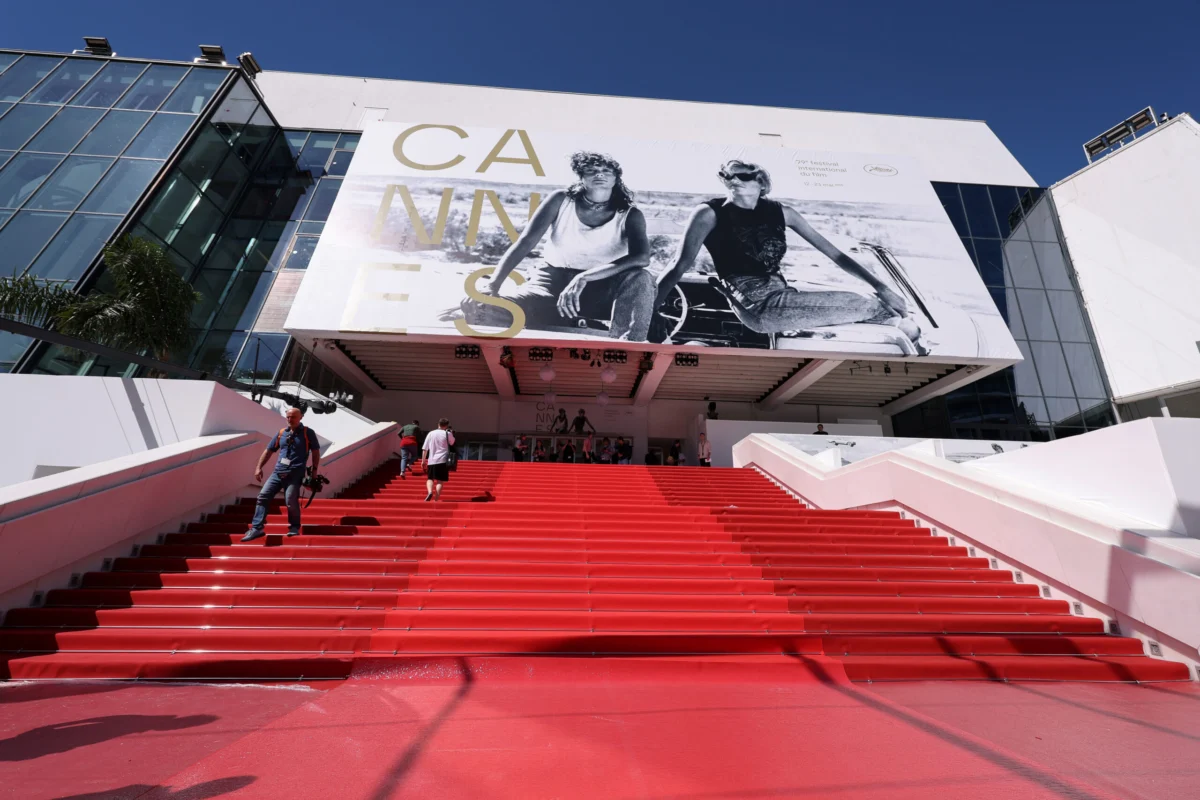
The long-gestating concept of a female-driven offshoot of The Expendables franchise, tentatively titled Expendabelles, is officially moving forward. Eclectic Pictures and Hollywood Ventures Group (HVG) have announced their collaboration on this ambitious project, aiming to introduce a new generation of elite female operatives within the established action universe. The announcement, made at the prestigious Cannes Film Festival, signals a renewed commitment to a concept that has faced significant development hurdles over the past decade, now backed by Lionsgate, which recently acquired the rights to the broader Expendables franchise.
The newly reimagined Expendabelles is envisioned as an origin story, uniquely set in the late 1990s amidst the palpable tension of the Y2K era and a backdrop of escalating geopolitical uncertainty. This strategic period choice allows for a distinct narrative foundation, differentiating it from the main series while leveraging a nostalgic appeal for audiences. Filmmakers involved in the project describe it as a "stylized, action-driven cinematic event designed to expand the mythology of the franchise while standing firmly on its own," emphasizing a fresh take that respects the original’s DNA.
A Decades-Long Quest: The Challenged Genesis of ‘Expendabelles’
The idea of an all-female Expendables counterpart is far from novel. Speculation and various development attempts have circulated since the original Expendables film debuted in 2010. That movie, a star-studded homage to 1980s action cinema, successfully tapped into a vein of nostalgia and delivered a robust box office performance, grossing over $100 million domestically and launching a successful franchise led by Sylvester Stallone. Its immediate success naturally sparked discussions about potential spin-offs, and an all-female ensemble quickly became a popular suggestion among fans and industry insiders alike.
One of the most concrete attempts to bring Expendabelles to fruition occurred in 2014. Millennium Films, the original producers of The Expendables, had attached Robert Luketic, known for helming Legally Blonde, to direct. The screenplay, penned by Kirsten Smith and Karen McCullah, the writing duo behind Luketic’s earlier hit, proposed a plot that involved female operatives who would pose as call girls to rescue a nuclear scientist being held hostage. Reflecting on this particular iteration, industry observers and producers themselves have acknowledged that such a narrative concept would likely face intense scrutiny and criticism in today’s evolved media landscape, potentially being "eviscerated online" for its outdated and problematic portrayal of women in action roles.
Indeed, the challenges of getting that 2014 project off the ground were multifaceted. Jeffrey Greenstein, a key figure at Millennium Films, candidly shared with The Hollywood Reporter that one of the primary obstacles was "trying to find a way to justify why we’d have a woman team." This statement encapsulates a broader industry struggle at the time: a perceived difficulty in crafting compelling, high-stakes narratives for female action protagonists that didn’t rely on tropes or contrivances to explain their presence. It highlighted a creative bottleneck where studios grappled with how to empower female characters within an action genre traditionally dominated by male archetypes, without resorting to stereotypical or objectifying scenarios. The failure of this earlier version underscored the need for a more thoughtful and contemporary approach to female-led action.
The Enduring Legacy of The Expendables Franchise
To fully appreciate the significance of Expendabelles, it’s crucial to understand the foundation laid by The Expendables. Conceived by Sylvester Stallone as a passion project, the first film brought together an unprecedented ensemble of action stars, many of whom were icons of the 1980s and 90s. Stallone himself, Jason Statham, Jet Li, Dolph Lundgren, Randy Couture, Steve Austin, Terry Crews, and Mickey Rourke formed the initial crew, with cameo appearances from legends like Bruce Willis and Arnold Schwarzenegger. The film’s appeal lay in its nostalgic celebration of old-school action, practical effects, and the sheer star power of its cast.
The franchise expanded with subsequent installments, drawing in an even wider array of talent. The Expendables 2 (2012) added Jean-Claude Van Damme and Chuck Norris, while increasing roles for Willis and Schwarzenegger. The Expendables 3 (2014) introduced Harrison Ford, Wesley Snipes, Mel Gibson, Glen Powell, Antonio Banderas, and Victor Ortiz, attempting to refresh the cast with both seasoned veterans and younger talent. Expend4bles (2023), the most recent entry, continued this tradition, bringing in new faces like Megan Fox and Iko Uwais alongside returning stars.
Collectively, the franchise has grossed over $800 million worldwide across its four films, demonstrating a consistent global appetite for its brand of explosive, ensemble-driven action. While critical reception has varied, the films have consistently found an audience, particularly internationally, drawn to the spectacle and the unique gathering of action heroes. This established brand recognition and fan base are significant assets for the Expendabelles project, providing a pre-existing universe and a blueprint for action choreography and ensemble dynamics.
Navigating the Modern Action Landscape: Producer Perspectives
The new iteration of Expendabelles arrives with a renewed sense of purpose and a strategic vision articulated by its key producers. Heidi Jo Markel of Eclectic Pictures, who was also involved in the project’s original conception more than a decade ago alongside Patrick Muldoon and Julie Kroll, expressed profound enthusiasm. "We are thrilled to finally bring Expendabelles to life alongside our incredible partners at Hollywood Ventures Group, who share our passion for reimagining this property on a much larger cinematic scale," Markel stated. Her comments highlight a long-held ambition and a belief that the current cinematic climate is ripe for such a venture.
Markel emphasized the enduring market demand for female-driven action franchises. "There has always been a strong global appetite for female-driven action franchises, and we believe the time is now to introduce a bold new generation of elite operatives into this universe," she added. This statement suggests a recognition of evolving audience preferences and a desire to tap into the growing demand for diverse representation in action cinema, moving beyond the limitations and perceptions that hindered earlier attempts. The focus, she clarified, is on "elevating the material by pairing it with top-tier creative talent and delivering a fresh, stylish, adrenaline-fueled experience for worldwide audiences." This indicates a commitment to high production values and compelling storytelling, rather than relying solely on the novelty of an all-female cast.
Glenn Gainor, co-founder of Hollywood Ventures Group and a producer on the film, echoed Markel’s sentiments, articulating the delicate balance they aim to strike. "We see this as an opportunity to honor the DNA of what made The Expendables resonate globally, while evolving it in a way that feels both timely and commercially compelling," Gainor explained. His vision centers on reintroducing audiences to a familiar world through a novel lens. "This is a world audiences know, but we’re introducing them to it in a way they’ve never seen before," he affirmed, pointing to the origin story format and the Y2K setting as key elements of this fresh perspective.
The production team is actively in the packaging phase, assembling creative talent including a director, writers, and potential cast members. Markel will produce for Eclectic Pictures, with Gainor producing for HVG. The executive producer team includes HVG co-founder Sandy Climan, Joe Smith of Thirteenth Studios, Nelly Kim, Julie Kroll, Stephen R. Foreht, and John Yarincik. This robust team signals a concerted effort to bring significant industry experience and creative horsepower to the project.
Hollywood’s Mixed Record with Female-Led Action Films
The path for all-female action franchises in Hollywood has been notoriously challenging, often described as a "tough nut to crack." Despite a growing demand for diverse representation and strong female protagonists, the box office performance of many recent attempts paints a cautionary tale.
A prime example is The 355, a high-profile spy thriller unveiled with considerable fanfare at Cannes a few years prior to the Expendabelles announcement. Starring an impressive ensemble including Oscar winner Jessica Chastain, Penélope Cruz, Fan Bingbing, Diane Kruger, and Lupita Nyong’o, and directed by Simon Kinberg, the film aimed to be a globetrotting, Bourne-esque espionage epic. Despite its star power and ambitious premise, the Universal Pictures release landed with a resounding "thud" upon its theatrical debut in 2022, grossing a mere $27 million worldwide against a reported production budget of $75 million. The film suffered from mixed reviews, a competitive release environment, and perhaps a failure to connect with a broad enough audience despite its marketable cast.
Similarly, the 2019 reboot of the iconic Charlie’s Angels franchise, directed by Elizabeth Banks and starring Kristen Stewart, Naomi Scott, and Ella Balinska, also proved to be a significant disappointment. Despite a beloved IP and a contemporary approach, the film earned only $17 million at the domestic box office and a total of $73 million worldwide, against a budget of $48 million. Industry analysts attributed its struggles to a combination of factors, including a perceived lack of originality, mixed critical reception, and an inability to attract a new generation of fans while retaining the nostalgic appeal.
These examples highlight the complexities inherent in launching successful female-led action ensembles. While individual female-led action films like Wonder Woman, Captain Marvel, and Atomic Blonde have demonstrated significant commercial and critical success, often relying on a singular, charismatic lead, ensemble projects face additional hurdles. The challenge lies in crafting a cohesive narrative that effectively showcases multiple strong characters, avoids cliché, and provides a compelling reason for their collaboration, all while delivering the high-octane spectacle audiences expect from the genre.
Strategic Timing and Broader Industry Implications
The timing of the Expendabelles announcement at the Cannes Film Festival is strategically significant. Cannes serves not only as a prestigious film festival but also as a vital global film market where producers engage in crucial discussions with distribution partners, financiers, and creative talent. Unveiling the project here allows Eclectic and HVG to garner international interest, secure crucial financing, and begin the complex process of "packaging" the film with a director and cast.
The involvement of Lionsgate is another critical factor. The studio’s acquisition of the Expendables franchise rights late last year provides a robust distribution network and institutional backing that was potentially lacking in previous attempts. Lionsgate has a strong track record with action franchises, and its commitment suggests confidence in the renewed vision for Expendabelles. This corporate support could be the catalyst needed to propel the project past its long development phase and into production.
The decision to set the origin story in the late 1990s and during the Y2K era offers intriguing creative possibilities. This period was marked by unique technological anxieties, geopolitical shifts following the Cold War, and a distinct aesthetic that could lend itself to a "stylized" action film. It also allows the film to exist somewhat independently of the contemporary Expendables timeline, providing creative freedom for its characters and narrative without being burdened by the current continuity of the main franchise. This could appeal to both fans of the original and new audiences looking for a fresh take on the genre.
The renewed effort to launch Expendabelles signifies a broader industry trend: the continued exploration of intellectual property expansion and the persistent push for greater diversity in blockbuster cinema. If successful, Expendabelles could demonstrate a viable model for reimagining existing male-dominated franchises with female protagonists, proving that thoughtful creative choices, strong storytelling, and strategic marketing can overcome past box office disappointments. Its success or failure will undoubtedly be closely watched, shaping future decisions regarding similar projects and influencing the evolution of action cinema for years to come. The challenge remains to deliver a film that not only satisfies the global appetite for action but also authentically and compellingly showcases a new generation of female operatives in a way that truly resonates with modern audiences.