The 55th edition of Visions du Réel (VdR) in Nyon, Switzerland, concluded this year under a cloud of significant institutional change and a program deeply reflective of the world’s most pressing geopolitical tensions. Artistic Director Emilie Bujès, a central figure in the festival’s recent growth, navigated the event just weeks after announcing her impending departure to join the Geneva International Film Festival (GIFF) in August. Her final tenure in Nyon was marked by a program that burrowed deeper into the global languages of nonfiction, presenting a curated selection that challenged formalized borders and explored the intersection of personal narrative and state-sanctioned repression.
Under the leadership of Bujès, Visions du Réel has solidified its reputation as a premier destination for creative documentary filmmaking, often serving as a counterpoint to the more commercially driven markets in North America. This year’s festival was characterized by its international scope, featuring works that addressed the ongoing conflict in Gaza, the Iranian diaspora, and the crumbling of urban infrastructures under the weight of global tourism. The festival’s ability to draw filmmakers from volatile regions—including those personally impacted by war and internet blackouts—underscored the event’s role as a vital sanctuary for cinematic discourse.
Geopolitical Realism and the Cinema of Resistance
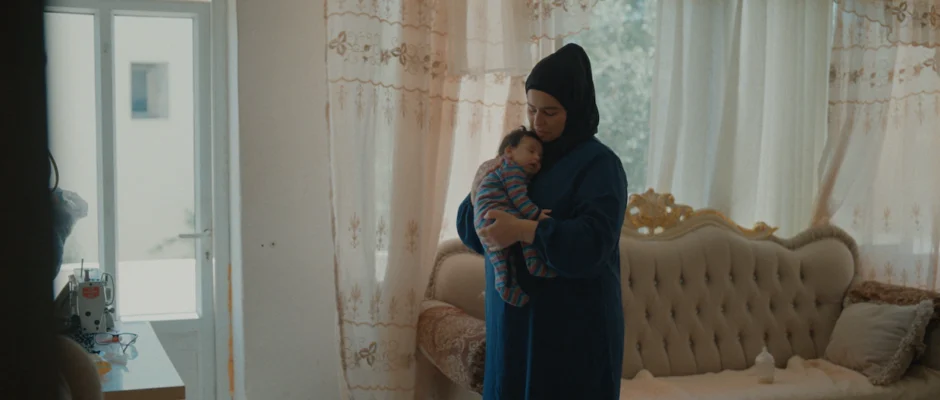
The 2024 program was heavily weighted with films that examined how geography and border control shape human experience. Among the most discussed works was For Life (Ömür Boyu) by Ömür Boyu, a striking piece of cinéma vérité that follows Hind, a Palestinian woman attempting to conceive through IVF under extreme conditions. The film functions as a high-stakes thriller, documenting Hind’s race against time to transport her husband’s sperm from an Israeli prison to a fertility clinic. The narrative highlights the intersection of medical necessity, legal barriers, and the daily struggles of life under occupation, serving as a poignant humanization of a conflict often reduced to statistics in mainstream media.
Similarly, the festival provided a platform for voices from the Iranian diaspora. Faezeh Nikoozad’s In Between, a Place explored the lifelong bond between three childhood friends, all filmmakers, who have been scattered across the globe due to political repression in Iran. The film’s emotional depth resonated with attendees, many of whom shared stories of being unable to return to their home countries due to safety concerns or the severance of digital communications by authoritarian regimes.
The ongoing humanitarian crisis in Gaza was also addressed through American Doctor by Poh Si Teng and the short film Muddy Currents by Shadi Habib Allah. These films, alongside others in the program, facilitated a dialogue on how filmmakers can document systemic violence while maintaining the dignity of their subjects.
Urban Decay and Environmental Narratives
Visions du Réel has long been a champion of the medium-length film, a format that often struggles for placement in traditional theatrical or streaming environments. This year, the Special Youth Jury Award was granted to The Building Site, directed by Tiziano Locci and Tito Puglielli. The film provides a meditative look at a decaying palazzo in Palermo, Italy, documenting the tension between the building’s historical tenants and the encroaching forces of gentrification and tourism. The film serves as a microcosm of broader European urban struggles, where the cultural fabric of neighborhoods is frequently sacrificed for financial speculation.
Environmental themes also occupied a central place in the 2024 lineup. Nikolaus Geyrhalter’s Melt presented a chilling visual account of the melting cryosphere, juxtaposing images of ice-workers in the Alps with the hedonism of party-skiers. The film suggests that the landscapes being captured are already historical artifacts, archived before their inevitable disappearance due to human-induced climate change.
In a more poetic vein, G. Anthony Svatek’s Humboldt, USA—which received its world premiere—braided contemporary American life with the legacy of 19th-century scientist Alexander von Humboldt. Edited by Kaija Siirala, the film explores interconnectedness through a diverse cast, ranging from community activists in Buffalo to Silicon Valley AI enthusiasts. The selection committee reportedly chose the film within its first minute of viewing, citing its "experientially potent" approach to environmentalism and legacy.

The Evolution of the VdR-Industry Market
A significant development at this year’s festival was the perceived shift in the European documentary market hierarchy. Industry insiders noted a growing preference for the VdR-Industry market over the International Documentary Film Festival Amsterdam (IDFA), which has traditionally held the top spot in the European documentary circuit. Led by former Chicken & Egg Vice President Sabine Fayoux Cantillo, the VdR market was described as "active and attentive," fostering a space for films that prioritize artistic innovation over purely commercial appeal.
Several projects garnered significant interest within the industry section:
- Trade by Todd Chandler: A multi-award-winning exploration of the cultural representation of capitalism.
- Hello?! by Sofie Benoot: A follow-up to her 2024 selection Apple Cider Vinegar, focusing on the symbolic and physical presence of cranes.
- To My Dearest by Grace Hsia: A tender feature shot on 8mm film that examines the intersection of fertility and friendship.
- The Vortex of Extinction by Ljubomir Stefanov: A unique project interpreting toxic masculinity through the lens of Macedonian turtles.
The robust attendance of American industry professionals, many of whom were visiting Nyon for the first time, highlighted the festival’s growing influence. Observers noted that the creative ambition on display—often achieved with budgets significantly smaller than those of US-based productions—serves as a testament to the strength of European state funding for the arts.
Cultural Immersion and the Festival Experience
The physical layout of the festival in Nyon contributes to its reputation as a "utopic" environment for cinema. With venues located within a ten-minute walk of one another and a central social hub at the Place du Réel, the festival encourages a level of intimacy and reflection rarely found at larger, more fragmented events.
One of the standout domestic perspectives came from Swiss-Indian filmmaker Sophie Schrago in What Comes From Sitting in Silence. The film offers an intimate look at the first female Islamic court in Mumbai. Schrago’s approach, which transitions from a static, observational lens to a more personal and participatory one, provides a rare insight into Judge Khatoon’s mediation of domestic distress. The film’s mid-point revelation regarding the filmmaker’s own past relationship reframes the court’s proceedings, shifting the viewer’s perspective from objective observer to empathetic participant.
Institutional Implications and Future Outlook
As Emilie Bujès prepares to exit her role, the festival stands at a crossroads. Her tenure has been marked by an expansion of the festival’s prestige, attracting high-profile guests such as Academy Award-winner Laura Poitras and HBO’s John Wilson. However, the festival’s core identity remains rooted in its curiosity for the obscure and its commitment to formally challenging work.
The success of the 55th edition suggests that despite global contractions in documentary budgets and the "dying industry" narrative prevalent in the United States, Visions du Réel continues to thrive by pushing back against algorithmic audience impulses. The festival’s programming suggests a parallel reality where creative risk-taking is rewarded and state-supported infrastructure allows for a more diverse global nonfiction landscape.
The transition to new leadership in late 2024 will likely focus on maintaining this balance between international growth and the preservation of Nyon’s unique, contemplative atmosphere. For the filmmakers and industry professionals who gathered on the shores of Lake Geneva this year, the festival remains a vital antidote to the homogenization of modern cinema. The 2024 edition did more than just screen films; it acted as a barometer for the health of global documentary filmmaking, proving that even in a time of widespread conflict and financial uncertainty, the appetite for challenging, truth-seeking narratives remains undiminished.