The 55th edition of Visions du Réel (VdR), the internationally renowned creative nonfiction film festival held annually in Nyon, Switzerland, concluded its 2024 run by cementing its status as a premier destination for global documentary cinema. This year’s festival was marked by a significant leadership transition, as Artistic Director Emilie Bujès announced her departure just weeks prior to the opening. Bujès, who has steered the festival since 2017, will transition to the Geneva International Film Festival (GIFF) in August. Her final edition at the helm of VdR reflected a curation deeply invested in the global languages of nonfiction, moving beyond traditional western narratives to explore the intersections of geography, conflict, and the resilience of the human spirit.
Under Bujès’ tenure, Visions du Réel has expanded its international footprint, attracting filmmakers and industry professionals from across the globe to the shores of Lake Geneva. The 2024 selection featured a diverse array of perspectives, ranging from the surrealist animations of Meriem Bennani to the observational rigor of Swiss-Indian filmmaker Sophie Schrago. The festival’s programming underscored a central theme: how formalized borders and geopolitical control shape individual and collective experiences. This focus was particularly resonant as the festival took place against a backdrop of ongoing global conflicts, with many attendees and participants personally affected by wars in the Middle East and political repression in Iran.
A Chronology of Leadership and Institutional Evolution
The 2024 edition served as a capstone for Emilie Bujès, whose leadership has been characterized by a commitment to formal experimentation and the promotion of "Burning Lights," a competition section dedicated to new vocabularies in documentary filmmaking. Bujès’ move to the Geneva International Film Festival represents a significant shift in the Swiss cultural landscape. Having previously worked at the Geneva Contemporary Art Center and contributed to the Berlin International Film Festival’s Forum section, Bujès brought a multidisciplinary approach to Nyon that blurred the lines between cinema and contemporary art.
The festival’s timeline this year was underscored by the announcement of her successor and the ongoing evolution of the VdR-Industry section. In recent years, Visions du Réel has increasingly been viewed as a formidable rival to the International Documentary Film Festival Amsterdam (IDFA), long considered the dominant European documentary market. The 2024 marketplace was curated by Sabine Fayoux Cantillo, formerly the Vice President of the US-based nonprofit Chicken & Egg Pictures. This leadership choice signaled a strategic effort to bridge the gap between European state-funded cinema and the North American independent documentary scene.
Geopolitics and the Cinema of Displacement
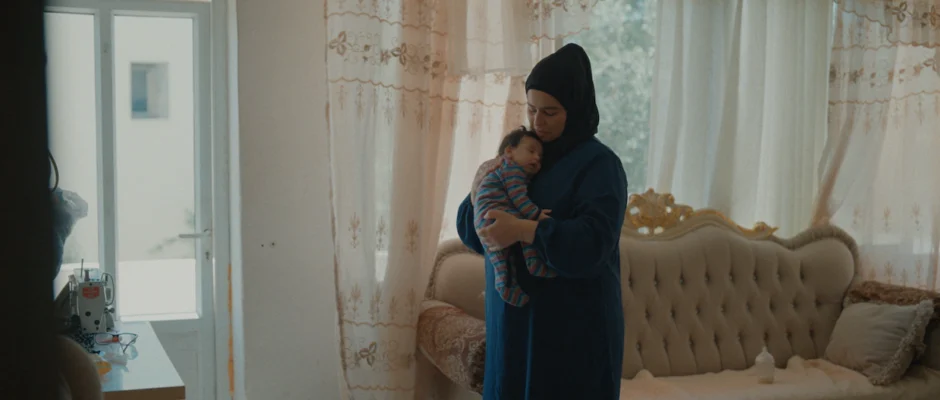
The 2024 program was heavily informed by the ongoing humanitarian crises and political instabilities worldwide. Several films offered direct or metaphorical dialogues with the situation in Palestine. Among the most discussed was For Life (Ömür Boyu), directed by Ömür Boyu. The film provides a harrowing yet intimate look at Hind, a Palestinian woman attempting to conceive through IVF using sperm smuggled from her husband, who is incarcerated in an Israeli prison. This practice, a known phenomenon among Palestinian families seeking to maintain a sense of future and lineage despite long-term imprisonment, was rendered with the tension of a thriller. The narrative follows Hind as she navigates checkpoints, traffic, and the volatile nature of fertility treatments, offering a poignant counter-narrative to dehumanizing portrayals of conflict.
Similarly, American Doctor by Poh Si Teng and Muddy Currents by Palestinian artist Shadi Habib Allah provided bracing insights into the Palestinian experience. These films were complemented by Faezeh Nikoozad’s In Between, a Place, which explores the lifelong bonds between three Iranian childhood friends now scattered across the globe due to political repression. The film serves as a meditation on the Iranian diaspora, highlighting the emotional toll of exile and the fractured nature of identity when access to one’s homeland is severed by authoritarian regimes.
Environmental Legacies and the Anthropocene
Visions du Réel has a long history of showcasing films that grapple with the relationship between humanity and the natural world. In 2024, this tradition was upheld by Nikolaus Geyrhalter’s Melt. Geyrhalter, known for his grand-scale observational style, presented a chilling look at the receding glaciers and the desperate, often futile attempts by "ice-workers" to preserve them. The film juxtaposed the clinical atmosphere of doctors’ offices near melting borders with the hedonism of party-skiers in the Alps, creating a stark visual record of the Anthropocene.
Another highlight in the environmental category was Humboldt, USA, the debut feature of G. Anthony Svatek. The film, which won over the selection committee within its first minute of viewing, examines the legacy of the 19th-century Prussian polymath Alexander von Humboldt. By weaving together stories from museum educators, Silicon Valley tech enthusiasts, and community activists in East Buffalo, Svatek explores how Humboldt’s holistic view of nature persists—or is distorted—in contemporary American life. The film’s narrative poetry, edited by Kaija Siirala, offers a unique lens on environmentalism that is both historical and forward-looking.

Urban Decay and the Politics of Space
The Special Youth Jury Award was granted to The Building Site, a medium-length film directed by Tiziano Locci and Tito Puglielli. The film centers on a decaying palazzo in Palermo, Italy, documenting the lives of its diverse residents as they face the encroachment of tourism and capitalist redevelopment. Through a series of observational shots through windows and apertures, the filmmakers capture the slow erasure of affordable housing and local histories. The palazzo itself becomes a character, seemingly resisting the "renovation" that seeks to turn it into a commodity for the global travel market.
The festival also featured Alea Jacarandas by Hassen Ferhani, a textural exploration of memory centered on the jacaranda trees of Algiers. The film uses the symbology of the plant to explore a father-son dynamic, demonstrating how physical landscapes can become repositories for interpersonal history. These films highlighted a recurring theme in the 2024 selection: the ways in which domestic and urban spaces are contested sites of memory and survival.
The VdR-Industry: A Shifting Power Dynamic
The industry component of Visions du Réel saw a notable surge in activity this year. Reports from attendees suggested a growing preference for Nyon over larger markets like IDFA, citing the festival’s more intimate scale and its success in fostering high-quality co-productions. The VdR-Industry section showcased several promising projects, including Trade by Todd Chandler, an atmospheric analysis of capitalism, and Hello?! by Sofie Benoot, which focuses on the symbolic and ecological significance of cranes.
Another standout project was To My Dearest by Grace Hsia, an 8mm feature exploring the intersections of fertility and friendship. The inclusion of Ljubomir Stefanov’s The Vortex of Extinction, a film that uses the life of Macedonian turtles to critique toxic masculinity, further illustrated the festival’s willingness to support unconventional and narratively daring projects.
Data from the festival organizers indicated that the industry section hosted over 1,500 professionals, a record number that underscores the festival’s role as a vital hub for documentary financing and distribution in Europe. The presence of high-profile guests, including Academy Award-winner Laura Poitras and HBO’s John Wilson, added to the festival’s prestige and attracted a significant cohort of American industry representatives.
Economic Realities and the Future of Nonfiction
Despite the "utopic" atmosphere often attributed to Nyon, the festival took place against a backdrop of economic anxiety within the global documentary industry. In the United States, independent filmmakers are facing a contraction in budgets and a shift in streaming priorities away from artistically driven nonfiction. Conversely, the films showcased at Visions du Réel often benefit from robust state funding models prevalent in Europe and parts of the Middle East and Asia.
This disparity was a frequent topic of discussion among international attendees. While the cost of attending the festival remains high—with basic meals in Nyon often exceeding 22 CHF (approximately $27 USD)—the creative ambition on display suggested a parallel reality where documentary cinema is treated as a vital art form rather than a mere content category for algorithms.
The 2024 edition of Visions du Réel reaffirmed that the festival is not merely a showcase for completed works but a site of active resistance against the homogenization of global cinema. By prioritizing formally challenging films and providing a platform for voices from marginalized or contested regions, the festival continues to push the boundaries of what nonfiction can achieve. As Emilie Bujès prepares to exit, she leaves behind an institution that is more internationally integrated and creatively vibrant than ever, ensuring that Nyon remains a crucial point on the global cinematic map.